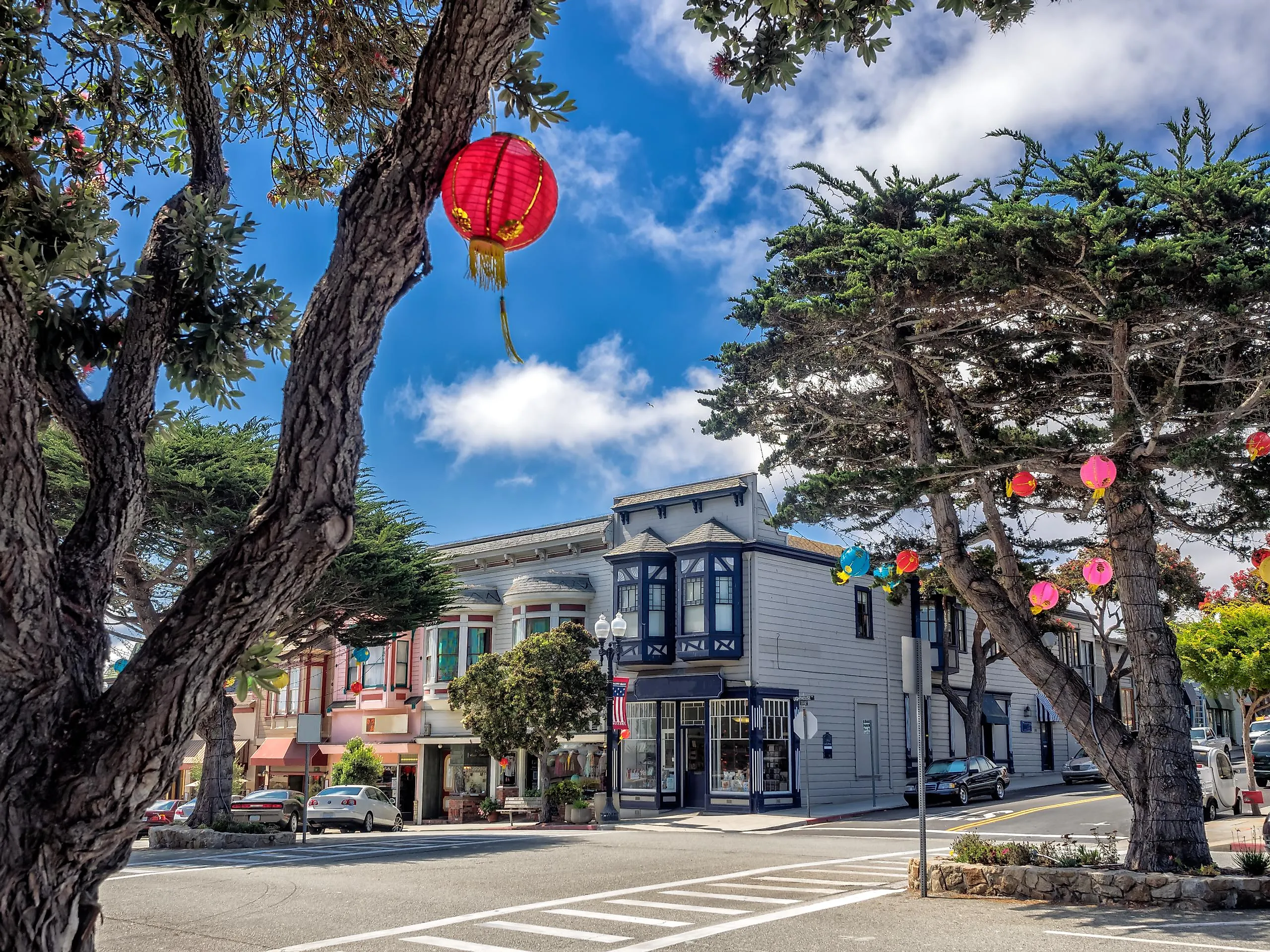
7 Cutest Small Towns On The Pacific Coast
The cutest towns on the Pacific Coast win people over with particulars, not postcards. Each fall, thousands of monarch butterflies settle into the pines above Pacific Grove, which bills itself as Butterfly Town USA. The cottages in Carmel-by-the-Sea carry painted names instead of street numbers, a holdover from a town that still has no home mail delivery. A 1929 pipe organ rises before the movies inside Avalon's Art Deco casino on Catalina Island, where golf carts outnumber cars. And azaleas blanket the Brookings hillsides for much of the year, thanks to the banana-belt climate of the southern Oregon coast.
Brookings, Oregon

Just north of Brookings, the Samuel H. Boardman State Scenic Corridor threads 12 forested miles above the surf, a stretch of secluded beaches, headlands, and cliff-top pullouts. A short trail at Natural Bridges ends at a railing over a set of sea-carved rock arches, where the water pushes through the openings at high tide. Down in Oregon's mild southern corner, the town is green and blooming most of the year.
In town, Azalea Park spreads over a hillside of azaleas and rhododendrons that flower through spring, with picnic lawns and summer concerts under tall evergreens. Chetco Brewing Company pours its beers a few blocks away, with live music, food trucks, and a dog-friendly patio where locals gather in the evening.
Prince Rupert, British Columbia

Prince Rupert is a working port on the north coast of British Columbia in Canada, wetter and more rugged than the towns to the south, with a colorful waterfront district at Cow Bay. Outside the harbor, the Butze Rapids trail makes a 3.2-mile loop through temperate rainforest to a lookout over reversing tidal rapids, an easy walk for an afternoon.
Downtown, the Sunken Gardens hide behind ordinary buildings, reached through a short tunnel that opens onto flower beds and a quiet bench or two. The Museum of Northern British Columbia lays out the region's First Nations history and its 19th-century growth, with totems, carvings, and artifacts inside a longhouse-style hall.
Avalon, California

Avalon is the only incorporated city on Santa Catalina Island, 26 miles off the California coast, a harbor town of pastel buildings stacked up the hillside above the bay. The Catalina Island Conservancy protects about 42,000 acres of the island's interior, and its trailhead center in town is where hikers and cyclists start before heading into the backcountry.
The Avalon waterfront ends at the round 1929 Casino, an Art Deco landmark whose Avalon Theatre still shows films beneath a working pipe organ, with a grand ballroom upstairs. Nearby, the Catalina Museum for Art and History traces the island's past, and a walk inland reaches the Wrigley Memorial and Botanic Garden, planted for chewing-gum magnate William Wrigley Jr. with succulents from around the world.
Port Townsend, Washington

Port Townsend was a busy port in the late 1800s that expected to become the region's big city, and when the railroad passed it by, the grand Victorian downtown already in place simply remained. Those brick and stone buildings along Water Street now house galleries, bookstores, and cafes, and the town leans into that heritage with an annual Victorian Festival each spring.
At the north end of town, Fort Worden guards the entrance to Puget Sound with old artillery batteries, parade grounds, and miles of beach, and the Point Wilson Lighthouse still marks the turn into the Strait of Juan de Fuca. On the edge of town, the Port Townsend Aero Museum shows a hangar of restored antique aircraft up close.
Pacific Grove, California

Pacific Grove occupies the tip of the Monterey Peninsula, where Lovers Point Park juts into the bay with lawns, a small beach, and water calm enough for swimmers and paddlers. South along the shore, Asilomar State Beach spreads over more than 100 acres of dunes and rocky coves, and its name means refuge by the sea, which is close to how it feels at sunset.
From October into February, thousands of monarch butterflies cluster in the pines of the Monarch Grove Sanctuary, the seasonal show that earned the town its nickname, Butterfly Town, USA. A few blocks off, Jameson's Classic Motorcycle Museum opens on weekends with the collection of the late Neil Jameson, from a 1913 Peugeot to British and Japanese racing bikes.
Astoria, Oregon

Astoria, founded in 1811 near the mouth of the Columbia River, was the first permanent United States settlement west of the Rocky Mountains, and it still lives off the river. The Astoria Column stands on Coxcomb Hill above town, its outer mural spiraling up to a viewing platform reached by 164 interior steps. Down at the water, the Astoria Riverfront Trolley rolls along old cannery tracks past piers and warehouses now turned into cafes and galleries.
Just outside town, Fort Clatsop preserves a replica of the log fort where the Lewis and Clark expedition waited out the wet winter of 1805 and 1806. A few streets up, the Flavel House, a Queen Anne mansion finished in 1885 for river pilot Captain George Flavel, still shows its carved woodwork, tall fireplaces, and period furnishings.
Carmel-by-the-Sea, California

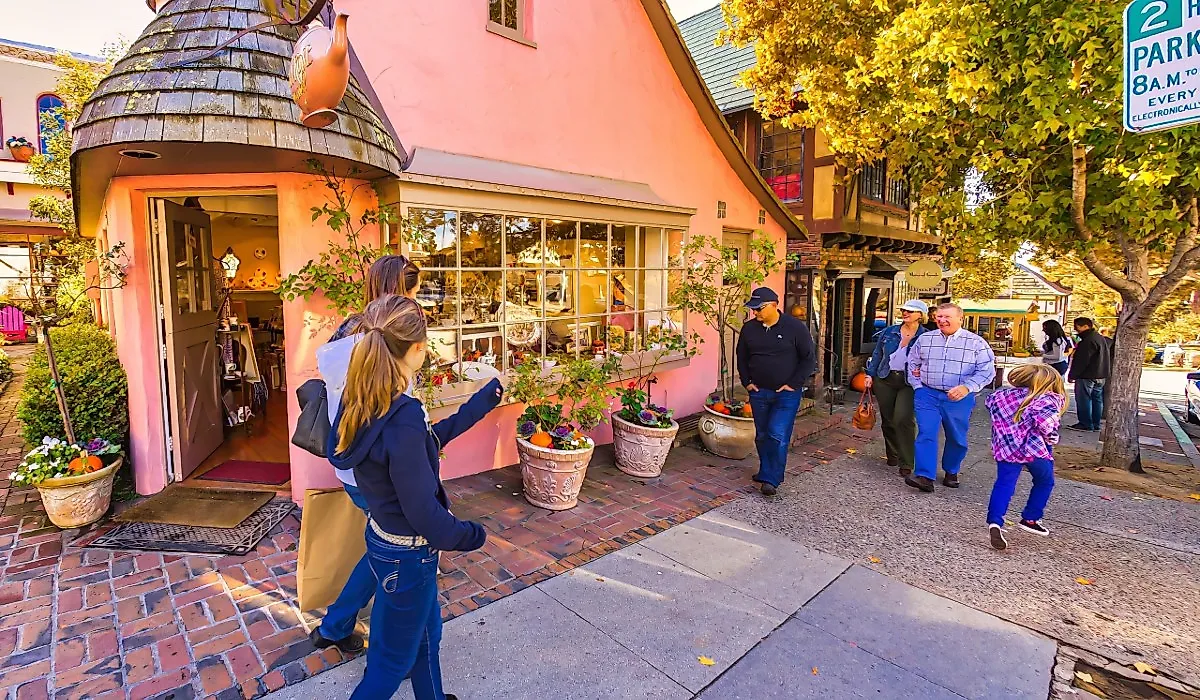
Carmel-by-the-Sea is a single square mile of cottages, courtyards, and shops with no street addresses, where Ocean Avenue slopes downhill to a wide crescent of white sand at Carmel Beach. A few minutes south, Point Lobos State Natural Reserve edges the water with cypress groves, coves, and cliffs that a landscape painter once called the greatest meeting of land and water in the world.
Up the road in Monterey, the aquarium recreates the bay's kelp forests, tide pools, and deep canyons, with sea otters and sharks behind its tanks. Back in town, the Carmel Mission, a 1797 Spanish church with a stone basilica and walled gardens, traces the area's founding as one of California's earliest missions.
The Coast at Its Cutest
Astoria and Prince Rupert carry working-port histories along their waterfronts, and Port Townsend turned a Victorian downtown into an arts town a visitor can walk end to end. The rest fold beaches, gardens, and old landmarks into a mile or two of streets. What they share is scale, small enough that the walking is the visit. The best of the coast is often the part most drivers pass in an afternoon.