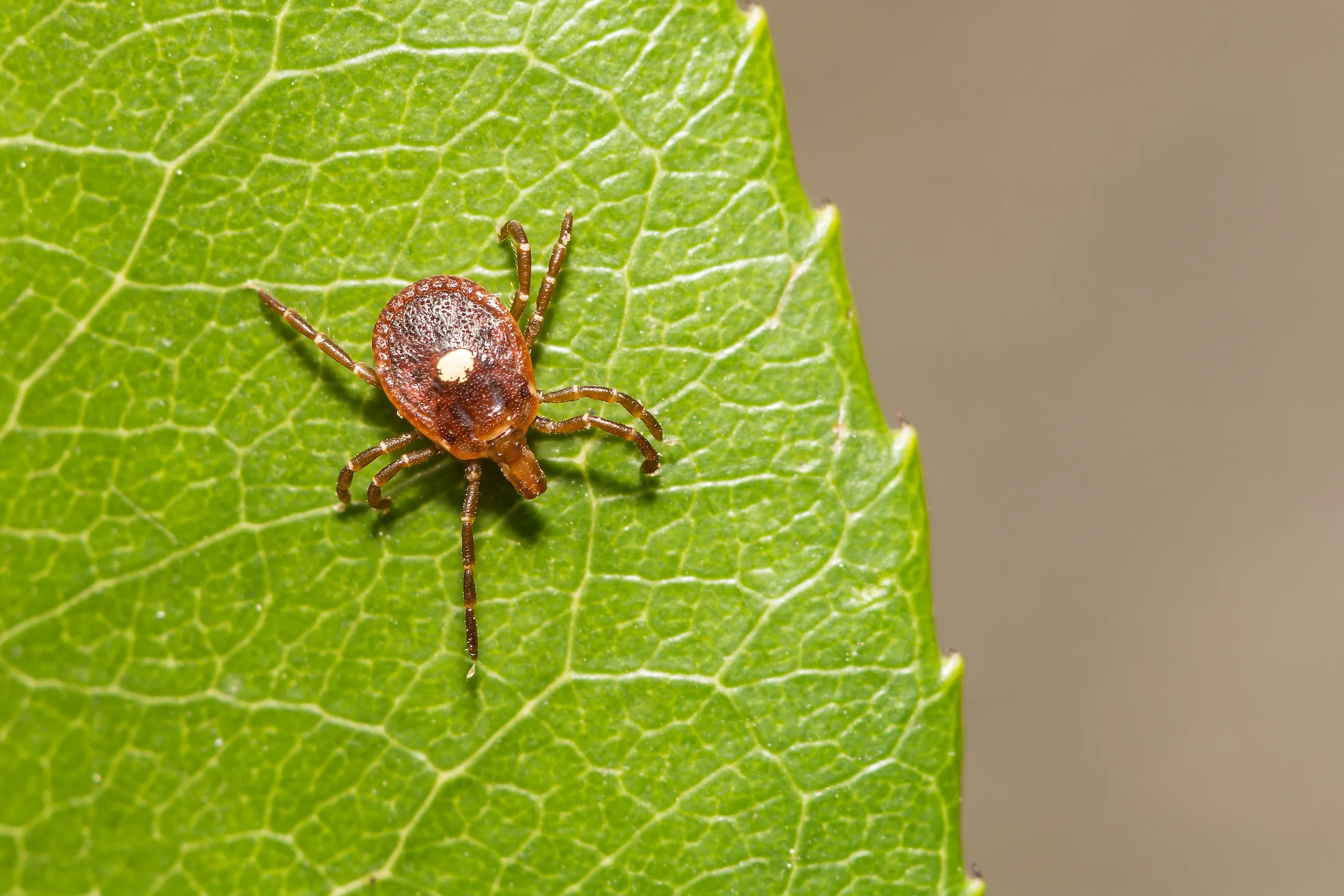
6 Tick Infested Areas In Louisiana
Tick contact in Louisiana concentrates where damp hardwood leaf litter, shaded pine edges, and the corridors deer and rodents travel all sit close together. A handful of parishes carry the state's heaviest overlap of established tick populations. West Feliciana is the only one where all three of Louisiana's medically important species are considered established. The six wildlife areas below are where that habitat, those hosts, and the people hunting, hiking, and working outdoors meet most often.
Tunica Hills Wildlife Management Area

Steep loess bluffs and wooded ravines give Tunica Hills a landscape that holds moisture the way little else in Louisiana does. Northwest of St. Francisville in West Feliciana Parish, the area's upland hardwoods and thick understory keep leaf litter shaded and damp long after a rain, and the South Tract's three hiking trails and nature trail run straight through that humid ravine habitat. White-tailed deer, rodents, and other mammals travel between creek terraces and ridge edges, and they carry ticks into exactly the vegetation hikers and hunters brush against.
All three established species share this parish, so the disease picture is the broadest of any site here. The lone star tick (Amblyomma americanum) is the one to watch for ehrlichiosis and alpha-gal syndrome, the red-meat allergy tied to its bite. American dog ticks (Dermacentor variabilis) account for the spotted fever rickettsiosis risk, Rocky Mountain spotted fever included. Blacklegged ticks (Ixodes scapularis) can carry Lyme disease and anaplasmosis, though Louisiana confirms few cases of either.
Tensas River National Wildlife Refuge

Spread across Madison, Tensas, and Franklin parishes west of Tallulah, this refuge is one of the largest remaining tracts of bottomland hardwood forest in the Mississippi Delta. Sloughs, swamps, lakes, and seasonally wet depressions break up the forest and keep the leaf litter humid, while the forest roads and openings cut through it are where a person most often meets a questing tick. Deer and squirrels are abundant, and tens of thousands of acres open to regulated hunting each year, which keeps hunters moving through prime tick ground. The visitor center on Quebec Road outside Tallulah marks the public entrance.
Species status varies parish by parish here. American dog ticks are established in both Madison and Tensas, so spotted fever rickettsiosis is the steadiest concern. Lone star ticks are established in Madison and reported in Tensas, bringing ehrlichiosis and alpha-gal syndrome into the mix. Blacklegged ticks run the other way, established in Tensas and reported in Madison; they are the theoretical source of Lyme disease and anaplasmosis, both of which stay rare statewide.
Sabine Wildlife Management Area

Roughly 7,500 acres of rolling loblolly-pine hills sit about five miles south of Zwolle in Sabine Parish, and where those hills drop into creek bottoms the mix shifts to beech, oak, maple, and magnolia. Yaupon, wax myrtle, huckleberry, dogwood, and wild azalea fill in a dense understory along the woodland edges, and the shaded drainages stay humid enough to keep ticks active through their life stages. Deer, squirrels, and rabbits supply hosts for each of those stages. The primitive campground in the northwest corner puts campers within steps of grass, brush, and forest margin.
Two species are established in Sabine Parish, the lone star and the American dog tick, with blacklegged ticks also reported. That makes ehrlichiosis, alpha-gal syndrome, and spotted fever rickettsiosis the practical concerns; the Rocky Mountain spotted fever risk travels with the American dog tick. Any Lyme disease or anaplasmosis exposure would come from blacklegged ticks, and confirmed cases in Louisiana remain uncommon.
Kisatchie National Forest's Evangeline Unit

The Wild Azalea National Recreation Trail runs about 31 miles between Valentine Lake Recreation Area and Woodworth, and along the way it crosses pine hills, hardwood bottoms, bogs, and clearings, which is to say it threads through most of the tick habitat this unit has to offer. The Evangeline Unit covers roughly 97,000 acres in Rapides Parish, south and west of Alexandria near Kincaid and Valentine lakes. Its constant transitions between moist leaf litter and brushy, sunlit openings are the interface ticks favor, and deer, squirrels, and rabbits move through those edges as hosts. Encounters are likeliest where the trail dips into dense vegetation, damp bottoms, and the routes wildlife travel.
Rapides Parish carries established lone star and blacklegged tick populations. The lone star tick drives the ehrlichiosis and alpha-gal syndrome risk here, as it does across the state. The blacklegged tick is the potential Lyme disease and anaplasmosis vector, but both illnesses are reported at low rates in Louisiana.
Lake Ophelia National Wildlife Refuge

This refuge occupies a former channel of the Red River, and its floodplain terrain is what makes it tick country: about 17,500 acres of bottomland hardwoods, low swales, ridges, and a permanently flooded lake. The swales hold water and humid leaf litter, while the higher ridges form the brushy woodland transitions deer and other mammals use. Regulated deer hunts confirm a substantial large-mammal host population on the ground. Reach it northeast of Marksville in Avoyelles Parish by way of Highway 452 and Lake Long Road, where the check station marks the public-use area.
Avoyelles Parish has established lone star and blacklegged tick populations. In practice the lone star tick is the greater concern, given its links to ehrlichiosis and alpha-gal syndrome. Blacklegged ticks account for the low-level Lyme disease and anaplasmosis risk that holds across Louisiana.
Bodcau Wildlife Management Area

A 1,600-acre greentree reservoir and its backwater sloughs anchor the wettest, most host-rich corner of this 33,700-acre area, which runs through Bossier and Webster parishes about 17 miles northeast of Bossier City. The wider landscape stacks cypress swamp, seasonally flooded sloughs, bottomland hardwoods, upland pine, grassland, and open fields against one another, and blackberry, honeysuckle, poison ivy, and sawbriar knit thick cover along every seam where ticks wait for a host. White-tailed deer are common, and squirrels, rabbits, and other small mammals feed the immature tick stages.
The two parishes contribute different species. Bossier Parish holds established lone star and blacklegged tick populations, which puts ehrlichiosis, alpha-gal syndrome, and the less common Lyme disease and anaplasmosis in play. Webster Parish adds an established American dog tick population, and with it the spotted fever rickettsiosis risk.
Reducing Tick Exposure In Louisiana
Spring through fall is the peak stretch for tick exposure, but the state's mild winters let some ticks stay active on warm days year-round, so no season is entirely off. For anyone hunting, hiking, doing forestry work, or clearing a yard near these areas, the standard defenses do most of the work: an EPA-registered repellent, permethrin-treated clothing, and staying clear of tall grass and dense understory where ticks quest. If a tick does attach, saving the specimen or taking a clear photograph helps Louisiana's tick-monitoring programs track species and spread. Anyone who develops fever, a rash, a severe headache, or similar symptoms after a bite should contact a healthcare provider or the Louisiana Department of Health.