12 Off-The-Grid Pacific Coast Towns To Visit
To reach Cordova, Alaska, a traveler flies in from Anchorage or catches a ferry across Prince William Sound. No road connects the town to anywhere else. Salmon boats work the mouth of the Copper River, and each spring bald eagles and trumpeter swans crowd the delta just outside town. Few places on the United States Pacific coast are harder to get to. The same isolation marks a string of small towns down through Washington, Oregon, and California, each a long way from the nearest city.
Brookings, Oregon

Brookings is the last town of any size on the Oregon Coast Highway before the California line. Harris Beach State Park, just north, mixes tent sites and RV spots with tide pools and offshore sea stacks. The Chetco River reaches the ocean here after passing the Redwood Nature Trail, a one-mile loop through some of the northernmost old-growth coast redwoods in the world. Chetco Point, reached by a short footbridge, opens an unbroken view of the surf and the rocky shore.
At the town center, Azalea Park hosts the Azalea Festival over Memorial Day weekend, with parades and live music among the blooms. The same park lights up in winter for Nature's Coastal Holiday, a long-running seasonal display. Brookings also puts on the Pirates of the Pacific Festival, and St. Timothy's Episcopal Church operates a well-regarded soup kitchen for residents in need.
Crescent City, California

Crescent City is the seat of Del Norte County and the main gateway to Redwood National and State Parks, a UNESCO World Heritage Site. The old-growth coast redwoods here include the tallest known trees on Earth, among them Hyperion, Helios, and Icarus, each above 370 feet. Their exact locations are left off the maps. After hikers trampled the ground around Hyperion, the Park Service closed its area in 2022, with steep fines for anyone who goes looking. The forest sustained the Yurok, Tolowa, Karuk, Chilula, and Wiyot peoples long before the Gold Rush reached the North Coast.
Battery Point Light has stood on a rocky islet off the harbor since 1856, reachable on foot only at low tide. The surrounding forests shelter the threatened northern spotted owl, among hundreds of other species. Fishing and crabbing boats still work out of the port, the backbone of the local economy, and U.S. Route 101 ties the town south toward the Bay Area and north into Oregon. Each May, the Forest Moon Festival marks Star Wars Day, a nod to the redwood groves nearby that stood in for the forest moon of Endor.
Port Townsend, Washington

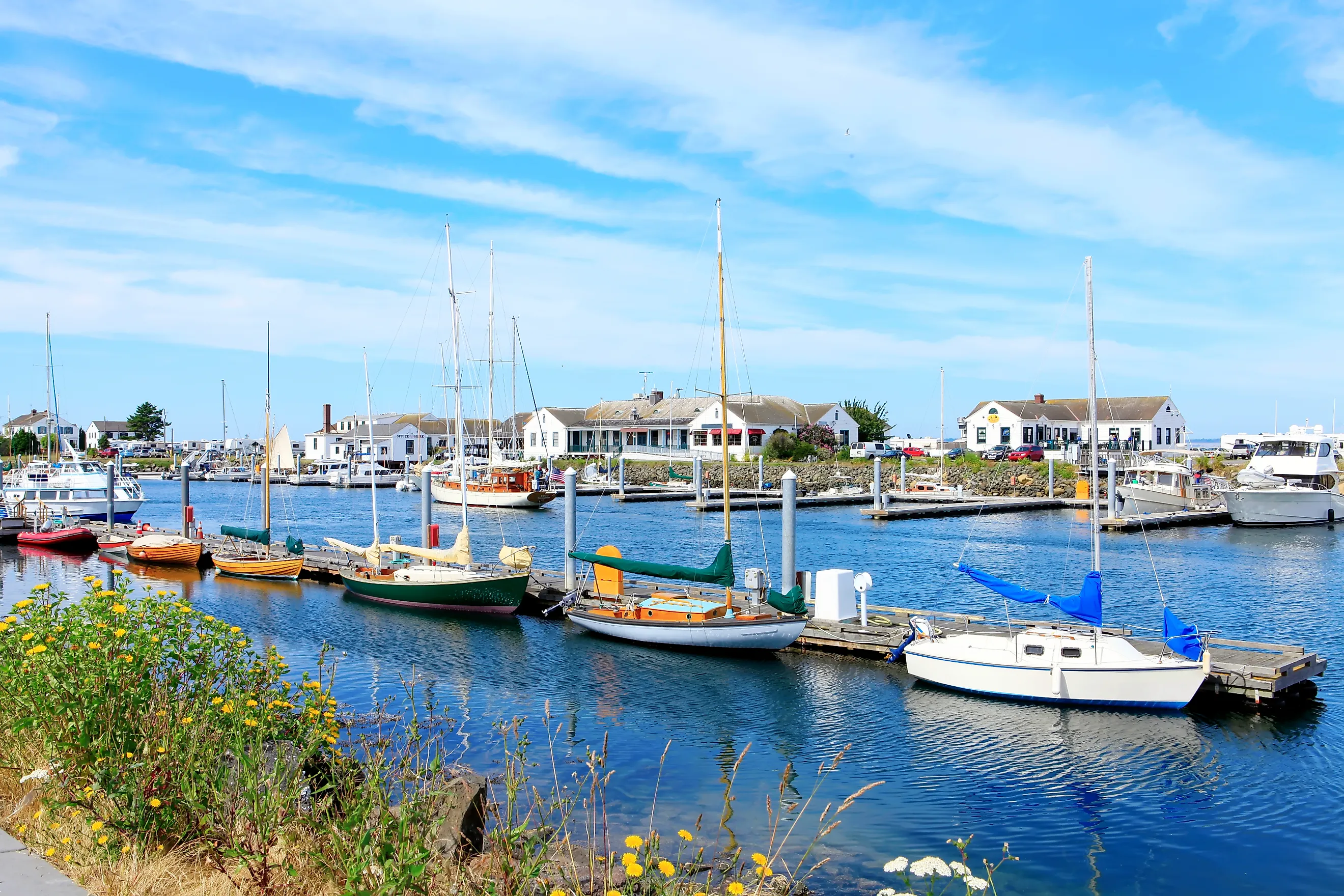
Port Townsend began as a Victorian seaport, and its downtown still shows the gabled storefronts and the Jefferson County Courthouse clock tower of the late 1800s. Fort Worden, now a state park on the bluffs above the water, mixes old military batteries with beaches and forest at the entrance to Puget Sound in Washington. North Beach County Park looks straight out across the Strait of Juan de Fuca, exposed to the wind coming down from Canada. Waterfowl work the tide pools, the American wigeon and several kinds of teal among them.
Chetzemoka Park spreads over gentle slopes above the shore, with fire pits, picnic tables, and open lawn for weekend barbecues. The Point Wilson Light still guides ships in from the strait at the edge of the inlet. The Jefferson County International Airport, just outside town, is home to the Port Townsend Aero Museum, which restores and displays antique aircraft from the early decades of flight.
Trinidad, California

Trinidad is one of California's smallest incorporated cities, on the coast about 15 miles north of Arcata. Trinidad Head, a high green promontory tied to the mainland by a narrow neck of sand, gives the town its profile and its small working harbor. Just up the shore, Pewetole Island rises as a tree-topped rock near the mouth of Mill Creek, and at low tide College Cove opens a rare walk out toward it. The Yurok village of Tsurai stood on this bay for centuries, and its site remains part of the town's history.
Three state parks line the shore here. Sue-meg, the largest, was renamed from Patrick's Point in 2021 to honor the Yurok, and Trinidad State Beach and Little River State Beach flank the town to the north and south. The cliffs along Trinidad Bay belong to the California Coastal National Monument, and the offshore rocks shelter seabirds and sea lions. Summer fog rolls in off the cold water and leaves the town cooler than the inland valleys, feeding the forest pockets that surround it.
Astoria, Oregon

Astoria stands where the Columbia River widens and empties into the Pacific, the oldest American settlement west of the Rocky Mountains. The Astoria-Megler Bridge crosses more than four miles of the river mouth to the Washington shore, the longest continuous truss bridge in North America. Down on the waterfront, Old 300, a 1913 streetcar, has carried riders along the river since the line opened in 1999. The Columbia River Maritime Museum, right on the water, traces the river's fishing fleets and the shipping and naval traffic at its mouth.
The Captain George Flavel House, a Victorian mansion finished in 1885, is open to visitors with its period furniture and gardens intact. Fans of The Goonies will recognize the streets and houses the 1985 film used around town, and props from it and other films shot across Oregon are displayed in the Oregon Film Museum, set in the old Clatsop County Jail. Astoria also stages its own past each summer in Shanghaied in Astoria, a melodramatic musical that locals tend to recommend.
Seaside, Oregon

Seaside lies west of Saddle Mountain, whose summit trail rewards hikers with a long view over the Coast Range. The Necanicum River and its side streams wind through town before reaching the sea, giving Seaside a near-island shape. This is the spot where the Lewis and Clark expedition reached the end of its westward push, marked by a turnaround monument at the south end of the promenade. On the first weekend of each month, the Gilbert District along Broadway opens its galleries for an art walk.
Summer brings the bigger crowds. The Seaside Beach Volleyball tournament is one of the largest amateur competitions of its kind anywhere, and the Civic and Convention Center hosts the Miss Oregon pageant, whose winner goes on to represent the state. Surfers ride the waves off Ocean Vista Drive, many of them coming down from Tillamook Head. North of town, Gearhart trades Seaside's busy boardwalk for quieter streets, and the land turns to cranberry bogs and small farms as the coast gives way to the interior.
La Push, Washington

La Push is an unincorporated village on the Quileute Reservation, about 15 miles west of Forks at the mouth of the Quillayute River. The weather here is grey and wet for much of the year, and the winter dusk over the sea stacks gave the Twilight novels and films their Pacific Northwest mood. First Beach, the broad strand below the village, faces a line of offshore rocks and the forested wedge of James Island just past the rivermouth. The Pacific Northwest Trail, which begins at the Continental Divide in Montana, ends at the ocean on the wilderness coast north of here.
The Quileute Tribe has lived at La Push for thousands of years and treats the village as its cultural center. Quileute Days, held each July, opens the community to visitors for fireworks and traditional handcraft displays. The Quileute Marina sends fishing charters and sightseeing trips out past James Island, and River's Edge Restaurant has a long reputation for seafood. Near the water, the Fisherman Memorial honors Coast Guard members and others lost at sea.
Cordova, Alaska

Cordova has no road connecting it to the rest of Alaska. The town reaches the outside world by ferry across Prince William Sound or a 45-minute flight from Anchorage, the nearest big city. It works as a major fishing port on Orca Bay, near Hawkins and Hinchinbrook Islands, with bears, wolves, and moose ranging the country around it. This is south-central Alaska, where the Pacific coast picks up again past the Canadian panhandle, milder and greener than the Arctic interior most people picture.
The Copper River Delta, just east of town, is one of the largest contiguous wetlands on the Pacific coast of North America, taking in Sheridan Glacier and Eyak Lake. Each spring, trumpeter swans, bald eagles, and millions of shorebirds stop over on the delta, and the Copper River Delta Shorebird Festival marks the migration. In summer, kayakers put in for trips across Prince William Sound. Mount Eyak rises above town with a small ski area served by one of the oldest chairlifts in the country, and the Eyak and Chugach peoples mark their traditions through events like the midwinter Iceworm Festival.
Cambria, California

Cambria lies on California's Central Coast, about halfway between San Francisco and Los Angeles and well off the freeway that connects them. Tourism drives the local economy, built on the rocky coves, the pine forest, and prices easier than the bigger resort towns down the highway. The walkable heart of town follows Moonstone Beach Drive and Burton Drive, lined with restaurants, galleries, and inns. The Guthrie-Bianchini House is home to the Cambria Historical Museum, and the 1922 Camozzi's hotel and bar carries on as Mozzi's Saloon.
Behind the beach, the Moonstone Beach Boardwalk follows the bluff past tide pools and viewpoints toward the Fiscalini Ranch Preserve. Cambria lies within one of the last native stands of Monterey pine, which the town works to protect. North along the coast in San Luis Obispo County, the Piedras Blancas rookery hosts thousands of northern elephant seals hauled out on the sand, and the nearby marine reserves guard the waters offshore. San Simeon, just up the road, adds campgrounds and a long view back toward town.
Anacortes, Washington

Anacortes occupies Fidalgo Island, partway between Seattle and the Canadian cities of Victoria and Vancouver, and serves as the mainland ferry gate to the San Juan Islands. Padilla, Burrows, and Fidalgo Bays wrap the town, the last of them an aquatic reserve of salt marsh and eelgrass beds. The Tommy Thompson Trail follows the old rail line along the shore and out across the water on a trestle to March Point. Hiking, biking, and boating here all come with a good chance of seeing wildlife.
Cypress Island, limited to primitive recreation, brings whale-watching within reach offshore. The Oyster Run, the Pacific Northwest's biggest motorcycle rally, brings tens of thousands of riders into the streets each fall, and the Anacortes Arts Festival has drawn around 80,000 people downtown for community art, jazz, and blues over the first weekend of August for more than sixty years. Mount Erie, a rock-climbing site, tops out near 1,300 feet with a wide view of the islands. The Majestic Inn, built in 1890, remains the town's landmark hotel, and Alexander Beach nearby trades it for beach houses and cabins.
McKinleyville, California

McKinleyville is an unincorporated community north of Arcata, the kind of place travelers pass through on the way to somewhere else, helped along by the Arcata-Eureka Airport and Humboldt County's road network. It tends to get warmer, clearer weather than its foggier neighbors. Clam Beach County Park reaches the Pacific on the west side of town, and small ponds and the Little River lie inland to the east. The Widow White Interpretive Trail makes a short loop good for birdwatching and dog walking, with no need to backtrack.
The Mad River cuts through the area, feeding the Azalea State Natural Reserve and the Arcata Community Forest along with a web of smaller creeks. The Cal Poly Humboldt Natural History Museum, just south in Arcata, shows fossils from the Maloney Collection alongside Native American artifacts, with dinosaur bone casts and meteorites that visitors can handle. McKinleyville is home to the Wiyot and Yurok peoples, whose presence reaches back generations here. Each summer, Pony Express Days takes over Pierson Park with cook-offs, craft shows, and a parade.
Manzanita, Oregon

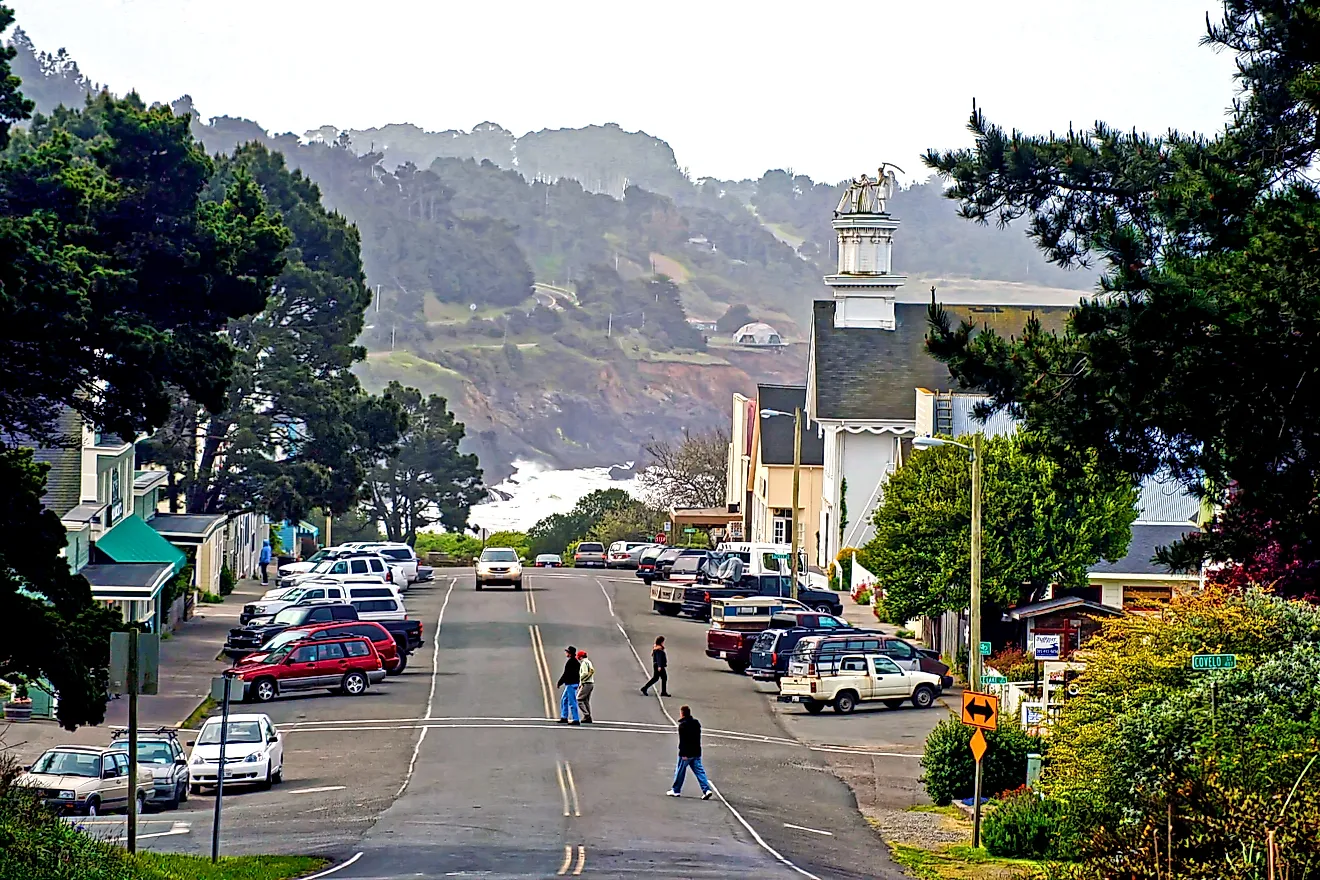
Manzanita lies below Neahkahnie Mountain on the north Oregon coast, on land the Tillamook people held for thousands of years. It is the closest beach town for travelers coming from Portland, about 85 miles east. Nehalem Bay State Park stretches along the sand spit south of the village, with walking routes beside the dunes and campsites set among black bears, coyotes, and the occasional mountain lion. North of town, the headland at Neahkahnie catches the long evening light over the water.
The area has one of the coast's stranger histories. The Cronin Point site has turned up protohistoric artifacts, including fire-cracked rock and shards of glass and ceramic tied to the Beeswax Wreck, the Spanish galleon Santo Cristo de Burgos, lost off this coast in the late 1600s. For lighter fare, Manzanita supports several art galleries, among them the Hoffman Center and the Kathleen Hickey Studio. Each year, the Manzanita Beach Walk and Run doubles as a community fundraiser for the fitness center in nearby Nehalem.
Where The Pacific Coast Goes Quiet
What ties these towns together is not the scenery alone but the distance. Crescent City guards groves of the tallest trees on Earth that no trail will ever reach. Cambria stands a deliberate distance from the freeway between Los Angeles and San Francisco. Anacortes faces the islands and the Canadian border, not the cities a short ferry ride behind it. The Pacific along this coast is colder and rougher than its reputation, and the towns scattered beside it are quieter for it.