10 Iowa Towns With Unforgettable Main Streets
You can tell a lot about a town by walking its main street, and in Iowa, those few blocks get surprisingly ambitious. Pella hauled an actual Dutch windmill across the Atlantic and planted it near Franklin Street. Burlington's downtown grid includes a brick alley so crooked that Ripley's put it on the map. Decorah built a national museum on Water Street, Elkader cooks Algerian food beside an 1889 stone bridge, and Orange City dug itself a canal. These ten Iowa downtowns each make their case in just a few blocks.
Pella

Settled in 1847 by 800 Dutch immigrants, Pella still looks the part because it keeps importing the look. The Vermeer Windmill was built in the Netherlands, taken apart, and reassembled here in 2002. At 124 feet, it stands as the tallest working grain windmill in North America, and you can climb all five levels to watch wind power grind wheat into flour. Down Franklin Street, the Klokkenspel chimes several times a day while its mechanical figures parade past: a blacksmith, Maria and Dominie Scholte, and a young Wyatt Earp, who spent his boyhood here. One street over, the Molengracht Plaza wraps shops and a cinema around a canal with a working drawbridge. And the orange-brick Pella Opera House, built in Romanesque Revival style in the early 1900s, still packs in touring acts and community theater under a restored pressed-tin ceiling.
Decorah

Decorah keeps one of the country's strongest Norwegian communities alive, and Water Street is its front door. The Vesterheim is the largest museum in the United States devoted to a single immigrant group. It holds more than 33,000 artifacts across 12 historic buildings, and its Folk Art School runs over 100 classes a year in rosemaling, woodworking, and blacksmithing. A few doors down, the Hotel Winneshiek still takes guests beneath a three-story octagonal rotunda capped with stained glass. Dragonfly Books commands a loyal following with its deep regional shelves. And where College Drive crosses the Upper Iowa River, Pulpit Rock Brewing pours IPAs and porters against reclaimed barn-wood walls, with heated igloo seating when the snow flies.
Winterset

Winterset wraps its best around the courthouse square. The Iowa Quilt Museum fills an 1880s building that spent decades as a J.C. Penney, hanging contemporary quilt art beside historic textiles. Around the corner on John Wayne Drive, named for the actor born a few blocks away, the Iowa Theater still lights its Art Deco marquee for first-run films and classic movie nights. Next door, Bakery Unlimited took third in USA Today's national readers' poll for best donut shop two years running, and the Saturday morning line out the door backs up the ranking. Down the way, Frostee's keeps it simple: soft-serve, old-fashioned walk-up service, done.
LeClaire

Just up the Mississippi from Davenport, LeClaire stacks its history along Cody Road. River pilots built this stretch, and the nine-block historic district still wears their 19th-century storefronts. The Buffalo Bill Museum digs into the life of hometown legend William F. Cody, and the preserved sternwheeler Lone Star lets you walk the deck of a real wooden-hull riverboat. A couple of minutes away, the Mississippi River Distilling Company turns local grain into whiskey, gin, and vodka, and its Cody Road Cocktail House pours the results over river views. Got a full day? The Riverboat Twilight runs one- and two-day cruises on the Mississippi, and Aunt Hattie's Fanciful Emporium rewards anyone willing to dig for antiques and oddments.
Elkader

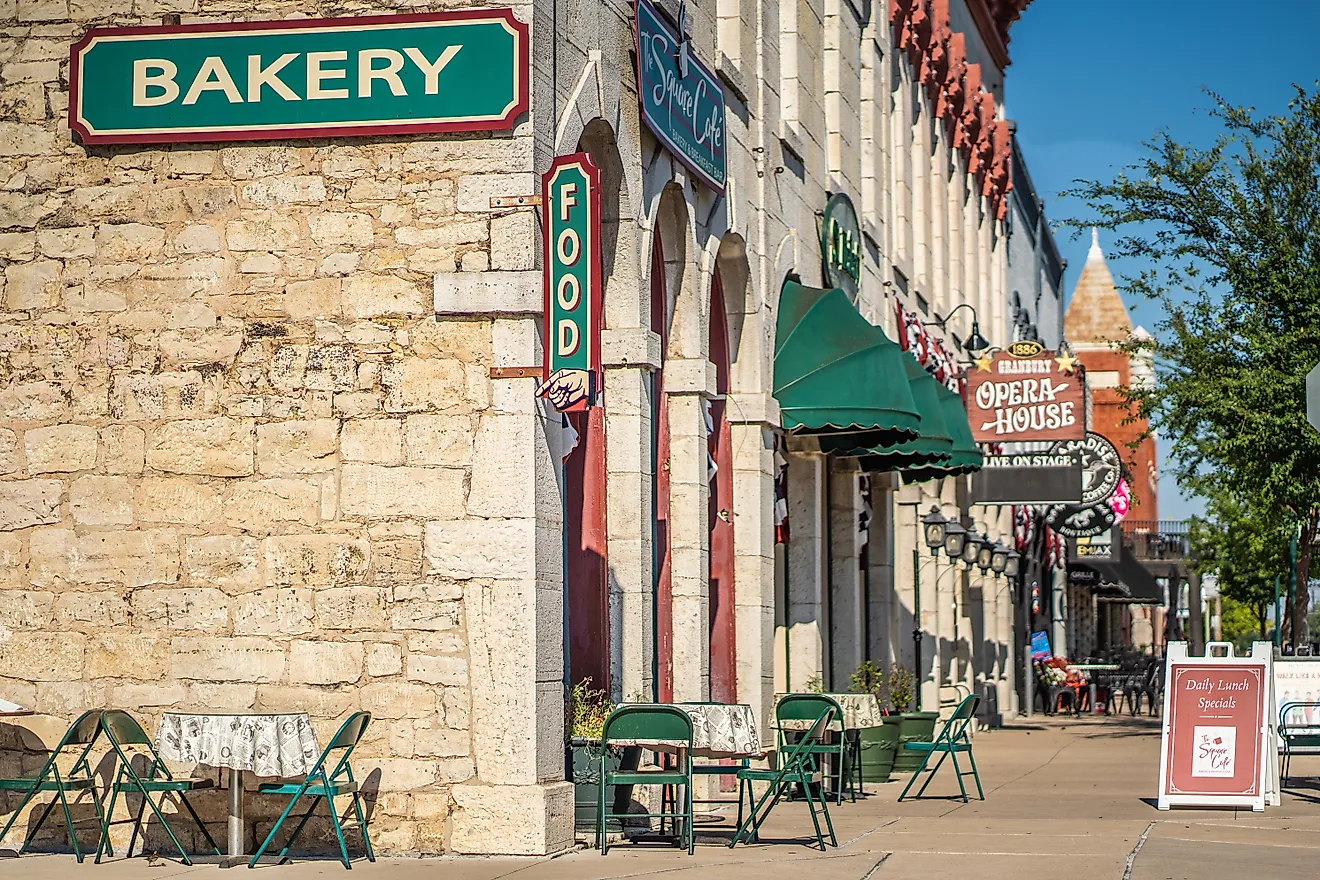
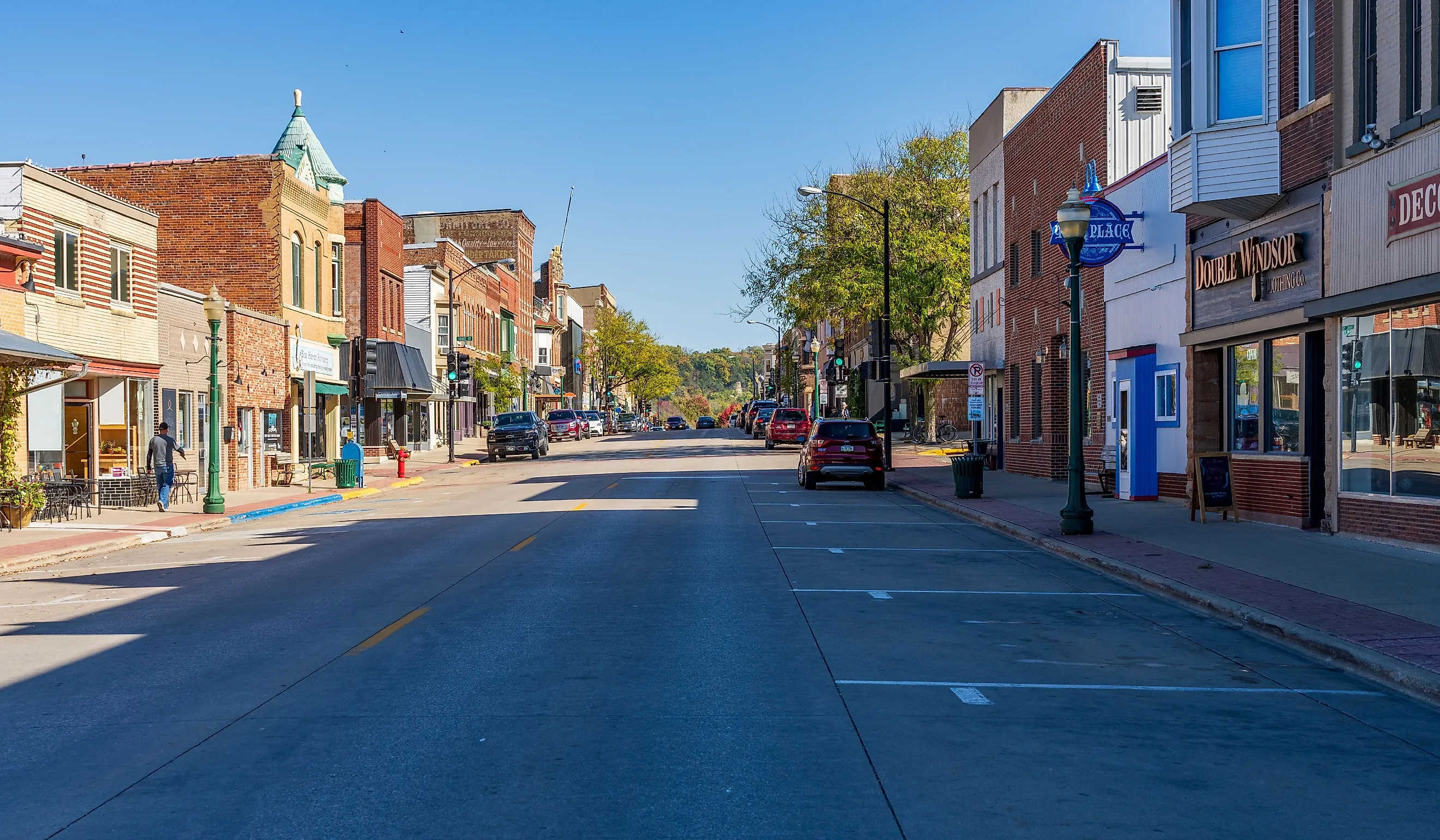
Elkader's Main Street tips downhill toward the Turkey River through a National Register historic district, its Victorian brick storefronts among the most striking in the state. The Elkader Opera House anchors downtown with a year-round slate of concerts and theater, plus a horseshoe balcony, a ruby-glass chandelier, and an original advertising curtain. Down the street, Schera's serves tagines beside burgers, a rare Algerian-American kitchen honoring the emir the town was named for, with a patio hanging over the Turkey River valley. Turn at the intersection for the Keystone Bridge, a twin limestone-arch span raised from local stone in 1889. Across from Schera's, the Turkey River Mall hides hundreds of antiques in a maze of floors that swallows an afternoon.
Amana

About 20 miles from Cedar Rapids, Amana wears its history plainly, with brick paths and communal buildings that have barely changed in a century. The Millstream Brewing Company kicked off Iowa's craft beer scene as the state's first microbrewery in 1985, and its taproom still pours house lagers and wheat beers to a biergarten crowd. About half a mile away, the Ronneburg Restaurant has dished out schnitzel and sauerbraten family-style since 1950. The Amana Heritage Society traces the colony's path from its Inspirationist roots in Germany through decades of communal living in Iowa. And at the Amana Woolen Mill, the last working woolen mill in the state, the looms still clatter while visitors watch.
Orange City

Orange City turns Central Avenue into a slice of the Netherlands. Windmill Park sits at the center, where six replica Dutch windmills rise beside a canal, a lifting bridge, a town pump, and thousands of spring tulips. Down the street, the Sioux County Courthouse makes its own statement: red Sioux Quartzite, a billion-year-old stone, stacked into 1904 Richardsonian Romanesque and crowned by a bronze statue of Justice. The Fox Hole turned the old Cambier Motor Company building into one of downtown's busiest restaurants, slinging steaks, gourmet burgers, and a long cocktail list. In season, the Orange City Farmers Market spreads down Central Avenue with pies, jams, fresh flowers, and farm eggs.
McGregor

McGregor earned the nickname "Pocket City" by wedging a half-mile of downtown between the Mississippi and 500-foot limestone bluffs. The McGregor Historical Museum covers the town's steamboat, railroad, and Native American past, but the showstopper is the work of Andrew Clemens, a deaf artist who spent the 1870s and 1880s packing impossibly detailed scenes into glass bottles, one grain of colored sand at a time. A short walk away, the Left Bank Shop and Gallery shows work from more than 70 regional artists, while River Junction Trade Co. outfits reenactors and film crews with historically accurate 19th-century clothing. By The Spoonful rounds it out with Iowa- and Midwest-made meats, cheeses, and pantry goods.
Burlington

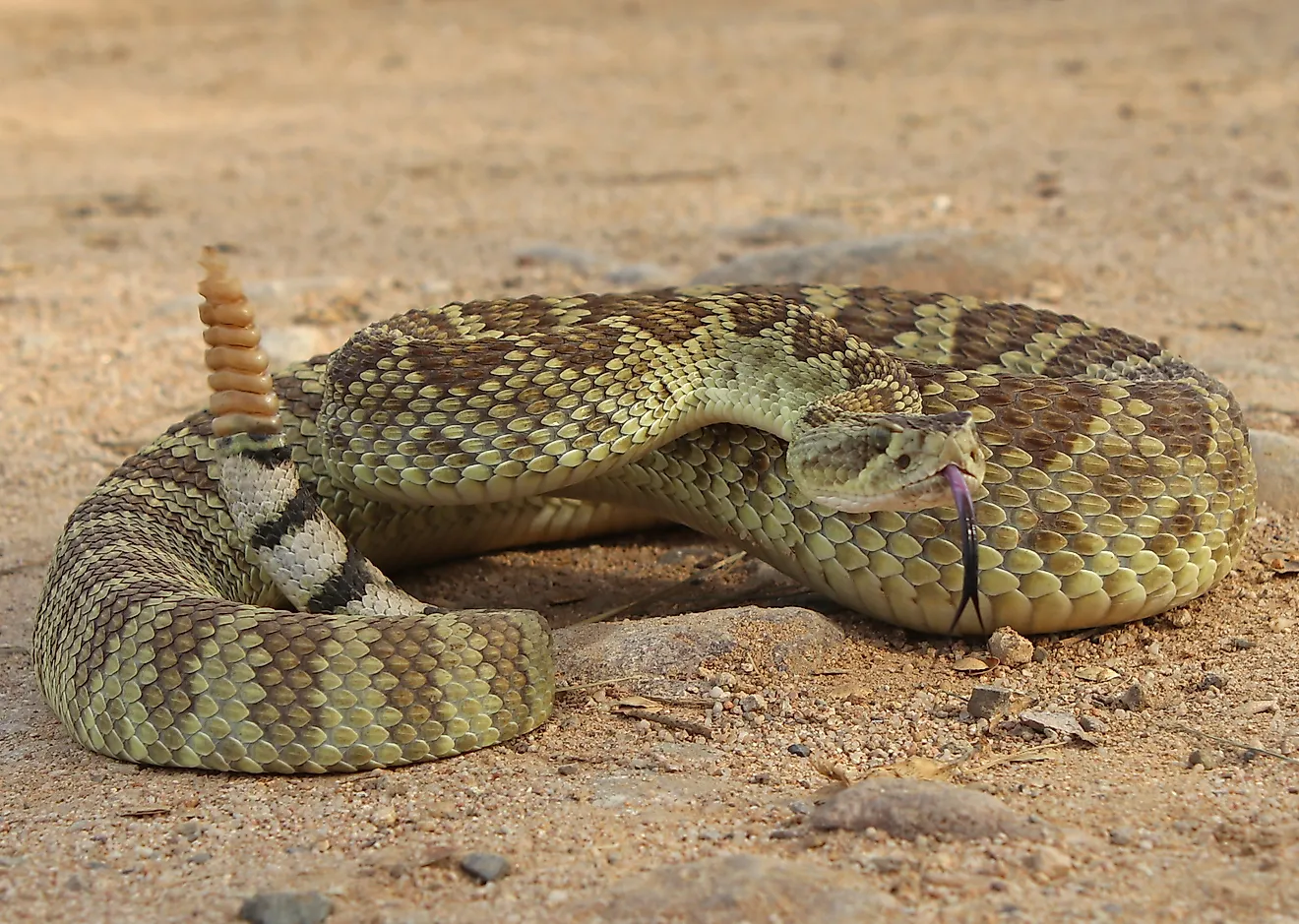
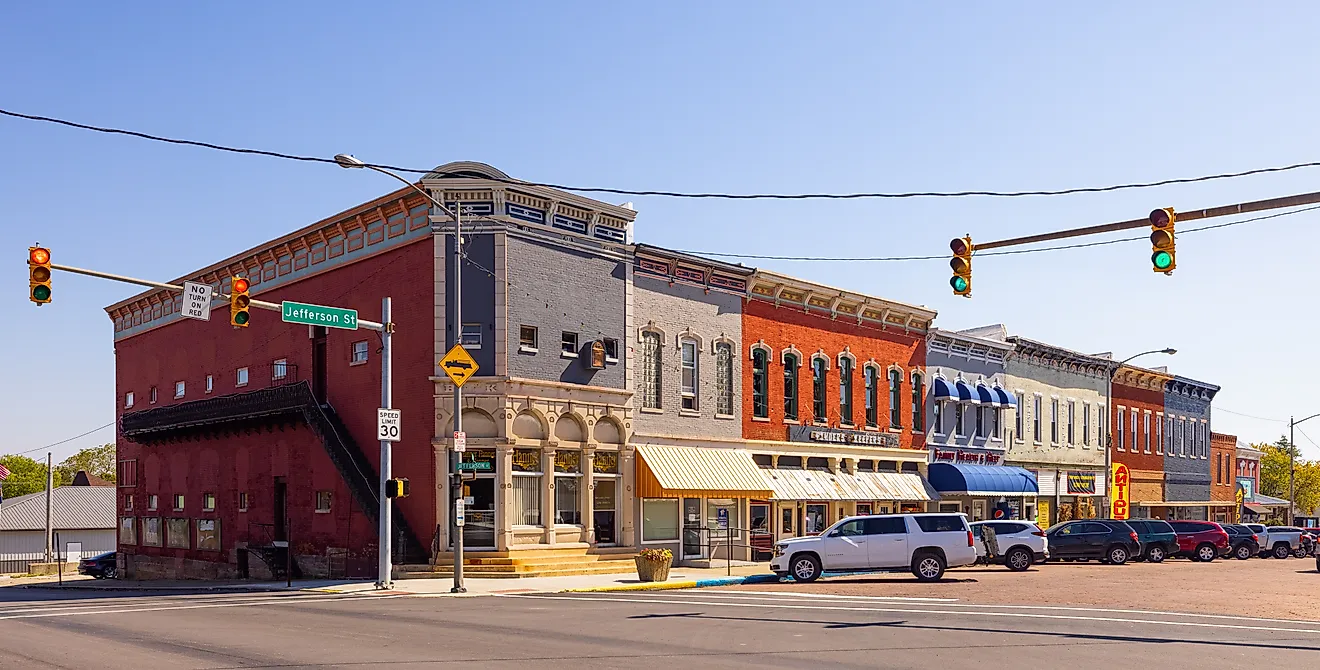
Burlington keeps its 19th-century brick downtown largely intact, but its most famous feature drops in from above. Snake Alley corkscrews down a steep hillside in five half-curves and two quarter-curves, beating San Francisco's Lombard Street to the crooked-street game by decades, and Ripley's once crowned it one of the oddest spots in America. Every Memorial Day weekend, cyclists punish themselves grinding up it in the Snake Alley Criterium. On Jefferson Street, the Art Center of Burlington runs year-round classes and gallery shows and hosts the Snake Alley Art Fair. A minute away, the 1937 Art Deco Capitol Theater sat dark for 35 years before a full restoration brought it back, and it now books concerts, films, and the Snake Alley Festival of Film, while The SOM serves globally minded comfort food down the block.
Mount Vernon

Mount Vernon owes a lot of its energy to Cornell College, and First Street shows it. The Lincoln Winebar made The New York Times' 2024 list of the country's 22 best pizzerias, the only Iowa restaurant to crack it, firing Neapolitan pies in an Italian-built wood oven with whatever Iowa farms have in season. Down the block, the First Street Community Center fills a former school with artist studios, small businesses, and event space. Every May, Chalk the Walk turns the pavement itself into a canvas, with professionals and amateurs working side by side. And Yock's Landing holds down the classics: diner fare, ice cream, and a front-row seat on downtown.
Main Streets In Iowa
Iowa's main streets pack a lot of ambition into a few blocks. Decorah's Water Street holds the country's biggest Norwegian-American museum, Amana still runs a working woolen mill, and Elkader pairs a restored opera house with a stone-arch bridge from 1889. Mount Vernon leans on college-town energy while Pella and Orange City go full Dutch. Each one gives you a reason to park the car, walk a few blocks, and look closely.