6 Old-Timey Mining Towns In Montana
Montana may be famous today for skiing and celebrity ranches, but in the 19th century, life revolved around mining. The town of Butte had silver running through its veins, while Virginia City was founded after a gold discovery in Alder Gulch. Anaconda had its own copper king, and Helena boasted 50 millionaires by 1888. Much of the historic vibe remains today, even though these towns have pivoted away from actual mining. Visitors who want to experience the old frontier will find the following old-timey mining towns the perfect destinations for a road trip.
Butte

Once known as 'The Richest Hill on Earth', Butte made people rich and helped create jobs for thousands of immigrants who wanted to be rich too. Gold prospectors had completely taken over the mile-high basin by 1864, and as they worked, they also found silver. By 1876, Marcus Daly pitched up in town and found a job as manager of the Alice silver mine. The town continued to prosper, with nine million pounds of copper produced in 1882, and supplying more than 26% of the world supply by 1896. The town was run by three copper kings, including Daly, before the mines eventually became quiet and people started moving away.
Today, this mining boomtown, also called 'The Copper City,' draws visitors from all over the country. And its main attractions include its incredible mining history. People can take the Butte Trolley tour, which includes a stop at the Berkeley Pit. There is also the World Museum of Mining, an open-air museum featuring a recreated 1890s mining camp and built atop the Orphan Girl Mine. The museum offers a tour that takes visitors 100 feet underground, where they can experience what mining was like more than a hundred years ago. Another must-see is the Copper King Mansion, which boasts 34 rooms and a staircase that was on display at the 1904 World's Fair. Those who want to see a bit of the outdoors in Butte can head to Thompson Park, which offers 25 miles of biking and hiking trails and access to the Continental Divide Trail.
Anaconda

Marcus Daly also established Anaconda in 1883, just 25 miles away from Butte. Anaconda was going to be called Copperopolis, but had to settle for the name it has now after it was discovered the first choice had been taken by another town. It took only a year for Anaconda to build four hotels and twenty-four stores. There were two churches, a bank, and a skating rink. And as it behooved mining towns, there were at least 20 saloons. The turn of the century brought with it grumblings among the miners who worked in town for the Anaconda Copper Mining Company. Along with employees of other western states, miners talked of striking. This was not the end of the troubles, and by 1980, the last of the town's smelters closed down.
Anaconda transformed itself into a tourist town to survive, but its history remains palpable. Visitors can learn more about this history while exploring the tourist attractions Anaconda offers. The 1936 touring bus takes people around town to see the old buildings dating back to the smelting days. The Smoke Stack is so tall it is visible from the I-90. Visitors can see exhibits and interactive displays at the Copper Village Museum & Art Market. There is also the Smeltermen's Day festival, held every August. The event takes place over three days and honors the smelter workers who helped the town thrive. Visitors who want to swim or hike will find the nearby Georgetown Lake and surrounding hiking trails ideal for a day of outdoor fun.
Philipsburg

Thirty miles from Anaconda lies another old-timey mining town. Philipsburg was settled in 1866, and by 1867, the first mill was erected here. The town was also officially registered that year and then saw growth at the rate of 'one house a day.' Before the end of 1867, Philipsburg had at least 1500 residents, 7 saloons, a Masonic hall, 6 general stores and two breweries. New mills sprang up throughout the 1870s, and in 1881 the Hope Mine started producing ore. Philipsburg went from strength to strength until the repeal of the Sherman Silver Purchase Act in 1893.
Mining eventually stopped in the 1980s, and the ruins of the Bimetallic Mill are one of many reminders today of what the town once was. The downtown area is small, but there is plenty to see, including the Philipsburg Brewing Company and the famous The Sweet Palace, where visitors can buy all the candy they could want. In winter, visitors can enjoy more than 2,200 acres of ski terrain, and in summer, Georgetown Lake is great for kayaking, fishing, and boating. Granite Ghost Town State Park is only 20 minutes away, where visitors can explore what remains of a 1890s silver boomtown.
Helena

Helena was settled in 1864 after gold was found in Last Chance Gulch by the 'Four Georgians.' Despite the men's attempt to keep the gold for themselves, more miners arrived, after which the name of the town was decided upon and the streets laid out. Mining law was also implemented. Soon, trade boomed, and hotels and business blocks were constructed. The railroad arrived in 1883, and by 1888 there were more millionaires per capita in Helena than in any city on Earth. Even so, mining operations dwindled at the turn of the century, and Helena's attention turned to politics and finance.
In 2026, Helena continues to flourish, and its 19th-century mining town look draws hundreds of visitors. There are several Victorian mansions to see here via the Last Chance Tour Train. The tour guide tells the stories of Helena's millionaires and gives information about the mansion district. The ExplorationWorks Science Museum is a great outing for families with its water table and interactive displays. Next to the museum, families can enjoy the Great Northern Carousel, with hand-carved animals to see and ring games to play.
Red Lodge

Custer Gallatin National Forest hugs Red Lodge, a town once highly attractive to the Crow tribes. Anglo pioneers settled in the area in 1882 after the discovery of coal in 1866 and gold in 1870. A mining community was established, and by 1887 the Rocky Fork Coal Company started mining coal on a commercial scale. The town's success escalated to the point where 20 saloons were opened, and the first deputy sheriff was appointed. After the railroad arrived, immigrants from places such as Germany, Sweden, and Finland followed. Hard times were not far behind, however, since mining activities declined after 1915.
Strip mining meant fewer jobs for underground coal miners, and the mines began closing down. During the Great Depression, citizens turned to bootlegging, selling moonshine throughout the west. Then the tourism industry took over with Yellowstone National Park and the Beartooth Scenic Byway. Thanks to the proximity of the park and the highway, Red Lodge remains a major tourist attraction. The local art also draws lots of people, especially to Kevin Red Star's gallery, where bold paintings depict local Indigenous people. After admiring the artworks, visitors can stop by the Carbon County Historical Society and Museum to learn more about the immigrants that once called Red Lodge home. Those who visit over July 4th can also catch a traditional rodeo along with all the other festivities.
Virginia City

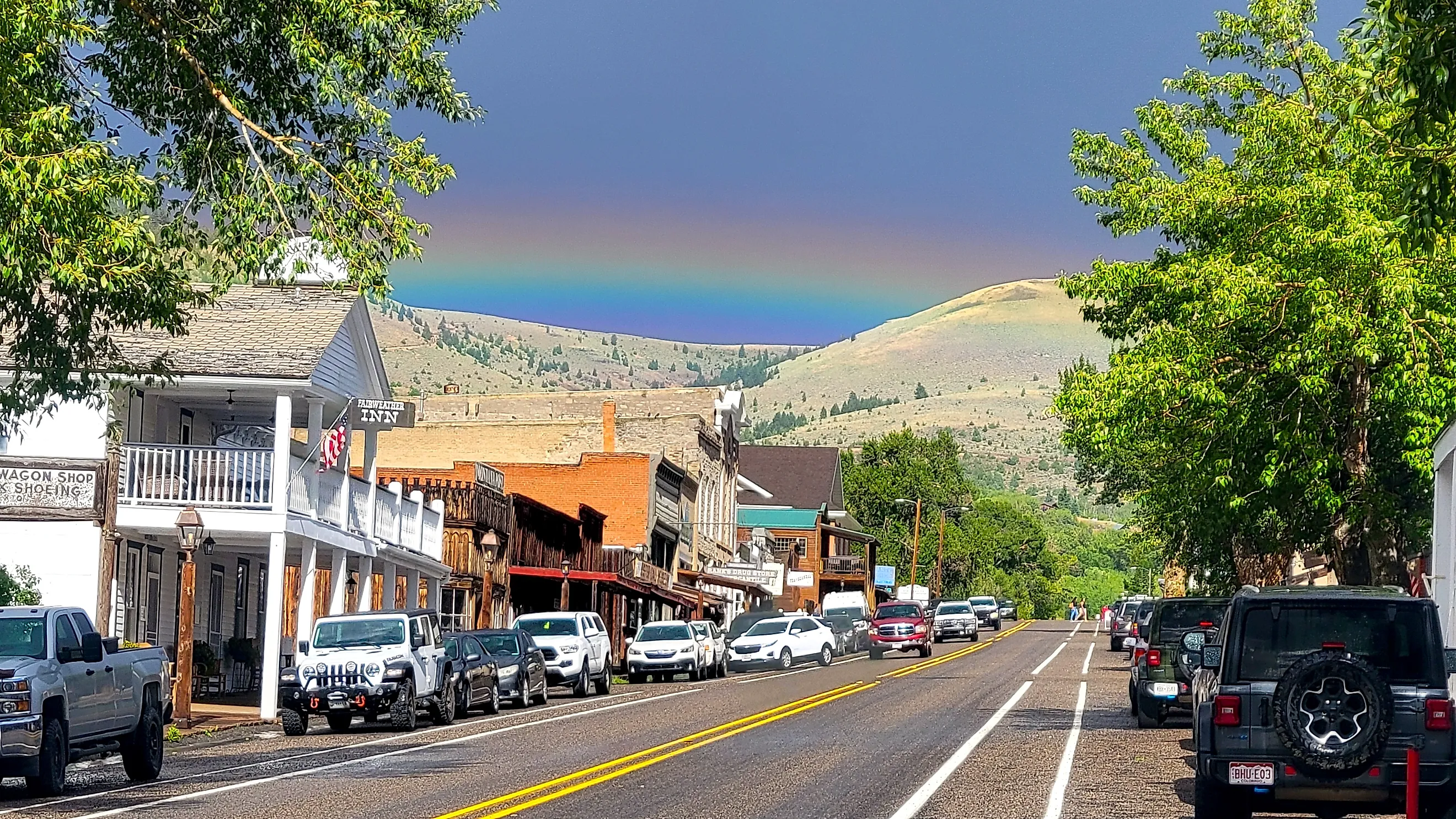
The last old-timey Montana mining town on this list is tiny Virginia City. By some estimates, the Alder Gulch mining district produced well over $100 million in gold during its heyday. The first gold deposit was discovered in 1863, and it allowed the area to grow quickly. By 1864, there were 10,000 residents in the area, all looking for gold. What set this town apart from the other mining towns was how violent it became. A gang of road agents was blamed for a string of robberies and killings along the routes out of the gulch, which led to the establishment of the Montana Vigilantes in late 1863. Over the following weeks, the vigilantes hanged those they held responsible, among them Henry Plummer, the sheriff of nearby Bannack.

Gold mining expanded to lode mining, and when the gold eventually dried up, the town's population shrank. Today, Virginia City is a peaceful place where people can still pan for gold in the River of Gold and ride the Alder Gulch Shortline Railroad. Between Memorial Day and Labor Day weekend, most saloons and shops are open, making it the best time to visit. And, Cousins Candy Shop is a must-visit for those who love colorful candies.
Discover The Living Old West
Montana's old mining towns are fascinating destinations. There are copper hills to see in Butte and wooden boardwalks in Virginia City. The streets and buildings hark back to a time when people were chasing quick fortunes and gold rushes took over the landscape. Even though the smelters have faded into obscurity and the mines have been cleared out, the spirit of the Old West remains. If you are looking for a road trip to remember, Montana's boomtown history is ready for you.