This Is The Rockies's Quirkiest Little Town
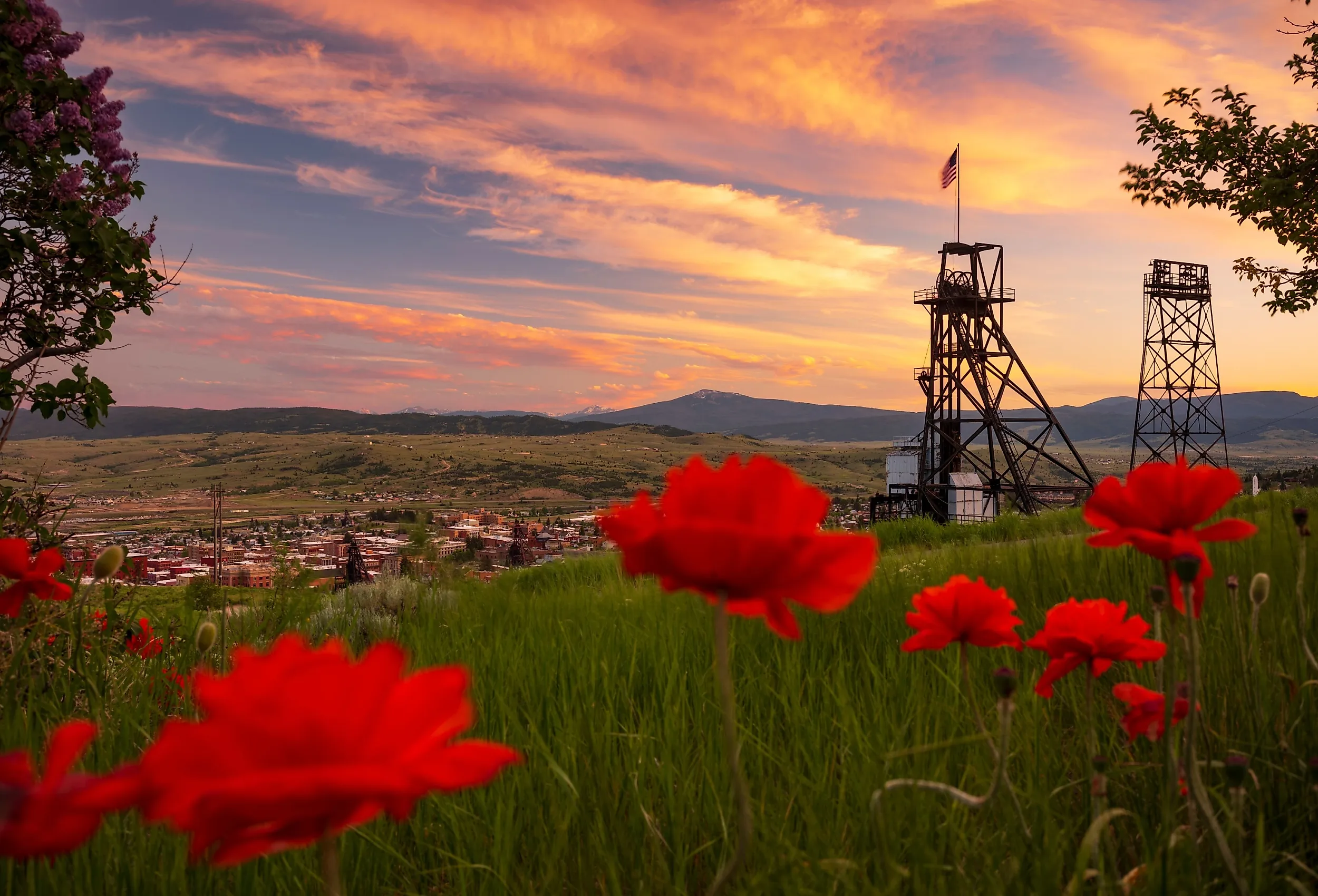
Butte, Montana is one of America's most classic blue-collar towns. It developed rapidly around one of North America's major copper mining districts. Its layered industrial history still shows up everywhere in town through museums, landmarks, and operating mines.
Butte's past is especially preserved at local favorites such as the World Museum of Mining and the former Dumas Brothel, both tied to its boomtown era. The 90-foot Our Lady of the Rockies statue, completed in 1985, ranks among the largest religious monuments on the continent. Pipestone Pass and the Beaverhead-Deerlodge National Forest add nearby outdoor draws shaped by the region's transportation history and recreation use.
Continue on to learn more about this quirky town of around 35,000 residents, and see if it will provide the kinds of novel experiences you may appreciate.
An Iconic Mining Town, Now with a Surprisingly Robust Outdoor Scene

Sitting near the Continental Divide in southwestern Montana, Butte originally developed near the end of the Civil War in the mid-1860s after large deposits of silver and, more significantly, copper, were discovered in the surrounding hills. What began as a camp then quickly expanded into one of the most productive hard-rock mining districts in all of North America. By the early 1900s, Butte was dominated by large-scale underground operations controlled by companies such as the Anaconda Copper Mining Company, which immensely shaped the city's economy and settlement patterns for decades to come.

The landscape retains clear evidence of its past as a magnet for mines, especially around the Berkeley Pit and the collection of historic mine headframes that still define the skyline today in the modern city core.
The topography of Butte is still exemplified by its steep, mineral-rich slopes, tailings piles, and exposed rock formations that reflect more than a century of excavation. It, as you might imagine, sits at a remarkably high elevation, too, nearing 5,540 feet above sea level on a broad basin, with even higher peaks all around, forming a 360-degree backdrop. With that, winters are cold and snowy, drawing in skiers each season, while summers are generally dry and perfect for hiking, horseback riding, and biking.
Interesting Attractions in and Around Butte

From old industrial operations and oversized monuments in town, to some of the Rocky Mountains' most underrated parks and outdoor recreation areas close by, here are a handful of the must-see and do locales you should check out the next time you find yourself in Butte.
World Museum of Mining

The World Museum of Mining is an open-air museum located on the site of the historic Orphan Girl Mine. It preserves and interprets the region's mining history through a variety of reconstructed streets, old-timey industrial structures, and extensive exhibits of equipment and other artifacts.
Here, you are free to tour underground workings, including the Orphan Girl Mine itself, which provides direct insight into the often dreary conditions of early labor practices. The museum also features restored headframes, machinery displays, and hosts guided tours that go into detail on how copper extraction shaped Butte's development.
This remains one of the most significant heritage sites in Montana, and a key attraction for understanding Butte's economic past as well as its place in the region today.
Dumas Brothel

The Dumas Brothel in the heart of downtown Butte operated from 1890 to 1982 and is recognized as one of the longest-running brothels ever in the United States. Located in the city's historic red-light district, it served miners and residents during the area's peak mining era.
The building is a multi-story red brick structure designed with private rooms, a basement tunnel system, and a parlor area that still shows off its original function. After closing, it was preserved as a historic site and later converted into a museum, offering tours (seasonally, and every other Saturday) that put on display a quirky bit of local history, architecture, and the location's ultimate role in Butte's prosperous boomtown period at the edge of the Wild West.
Our Lady of the Rockies

The Our Lady of the Rockies statue overlooks the townsite from high in the adjacent mountains. This 90-foot monument, erected between 1979 and 1985, depicts the Virgin Mary and was inspired by local miner Bob O'Bill's promise to honor the saint after his wife, Joyce, seemingly miraculously survived serious cancer.
Its construction used volunteer labor and helicopters to help lift material, which was necessary due to the notably rugged terrain, making it almost impossible to drive supplies up by truck. The statue was completed less than a decade later and remains one of the largest religious monuments on the continent.
Visitors can reach the site via guided group tours. But please note that visits do require ticketed reservations, and that no private motor vehicles are allowed up.
Grave of Evel Knievel
You can come and see the final resting place of one of the world's most daring performers right here in Butte. The Grave of Evel Knievel is located in Mountain View Cemetery, with the gravesite still attracting fans who come to pay respects and recognize his impact and legacy on American popular culture, motorsport, and the stunt industry.
Born Robert Craig Knievel, he became internationally known for his motorcycle jumps and high-risk performances during the 1960s and 1970s. Following his death in 2007, he was interred in his hometown, maintaining his strong ties to the region even after his life ended.
Pipestone Pass

Pipestone Pass, just a 20-minute drive southeast of town, forms a natural corridor through the nearby Highland Mountains. The pass reaches an elevation of roughly 6,450 feet and has long served as a transportation route linking the Jefferson Valley with the Butte mining district. In the early 20th century, it became a key segment of the Chicago, Milwaukee, St. Paul and Pacific Railroad, which used the route for its electrified mainline through the Rockies.
Today, with its rugged, yet scenic terrain, full of rocky landmarks, alpine meadows, and seasonal snow cover, this pass is frequently used by hikers, cyclists, and motorists traveling secondary roads that follow historic rail and wagon alignments in the mountains.
Beaverhead-Deerlodge National Forest

Driving south of Butte on the I-15 will land you at the Beaverhead-Deerlodge National Forest, the largest national forest in Montana. It covers over 3.4 million acres of the pristine high country that surrounds Butte and extends toward the Idaho border, including multiple mountain ranges such as the Anaconda-Pintler, Gravelly, and Pioneer ranges, along with extensive river systems that feed the Missouri River watershed.
The landscape here boasts a diverse mix of conifer forests, alpine basins, sagebrush valleys, and glacially carved peaks, and supports recreational activities such as hiking, camping, hunting, fishing, and off-road travel via a network of trails and backroads. Moreover, it contains important wildlife habitat for elk, deer, moose, and grizzly bears.
There are also several ghost towns within the park, namely Coolidge and Elkhorn, that showcase mining/resource extraction communities in the region that didn't quite thrive as much as Butte did.
Make Butte Your Next Unique Travel Destination
Whether you are in the area to ski during winter or hike in the summer, be sure to also check out some of Butte's other interesting and memorable draws. This community may look a little rough around the edges at times, but it is a welcoming example of the kinds of places that built Montana into the state it is today, one that balances natural resource industries with immensely beautiful scenery.
.jpg)