11 Most Comfortable Massachusetts Towns For Seniors
Concord solved the retirement question in 1849, when it laid out a town where the bookstore, the pond, and the hospital all sit within a short drive of the same green. That is the Massachusetts formula: compact, walkable town centers built three centuries before anyone coined "walkability," layered with the best healthcare density in the country and cultural calendars that run deeper than most cities'. The state sweetens the deal where it counts for retirees, taxing no Social Security income and offering a property-tax circuit breaker credit for homeowners 65 and over. These 11 towns put the pieces together most comfortably.
Concord

Concord offers retirement with footnotes. The town where the Revolution's first day of fighting turned later became America's literary capital, home to Emerson, Thoreau, Louisa May Alcott, and Hawthorne, and their world is still the daily scenery: the Old Manse by the river, the replica Old North Bridge at the battle site, and Authors Ridge in Sleepy Hollow Cemetery, where all four writers rest a short walk apart. Walden Pond waits at the edge of town for the morning loop Thoreau made famous.

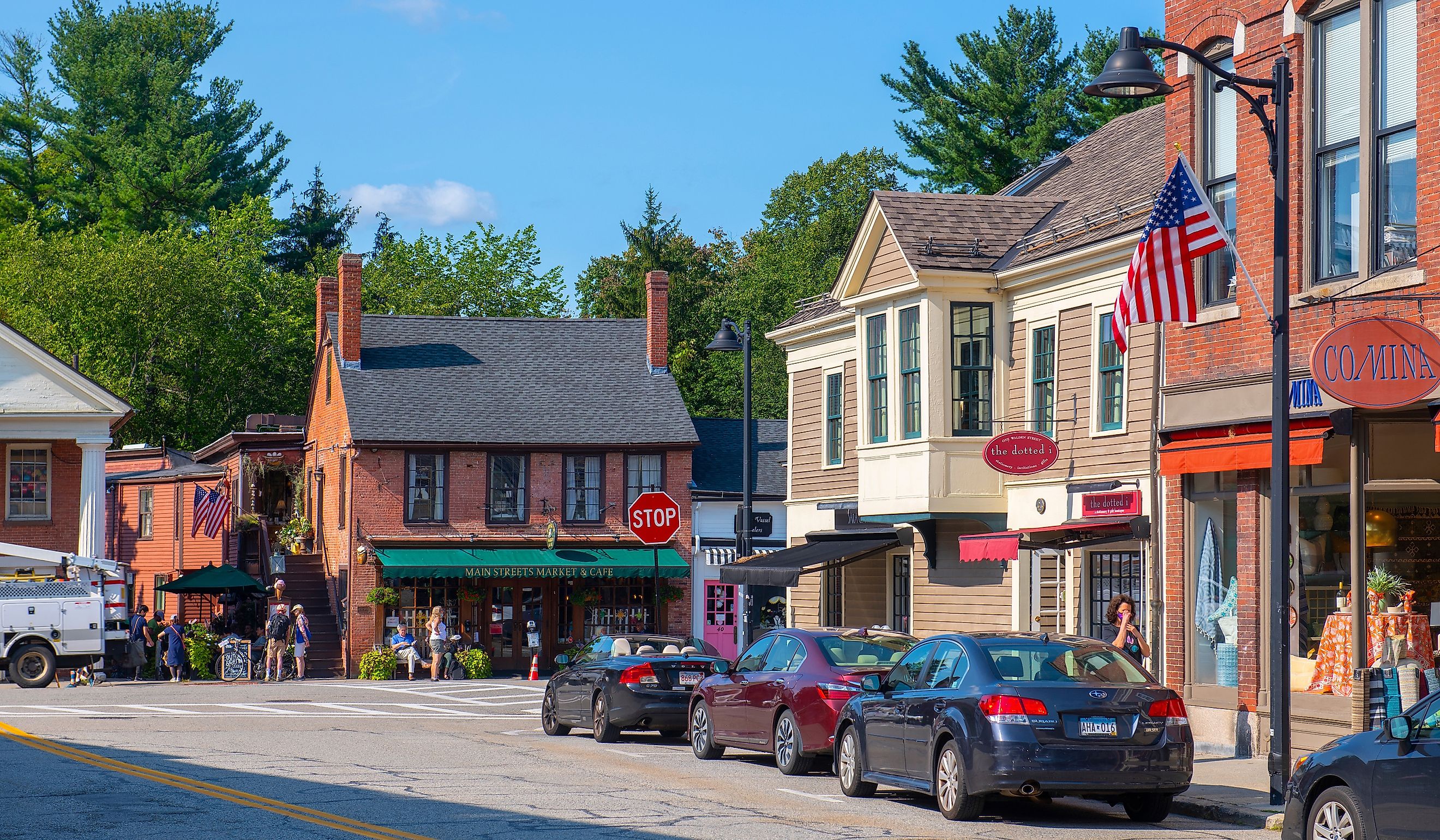
The practical side is just as settled. Emerson Hospital operates its main campus right in town, a genuine rarity among towns this size, the walkable center still includes Main Streets Market & Cafe, which has fed the town for more than a century, and Boston sits 45 minutes away for everything a world city adds. History, healthcare, and a bookstore town: Concord retires well.
Lexington

Lexington's town common is the Battle Green itself, where the first shots of the American Revolution rang out in April 1775, which makes an ordinary morning walk here a stroll through the national origin story. The Hancock-Clarke House still stands where Paul Revere's midnight ride roused John Hancock and Samuel Adams, and the recreated Old Belfry marks where the alarm bell called the minutemen out.
The town's best senior amenity is flat and paved: the Minuteman Bikeway, a rail trail running straight through the center, carries walkers and cyclists across four towns to the Cambridge line without a hill worth mentioning. Massachusetts Avenue keeps a full downtown of cafes and shops, Lahey Hospital & Medical Center sits one town over in Burlington, and downtown Boston is ten miles away. Few places pair this much history with this little friction.
Marblehead

Marblehead keeps one of America's most famous paintings in its town hall: "The Spirit of '76" hangs in Abbot Hall, free to visit, a fitting treasure for a harbor town whose crooked lanes date to the 1600s. The Old Town is a walker's museum of sea captains' houses, Fort Sewall's headland has guarded the harbor since 1644 and now serves as the town's best bench with a view, and Chandler Hovey Park frames the 1896 Marblehead Light, a rare skeleton-tower lighthouse whose only East Coast twin stands at Coney Island.
Harbor life sets the pace, with sailboats working one of New England's great yachting anchorages all season, and the compact downtown handles errands on foot. Salem Hospital is about ten minutes away, and Boston under an hour. Marblehead's motto is "Where History Comes Alive," and for retirees the operative word is alive.
Hingham

Hingham holds the oldest church in continuous use in the United States: the Old Ship Church, raised in 1681, its roof framed like an inverted hull by the ship's carpenters who built it, still gathering a congregation every week. The rest of the town keeps the same standard, with a handsome Main Street of colonial houses and a harbor that opens onto the Boston skyline.
World's End is the daily reward, a 251-acre peninsula of Olmsted-designed carriage paths, gentle gravel loops with harbor views in every direction, ideal for unhurried walking. The Derby Street Shops cover modern errands, South Shore Hospital sits about ten minutes away in Weymouth, and the commuter boat from Hingham's harbor glides to downtown Boston in about 40 minutes, no traffic involved. A town where the commute is a harbor cruise has thought this through.
Yarmouth

Yarmouth, settled in 1639 and one of Cape Cod's oldest towns, delivers the Cape's retirement essentials without the resort markup. The warm-water beaches along Nantucket Sound, led by Seagull Beach's long white stretch, suit actual swimming, and the Bass Hole Boardwalk on the north side runs its famous planked path over a salt marsh to one of the Cape's best sunset seats, a flat quarter-mile anyone can manage.
The town's quirkiest treasure is the Whydah Pirate Museum, home of the only fully authenticated pirate shipwreck ever recovered, a genuine 1717 wreck raised off the Cape's own back shore. Day to day, Route 28's conveniences keep errands short, and Cape Cod Hospital in neighboring Hyannis puts full care about 15 minutes away. The Cape's season swells in summer; Yarmouth's advantage is that it still works in February.
Falmouth

Falmouth is the Cape town built for staying all year. The village green and Main Street keep a working downtown of shops, cafes, and a classic art-house cinema, and the Shining Sea Bikeway, a flat, paved rail trail, runs 10.7 miles along the coast through salt marshes and past beaches, as senior-friendly as recreation infrastructure gets. Woods Hole at the town's tip adds a working scientific village, with the aquarium and the ferry docks to Martha's Vineyard.
The decisive detail is medical: Falmouth Hospital operates right in town, so the Cape's famous light comes with full services attached. Add softer Buzzards Bay beaches like Old Silver, where the water runs warmer than the ocean side, and Falmouth makes the strongest practical case on the peninsula.
Rockport

Rockport organizes itself around a red fishing shack: Motif No. 1, reputedly the most painted building in America, presides over the harbor at the end of Bearskin Neck, the narrow lane of galleries and shanty shops that gives this Cape Ann town its daily promenade. Artists colonized Rockport a century ago and never left, so the gallery walk is a standing institution rather than a seasonal event.

The town's crown jewel for retirees is the Shalin Liu Performance Center, a chamber-music hall whose stage sits against a two-story window on the Atlantic, home to a year-round concert calendar that peaks with the Rockport Chamber Music Festival. The commuter rail ends right in town for car-free Boston trips, and Addison Gilbert Hospital in neighboring Gloucester is about ten minutes away. Granite coast, string quartets, and a train station: Rockport retires like a postcard with good logistics.
Northampton

When singer Jenny Lind toured America in the 1850s, she reportedly called Northampton "the Paradise of America," and the city has spent the years since earning the compliment. Its downtown is among New England's liveliest walkable centers, dense with bookshops, cafes, galleries led by R. Michelson, one of the region's largest, and a concert calendar that outperforms the city's size.
The senior infrastructure is quietly excellent: Cooley Dickinson Hospital operates right in town, the flat Norwottuck Rail Trail crosses the Connecticut River toward Amherst for easy daily miles, and Look Park spreads 150-plus acres of lawns, paddleboats, and picnic groves at the city's edge. Smith College's Botanic Garden adds year-round greenery. For retirees who want sidewalks full of life rather than silence, Paradise still fits.
Amherst

Amherst runs on the five-college energy of the Pioneer Valley, and retirees get the dividends without the tuition: lectures, concerts, and lifelong-learning programs open to older adults all year, plus a town common ringed by cafes where the conversation skews bookish. The town's literary shrine is the Emily Dickinson Museum, in the poet's own family Homestead, restored to the 1850s world she wrote from.

The Beneski Museum of Natural History at Amherst College holds one of the largest collections of dinosaur tracks in the world, gathered from the valley's own sandstone, and the Norwottuck Rail Trail links the town to Northampton for flat riverside walking. Cooley Dickinson Hospital is about 20 minutes away, with UMass's health resources closer still. College towns keep people young; Amherst has five of them on call.
Lenox

Lenox gives retirees the richest cultural calendar of any small town in America, and it is not especially close: Tanglewood, the summer home of the Boston Symphony Orchestra, sits at the edge of the village, where a lawn ticket and a picnic basket buy the finest evening in American summer music. Shakespeare & Company extends the performance year on its own campus, and The Mount, Edith Wharton's self-designed estate, keeps the town's Gilded Age literary pedigree open for touring.

The village itself is a composed few blocks of galleries, bookshops, and porches, with Kennedy Park's gentle wooded trails starting right off Main Street. Berkshire Medical Center in Pittsfield is about ten minutes north. Lenox winters are real, but so is hearing the BSO from a lawn chair ten minutes from your own porch.
Great Barrington

Great Barrington is the southern Berkshires' main street, and the town wears the role well: Railroad Street and Main stack bookshops, bakeries, and galleries into a downtown that works on foot in any season, with the restored 1905 Mahaiwe Performing Arts Center supplying music, film, and live broadcasts year-round. The farms of the surrounding valley keep the farmers market and the restaurant kitchens honest.

The clincher is Fairview Hospital, a full-service community hospital right in town, which few communities of 7,000 anywhere can claim. Add Monument Mountain's modest summit trails for clear-day ambition and the river walk for everyday strolling, and Great Barrington closes this list the way it closes most best-small-town arguments: comfortably.
Comfort Is A Massachusetts Tradition
The pattern across these 11 towns is no accident: Massachusetts built its communities around commons, harbors, and main streets centuries before anyone studied livability, then layered on the hospitals and concert halls. The result is retirement where the daily walk passes a battlefield, a lighthouse, or a symphony lawn, and where a named hospital is rarely more than minutes away. Taxes spare Social Security, winters demand a good coat, and the towns themselves do the rest. Comfort here is not a marketing word; it is municipal history.