6 of the Most Walkable Towns in the Great Lakes
Chesterton, Indiana, packs a historic downtown and a Saturday European market into a few walkable blocks, with the Indiana Dunes rising at the edge of town. It is the kind of place where the best way to explore is to park once and walk, and the Great Lakes region is full of them. Some lie on Lake Superior's shores, others at the straits where Lake Michigan meets Lake Huron, each pairing a compact downtown with the water right at its doorstep. Here are six of the most walkable towns in the Great Lakes.
Chesterton, Indiana

Downtown Chesterton is built for walking. Its Commercial Historic District lines up independent shops and cafes within a few blocks of Thomas Centennial Park and its 1924 bandstand. From May through October, a Saturday European Market brings produce, baked goods, and live music to the streets.
The town is also the gateway to Indiana Dunes State Park and the Indiana Dunes National Park, where sand dunes climb nearly 200 feet above Lake Michigan. The dunes make an easy morning out, with downtown a short drive back for lunch. The Westchester Township History Museum, in the 1885 Brown Mansion, traces the area's history from the glacial era forward.
Ashland, Wisconsin

One of Ashland's 20 historic murals. Photo: Andrew Douglas
Ashland's downtown doubles as an open-air gallery. More than twenty hand-painted murals spread across eight blocks of its Main Street business district, a stretch listed on the National Register of Historic Places, with scenes of the city's lumberjacks, railroads, and the old ore dock. The paintings have earned Ashland the title "Historic Mural Capital of Wisconsin."
Because the streets follow an easy grid, the murals and the Ashland Historical Museum are a short walk apart. South Shore Brewery, northern Wisconsin's first craft brewery, pours ales a block off Main, and the Lake Superior waterfront trail threads past the long Ashland Oredock.
Grand Marais, Minnesota

US Coast Guard Station of North Superior at Grand Marais, Minnesota on Lake Superior.
A short walk from downtown leads out onto Artist's Point, the rocky spit and breakwall that reach into Lake Superior past the Grand Marais Lighthouse, harbor on one side and open water on the other. Back in town, shops, restaurants, and galleries cluster along Wisconsin Street within a couple of blocks of the water.
The Cook County History Museum, in the 1896 lightkeeper's residence, is devoted to the area's fishing and shipping past, including the shipwrecks the lake is known for. Grand Marais is also home to the Grand Marais Art Colony, founded in 1947 and the oldest in Minnesota.
Mackinaw City, Michigan

Mackinaw City stands at the Straits of Mackinac, where Lake Michigan meets Lake Huron at the northern tip of Michigan's Lower Peninsula. It is the south end of the five-mile Mackinac Bridge, the main crossing to the Upper Peninsula, and the departure point for ferries to car-free Mackinac Island. The walkable downtown is lined with shops and eateries, and a three-mile historic pathway loops past markers explaining the town's role as a Great Lakes crossroads.
Two lighthouses mark the waterfront. The Old Mackinac Point Lighthouse, built in 1892, is now a maritime museum, and the older McGulpin Point Lighthouse dates to 1869. Just west of town, the Headlands International Dark Sky Park brings stargazers to some of the darkest skies in the region.
Bayfield, Wisconsin

Bayfield, which calls itself Wisconsin's smallest city, lines historic Rittenhouse Avenue with galleries, shops, and restaurants a short walk from the harbor. The Bayfield Artists Guild shows work by local painters and potters, and the Bayfield Maritime Museum tells the town's history as a fishing and shipping port on Lake Superior.
From the downtown dock, a ferry crosses to Madeline Island, and the town serves as the mainland gateway to the Apostle Islands National Lakeshore and its sea caves. Bayfield is also Wisconsin's self-styled Berry Capital, known for the hillside orchards behind its fall Apple Festival.
Traverse City, Michigan

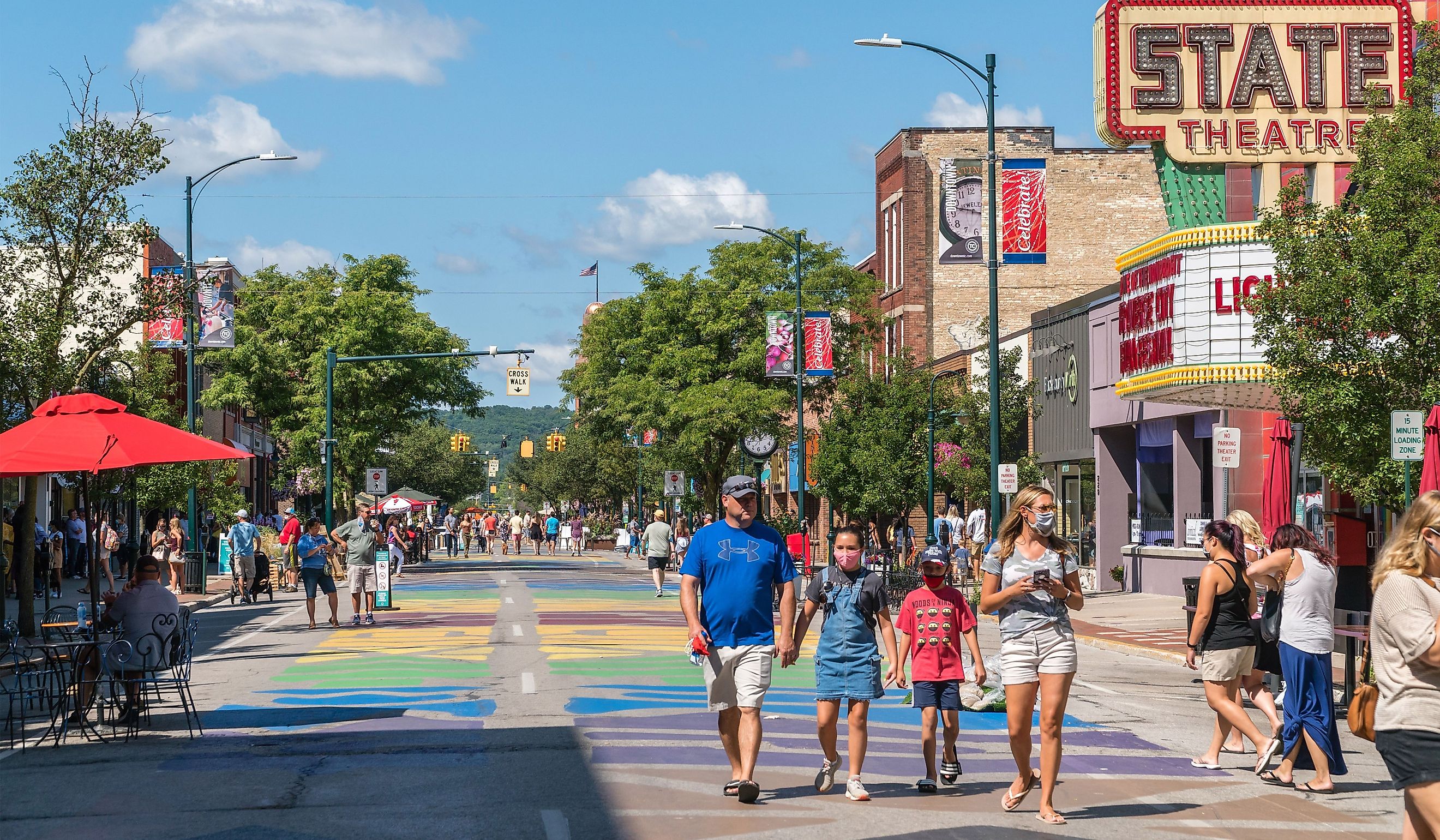
Known as the cherry capital of the world, Traverse City lies at the center of a region that grows much of the country's tart cherry crop, celebrated each July at the National Cherry Festival. Downtown, Front Street threads a few flat blocks of 19th-century storefronts and cafes along the Boardman River.
Clinch Park, a short walk away on Grand Traverse Bay, has a beach, a marina, and a connection to the paved TART trail. The Great Lakes Children's Museum is close by, while the Botanic Garden at Historic Barns Park adds gardens to the mix just outside the center.
Where The Lakes Meet Main Street
What links these six towns is scale. Each one packs its galleries, museums, and waterfront into a few blocks, so a day here moves at walking speed, whether the stop is the murals in Ashland, the breakwall at Grand Marais, or the lighthouses at Mackinaw City. The lakes set the terms, supplying the harbors, the shipping history, and the wide horizons, while the towns remain small enough to cross on foot.