2026's 8 Most Scenic Portugal Towns
Tourism is a major part of Portugal's economy, and the Portuguese warmly welcome visitors who respect their culture, traditions, and way of life. Directions may not always be in English, and communication can sometimes be challenging, but you can bet they'll be the first to offer family-like hospitality, delicious fresh food, and immersive experiences in these captivating small towns. You might be munching on mouth-watering traditional custard tarts at Alte's Doçaria Água Mel, freshly made by the staff. You could be wandering around medieval Castelo de Marvão, glimpsing the Serra de São Mamede mountain range in the distance. Or you might be standing at Cabo de São Vicente, the southwestern tip of Europe, where the imposing cliffs feel like something out of a movie, so get ready to roll at a slower pace amongst dramatic beauty here in Portugal.
Paderne

Paderne is one of the oldest towns in Albufeira, hence its numerous historic landmarks. The Castle of Paderne is a Hispano-Muslim fortification from the 12th-13th century, with reddish ruins that are among the most striking examples of Muslim military architecture in the Iberian Peninsula. It stands grandly above the Quarteira River and is even more spectacular at night when lit up.
Igreja Matriz de Paderne, a Catholic church, is another historic building worth visiting, featuring 16th-century architecture. In 1905, the bell tower was enlarged and the church was blessed with an exterior clock, a timekeeper in the center of town. Also located in the village square is Pastelaria Moiras Encantadas, a restaurant serving traditional Portuguese flavors. With codfish fritters, octopus rice, and grilled lamb chops on the menu, there are no bad choices, so order as many dishes as you please.
Sagres

Sagres has one of the most dramatic landscapes in the Algarve, and the steep cliffs of Cabo de São Vicente cement this truth. A peninsula at the southwestern tip of Europe, its towering cliffs overlooking crashing waves, once known as "the end of the world," feels transcendent. You can also walk to the lighthouse area, providing a double dose of magnificent sights to take in.
By driving 10 minutes you can reach Sagres Fortress, originally built in the 15th century and rebuilt after the 1755 earthquake. Entry to the fortress is through a formidable neoclassical gate with bastions flanking either side, which you can climb for a panoramic view over the fortress and cliffs. Restaurante A Sagres is a welcoming dinner spot to end the day with delicious dishes, including tuna steak, stuffed squid with fries and rice, and fresh clams.
Alte

Alte, filled with whitewashed houses and chimneys decorated with arabesques and flanked by trees, is a typical Algarve town that dates back to the Roman period.
For a sweet start to your day, Doçaria Água Mel has to-die-for Portuguese custard tarts ready to devour, along with almond pastries and coffee to give you the shot of energy you need. Head on over to Queda do Vigário, a cascading waterfall with turquoise waters at the bottom to swim around in. Take your film camera out to get a snap because you'll want to remember the moments spent in this oasis. More outdoor wonders await at Cândido Guerreiro Gardens, a paved garden area on the banks of the river that pays homage to Alte's famous post-Symbolist poet, playwright, and lawyer, Cândido Guerreiro. There are tiled plaques within the garden featuring some of his works inscribed on them.
Lamego

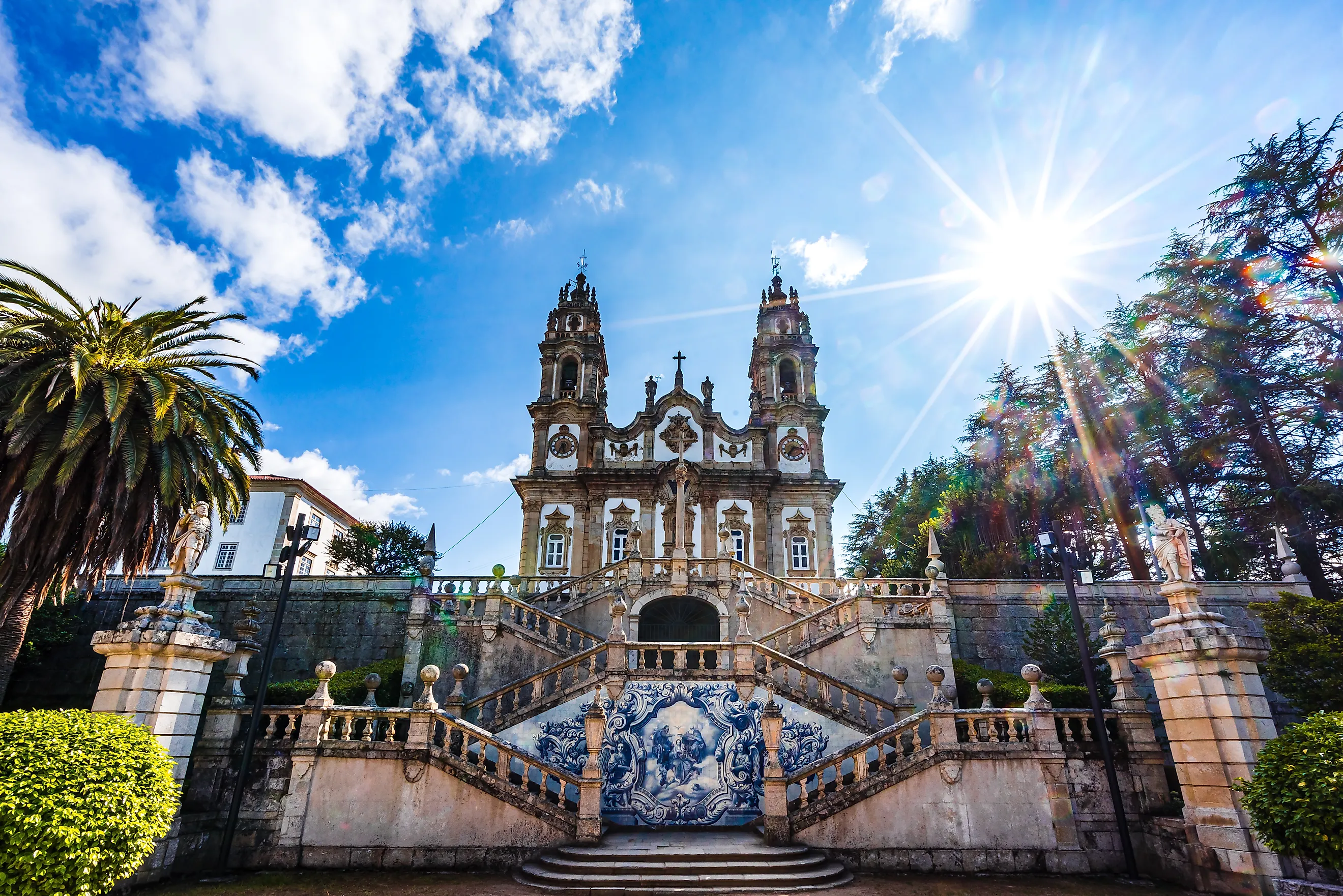
Lamego is a town situated 10 kilometers from the Douro River, in northern Portugal, with an ancient history it proudly preserves. Santuário Nossa Senhora dos Remédios is an 18th-century Catholic church featuring a Baroque and Rococo façade, an ornate altar, and mesmerizing stained-glass windows. The staircase landing is dubbed the "Courtyard of the Kings" due to its intricate architectural details.
After the thirsty work of walking through the church, a glass of port wine, perhaps even a 100-year-old vintage, is just what you need and can be found at Quinta do Mourão winery. Set among rolling vineyards with commanding views over the river, learning about the unique methodology behind creating these quality port wines, with friendly hosts leading the way, makes for an unforgettable tasting experience. Lastly, it's imperative that you shop at Sé Gourmet, a gift shop selling regional produce and goods, including almonds, olive oil, and handmade ceramics.
Marvão

The medieval fortified town of Marvão is set high on a rocky outcrop, surrounded by the Portuguese countryside of the Alentejo region near the Spanish border. Castelo de Marvão is a historic castle that allows you to walk around, viewing the town along its walls. From its battlemented towers, you can enjoy views of various mountain ranges, including Serra de São Mamede and Serra da Estrela. Located at the foot of the castle and housed in Igreja de Santa Maria Church is the Marvão Municipal Museum, brimming with fascinating archaeology, armory, and sacred art.
A snack bar with a view, Natural Bar is the perfect evening treat. The small bar has a cabinet filled with local goods available for purchase and serves carefully crafted cocktails made with fresh ingredients. Small homemade bites, such as bruschetta, soup, and sandwiches, are also on the menu, while relaxed vibes reverberate throughout.
Monsanto

Monsanto is a village unlike any other in Portugal, with granite cottages wedged between, beneath, and around colossal boulders on a hillside near the Spanish border. Some of these boulders weigh as much as 200 tonnes, and one famous house, the Casa de Uma Só Telha, is roofed by a single enormous slab of stone. Crowning the hill are the ruins of Castelo de Monsanto, a Templar fortress raised in the 12th century, with wide views that reach the Serra da Estrela and stretch across the plains into Spain. The village won the title of the most Portuguese village in Portugal in a 1938 contest, and its silver rooster trophy still sits atop the Torre de Lucano. One of the country's twelve designated Historical Villages, Monsanto also stood in as the Targaryen stronghold of Dragonstone in the series House of the Dragon.
When hunger strikes, Taverna Lusitana is a memorable spot, a small restaurant with a boulder for a roof and a panoramic terrace looking out over the countryside. It is known for a local twist on the classic pastel de nata, a custard tart made with cherries. For more regional bites among the granite, Petiscos e Granitos in the old village serves hearty Portuguese plates that reward the steep walk up.
Mértola

Mértola is a town perched on rocky hills beside the Guadiana River and is full of archaeological significance. The Archaeological Field of Mértola is a true guardian of the town's history, a site with a diversity of archaeological finds dating from the Pre-Roman Age to the early Middle Ages. Guadiana Valley Natural Park is also rich in prehistoric remains scattered throughout the vicinity, as well as hills and deep valleys abundant with flora and fauna. Endangered and elusive wildlife species also inhabit the area, including black storks, eagle owls, horned vipers, and Iberian toads.
Mercearia Souk, a shop filled with goodies, needs to be on your itinerary, too. Have a chat with the friendly owner, enjoy a tasting of ginjinha (cherry liqueur) and browse the local lavender honey and herbal tea, as well as handmade souvenirs, including cute magnets and mugs.
Ponte de Lima

Ponte de Lima is a beautiful old town resting beside the Lima River, with many amazing sights to explore. One of them is Paço do Marquês de Ponte de Lima, a 15th-century castle that retains its Manueline windows and merlons, surrounded by beautifully manicured greenery. Ponte de Lima Bridge is another old relic that still stands today. Built in the 14th century, this 280-meter-long stone bridge is now reduced to five Roman arches and is considered one of the most beautiful bridges in Portugal.
As the evening winds down, there's nowhere better to spend it than Ti'Álvaro - Finger Food & Bar, a tapas bar that does what it says on the tin. With a lovely indoor space and outdoor tables, it serves Portuguese cheese and chorizo charcuterie boards, fried bites with homemade sauce, local wines, and beers. Portuguese hospitality at its peak, the staff are friendly and the food is affordable.
Unearth Portugal's Quiet Corners
Greet the owner of Mercearia Souk, a local produce and gift shop in Mértola, with a "boa tarde" (good afternoon), and you may be invited to sample some ginjinha, a cherry liqueur. Dive into the aquamarine pool at the bottom of Queda do Vigário, a flowing waterfall, and feel rejuvenated by the waters.
There's no real way to describe the allure these captivating towns have unless you visit them. So, this is your sign to go out and experience Portugal's finest pockets of gold in 2026.