Where People Are Moving To In Portugal In 2026
Portugal's population reached a record 11.4 million in 2025, but the country's recent growth is concentrated in a relatively small number of municipalities. The increase is not simply a story of international arrivals settling in Algarve resort towns, some of Europe's most popular travel destinations. Immigration now drives almost all of Portugal's growth. Foreign nationals account for about 14% of residents, and Brazilians are by far the largest community.
The largest gains have occurred around Lisbon, where Loures and Odivelas each added tens of thousands of residents, while Porto, Braga, and Leiria also recorded substantial increases. Both international and domestic migration account for most of the recent growth, often offsetting negative natural population change. The result is a population shift toward metropolitan fringes, regional employment centers, international destinations, and a smaller number of towns where new arrivals are compensating for long-term demographic decline.
Porto

Portugal's recent population growth is not simply a story of people leaving the country's largest cities for cheaper suburbs. Porto shows that some people are also moving toward major urban centers with established employment and education economies. The city combines universities, international business, tourism, and a large existing housing market, while domestic migration and international arrivals have contributed to a broader urban revival after decades in which parts of Porto experienced population decline.
Much of the pull is economic. The wider Porto area has drawn technology firms, shared-service centers, and tourism operators, and the University of Porto anchors a large student and research population that feeds the local labor market. Growth is not evenly distributed across the city. Neighborhoods such as Bonfim and Campanhã have experienced substantial residential investment and redevelopment, while rising demand has also contributed to housing pressures. Between 2021 and 2025, Porto added more than 29,000 residents, reaching approximately 273,500 people. Its migration balance exceeded the total population increase because natural population change was negative, a clear indicator of how strongly migration has contributed to the city's recent growth. Porto provides the clearest big city alternative to the Lisbon metropolitan cluster.
Odivelas

Odivelas is one of the clearest examples of Lisbon's population growth taking place through urban intensification beyond the capital's municipal boundary. Dense neighborhoods around the Odivelas and Senhor Roubado metro stations continue to accommodate new residents immediately north of Lisbon, where proximity to the city's jobs and services remains a major advantage. Direct Metro and bus links into central Lisbon let residents reach the capital's employment core without living inside its far more expensive housing market, which is a large part of why people settle here. The municipality added roughly 25,000 residents between 2021 and 2025, bringing its population to about 186,000, with migration accounting for nearly all of that increase. Odivelas is already one of Portugal's most densely populated municipalities, so its recent growth represents the continued expansion of Lisbon's metropolitan area.
Loures

Loures added approximately 28,700 residents between 2021 and 2025, reaching nearly 237,000 people. That was one of the largest population gains among Portugal's municipalities, and migration accounted for almost all of the increase. The municipality extends across established urban districts, industrial areas, major transport routes, and areas with room for additional residential development, while its location north and northeast of Lisbon places it within the capital's wider commuter and employment system.
The Sacavém and Prior Velho area, close to Lisbon's airport and major transport routes, provides one concrete example of this connection to the capital's employment infrastructure. That logistics and airport-adjacent economy is itself a job magnet, drawing warehouse, transport, and services workers who then look for nearby housing. Across Loures, residential expansion has added to the population base, creating pressure for additional schools, transport, and public services.
Braga

The University of Minho is central to Braga's appeal. Its Braga campus draws students, researchers, academic staff, and other workers to the city, while the wider university ecosystem supports demand for housing, services, and businesses in the surrounding urban area. Braga's economy also extends beyond higher education, with technology and business services alongside established engineering, manufacturing, and construction industries. The city has built a reputation as one of northern Portugal's technology hubs, and that concentration of younger, working-age employment is a direct reason newcomers choose it. Together, these institutions and industries give the city multiple reasons to attract newcomers.
Population growth has consequently extended beyond the historic center, with expanding urban districts and continued residential development around areas connected to the university adding to pressure on the local housing market. Braga's population reached approximately 213,000 in 2025 after growing by more than 17,000 residents since 2021. Migration accounted for almost the entire increase. Unlike the Lisbon-area municipalities, Braga is not primarily a metropolitan overflow destination. Its population growth demonstrates its attraction to residents through its own university, employment base, and services.
Leiria

Located between Lisbon and Porto, Leiria has developed as a regional center for industry, commerce, education, and administration, offering employment and urban services without the scale or housing costs of Portugal's two largest metropolitan areas. Its position on the A1 motorway and main rail line between the two big cities, combined with a manufacturing base built around molds, plastics, and glass, gives newcomers steady work and an easier cost of living. This is shown in how the city has attracted both domestic and international newcomers in its own right, rather than serving as a residential extension of a larger urban center.
Between 2021 and 2025, Leiria added roughly 13,000 residents, reaching a population of about 146,000. Its migration balance was positive enough to outweigh a negative natural balance, meaning that arrivals more than compensated for the difference between births and deaths. The area around Leiria Castle and the expanding districts beyond the historic center illustrate the contrast between the older city and the newer residential areas accommodating population growth.
Albufeira

Albufeira's population growth extends beyond the traditional image of an Algarve resort centered on tourism and the beachfront. Residential areas such as Montechoro and neighborhoods surrounding the city have added housing away from the historic center, contributing to a larger permanent population than the municipality's tourism profile alone would suggest. Its economy, long connected to tourism, hospitality, property, and services, supports both international employment and longer-term retirement and lifestyle migration.
The Algarve recorded the strongest regional population increase in the country between 2021 and 2025, and a mild climate, established English-speaking services, and a large existing foreign community make Albufeira a natural landing point for retirees and remote workers. Foreign residents now make up a substantial share of the population, although the international community is diverse and should not be reduced to a single nationality or expat group. Between 2021 and 2025, Albufeira added approximately 11,400 residents, reaching about 63,000, or roughly 22% growth, one of the strongest increases among the places on this list.
Óbidos

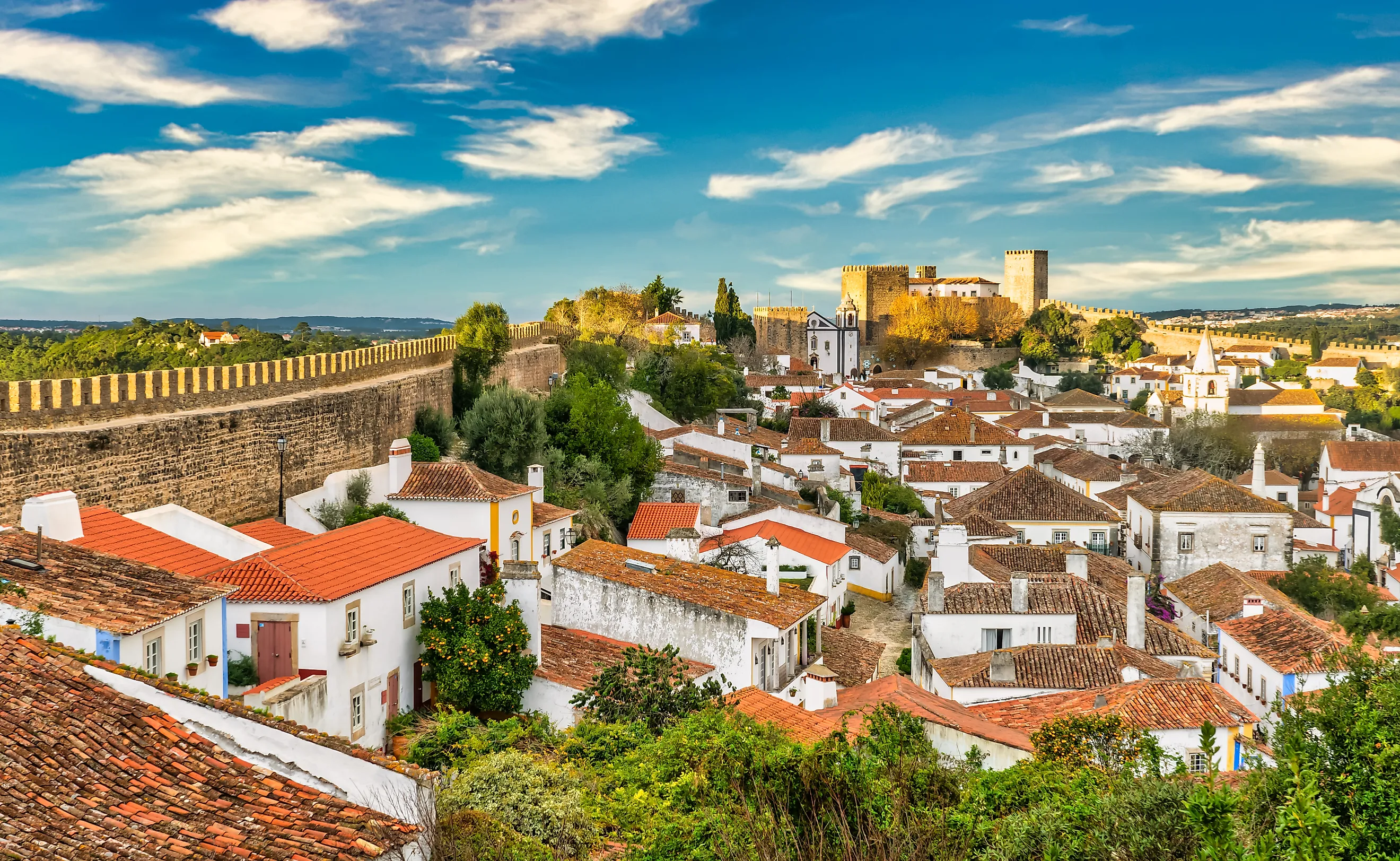
Óbidos is the smallest municipality on this list, with a population of approximately 14,000 in 2025. It nevertheless grew by around 1,500 residents between 2021 and 2025, or roughly 12%. Its migration balance was positive enough to overcome a negative natural balance, meaning that the municipality gained residents even as deaths exceeded births. Its location in the fast-growing Oeste region, within commuting reach of both Lisbon and the coast, and a tourism economy anchored by the walled town and its literary and chocolate festivals, give arrivals both work and a reason to stay.
The numbers are small compared with the Lisbon metropolitan municipalities, but the percentage growth makes Óbidos an important counterexample to the idea that Portugal's migration-driven population growth is limited to major cities and resort centers. Its position in the central coastal region places it within reach of larger urban areas while offering a much smaller settlement pattern. The municipality's historic walled town is the most recognizable anchor, but the population story extends beyond the tourist center into the surrounding villages and residential areas.
What Portugal's Growth Map Reveals
Portugal's recent population growth is concentrated in a relatively small number of places, a trend seen across Western Europe. The Lisbon metropolitan area has absorbed the largest wave, with Loures and Odivelas demonstrating how the capital's population is expanding into surrounding municipalities rather than remaining concentrated within Lisbon itself. Porto, Braga, and Leiria show that regional cities are also gaining residents on the strength of their own universities and employers, while Albufeira reflects the continued importance of international migration to the Algarve. Óbidos shows that the same migration-driven pattern can occur on a smaller scale. As these places continue to grow, housing supply, transport, schools, and public services will increasingly determine how well Portugal's fastest-growing municipalities accommodate the people arriving there.