The 8 Can't-Miss Towns In Portugal
Surfers track the winter swell into Ericeira while pilgrims still climb to the Sítio cliff above Nazaré. Both towns sit within a couple hours of Lisbon, yet neither feels like the capital's overflow. Portugal keeps its best small towns spread far apart, from the Algarve salt marshes around Tavira to a granite village wedged into boulders near the Spanish border. Some perch on Madeira's sea cliffs. Others guard mountain passes that mattered in the 1200s. These eight reward the drive out.
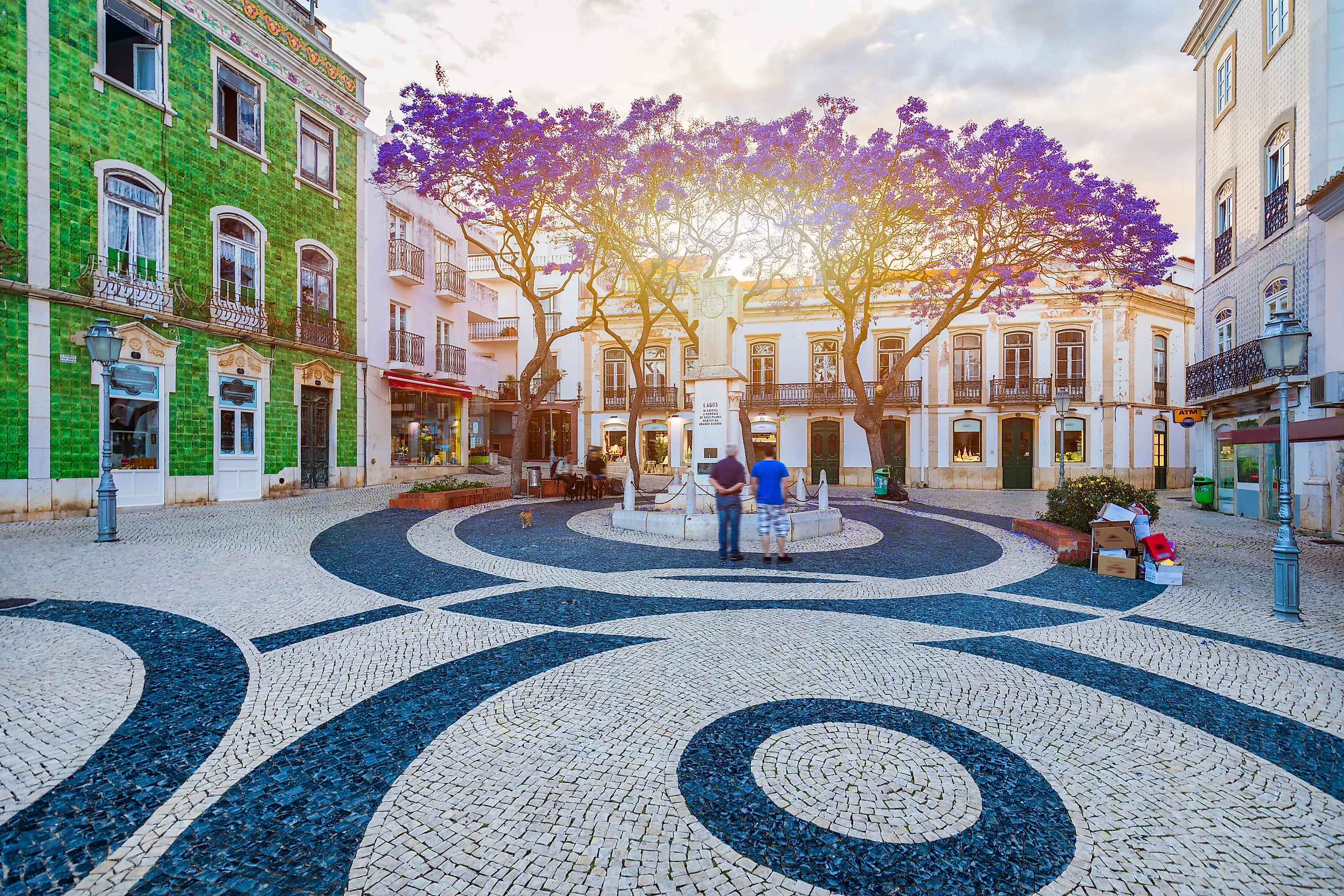
Lagos

Lagos anchors the western Algarve, and most first-time visitors come for the coastline. A short boat trip with Blue Fleet or one of the other operators runs along the shore past the sandstone grottoes and stacks of Ponta da Piedade, the geology that puts Lagos on postcards. The beaches back it up. Meia Praia stretches close to five kilometers of golden sand east of town.
The history is in the streets, not just the cliffs. Lagos was the port from which much of Portugal's 15th-century African trade departed, including the first slave market in Europe, now a museum on Praça do Infante. The Igreja de Santa Maria on the same square dates to the 15th and 16th centuries and keeps a carved Renaissance doorway from that period, though most of what stands today was rebuilt after the 1755 earthquake.
Nazaré

Nazaré was a fishing village for centuries before it became a beach town, and the fishing past still shows in the seven-skirted costumes and the dried fish laid out along the promenade. The wide town beach, Praia da Nazaré, draws the summer crowds to its calm water. The town splits into three parts: Praia along the sand, and the older quarters of Sítio and Pederneira on the heights above.
The Nazaré Funicular climbs from the main beach to the cliff-top village of Sítio in a few minutes, a ride that dates in some form to the late 19th century. From Sítio, a path leads to Praia do Norte, the beach that made the town famous. The underwater Nazaré Canyon focuses winter swell into some of the largest waves ever surfed here, and the lighthouse at the São Miguel Arcanjo fort is the spot to watch them from.
Câmara de Lobos

On Madeira's south coast sits Câmara de Lobos, where João Gonçalves Zarco landed around 1420 and built the first settlement on the island. Its landmark, Cabo Girão, rises about 580 meters straight out of the Atlantic and counts among the highest sea cliffs in Europe. A glass-floored skywalk, the highest of its kind in Europe, lets you stand out over the drop. Restaurants like Vila do Peixe serve the day's fish over the bay. The settlement's age shows in its early religious sites, including the Nossa Senhora da Conceição chapel and the old convent of São Bernardino, which dates to 1425.
Tavira

About 70 kilometers east of Albufeira by road, Tavira sits on the quieter Sotavento end of the Algarve, away from the resort strip. Its architecture carries a strong Moorish imprint, and its streets reward slow walking.
The Gilão River runs through the middle of town, splitting it into two banks linked by several bridges, one of them rebuilt on Roman foundations. Jardim do Coreto, the central public garden, is the place to sit with an ice cream and watch the town go by. The church of Santa Maria do Castelo, raised on the site of a former mosque, holds the tombs of Dom Paio Peres Correia and his knights, a reminder of the 13th-century reconquest of the Algarve.
For a longer look, climb to Castelo de Tavira, the partly ruined medieval fortress at the high point of town. The walls and the garden inside frame the rooftops and the salt pans of the Ria Formosa beyond.
Marvão

Marvão sits high in the Serra de São Mamede in the district of Portalegre, one of the loftiest villages in Portugal, close enough to the clouds that the view runs for miles into Spain. Marvão Castle holds the highest point, but the climb up through the narrow streets and past the Gothic windows is its own reward.
The village wears its layered history openly. The Senhora da Estrela convent and the Santiago church trace its Christian past, while the old quarter recalls a Jewish community that crossed the nearby border with Spain in the late 1400s. The Church of Santa Maria now houses the municipal museum, where the village's full story is laid out in more detail. A single day here always feels too short.
Monsanto

Viewers of "House of the Dragon" may recognize Monsanto, whose granite-and-boulder skyline stood in for the show. The village climbs the eastern slopes near the Spanish border, a position that made it a medieval stronghold, and walking its streets still feels like stepping into that era.
Monsanto Castle, built in 1165 under the Knights Templar, crowns the hilltop in ruins after a 19th-century gunpowder explosion. The village changed little after 1938, when it won the government's "Most Portuguese Village in Portugal" title and the protection that came with it kept new construction out. A handful of local eateries, such as Taverna Lusitana, serve filling breakfasts, lunches, and dinners in a small dining room.
Amarante

An hour's drive from Porto, Amarante spreads along the Tâmega River in the north. Its calendar centers on the Festas do Junho, held the first weekend of June in honor of São Gonçalo, the 13th-century holy man tied to the town's founding. The granite Ponte de São Gonçalo became a symbol of local resistance to Napoleon's forces in the early 1800s, when the townspeople held the bridge against the French advance.
The setting matches the history. The Serra do Marão rises to the east, the sixth-highest range in mainland Portugal at 1,415 meters, with hiking trails and wide views over the Douro country. Back in town, restaurants and cafés along the river, such as Restaurante Residencial Sampaio, serve the regional cooking.
Ericeira

Once a fishing village, Ericeira has remade itself into one of Portugal's main surf towns, and it earned a World Surfing Reserve designation in 2011 for the quality of its breaks. It has no train station, but it is an easy drive from Lisbon, Portugal's capital.
Non-surfers find plenty too. The Old Town's narrow lanes and white houses trimmed in blue give it a Mediterranean feel despite the Atlantic at its foot. The Igreja de São Pedro, the town's main church, traces its origins to 1446 and carries a baroque and rococo interior dedicated to Saint Peter, whose life appears across its paintings and tile panels. Praia dos Pescadores, the most central beach, is the one that shows up on the postcards, with a sea wall above it that draws photographers.
Eight Towns, One Country Worth the Detour
What ties these towns together is how little they resemble each other. Monsanto's boulders and Tavira's salt marshes belong to different worlds, and Câmara de Lobos sits on an island closer to Africa than to Lisbon. Each repays the extra distance with its own history, its own coast or mountain, and a pace the bigger cities lost long ago. Pick two or three, and let the gaps between them show you the rest of the country.