10 Best Towns In Portugal For A Two-Day Recharge
Portugal keeps showing up on American relocation shortlists for reasons that hold up close. Healthcare is public and inexpensive. The Atlantic sets the weather more than the calendar does. Housing outside Lisbon and Porto still costs a fraction of a US coastal city. The towns below each make a strong two-day visit. They also double as a low-pressure way to test whether a corner of the country could become home. Each one rewards a slow weekend and answers the quieter question underneath it.
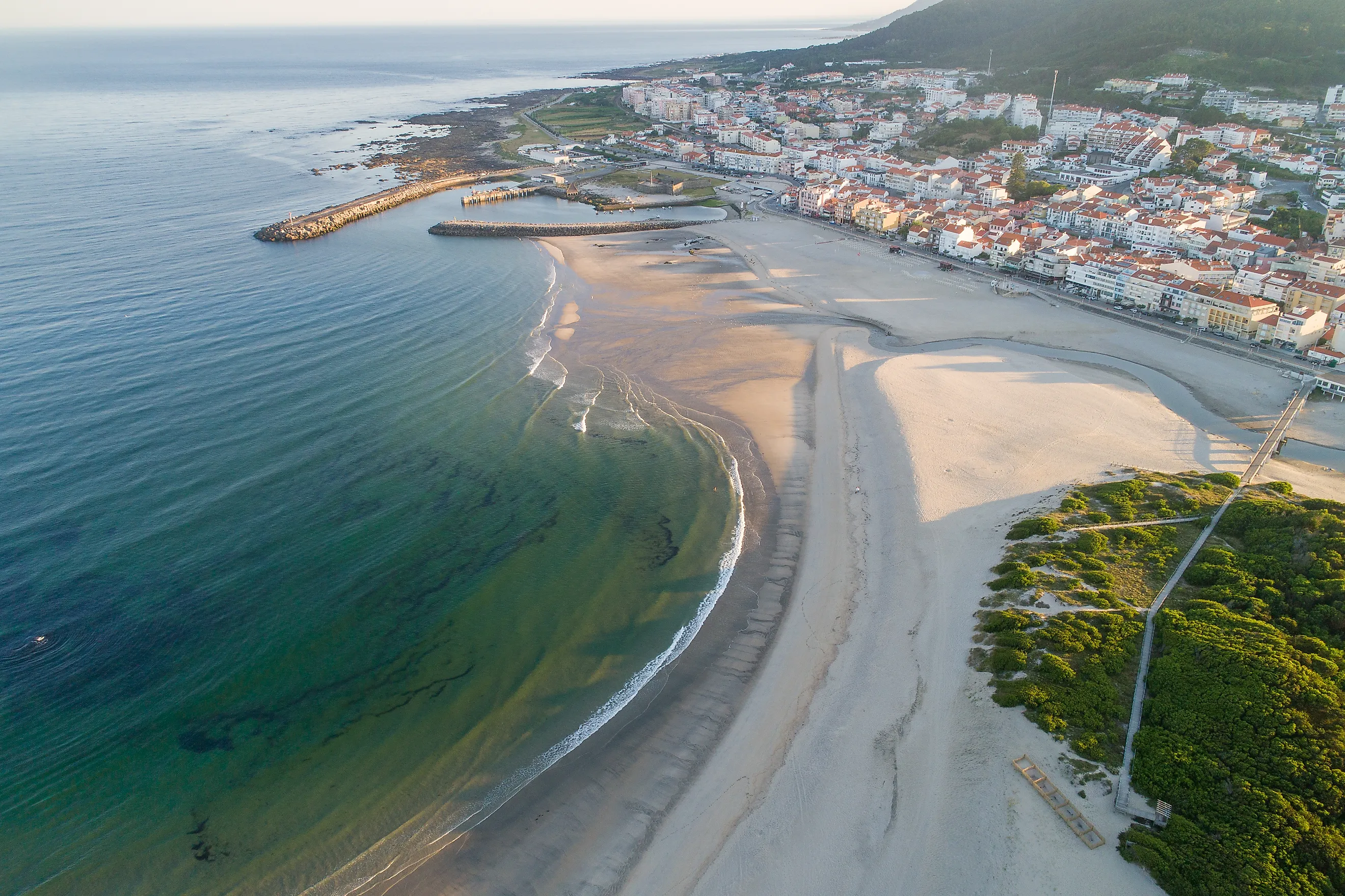
Caminha

Caminha sits in Portugal's far northwest, about 88 miles (141 kilometers) south of Santiago de Compostela across the Spanish border. The Torre do Relógio e Porta Medieval survives from the town's 13th-century castle, and the Santiago de Compostela pilgrim routes feed through this stretch of coast, so the streets carry steady foot traffic without the crowds farther south. Day-to-day life centers on the riverfront, where the Sapal do Rio Coura preserve draws kayakers and the Wednesday market fills the old square. A short drive west reaches Praia do Camarido, a long sandy beach where the Minho River meets the Atlantic.
For anyone weighing the area as a base, the appeal is the location. Caminha puts the Spanish region of Galicia, the city of Viana do Castelo, and the beaches of the Minho coast all within a short drive. Rinoterra Minho, just outside the center, makes a comfortable spot to settle in for a couple of nights and read the rhythm of the place.
Vieira do Minho

Mountains define Vieira do Minho, and the big draw is just north of town. Parque Nacional da Peneda-Gerês is the only national park in Portugal, a UNESCO Biosphere Reserve protecting granite peaks roughly 300 million years old, oak and pine forest, and Roman and medieval ruins. Iberian wolves, roe deer, garrano ponies, and gold-striped salamanders still live here. Closer in, Serra da Cabreira rises to 4,140 feet (1,262 meters) with long summit views, and the hill of Castro de Vieira do Minho holds traces of an Iron Age settlement and a later medieval castle. The Jardim da Praça Doutor Guilherme de Abreu anchors the town center, ringed by shops and cafes.
This is country for someone who wants mountains at the doorstep and a real town behind them. Pousadela Village & Spa, set between the village and the park, has stone "boulder rooms" and larger houses, indoor and outdoor pools, and a restaurant built around local produce. A weekend here tells you fast whether you want trailheads as neighbors.
Vinhais

Vinhais sits in the Bragança District of Portugal's northeast, a region known for cured meats and a slower pace that pulls a certain kind of mover. The Parque Biológico de Vinhais opens onto forest with walking and riding trails and serves as a gateway to the larger Parque Natural de Montesinho, one of the wildest stretches of the country. Praia Fluvial da Ponte Nova is a river beach for swimming and picnicking, and Serra de Coroa offers a harder backcountry hike for anyone testing their legs against the terrain.
The town itself runs on family-owned places. Vasco da Gama serves traditional Portuguese home cooking, the local museums fill an afternoon, and the family-run Hotel Vinhais offers 22 simple rooms and a garden. The Bragança District is among the most affordable corners of Portugal, which is part of why it lands on budget-minded relocation lists.
Lamego

Lamego sits in the Douro Valley, the world's oldest demarcated wine region, which shapes both the economy and the appeal of living here. The Núcleo Arqueológico Porta dos Figos traces the town from Roman times to its 12th-century castle. South of the center, the Santuário de Nossa Senhora dos Remédios is a Baroque church reached by a long ceremonial staircase that climbs the hillside. Wineries surround the town, including Caves da Raposeira for sparkling wine and Solar dos Dragos for still wines, olive oils, and honey.
For a prospective resident, Lamego balances quiet with reach. Porto sits close enough for an airport run, and the river towns of the Douro line up downstream. Lamego Hotel & Life keeps rooms with wood furnishings and Portuguese Burel wool blankets, plus a Douro wine list at the 1926 Bar and a spa. It is an easy place to picture a regular life.
Espinho

Espinho lies 14 miles (23 kilometers) south of Porto, close enough to make a serious case for anyone who wants the coast with a major city in commuting range. Casino Espinho anchors the nightlife, and the Museu Municipal de Espinho documents the area's Arte-Xávega beach-fishing tradition. The surf is the real draw: Praia de Silvalde and Praia Azul both pull surfers and swimmers through the warm months. The grid of numbered streets makes the town easy to learn in a weekend.
Espinho already houses a steady remote-work crowd, and Green Coast Surf House leans into it, two blocks from the central beach with fast wifi, surfboard and bike rentals, and an airport shuttle to Porto. Stay a couple of nights and the trade-off becomes clear: smaller and cheaper than Porto, with the same train line into it.
Ílhavo

Ílhavo, on the Atlantic coast of the Aveiro District, runs on a maritime history that still defines the town. The Museu Marítimo de Ílhavo keeps a Codfish Aquarium and the Santo André museum ship, a working trawler from 1948 to 1997, alongside exhibits on the region's cod-fishing past. Mata Nacional Dunas da Gafanha is a 1,700-acre (688-hectare) pine forest preserve for biking, hiking, and birdwatching. The Museu Vista Alegre traces more than 200 years of Portuguese porcelain. Out at Praia da Barra stands the tallest lighthouse in Portugal, at 203 feet (62 meters), beside a long beach built for surfing and kitesurfing.
Aveiro city, with its canals and train links, sits minutes away, which gives Ílhavo the rare combination of beach-town calm and quick access to services. The Montebelo Vista Alegre Ílhavo Hotel, once home to the porcelain factory's founders, is now a five-star property with a spa and on-site art workshops. The setting suits anyone who wants the ocean without giving up a city nearby.
Seia

Seia stands at the edge of the Serra da Estrela, mainland Portugal's highest mountain range, which makes it a natural base for anyone drawn to four-season terrain. The Parque Natural da Serra da Estrela spreads across more than 250,000 acres (101,000 hectares) and reaches mainland Portugal's highest point at Torre, 6,539 feet (1,993 meters) above sea level. Sheep graze the high pastures and supply the milk for the region's prized Queijo da Serra cheese. In town, the Museu do Pão tells the story of Portuguese bread, and the Serra da Estrela Sheep Interpretative Centre rounds out the farm-to-table picture. Borges and Preto & Branco Bar handle dinner.
This is the part of Portugal that gets snow, which matters if you are choosing a climate rather than just a view. Quinta do Crestelo Aparthotel keeps apartment-style units with room for a family, a pool, and direct access to mountain trails. A weekend shows whether mountain living suits you before any lease does.
Fátima

Fátima sits in the center of the country and draws millions of pilgrims a year, which gives a town of its size the infrastructure of a much larger one. In 1917, three shepherd children reported a vision of the Virgin Mary here, and the Catholic Church declared the apparitions worthy of belief in 1930. The Santuário de Nossa Senhora de Fátima is now one of the most visited Marian shrines in the world. The surrounding area holds more than faith: the Parque Natural das Serras de Aire e Candeeiros preserves Jurassic-era sauropod footprints and caves sheltering 18 bat species, and the Castelo de Ourém crowns a hill east of town on ground settled since prehistory.
The pilgrim economy means Fátima has hotels, restaurants, and transport links out of proportion to its population, a practical point for anyone who values services. Taberna do Bacalhau cooks classic salt-cod dishes, and the Aurea Fátima Hotel Congress & SPA offers 108 rooms and a large spa. Central Portugal's location puts Lisbon, Coimbra, and the coast all within reach.
Mértola

Mértola, in the Alentejo region of southern Portugal, sits about 147 miles (236 kilometers) southeast of Lisbon and functions almost as an open-air museum. The Campo Arqueológico de Mértola preserves artifacts from the Roman Empire through the Moorish era of Al-Andalus, and the Castelo de Mértola dates to the late 13th century, after the Reconquista ended Islamic rule here. Up the hill, the 17th-century Ermida de Nossa Senhora das Neves looks out over the village and the surrounding hills. The town sits beside the Parque Natural do Vale do Guadiana, where you can canoe the Guadiana River and reach the Pulo do Lobo waterfall.
The Alentejo is Portugal's least crowded region, with hot, dry summers and prices well below the coast, which appeals to movers who want space and quiet. Quinta do Vau, across the river from the archaeological sites, has modern rooms and a pool with some of the best views in town. Mértola rewards anyone who wants history underfoot and room to breathe.
Lagoa

Lagoa anchors a central stretch of the Algarve, the southern coast that hosts the largest established American and expat communities in Portugal. Praia da Marinha is the signature beach, a run of golden cliffs dropping to clear Atlantic water, with quieter coves at Praia do Barranquinho to the east and Praia do Carvalho to the west. Inland, Paxá Wines pours regional whites and rosés alongside a Portuguese tapas lunch. English is widely spoken across the region, which softens the early landing for newcomers.
The Algarve trades affordability for convenience: prices run higher than the interior, but the services, healthcare access, and international community are the most developed in the country. Vila Alba Resort sits near Praia de Albandeira with 62 apartment-style units, a restaurant, and a full-service spa. For many Americans, a weekend in Lagoa is the first real look at the place they have read about for years.
Choosing Where to Land in Portugal
These ten towns map the trade-offs a move to Portugal actually turns on. The northern towns like Caminha and Vieira do Minho offer mountains, low prices, and cooler Atlantic weather for people who want quiet over convenience. Lamego, Seia, and Fátima sit in the center, where wine country and high terrain come with strong road links to Porto and Lisbon. The south splits cleanly: the Alentejo around Mértola is empty, hot, and cheap, while the Algarve around Lagoa carries the highest costs and the largest expat community in the country. A two-day visit will not settle the question of where to live. It will tell you which version of Portugal fits the life you are picturing, which is the right place to start.