14 Prettiest Towns In Ohio
Most people heading to Ohio aim for Columbus, Cleveland, or Cincinnati. What they miss are the towns in between: a village built around a waterfall in the middle of its own downtown, an island you reach by ferry that calls itself the Key West of the North, and a Swiss settlement in Amish country with a cuckoo clock the size of a house. Ohio sits in the Midwest and looks the part in places, but between the glacial grooves on Lake Erie and the Appalachian foothills in the southeast, the state has more range than it gets credit for. These are fourteen towns worth the detour.
Yellow Springs

The spring the town is named for runs orange. Iron in the water stains the rock around it, and nineteenth-century visitors came believing it could cure what ailed them. Yellow Springs holds 3,697 people in Greene County, about 25 miles northeast of Dayton, and it has spent the last century as the most reliably countercultural address in the state, largely because Antioch College is here.
The result is a four-block downtown with more galleries, record shops, and independent cafes than the population supports, plus the Little Art Theatre, which has been showing films since 1929. The Street Fair takes over the whole thing twice a year, in June and October. Just outside town, Glen Helen Nature Preserve covers 1,000 acres with more than 20 miles of trail, old-growth forest, and the Yellow Spring itself. John Bryan State Park sits next to it, running along the Little Miami River beside Clifton Gorge.
Put-in-Bay

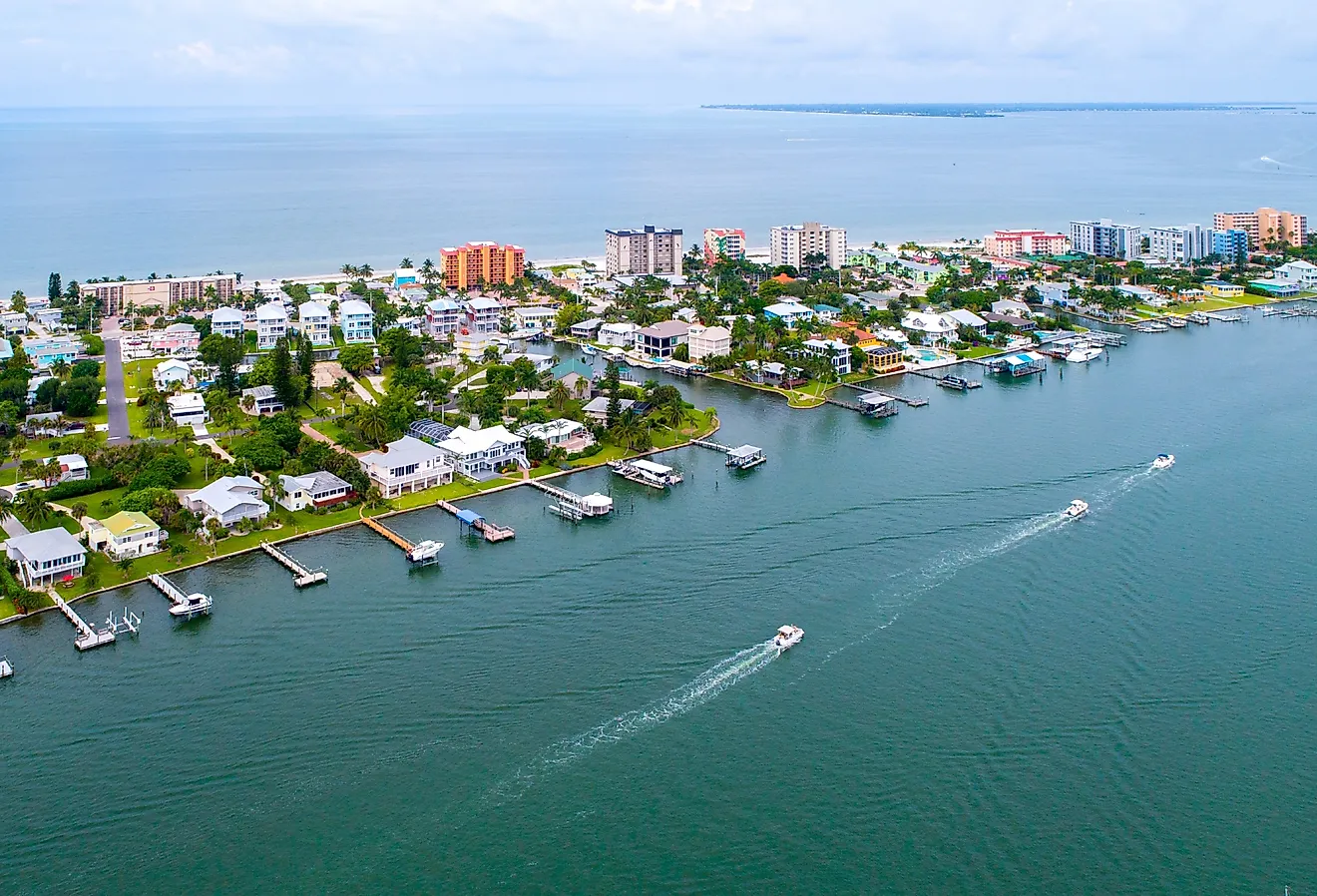
They call it the Key West of the North, and in July that is not far off. Put-in-Bay occupies South Bass Island in Lake Erie, roughly 15 miles northwest of Sandusky, and arrives by ferry, private boat, or small plane. The season runs April through October, after which the island goes very quiet indeed.
Perry's Victory and International Peace Memorial is the landmark, a Doric column rising 352 feet to mark Oliver Hazard Perry's victory in the Battle of Lake Erie during the War of 1812, with an observation deck near the top. Crystal Cave, under Heineman's Winery, is billed as the world's largest geode, lined in pale blue celestine. Perry's Cave and the Lake Erie Islands Historical Society Museum fill out an afternoon. The downtown is bars, docks, and golf carts, which are how most people get around.
Marietta

Marietta got here first. Founded in 1788 where the Muskingum meets the Ohio River, it was the first permanent American settlement in the Northwest Territory, which means it predates Ohio statehood by fifteen years. Settlers named it for Marie Antoinette, in thanks for French help during the Revolution.
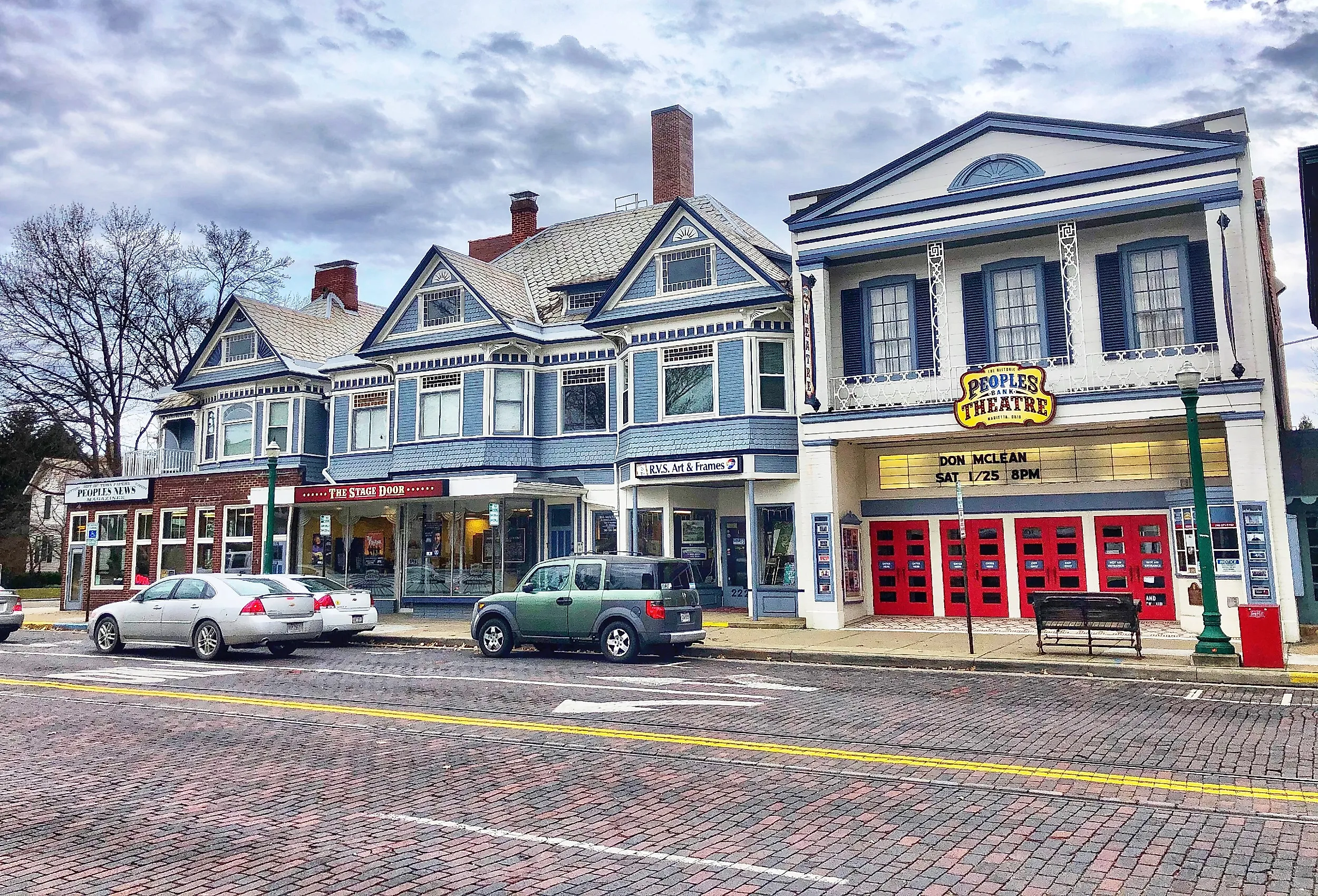
The Campus Martius Museum sits on the site of the original fortified settlement, and Mound Cemetery is built around a prehistoric Adena burial mound that the founders deliberately preserved rather than levelled. Brick streets downtown hold Victorian storefronts, the Peoples Bank Theatre for live performances, and the Antique Mall of Marietta. The Ohio River Sternwheel Festival brings paddlewheelers back to the landing each September, and Wayne National Forest starts just outside town.
Granville

Granville looks like New England because it was built by New Englanders. A group from Granville, Massachusetts, laid it out in 1805 on the western edge of the Appalachian Plateau, 35 miles east of Columbus, and the white clapboard and town green came with them. Denison University sits on the hill above, a mix of Gothic and Romanesque stonework.
The Robbins Hunter Museum occupies the Avery-Downer House, an 1842 Greek Revival mansion on Broadway, and is worth the stop for the architecture alone. The real draw is a few minutes away: the Newark Earthworks, built by the Hopewell culture roughly two thousand years ago, were inscribed as a UNESCO World Heritage Site in 2023. The Octagon Earthworks alone could hold four Roman Colosseums. The Alligator Effigy Mound sits closer to town, and the Dawes Arboretum is a short drive south.
Geneva-on-the-Lake

This was Ohio's first summer resort, opened to vacationers in 1869, and the Strip has been doing more or less the same thing ever since. That mile of State Route 531 holds arcades, mini golf, custard stands, and bars, and it is unapologetically old-fashioned in a way that has come back into fashion.
The town sits on the southern shore of Lake Erie about 50 miles northeast of Cleveland, in the middle of Ohio's main grape-growing belt, so the tasting rooms are close together. The Lodge at Geneva-on-the-Lake handles year-round accommodation with indoor and outdoor pools facing the water. Thunder on the Strip, a motorcycle rally held each September, brings several thousand riders to town.
Marblehead

The lighthouse at the tip of the Marblehead Peninsula has been lit since 1822, which makes it the oldest continuously operating lighthouse on the American side of the Great Lakes. You can climb it in season, and the keeper's house next door is now a museum.
Locals call this stretch of shoreline Vacationland. Ferries leave for the Lake Erie islands, the fishing for walleye and perch is genuinely good, and Cedar Point is twenty minutes around the bay. The odd one out is the Lakeside Daisy State Nature Preserve, an old limestone quarry that holds the only naturally occurring population of the Lakeside daisy in the United States. It blooms for about two weeks in May, and the preserve opens to the public for it.
Chagrin Falls

The waterfall is not near town. It is in it, directly below the main intersection, with a staircase down to a viewing platform. The Chagrin River drops more than 20 feet here, which is why the mills were built, and the village never moved away from the spot.
Bill Watterson grew up in Chagrin Falls and drew on it for the suburban world of Calvin and Hobbes. The Popcorn Shop leans out over the water beside the falls, and the storefronts along North Main run to independents rather than chains. The Chagrin Valley Little Theatre, founded in 1930, is among the oldest continuously operating community theatres in the country and stages around eight productions a year. South Chagrin Reservation next door adds miles of trail. Cleveland is twenty miles west and feels considerably further.
Loveland

A Boy Scout leader named Harry Andrews started building a medieval castle on the Little Miami River in 1929 and kept at it for fifty years, hauling stones up from the riverbed by hand. Chateau Laroche, better known as Loveland Castle, is still there, still stone by stone, and open to visitors.
The town itself spreads across Hamilton, Clermont, and Warren counties about 15 miles northeast of downtown Cincinnati, named for James Loveland, who ran the store and the post office. It calls itself the Sweetheart of Ohio and backs it up every February, when the post office hand-stamps Valentine's mail with a local cachet and volunteers add a verse. The Loveland Bike Trail, part of the Little Miami Scenic Trail, runs through the middle of it along the river, and the historic downtown has grown up around the trailhead.
Waterville

John Pray laid out Waterville in 1830 on the west bank of the upper Maumee River in Lucas County, and the Columbian House he built two years earlier is still standing. It worked as tavern, trading post, and hotel in turn, and it remains the centrepiece of the village.
The better reason to come is the Interurban Bridge at Farnsworth Metropark, an abandoned concrete railway bridge thrown across the Maumee in 1908 to carry electric trains between Lucas and Wood counties. It has not carried a train since 1937 and now stands in the river doing nothing at all, which is somehow the point. Baer Park handles the practical side with ball fields, courts, and walking paths.
Waynesville

Waynesville calls itself the Antiques Capital of the Midwest, and five blocks of Main Street back the claim up with dealers, boutiques, and coffee houses in restored Victorian houses. Copper lamps line the brick sidewalks. The village takes its name from General Anthony Wayne, the Revolutionary War commander better known as Mad Anthony.
The bigger event is the Ohio Sauerkraut Festival each October, which draws hundreds of thousands of people to a village of about 3,000 and sells sauerkraut in forms you would not expect, including cake. Caesar Creek State Park is five miles east with a 2,830-acre lake, more than 40 miles of trail, and a designated fossil-collecting zone where the rule is no tools and nothing bigger than your palm. The Ohio Renaissance Festival runs in nearby Harveysburg through the autumn.
Kelleys Island

The Glacial Grooves on the north shore of Kelleys Island are the largest easily accessible set anywhere in the world: limestone gouged 400 feet long and up to 10 feet deep by the ice sheet that came through 18,000 years ago, with marine fossils exposed in the walls. You walk a boardwalk around them.
The island sits in Erie County and runs on summer visitors, with rocky shoreline, public beaches, wineries, and campgrounds. Kelleys Island State Park covers 677 acres with fishing, hiking, and lake views. Inscription Rock on the south shore carries Native American petroglyphs, weathered now but still legible in the right light. The village downtown is a few blocks of pubs, general stores, and golf cart rentals.
Oberlin

Oberlin College admitted women alongside men in 1837 and Black students from its earliest years, which made it the first coeducational college in the country and put the town at the centre of abolitionist Ohio. The Oberlin-Wellington Rescue of 1858, when townspeople freed a recaptured fugitive slave, is part of why. The town of about 8,000 sits in Lorain County, 31 miles southwest of Cleveland.
The college supplies most of what there is to do. The Allen Memorial Art Museum holds a collection well out of proportion to the town, the Conservatory of Music programs concerts most weeks of term, and Tappan Square is the green at the centre of everything. A quieter footnote: Charles Martin Hall worked out how to smelt aluminium cheaply in a woodshed here in 1886, an Oberlin graduate turning a precious metal into something you wrap sandwiches in.
Tipp City

Tipp City was called Tippecanoe until 1938, when the post office got tired of confusing it with Tippecanoe City and the town shortened the name. It sits in Miami County north of Dayton on the old Miami and Erie Canal, and the canal is why the downtown looks the way it does, with nineteenth-century brick buildings along a main street built for trade.
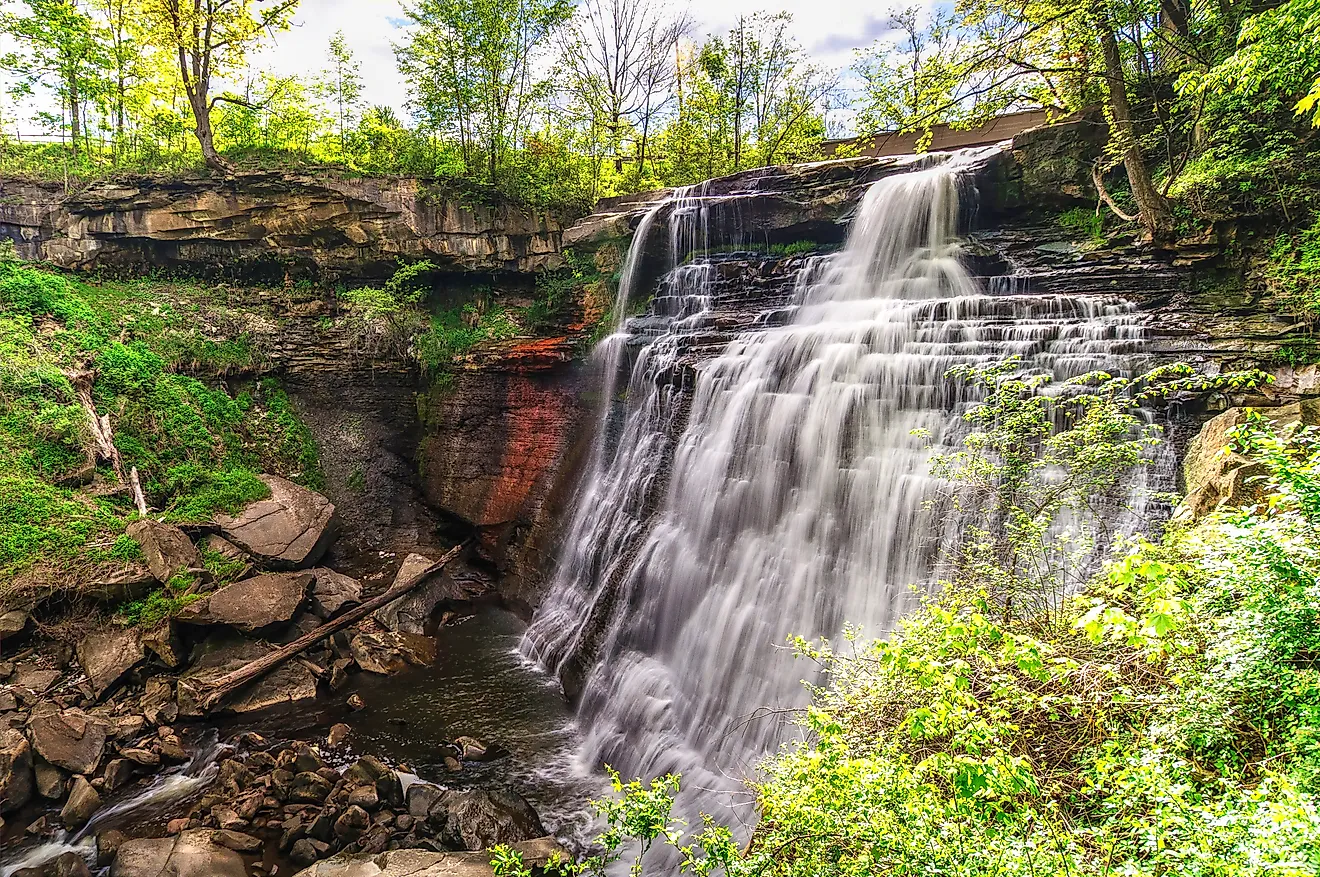
Charleston Falls Preserve is the reason to make the trip: a 37-foot waterfall over limestone in a 216-acre preserve, sometimes called a miniature Niagara, with trails, a lookout tower, and a small cave. Back in town, the antique shops and family restaurants fill the historic district, and Canal Days each May brings the whole thing out onto the street.
Sugarcreek

There is a cuckoo clock in the middle of Sugarcreek that stands more than 23 feet tall and 24 feet wide, with a band that comes out and plays and a pair of dancers that circle on the hour. It is billed as the world's largest, and nothing about the town discourages that reading.
Swiss immigrants settled here in the nineteenth century and the architecture followed, which is why a village in the middle of Ohio's Amish country goes by the Little Switzerland of Ohio. Tuscarawas County produces Swiss cheese commercially as a direct result. The Alpine Hills Historical Museum covers both traditions, Breitenbach Winery pours on a hillside just outside town, and the Age of Steam Roundhouse a few miles out keeps working steam locomotives in a purpose-built roundhouse, which is a rarer thing than the cuckoo clock.
Working Out A Route
These fourteen fall into three clusters, and the drive between them is shorter than it looks on a map. The Lake Erie group, meaning Put-in-Bay, Kelleys Island, Marblehead, and Geneva-on-the-Lake, runs on a summer calendar and largely shuts down after October, so time it accordingly. The southwest group of Yellow Springs, Loveland, Waynesville, and Tipp City sits within an hour of Dayton or Cincinnati and works year-round. Marietta and Sugarcreek anchor the Appalachian southeast and the Amish country respectively, and both are at their best in autumn when the hills turn.
Granville, Chagrin Falls, Oberlin, and Waterville are the day trips, each close enough to Columbus, Cleveland, or Toledo that you can go and come back without planning much. If you only have one weekend, pick a cluster rather than a route. Ohio is wider than it feels.