13 Prettiest Towns in Massachusetts
The prettiest towns in Massachusetts are full of white clapboard houses and old working harbors. Rockport holds the most painted building in America, a red fishing shack the town rebuilt after a blizzard took it. One saltbox has worn the same paint for three centuries. A village green looks the same as it did when the muskets went quiet. The harbors fill with sailboats every summer. These towns are some of the most beautiful in the state, down on the coast and up in the Berkshires.
Concord

Concord is all white-clapboard houses and a wooden bridge arched over a slow green river. That bridge is the Old North Bridge. Colonial militia fired the shot heard round the world here on April 19, 1775. Ralph Waldo Emerson supplied the phrase decades later. His grandfather watched the fight from the Old Manse. The house still stands beside the bridge.
Louisa May Alcott wrote Little Women at Orchard House in 1868. Henry David Thoreau did his thinking at Walden Pond just south of the center. Emerson, Thoreau, Hawthorne, the Alcotts now rest a few feet apart on Authors Ridge in Sleepy Hollow Cemetery. The scenery turns its calmest when fall color reaches the Concord River.
Rockport

Rockport's whole reputation hangs on one weathered red shack. The fishing shed on Bradley Wharf is called Motif No. 1. It has been painted so often it became the most painted building in America. The Blizzard of 1978 dropped the original into the harbor. The town rebuilt it the same year. Bearskin Neck stretches beside it, a narrow spit of galleries and seafood shacks above the water.
Granite built the rest. Rockport broke off from Gloucester in 1840. The quarry trade made it rich. The flooded quarry at Halibut Point State Park now stands over a shoreline of tumbled stone. Rockport was a dry town until 2005.
Oak Bluffs

Oak Bluffs has more than 300 gingerbread cottages on one corner of Martha's Vineyard. The tiny Carpenter Gothic houses are painted like candy. They grew out of a Methodist camp meeting in the 1800s. Canvas tents slowly hardened into wood. Each late summer the residents string paper lanterns across the whole neighborhood for Grand Illumination Night.
The town incorporated as Cottage City in 1880. It took its present name in 1907. The Flying Horses Carousel has turned since 1876. That makes it the oldest continuously operating platform carousel in the country. East Chop Lighthouse and the Ocean Park bandstand fill out the rest.
Edgartown

Edgartown is a row of white Greek Revival houses with black shutters down North Water Street. Whaling captains poured two centuries of fortune into them. They had settled the island's first English town back in 1642. They grew rich enough to build like this two centuries on. The 1843 Old Whaling Church and the Dr. Daniel Fisher House mark the architecture at its grandest.
Edgartown Harbor Lighthouse stands at the end of a sandy path. Harbor traffic glides past. The On Time ferry crosses to Chappaquiddick. The barge holds three cars and follows no schedule. It can never be late. That is the joke in the name. Morning Glory Farm sells what its own fields grow.
Marblehead

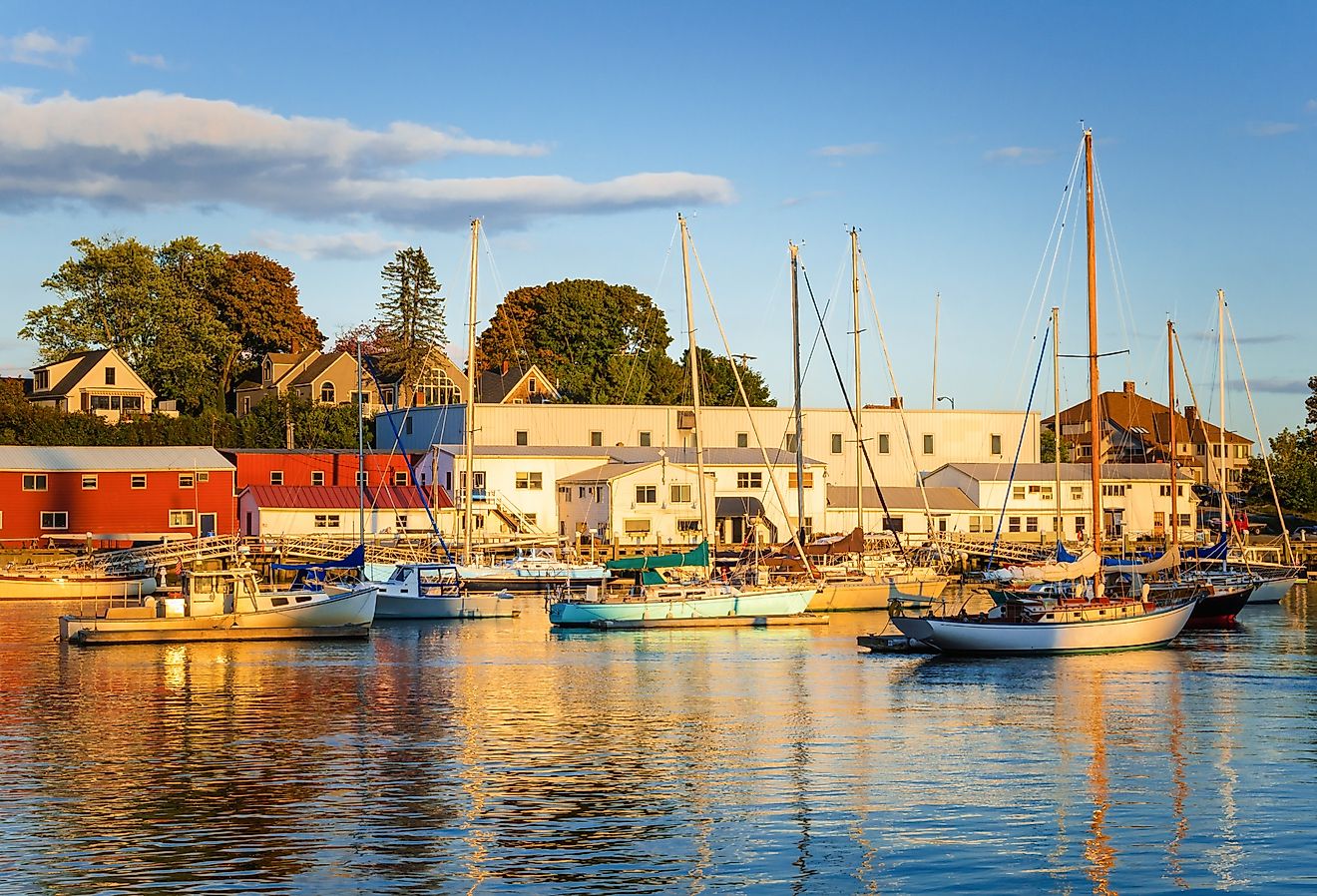
Marblehead's Old Town is a maze of crooked lanes. The house plaques read like a roll call of the 1700s. Fishermen's cottages and sea captains' homes stand shoulder to shoulder. Window boxes work overtime. The harbor below fills with sailboats every season. The earthen ramparts of Fort Sewall overlook the harbor.
Locals call Marblehead the birthplace of the US Navy. The schooner Hannah sailed from here in 1775 as one of the Revolution's first armed vessels. Neighboring towns contest the title with some heat. Inside Abbot Hall hangs The Spirit of '76, one of the most reproduced patriotic paintings in the country. Devereux Beach lines the causeway. The Marblehead Neck Wildlife Sanctuary and the overlook at Castle Rock share the Neck with the grandest shingle houses on the coast.
Swampscott

Swampscott watches the sun drop behind the Boston skyline. The show lasts about half an hour. The town faces southwest. That is why it gets a sunset most of the North Shore never sees. It has three beaches in a row. Phillips Beach is a rocky strand. Fisherman's Beach and Eisman's Beach are closer to the center. Lifeguards work them in summer.
The name has nothing to do with swamps. It comes from an Algonquian phrase usually read as something close to "at the red rock." The phrase suits the reddish ledges along the shore. Swampscott is really a commuter town that looks like a resort. The locals seem happy to leave it that way.
Stockbridge

Stockbridge looks like a Norman Rockwell painting because it is one. The town is out in the Berkshires. Rockwell lived here for the last 25 years of his life. He painted Main Street at Christmas. The town still restages the scene every year. The Norman Rockwell Museum now holds the world's largest collection of his work. The Red Lion Inn has taken in travelers on that same street since 1773.
The town began in the 1730s as a mission settlement among the Mohican people. The preacher Jonathan Edwards served here in the 1750s. Naumkeag supplies the grand scenery. The 1880s mansion has 44 rooms. Stanford White designed it. Terraced gardens drop down the hillside in the famous Blue Steps. Just north, the Stockbridge Bowl spreads below the hills. The fields of Gould Meadows slope down to the shore.
Nantucket

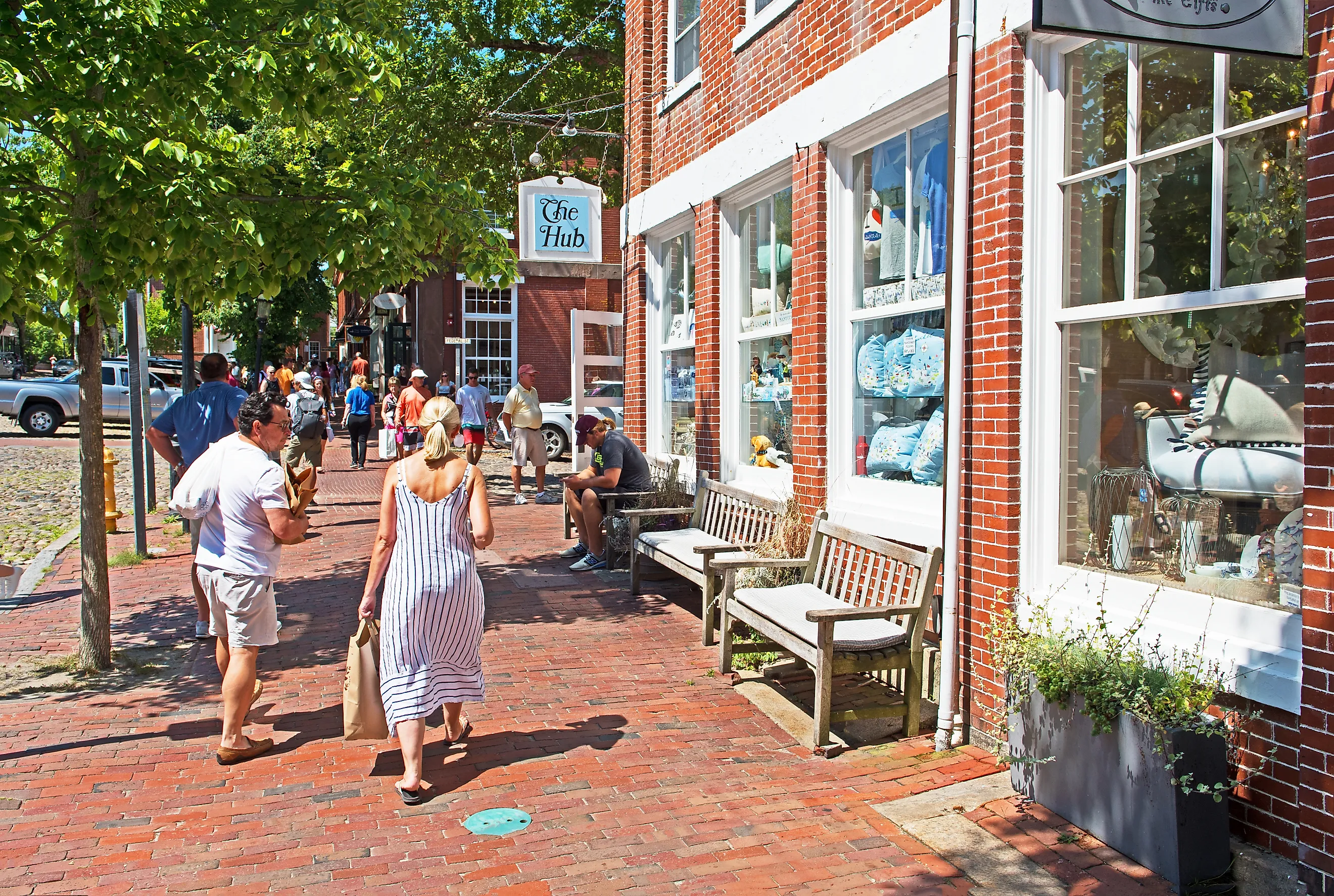
The whole of Nantucket is a National Historic Landmark district. Gray cedar shingles and cobblestone cover it in every direction. The shingled houses, the cobbled Main Street, the white spire of the old whaling town have barely changed since the 1800s. The fog that rolls in gave the island its nickname, the Grey Lady. Out at Siasconset the fishing cottages vanish under climbing roses in summer.
Bartholomew Gosnold sighted the island in 1602. English settlers arrived in 1659. Nantucket belonged to New York until 1692. That year it passed to Massachusetts. Brant Point Light, first built in 1746, greets every ferry at the harbor mouth. Dionis and 40th Pole beaches line the calm north shore. Bartlett's Farm is the island's oldest family farm.
Salem

Chestnut Street in Salem is named regularly among the most beautiful streets in America. A row of Federal mansions lines it. The merchant fleet paid for them. Salem was one of the richest ports in the young republic. The money went straight into the McIntire Historic District. The witch trials of 1692 get the headlines. The sea captains built everything else.
The Witch House was the home of trials judge Jonathan Corwin. It is the only building left with a direct tie to that grim year. The House of the Seven Gables, begun in 1668, broods over the harbor exactly as Hawthorne described. Derby Wharf reaches a half mile into the water. A small lighthouse stands at its tip. Winter Island Park adds a second beacon, Fort Pickering Light. The harbor views explain why the captains never left.
Provincetown

Provincetown is a curl of dunes and lighthouses wrapped around a packed little harbor at the end of the land. At the very tip of Cape Cod, the town crams one of America's oldest continuous art colonies onto Commercial Street. The dunes of the Cape Cod National Seashore start just past the last house. Race Point and Long Point hold the lighthouses. Clapps Pond hides inland in the woods.
The Pilgrims landed here first. The Mayflower anchored in Provincetown Harbor in November 1620. The Mayflower Compact was signed aboard ship in that harbor. Only weeks later did the colonists sail on to Plymouth. The 252-foot Pilgrim Monument is the tallest all-granite structure in the United States. It makes the point from above the town. The Puritans returned the favor. They nicknamed the rowdy port Helltown.
Sandwich

Sandwich saved its 1600s bones better than anywhere else on Cape Cod. The Dexter Grist Mill, built in 1654, still grinds corn beside Shawme Pond. Settlers founded the town in 1637. They named it for the town in Kent, England. That makes it the oldest on the Cape. The Hoxie House is a saltbox from about 1675. It ranks among the oldest houses anywhere on the peninsula.
The town's Quaker meeting gathered in the 1650s. It counts as the oldest continuous Quaker meeting in America. Sandwich later made its name in glass. The Sandwich Glass Museum tells the story with its furnaces lit for demonstrations. The gardens at Heritage Museums and Gardens fill with rhododendrons each spring. The Sandwich Boardwalk is a long wooden ribbon across the salt marsh to Town Neck Beach.
Sturbridge

Sturbridge built itself a second town on purpose. Old Sturbridge Village is the largest living-history museum in the Northeast. It recreates a New England settlement of the 1830s from more than 40 antique buildings moved here from across the region. Costumed farmers, blacksmiths, a working mill bring it to life. The scenery comes with oxen.
The Nipmuc people called part of this area Tantiusques. They mined a graphite deposit there long before colonists arrived. The name still marks a preserved tract south of town. Sturbridge calls itself the Crossroads of New England. Wells State Park has trails to the Carpenter's Rocks ledges above Walker Pond. East Brimfield Lake and Long Pond lie nearby. B.T.'s Smokehouse serves barbecue.
Wellfleet

Wellfleet has a tame side and a wild one. On the tame side, Uncle Tim's Bridge crosses Duck Creek on weathered planks. The town built its fortune on oysters. The name still means exactly that on menus everywhere. Settlers arrived in the 1650s. The town split from neighboring Eastham in 1763.
The wild side belongs to the Cape Cod National Seashore. The Great Island Trail follows the bay shore toward Jeremy Point. The sandy tip vanishes under every high tide. The ocean side drops from the high dunes at Marconi Beach. Guglielmo Marconi sent America's first transatlantic wireless message from the station there in January 1903, President Theodore Roosevelt to King Edward VII. Cahoon Hollow Beach has the Beachcomber. The bar serves chowder and cocktails inside an 1897 lifesaving station.
The Paint Never Dries
The prettiest towns in Massachusetts look this way on purpose. Oak Bluffs repaints its gingerbread cottages. The Dexter mill in Sandwich has ground corn since 1654. The Flying Horses carousel has spun since 1876. Fort Sewall still guards the harbor at Marblehead. These towns look the part because somebody minded them for three or four centuries. That care is what you remember.