11 Off-The-Beaten-Path Towns In Georgia
These Georgia towns are the real deal, still running on the work that built them. In Folkston, the big attraction is a platform where you sit and watch freight trains roll by. Juliette runs on an old grist mill and a plate of fried green tomatoes. Flovilla has a spring the state has kept flowing since the 1820s. Show up on a weekday and it is all still working. That is the whole appeal. Come see Georgia with its sleeves rolled up.
Euharlee

Euharlee gives northwest Georgia one of its most memorable historic stops without the heavier traffic of larger mountain towns nearby. The town's centerpiece is Euharlee Creek Covered Bridge, a wooden bridge built in 1886 that still stretches across Euharlee Creek. Its red siding, timber framing, and creekside setting make the bridge the landmark that immediately explains why Euharlee calls itself the Covered Bridge City. The historic district around the bridge gives visitors more to do than take one photograph. The Euharlee Welcome Center & History Museum sits close by and adds context through exhibits tied to Native American history, early settlement, and the area's agricultural past.
Juliette

Juliette is small, but its main street carries a larger cultural memory because of its connection to the movie "Fried Green Tomatoes." The strongest stop is The Whistle Stop Cafe, which operates in the building tied to the film and still draws travelers for fried green tomatoes, Southern food, and the chance to stand inside a familiar movie setting. The cafe gives Juliette a clear identity, but the town works best when visitors slow down and take in the whole riverfront setting.
Nearby, the former Juliette Milling Company adds scale to the visit. The old mill sits along the Ocmulgee River and helps explain the industrial history that shaped the community before film tourism arrived. McCrackin Street keeps the town's main visitor area compact, with rustic storefronts, gift shops, and railroad scenery close together. During theFriedGreen Tomato Festival, Juliette leans fully into its movie fame, but even on a regular day, the cafe, mill, river, and gravel street make the community feel separate from the usual Georgia weekend route.
Folkston

Folkston has one of Georgia's most unusual pairings: trains and swamp country. Downtown's signature stop is Folkston Funnel Platform, a covered viewing area where rail fans watch trains moving into and out of Florida. The platform turns a working rail corridor into a visitor attraction, complete with the patience, sound, and movement that make the stop feel different from a standard historic downtown walk.
The second half of Folkston's appeal lies outside town at Okefenokee National Wildlife Refuge. The Suwannee Canal Recreation Area serves as the refuge's main entrance near Folkston, giving travelers access to boardwalks, boat tours, paddling routes, and wildlife viewing. Chesser Island Boardwalk and Okefenokee Adventures help visitors experience the swamp without needing a backcountry plan. In town, the Charlton County Courthouse and historic downtown streets add a civic center before or after a swamp visit. Folkston is not polished in a resort town way, which is exactly why the train platform and Okefenokee access feel so memorable.
Flovilla

Flovilla stays small, but its place beside one of Georgia's oldest public recreation areas gives it a strong reason to stop. Indian Springs State Park anchors the visit with mineral spring history, shaded walking areas, cabins, campsites, picnic spaces, and water access. The park's old stonework and spring structures give the landscape a historic character that feels different from a typical lake park.
The park's Stone Spring House remains one of the most recognizable features, connecting the site to generations of travelers who came for the mineral water. Nearby, the Indian Spring Hotel/Museum adds a rare surviving piece of Georgia's early resort history, with the 1823 hotel tied to the Indian Springs area and the 19th-century mineral springs era.McIntosh Lake gives visitors a place for fishing, paddling, and park views, while Idlewilde Event Center reflects the park's continued community use. Flovilla works because the landmarks are close together, making the stop feel full without requiring a packed itinerary.
Ball Ground

Ball Ground sits in Cherokee County with a foothills setting, a historic district, and garden country close by. The town's older center gives visitors a clear starting point at Ball Ground Historic District, where late 19th and early 20th-century buildings show the town's railroad and commercial past. The streets are small enough to take in at walking pace, especially around downtown shops, restaurants, and preserved buildings.
A short drive from the center, Gibbs Gardens gives Ball Ground one of the strongest visual anchors on this list. The gardens cover a large estate landscape with seasonal flowers, water features, Japanese garden areas, and wooded paths. For a more local outdoor stop, Roberts Lake Trail leads toward Roberts Lake Park, a 45-acre green space along Long Swamp Creek where remnants of an old dam and power site add history to the walk. In town, Calvin Farmer Park brings a pond, walking track, playground, and pavilions into the community's public spaces. Ball Ground works because it balances downtown history with gardens and creekside trails.
Tallapoosa

Tallapoosa gives west Georgia a river town with a surprisingly layered past. The Dub Denman Canoe Trail follows the Tallapoosa River for roughly 27 miles through Haralson County, giving paddlers a lesser-known alternative to busier North Georgia waterways. The river setting helps define the town, especially for travelers looking for outdoor recreation without a heavy resort feel.
History gives Tallapoosa its second strong angle. Budapest Cemetery sits east of town and preserves the story of Hungarian wine-making communities founded in the area in the late 1800s. Its small number of graves, arch gateway, and unusual backstory make it one of the more distinctive historic sites in the region. In town, the West Georgia Museum collects local and natural history, including exhibits that help explain the area's late 19th and early 20th-century identity. Helton Howland Memorial Park adds green space, picnic areas, and military displays, while the Historic Walking Trail gives visitors a reason to look closer at Tallapoosa's older architecture.
Woodbine

Woodbine brings Georgia's coastal countryside into the article without relying on the state's familiar beach towns. The town sits along the Satilla River, where Satilla Waterfront Park & Boat Ramp gives visitors river views, pavilions, a boat ramp, restrooms, and access to the riverwalk. The setting feels open and tidal, with live oaks, marsh air, and Highway 17 crossing close by.
The best way to experience Woodbine is on foot. Woodbine Riverwalk begins near the waterfront and follows the river before connecting with the old rail corridor. Woodbine Nature Trail & River Walk adds a paved route along part of the Coastal Georgia Greenway, making the town useful for walkers, cyclists, birders, and travelers who want coastal scenery without a full island trip. Camden County Courthouse gives the town a historic civic landmark, while the annual Crawfish Festival brings a larger gathering to the riverfront each spring. Woodbine feels understated, but the river, trail, courthouse, and park make it one of the strongest off-route coastal stops.
Sparta

Sparta stands out in Georgia's inland plains because its historic architecture feels unusually concentrated for such a small city. The town's most visible landmark is the Hancock County Courthouse, a Second Empire-style courthouse that has served as both a civic symbol and a preservation story. Its clock tower and courthouse square give the town a strong visual center.
The surrounding Sparta Historic District adds more depth, with older homes, commercial buildings, and streets tied to the town's long architectural history. Sparta Hancock Historical Society helps preserve that local story, while historic district records highlight older properties such as the Drummer's or Lafayette Hotel as part of the town's built heritage. Travelers should treat some of Sparta's older properties as exterior-view historic resources unless a local organization confirms public access. Sparta is not a glossy tourist town, but that is part of its value. Its courthouse, historic district, and preservation work give travelers a chance to see a Georgia town with architectural weight and a quieter public profile.
Cochran

Cochran gives Middle Georgia an off-the-beaten-path stop shaped by agriculture, courthouse architecture, and local entertainment. The most distinctive landmark is the Cochran-Bleckley Cotton & Peanut Museum, a free open-air museum that explains how cotton and peanuts shaped the county's economy. Its equipment, displays, and agricultural focus make it more specific than a general local history museum.
Downtown adds another historic layer through the Bleckley County Courthouse, a 1914 Neoclassical Revival building connected to the county seat. Nearby, the Cochran Municipal Building and School give the city another historic property tied to civic and educational life. For a different kind of local landmark, Cochran Motor Speedway brings dirt-track racing into the town's visitor appeal, whileUchee Trail Golf Club adds recreation beyond the square. Cochran works because it does not lean on one attraction. It gives travelers agriculture, architecture, racing, and small-town civic history in a compact Middle Georgia setting.
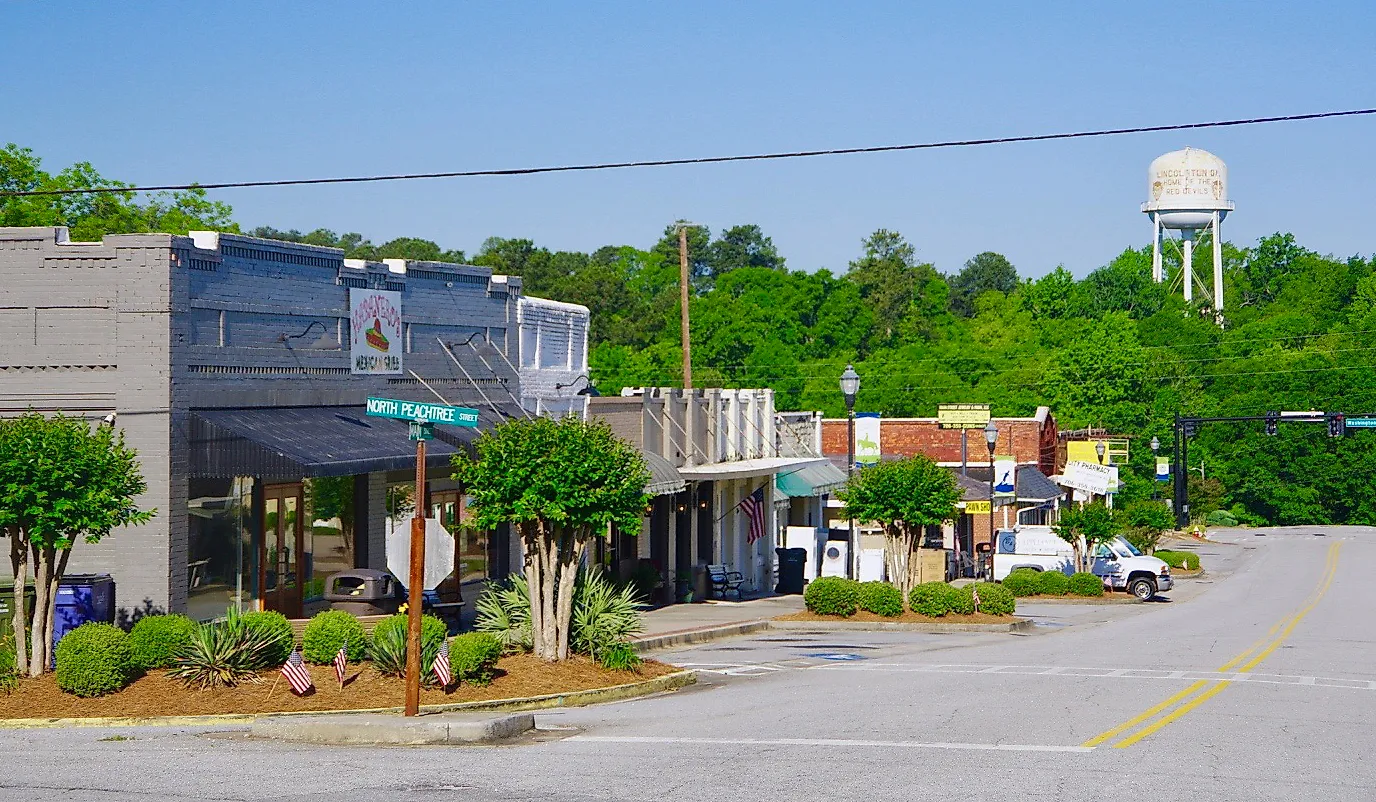
Lincolnton

Lincolnton sits near one of Georgia's major lake landscapes, but it stays far quieter than many better-known water towns. Elijah Clark State Park is the main anchor, resting on the western shore of Clarks Hill Lake, also known as Lake Strom Thurmond. The park has boat ramps, a fishing pier, a swimming beach, campsites, cottages, and lakefront scenery that make it a strong weekend base.
History adds another reason to stop. Lincoln County Historical Park recreates pieces of an older rural Georgia community through preserved and relocated structures. Its collection includes a grist mill, sawmill, smokehouse, early doctor's office, blacksmith shop, and late 1700s log cabin. Graves Mountain gives the area a geological landmark known for mineral collecting opportunities. Lincolnton's appeal comes from how naturally the lake, state park, historical park, and courthouse town setting work together. It is a practical choice for travelers who want water, history, and quiet roads in the same trip.
Talking Rock

Talking Rock is one of the smallest places on this list, and that scale is part of its appeal. The town grew around railroad life, and the main visitor area still feels like a short pause along a mountain road rather than a developed destination.Talking Rock Schoolhouse Museum, local murals, and the old town center give the community a compact historic feel.
The town's official attractions add more than expected for such a small place. Talking Rock Park & Pavilion sits along Talking Rock Creek, giving travelers a green pause close to the center. Shops and local stops such asLateral Drift General Store, Talking Rock Pottery, Petticoat Junction, and Talking Rock Brewery help fill out a slow afternoon without turning the visit into a crowded shopping district. The town also keeps railroad imagery visible through vintage train cars and trackside scenery. Talking Rock works best for travelers who like very small towns, mountain roads, local shops, creek views, and places that still feel easy to miss unless someone points them out.
Georgia Beyond The Usual Route
Georgia's off-the-beaten-path towns show how much variety sits outside the state's most familiar travel circuits. Euharlee and Juliette turn single landmarks into fuller historic stops through bridges, mills, museums, and main streets. Folkston and Woodbine bring trains, swamp country, riverwalks, and coastal marsh scenery into view. Other Georgia towns add mineral springs, gardens, and mountain storefronts. Together, these towns prove that a memorable Georgia trip does not have to depend on the most photographed places. Sometimes the better route is the one that follows a creek, an old rail line, a river, or a courthouse square that most travelers pass without stopping.