12 Prettiest Small Towns In UK
Across the United Kingdom, some of the most memorable places are not the largest cities but the small towns in between. Coastal villages built around fishing harbors, countryside settlements shaped by stone cottages, and market towns that grew around rivers and trade routes all offer a different view of British life. What makes these towns stand out is the way their surroundings continue to influence how people experience them. A walk to the local bakery might pass a medieval church, a harbor path might double as an evening stroll, and a village pub might still serve as the main meeting place for residents. Along Cornwall's Atlantic coastline and up into the Scottish Highlands, these small communities show how architecture, nature, and local traditions continue to shape some of the UK's prettiest places in 2026.
Castle Combe, England

Stone cottages, a small stream, and a market cross that has stood for centuries give Castle Combe one of the most recognizable village scenes in England. Built from the warm limestone common across the Cotswolds region, the village has kept much of its medieval layout because modern development has largely remained outside the historic streets. St. Andrew's Church, a medieval parish church with a distinctive tower, has watched over the village for hundreds of years and remains one of its most important landmarks.

Walking through Castle Combe feels less like visiting a collection of attractions and more like passing through a place that has simply continued as it always has. The Bybrook River runs alongside stone bridges and gardens, while The Castle Inn, a traditional village pub dating back several centuries, provides a natural stopping point near the center. Early mornings are especially quiet, when only residents, dog walkers, and the sound of the church bells break the stillness.
Rye, England

Rye rises above the surrounding marshland with streets that reveal its medieval past at almost every turn. The town was once surrounded by water and played an important role as a member of the Cinque Ports, a historic group of coastal towns linked to England's maritime defense. Today, narrow lanes climb toward St. Mary's Church, where the tower offers views across the rooftops, countryside, and distant coastline.

The most memorable walk leads along Mermaid Street, where timber-framed houses, uneven paving, and old inns create one of the country's most atmospheric streets. Away from the main lanes, independent bookshops, antique stores, and cafés fill former merchant buildings. The Mermaid Inn, a historic timber-framed hotel dating back centuries, remains one of the town's best-known buildings. Nearby, Rye Harbour Nature Reserve provides a different side of the area, with open wetlands and walking paths where the landscape feels much larger than the town itself.
St. Ives, England

Few coastal towns in Britain have blended fishing heritage and artistic influence as closely as St Ives. Whitewashed cottages, narrow lanes, and beaches set between rocky headlands create the setting that attracted painters to the Cornish coast for generations. St Ives Harbour remains central to the town's character, where fishing boats still share the waterfront with cafés, seafood restaurants, and galleries. Tate St Ives, a modern art gallery overlooking Porthmeor Beach, continues the town's creative tradition by showcasing artists connected to Cornwall's influential art movement.

Beyond the harbor, St Ives is shaped by the way its streets, beaches, and viewpoints connect naturally. Porthmeor Beach has become part of everyday life, with surfers, walkers, and families using the shoreline throughout the year, while the surrounding lanes are filled with independent galleries, bakeries such as St Ives Bakery, and small shops that give the old streets their character. Coastal walks lead around rocky headlands toward quieter views across St Ives Bay, where the changing light that inspired generations of artists remains one of the town's defining features.
Clovelly, England

Clovelly is shaped by one unusual feature: there are no ordinary streets running through the village. Instead, a steep cobbled path winds down the hillside toward the harbor, following a layout that developed long before cars changed the way towns were built. White cottages covered with flowers line the route, while glimpses of the Bristol Channel appear between buildings as the path descends. Nearby, Clovelly Harbour remains closely connected to the village's fishing heritage, while Clovelly Court Gardens adds another layer of history with its traditional walled gardens and coastal setting.

At the bottom of the hill, Clovelly Harbour remains closely connected to the sea, with fishing boats, lobster pots, and small restaurants overlooking the water. The climb back up is part of the experience, with visitors stopping at places like The Red Lion Hotel, a historic inn beside the harbor, before making their way through the village again. The steep streets can be challenging, but they are also what preserve Clovelly's distinctive character. It feels like a place built around walking rather than passing through.
Portmeirion, Wales

Colorful buildings, Italian-style architecture, and views across a Welsh estuary make Portmeirion unlike any other village in Britain. Designed by architect Sir Clough Williams-Ellis during the twentieth century, the village was created as a carefully planned landscape rather than growing naturally over hundreds of years. Bright facades, terraces, gardens, and courtyards sit beside the edge of the Dwyryd Estuary, where the surrounding mountains provide a dramatic backdrop. The Central Piazza, with its pastel buildings and open courtyard, acts as the village's main gathering space, showing how Portmeirion was designed around movement, views, and small moments of discovery rather than traditional streets.

Exploring Portmeirion is less about reaching one landmark and more about discovering small details along the way. Portmeirion Gardens spread through woodland and coastal paths, with subtropical plants, hidden corners, and viewpoints appearing throughout the grounds. Visitors can walk past The Gwyllt, a woodland garden covering more than 70 acres, before returning to the village for a meal at Hotel Portmeirion's Castell Deudraeth or browsing the shops and galleries set inside the colorful buildings. With cafés, gardens, and architecture all connected within the same landscape, Portmeirion feels like a place designed to be explored slowly rather than simply viewed.
Robin Hood's Bay, England

Robin Hood's Bay appears almost as if it has been folded into the hillside above the North Sea. Narrow passages wind between old stone cottages before dropping toward the shoreline, reflecting the village's origins as a fishing community where buildings were packed closely together for protection from coastal weather. The steep streets and changing views make even a short walk feel different depending on the direction, with small courtyards, hidden corners, and glimpses of the sea appearing between the houses.

At low tide, the beach reveals rock pools and fossils beneath the cliffs, while the surrounding coastline attracts walkers following the Cleveland Way National Trail, one of England's best-known long-distance walking routes. The village's old fishing cottages now house cafés, pubs, and independent shops, including The Old School House, a café set inside a converted historic building, and The Laurel Inn, a traditional pub overlooking the winding streets. Nearby, Robin Hood's Bay Museum explores the village's maritime past and smuggling history, adding context to the narrow lanes and old stone buildings. By evening, many residents and visitors make their way toward the shoreline, where the sound of the waves and village lights create a quieter side of this dramatic coastal community.
Luss, Scotland

The first thing many people notice in Luss is the view across the water. Luss Pier, extending into Loch Lomond, looks toward the mountains beyond the shoreline and has become one of the village's most recognizable scenes. Behind it, rows of sandstone cottages with slate roofs create a carefully preserved streetscape that developed during the nineteenth century when the village was rebuilt around the local estate.
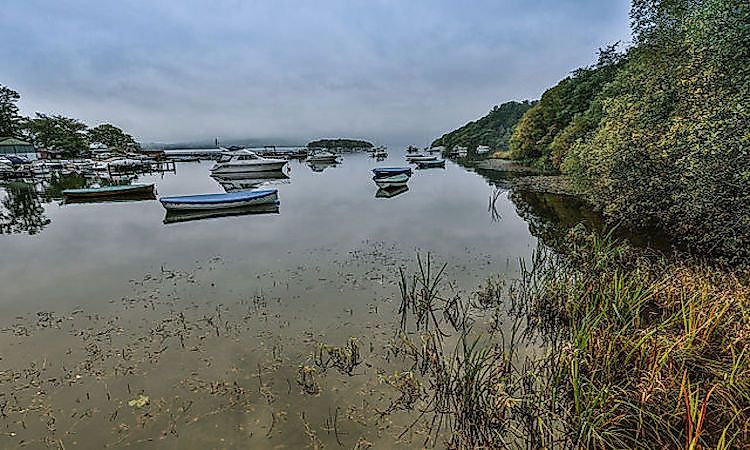
Although the scenery attracts visitors, Luss still feels connected to everyday Highland life. Residents walk along the loch, launch boats from the shore, and gather at local spots such as The Village Rest, a café and restaurant serving visitors and locals throughout the year. The nearby Loch Lomond and The Trossachs National Park, Scotland's first national park, provides walking routes, forests, and mountain landscapes just beyond the village. Even during busy summer months, it only takes a short walk along the shoreline to find quieter views across the loch.
Hawkshead, England

Hawkshead's appeal comes from the way it sits between the landscapes that made the Lake District famous. The village itself is made up of whitewashed cottages, small squares, and narrow lanes that were designed centuries before modern traffic. The Old Grammar School, where poet William Wordsworth studied during his childhood, reflects the literary connections that have long been part of Hawkshead's story.

Beyond the village streets, the surrounding fells quickly become part of everyday life. Walkers leave from the center toward woodland paths, lakes, and open countryside, while visitors returning in the afternoon often stop at traditional tea rooms or pubs such as The Queen's Head. Beatrix Potter Gallery, housed in a former solicitor's office, adds another connection to the area's creative history. Hawkshead does not rely on dramatic landmarks within the village itself. Its appeal comes from how naturally the old streets open into one of England's most famous landscapes.
Bourton-on-the-Water, England

The River Windrush runs through the middle of Bourton-on-the-Water, passing beneath several low stone bridges that have shaped the village's appearance for generations. These crossings are the reason behind its nickname, the "Venice of the Cotswolds," but the village feels less like a postcard and more like a place organized around the water itself. Grassy banks, willow trees, and limestone buildings create open views throughout the center.

On warmer days, families sit beside the river while visitors move between cafés, bakeries, and independent shops. The Model Village, a detailed one-ninth-scale replica of Bourton-on-the-Water built from local stone, offers a different perspective by showing how the village fits together. Nearby, Cotswold Motoring Museum, which displays historic vehicles and motoring memorabilia, adds another layer beyond the scenery. The best moments in Bourton-on-the-Water are often simple ones, such as sitting beside the river while village life continues around you.
Bibury, England

Bibury is best known for Arlington Row, a line of former weavers' cottages that has become one of the most photographed streets in Britain. Built from local limestone beside the River Coln, these cottages reflect the traditional materials and craftsmanship that define much of the Cotswolds. The village has remained small and carefully preserved, with stone houses, flower-filled gardens, and waterways creating a setting that feels closely connected to the surrounding countryside. St Mary's Church, a medieval parish church near the river, adds to the village's historic character with its peaceful churchyard and centuries-old architecture.

Away from the main viewpoint, Bibury becomes noticeably quieter. A walk along the River Coln leads past stone bridges, grassy banks, and stretches of countryside where the pace of life feels unchanged. Bibury Trout Farm, one of England's oldest working trout farms, continues to operate along the river and remains part of the village rather than simply a place for visitors to stop. Nearby, The Catherine Wheel, a traditional Cotswold pub, provides a local gathering place among the stone cottages. Bibury's appeal comes from the way its buildings, river, and countryside blend together, creating a village that feels shaped by its surroundings rather than separated from them.
Plockton, Scotland

Palm trees beside a Highland harbor are not something most people expect to find in Scotland, but Plockton's sheltered position allows these unusual plants to grow along the waterfront. The village sits beside Loch Carron, where calm waters, fishing boats, and mountain views create a setting that feels different from many other Highland communities. Traditional cottages line the shore, while small islands sit just offshore.

The harbor remains the center of village life, with boats leaving for wildlife trips and residents gathering around places such as The Plockton Hotel, a historic inn overlooking the water. Small waterfront chip shops and seafood restaurants serve locally caught fish, while evenings often become quieter as the fishing boats return and the shoreline empties. Nearby walking routes lead to viewpoints above the village, including Plockton Viewpoint, where the surrounding coastline and mountains can be seen together. Its remote location gives Plockton a slower pace, but the community remains lively throughout the year.
Staithes, England

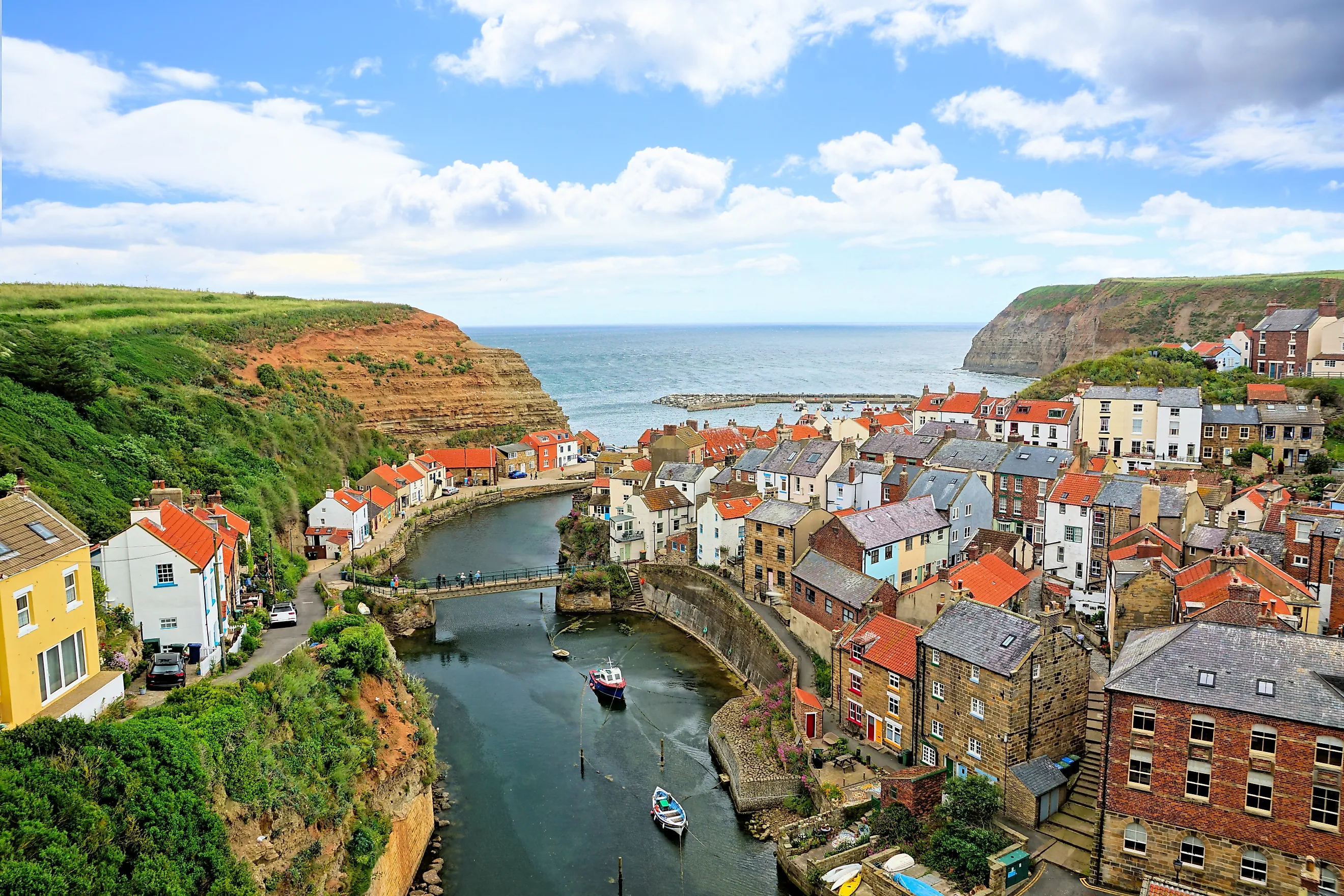
Staithes looks as though it has been built directly into the cliffs above the North Sea. Red-roofed cottages descend toward the harbor, where narrow lanes twist between buildings that once belonged to fishermen and boat workers. The village was once an important fishing port, and traces of that history remain visible around the waterfront and old stone buildings. The sea still shapes how people experience Staithes. At low tide, the beach reveals rock pools and fossils, while the surrounding cliffs attract walkers following the Yorkshire coastline.

Staithes Heritage Centre, located inside a former chapel, tells the story of the village's fishing history and its connection to explorer Captain James Cook, who worked here as a young man. Today, galleries, cafés, and pubs occupy many of the old buildings, creating a place where visitors can explore historic streets before ending the day beside the harbor. Shops such as Staithes Gallery, which showcases work from local artists, along with small independent craft and vintage shops, add to the village's creative side while keeping its old streets connected to modern community life.
Where Britain's Small Towns Feel Most Memorable
The prettiest small towns in the UK stand out because each one has developed its own connection with the landscape around it. Some are shaped by the sea, where fishing harbors, beaches, and coastal paths remain part of local life, while others are defined by rivers, stone cottages, medieval streets, or mountain scenery that has been preserved for generations. Across the Cotswolds and the Scottish Highlands alike, these places show how history and nature can exist together.
What makes these towns special is the way ordinary moments become part of the experience. A walk beside a loch, an evening near a village harbor, or a coffee beside a historic street can reveal just as much as any landmark. Their charm comes from communities where architecture, scenery, and local traditions still feel naturally connected.