The County That Grows The Most Corn In America
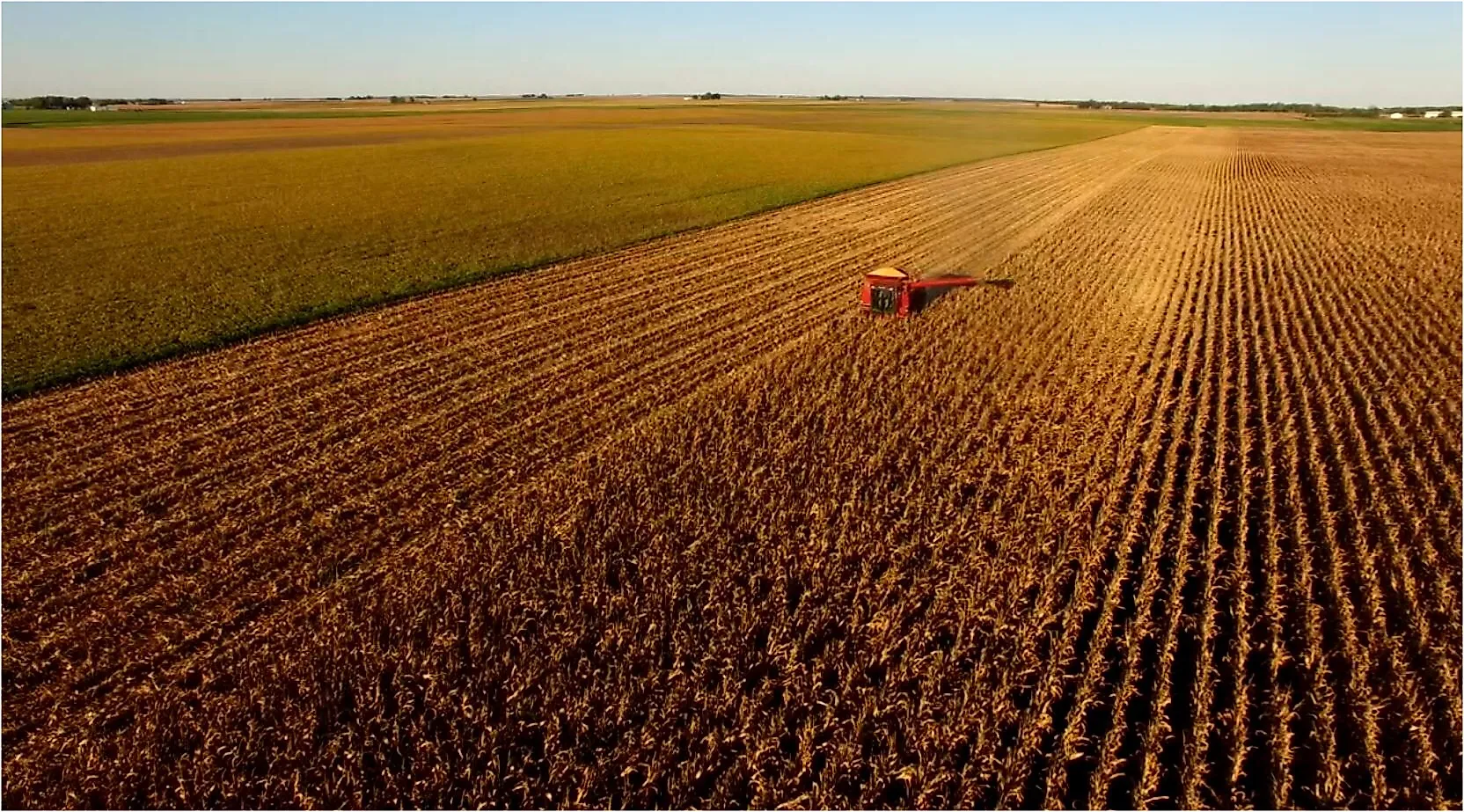
Corn is not just another crop in the US. It feeds the cattle, hogs, and poultry that stock the meat counter, and ethanol plants turn it into fuel blended with gasoline. Fields of it stretch across the Corn Belt, and no county grew more of it in 2025 than McLean County, Illinois. Farmers there harvested a reported 77.31 million bushels from 318,000 acres. Other counties pulled more corn from each acre, but McLean's sheer acreage, deep prairie soil, and flat terrain produced the largest total in the country.
America's Biggest County Corn Harvest

Just how much corn is 77.31 million bushels? For measuring corn harvests, a bushel represents 56 pounds of kernels removed from the cob. That puts McLean County's 2025 harvest at approximately 4.3 billion pounds of corn.
The county's enormous area of cornfields helps explain that total. Stark County, another Illinois county, produced more corn per acre in 2025, but McLean harvested almost four times as much land. Its much larger growing area more than made up for the difference in yield.
McLean also produced a huge harvest the previous year, generating about 76.2 million bushels in 2024. Farmers grew slightly less corn per acre in 2025 but harvested more acres, pushing the overall total higher. The two seasons show how both the size of the growing area and the amount each acre produces determine a county's final harvest.
The Geography Behind The Corn

McLean County's farming success owes much to the prairie soils of central Illinois. Grasses once covered this region, adding organic matter to the ground as roots and other plant material decomposed. The Natural Resources Conservation Service, part of the US Department of Agriculture, describes soils formed under prairie vegetation as typically dark and rich in organic matter, helping explain Illinois' familiar black soil.
One local example is Drummer soil, which has a thick, dark upper layer and occurs on nearly level ground. Corn and soybeans are its principal crops. McLean County's comprehensive plan identifies several soil groups containing Drummer as suitable for growing crops, alongside other productive agricultural soils.
Much of the county's farmland is nearly flat or gently sloping, which allows farmers to operate large machinery efficiently across broad fields. Some soils drain poorly, so managing excess water is also important. According to the 2022 Census of Agriculture, farms occupied approximately 597,000 acres in McLean County. That enormous agricultural footprint gives farmers room to produce corn on a scale few US counties can match.
How Farmers Grow So Much Corn

Good soil provides a strong foundation, but farming methods also influence how much corn reaches the harvest. Across Illinois, farmers commonly alternate corn and soybeans, planting one crop in a field one year and the other the next. University of Illinois research has found that corn following soybeans can produce higher yields while requiring less nitrogen fertilizer than corn planted repeatedly in the same field.
Water management is another important part of farming these prairie soils. In poorly drained fields, buried pipes called tile drains carry excess water away beneath the surface. Despite the name, modern drainage systems commonly use plastic pipes. Removing excess water improves soil conditions around plant roots and can help fields dry sooner for planting and other farm work. University of Illinois researchers identify drainage as an important part of crop production across poorly drained parts of the Midwest.
Farmers also make decisions about seed varieties, fertilizer, weed control, insects, and the timing of field work. The USDA credits advances in crop genetics, machinery, fertilizers, pest management, and other farming practices with helping US corn yields rise dramatically over time.
Those approaches differ between farms. McLean County's 2022 agricultural census found that 30% of farms reported using no-till practices, meaning crops were planted without first plowing the field. Other farms reported reduced tillage, which disturbs the soil less than conventional plowing. There is no single method responsible for McLean's enormous corn crop.
The same census classified 94% of McLean County's farms as family farms. Corn also shares the landscape with other crops. Farmers harvested roughly 273,000 acres of soybeans in 2022, making soybeans the county's second-largest crop by acreage after corn. Hay and wheat occupied smaller areas. Soybeans are particularly important because their place in crop rotations can help support the following year's corn crop.
Other Counties That Grow Huge Amounts Of Corn

McLean County has plenty of company in the Corn Belt. Livingston County, directly north of McLean, produced about 62.9 million bushels of corn in 2025 from 289,000 harvested acres. Farther north, La Salle County harvested about 61.3 million bushels from 279,500 acres. Those totals remained well below McLean's 77.31 million bushels, but they still represent enormous harvests. Their production also shows how strongly corn farming is concentrated across the broad agricultural counties of central and northern Illinois.
Major county harvests extend well beyond Illinois. Iowa produced roughly 2.77 billion bushels of corn statewide in 2025, while Nebraska produced more than 2 billion. Counties across both states routinely harvest tens of millions of bushels when large planting areas combine with strong yields. The county at the top can change from one growing season to another as rainfall, heat, planted acreage, and yields shift.
McLean's 2025 numbers show what it takes to finish ahead of that competition. Farmers harvested more than 300,000 acres of corn while averaging about 243 bushels per acre. A county can achieve a higher yield on individual acres and still finish behind McLean if it has substantially less land devoted to corn. The national leader therefore needs both productive fields and an extraordinary amount of acreage.
What Happens To All The Corn

The corn counted in these totals is grain corn rather than the sweet corn eaten fresh from the cob. Farmers grow it primarily for livestock feed, fuel, industrial processing, and food ingredients. Across the US, animal feed and ethanol production account for large portions of the crop.
Corn supplies feed for cattle, hogs, and poultry. Ethanol plants process the grain into alcohol that is blended with gasoline, while a byproduct called distillers grains can return to the agricultural system as livestock feed. Food manufacturers process corn into cornmeal, flour, cereal ingredients, and grits, while other methods produce corn oil, cornstarch, and sweeteners. US growers also export large quantities of corn, connecting Midwestern farms with buyers around the world.
Those figures describe the major uses of US grain corn rather than the exact destination of McLean County's individual harvest. They help explain why so much land is devoted to the crop. The demand reaches far beyond fresh food, tying cornfields to livestock operations, fuel producers, manufacturers, and international markets.
A Harvest That Changes Each Year

McLean County led US counties in corn production in 2025 because it combined fertile soil, extensive farmland, strong yields, and hundreds of thousands of harvested acres. It may not hold the title every year. Weather, planting decisions, and changes in yield can quickly reshape county rankings from one season to the next.
Even so, a harvest of more than 77 million bushels shows the remarkable scale of corn farming in central Illinois. Nearby counties also produce tens of millions of bushels, while Iowa, Nebraska, and other Corn Belt states add enormous harvests of their own. Once the crop leaves the field, it enters a much larger system of animal agriculture, fuel production, food manufacturing, and trade, giving one county's corn harvest an impact far beyond Illinois.