12 Prettiest Downtown Strips In Texas
Texas packs a huge amount of architectural variety into its main streets. Some of these places built their identities around river ports and rail booms, others around German settlers, oil money, or barbecue. And in most cases, you can still see exactly where it all came from just by walking a single block. Waxahachie is doing full Victorian everything, and Fredericksburg has somehow turned a Hill Country limestone strip into one of the most visited main streets in the state. Whether you're after a cold scoop of Blue Bell in Brenham or a long look at the Marfa lights after dark, these twelve towns will impress you with their downtown strips.
Granbury

Granbury is the kind of town that's easy to spend a full day in without really trying. The original plaza wraps around the limestone Hood County Courthouse and its clocktower, and Farina's Winery & Café sits right on the plaza with wine, pasta, and patio tables that make it difficult to leave. The Granbury Opera House has been running live productions in its original 1886 building (rebuilt and reopened in 2015 after a 2010 fire) for years, and Lake Granbury City Beach adds sand and boardwalk scenery within easy walking distance of the shops. If you want the local history side of things, the Bridge Street History Center inside the former post office covers Hood County families, rail links, and frontier-era stories without making it feel like homework.
Bastrop

Bastrop sits beside the Colorado River with a main corridor full of painted signs, balconies, and 1800s commercial facades that give it a lived-in, unhurried feel. The Riverwalk follows the water with picnic lawns and views toward the iron truss bridge, and Neighbor's Kitchen & Yard keeps the riverfront side of things lively with pizza, music, and outdoor seating. The Bastrop Opera House on Chestnut has been staging plays and musicals in its 1889 building since long before the town became a weekend destination. For the full picture of how the place got here, the Bastrop County Museum & Visitor Center ties together the lumber, rail, and river commerce that shaped the corridor you're walking through.
Waxahachie

Waxahachie goes all in on Victorian architecture, and it works. The Ellis County Courthouse at the center of it all (red sandstone, pink granite, turrets, and Romanesque carvings) is genuinely one of the more striking courthouses in the state, and the surrounding blocks of arched windows and decorative cornices keep the visual momentum going. The Webb Gallery is worth a stop for its collection of folk art, carnival banners, and outsider art that you won't find anywhere else. On West Main, the restored 1928 Texas Theatre hosts concerts and classic films, and the Waxahachie Creek Hike & Bike Trail offers a shaded break from the brickwork if you need one.
Brenham

Brenham's downtown has the kind of main street energy that comes from a community actually using its historic blocks rather than just preserving them. Blue Bell Creameries is the obvious first stop, with an observation room, ice cream parlor, and company exhibits at the visitor center, and it's worth every minute. Toubin Plaza turns a small footprint into an outdoor history lesson on Brenham's 1800s cistern and early fire protection, which sounds dry but isn't. The Barnhill Center at Historic Simon Theatre uses a 1925 movie palace for concerts and community performances, and Unity Theatre just off Alamo presents professional plays and musicals inside a renovated warehouse that gives the arts scene here more depth than most towns this size can claim.
Wimberley

Wimberley sits among limestone hills between San Marcos and San Antonio, and the Cypress Creek scenery sets the tone before you've even reached the square. Blue Hole Regional Park is the natural centerpiece, with creek-fed swimming under ancient cypress trees and trails alongside clear water that stays cool even in summer. Around Wimberley Square, you'll find Kiss the Cook Kitchen Shop, Rancho Deluxe, galleries, boutiques, and shaded patios that make for easy browsing. EmilyAnn Theatre & Gardens spreads across a hillside with outdoor stages, sculpture paths, and seasonal light displays that give the town a creative side to match its natural one. The Winters-Wimberley House handles the history, with exhibits on ranching, pioneer life, and the floods that have shaped the area over the years.
Marfa

Marfa is unlike anywhere else in Texas, and it knows it. The high desert setting frames Highland and San Antonio avenues with adobe walls, pale stucco, and gallery glass, with the Davis Mountains sitting quietly in the background. Hotel Paisano is the place to start, with Spanish Colonial Revival arches, decorative tilework, and genuine film history from the 1955 production of Giant. The Presidio County Courthouse rises above it all with a pink-stucco exterior and a spiral-stair lookout worth climbing for the views. After dark, head east to the Marfa Lights Viewing Area for the region's most talked-about mystery. The Chinati Foundation, which places large-scale works by Donald Judd, Dan Flavin, Carl Andre, and others in former military buildings, is the reason the art world started paying attention to this corner of the Trans-Pecos in the first place.
Jefferson

Jefferson looks like a river port town because it was one, and the iron balconies, brick fronts, and 1800s mercantile buildings along its main corridor make that history impossible to miss. The Excelsior House Hotel has been welcoming guests since the 1850s, with antique-filled rooms and columned porches that feel genuinely unchanged. Jefferson General Store keeps the soda-fountain character alive in a former hardware shop stocked with candy barrels, gifts, and ice cream. The Jay Gould Railroad Car (the Atalanta) is a fascinating detour into Gilded Age rail luxury inside a restored private coach tied to the financier's 1882 visit. And just outside town, Caddo Lake State Park extends the scenery into bald cypress groves, Spanish moss, and quiet bayou paddling that's hard to beat.
Llano

Llano sits on the river of the same name near the Highland Lakes, and the combination of granite civic architecture and open water views gives it a character that feels distinct from the Hill Country towns nearby. The river bridge is worth the walk for the limestone banks and sunset angles alone, and it's only steps from the shop-lined blocks of the plaza. The 1893 Llano County Courthouse, built of local red granite with limestone trim and a tall central clocktower, anchors the whole downtown visually. Gio's Italian Restaurant inside an 1882 building is a reliable dinner stop, and the local history collection in the former drugstore covers ranching tools, railroad artifacts, and Native American objects with a thoroughness that rewards the curious.
Lockhart

Lockhart has a strong claim to being the barbecue capital of Texas, and Kreuz Market makes the case convincingly with smoked sausage, brisket, and shoulder clod served on butcher paper in a no-frills setting that has been doing things the same way for a long time. But the downtown is worth the visit beyond the smoke. The red-and-white Caldwell County Courthouse with its mansard roofs, arched windows, and tall tower is one of the more distinctive in the state, and the shaded sidewalks and ornate masonry of the surrounding blocks hold up well on foot. Lockhart State Park adds Clear Fork Creek, hiking routes, and CCC stonework if you need a break from the main street, and the Dr. Eugene Clark Library, built in 1899, still has its stained glass and pressed-tin ceilings fully intact.
Corsicana

Corsicana's Beaton corridor carries brick business blocks and oil-boom-era architecture that makes the town's economic history easy to read from the street. Collin Street Bakery is a genuine local institution, founded in 1896 and known for fruitcakes, pecan cakes, and cookies that have been shipped around the world for over a century. The 1921 Palace Theatre brings concerts, films, and stage productions beneath a restored vintage marquee that anchors the block nicely. Jester Park gives the area a leafy green break with walking space and sports fields, and the Pearce Museum at Navarro College rounds things out with Civil War documents, Western art, and early Texas settlement material that adds some historical weight to the visit.
Mineola

Mineola's Johnson and Commerce corridors have the painted signs, brick fronts, and railroad-era architecture of a town that built itself around the tracks and hasn't tried to pretend otherwise. The Beckham Hotel on Commerce Street is the early-20th-century landmark that anchors the rail-boom story, and the Mineola Amtrak depot keeps that identity alive as an active stop near the older business blocks. Lake Country Playhouse at the Historic Select Theater presents movies, concerts, and stage productions under a classic marquee that gives the main street some cultural pull. For a longer stretch outdoors, Mineola Nature Preserve covers more than 2,900 acres of Sabine bottomland, wetlands, and equestrian routes that feel genuinely remote for something this close to town.
Fredericksburg

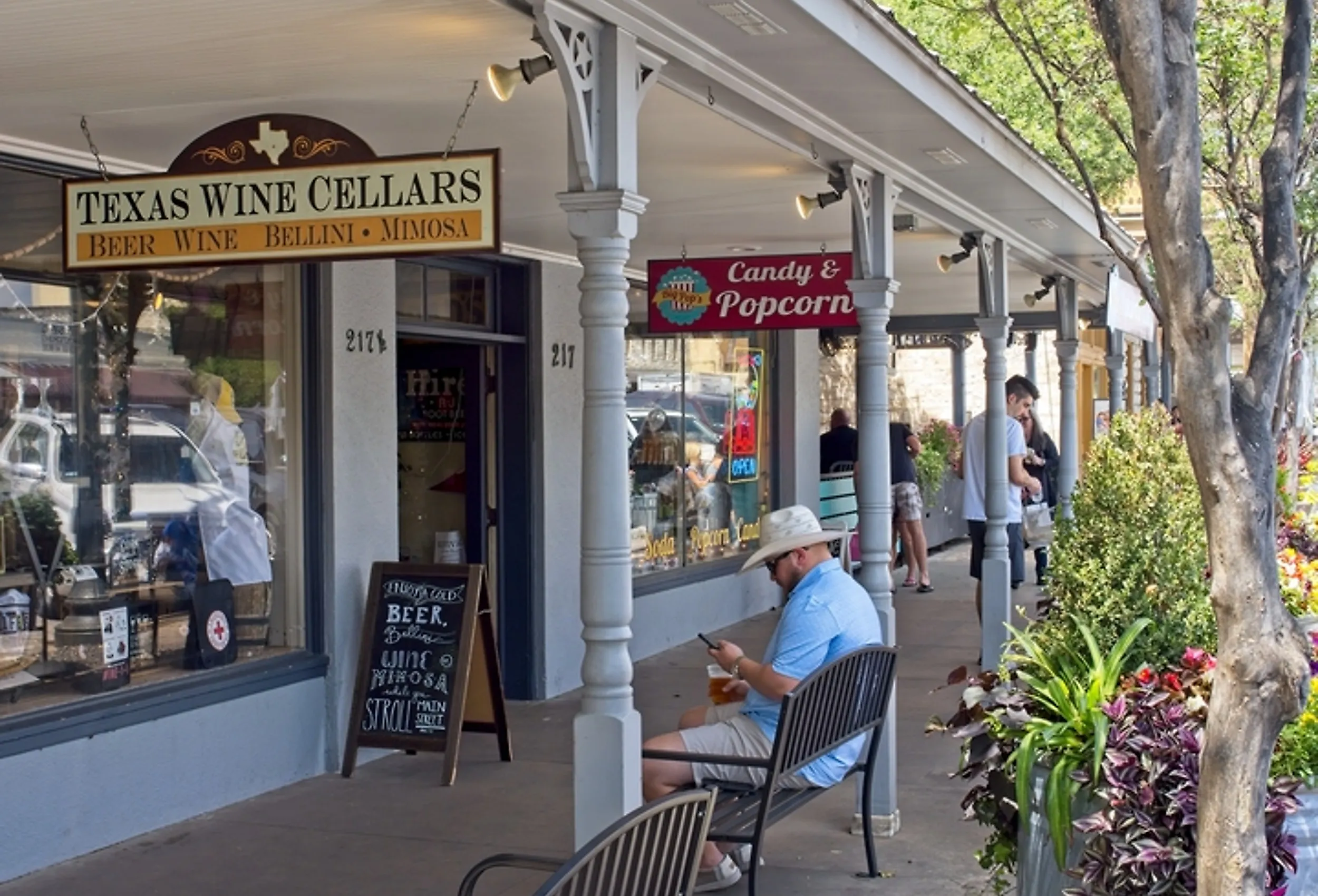
Fredericksburg's Main Street is one of the most visited in Texas, and the limestone shops, shaded courtyards, and tasting rooms backed by low hills make it easy to see why. The German-settler history is everywhere, in the Pioneer Museum complex with its log cabins, Sunday houses, and schoolhouse, and in Marktplatz at the center with its Vereins Kirche replica and festival lawns. The National Museum of the Pacific War is the kind of institution that surprises you with its scale, covering several blocks with aircraft, submarines, battlefield displays, and the Admiral Nimitz Gallery. And when you're ready to get out of town for a few hours, Enchanted Rock State Natural Area is just up the road, a pink-granite dome with summit trails and wide open views across the Hill Country that put the whole trip in perspective.
Texas main streets reward the people who slow down enough to actually read them. The courthouse tells you who had money and when, the opera house tells you what people did on a Saturday night, and the old hardware store turned soda fountain tells you everything else. Granbury's lakeside plaza, Jefferson's bayou-adjacent port blocks, and Fredericksburg's limestone Hill Country corridor all carry distinct stories running through their streets. You just have to show up and pay attention. Pick the one that sounds most like your kind of afternoon, and go from there.