6 Most Rattlesnake Infested Areas in Georgia
Georgia's varied landscapes support the state's three rattlesnake species. The coastal plain across the southern third of the state is prime habitat for the eastern diamondback rattlesnake (Crotalus adamanteus), found in places such as Cumberland Island National Seashore. Timber rattlesnakes (Crotalus horridus) favor the forested uplands of the Appalachian Mountains, and pygmy rattlesnakes (Sistrurus miliarius) occur in areas such as Lake Hartwell. Since each species is adapted to different habitats, rattlesnakes occur across most of the state. The list below covers six areas in Georgia with suitable rattlesnake habitat.
Altamaha River

The Altamaha River is the largest in Georgia. It is formed from the confluence of the Oconee and Ocmulgee rivers and flows for 137 miles before emptying into the Atlantic Ocean, where it discharges more than 100,000 gallons of freshwater per second on average. At its mouth, the river meets a series of salt marshes and barrier islands characterized by tidal forests and sand dunes.
The Altamaha River supports eastern diamondback rattlesnakes, a species that has declined across its range, with agriculture and urbanization as the leading causes. The species' preferred coastal habitat includes marshes, dunes, and open areas with grasses and shrub islands. Eastern diamondbacks have a medically significant bite, and hikers, hunters, and visitors are advised to watch their footing and give space to any rattlesnake they encounter.
Chattahoochee-Oconee National Forest

The Chattahoochee-Oconee National Forest covers approximately 867,000 acres of forested mountains, hills, rivers, and waterfalls. It includes ten wilderness areas, roughly 1,367 miles of fishable streams, and about 850 miles of trails used for hiking, biking, and off-roading, along with dozens of campgrounds and picnic areas.
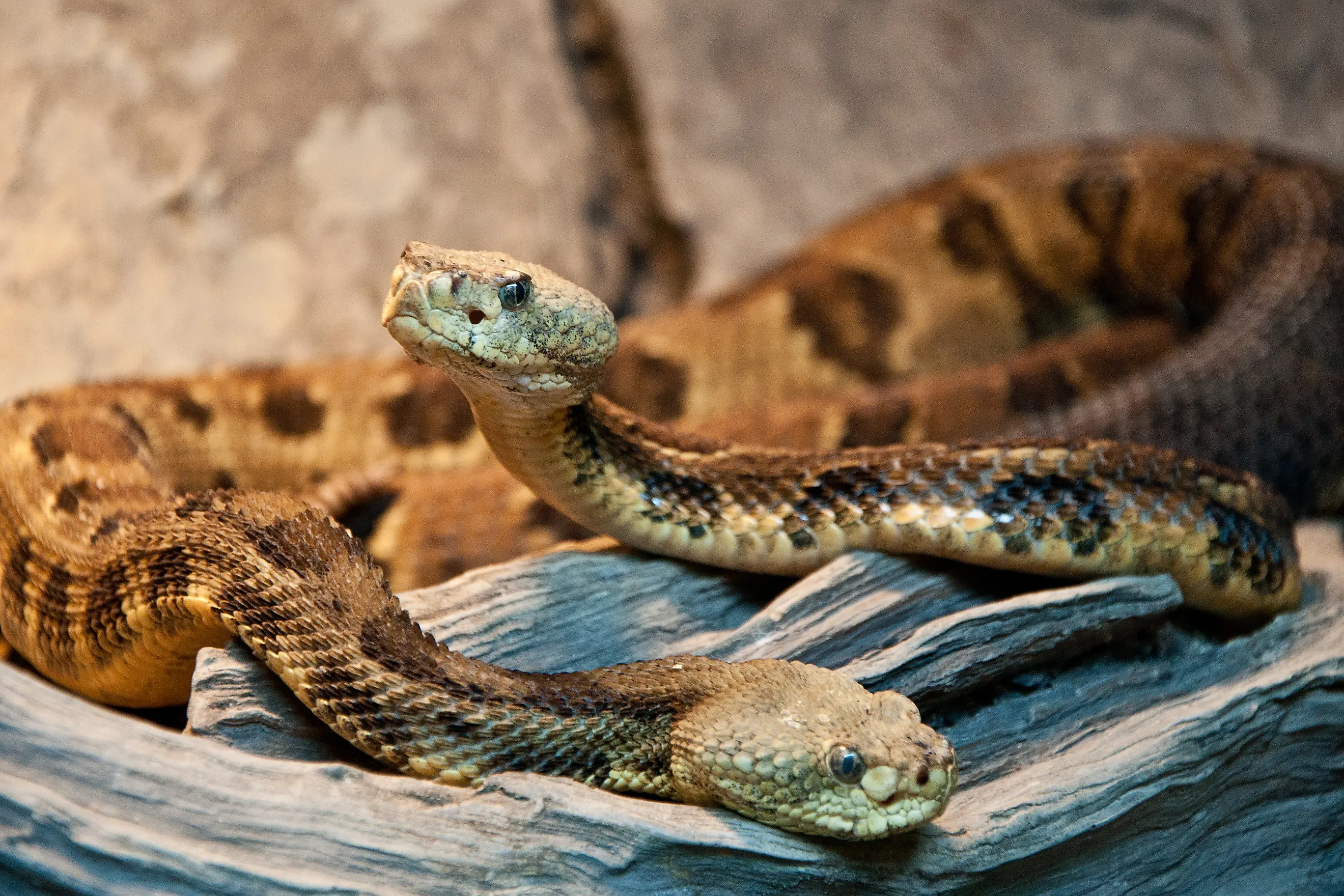
Timber rattlesnakes inhabit forested areas throughout the region and are among the more commonly encountered rattlesnakes here. Adults in this area typically grow to 90 to 150 centimeters (35 to 60 inches) in length. Preferred habitat includes deciduous and mixed hardwood forests, pine ridges, rocky outcrops, bluffs, and swamp edges. Timber rattlesnakes use stump holes and rocky crevices in the fall, and often den communally over the winter.
Cumberland Island National Seashore

Cumberland Island is Georgia's largest and southernmost barrier island. It includes maritime forests, undeveloped beaches, dune fields, and expansive salt marshes. The island totals around 36,000 acres, of which about 16,850 are marsh, mudflats, and tidal creeks. This is prime habitat for the eastern diamondback rattlesnake, though it is seen less frequently on the island than nonvenomous species.
Eastern diamondback rattlesnakes are one of the largest rattlesnake species in the world and the heaviest venomous snake in North America. Adults can reach about seven feet in length, and are characterized by their thick bodies and large triangular heads. Their size contributes to their buoyancy, and they are capable swimmers, sometimes crossing open water between barrier islands.
Lake Hartwell

Lake Hartwell straddles the border between northeast Georgia and upstate South Carolina. At 56,000 acres at normal pool stage, with 962 miles of shoreline, it is one of the largest lakes in the southeastern United States. The reservoir was originally built for flood control and hydropower, and is now used primarily for fishing and boating.

Along the shoreline, timber and pygmy rattlesnakes are the two most commonly observed venomous snakes. Pygmy rattlesnakes are typically found in wet areas along wooded habitats, swamps, and pine forests. They are much smaller than other rattlesnake species, typically 30 to 60 centimeters (12 to 24 inches) in length, with compact bodies and dark spots. Their small rattles produce a faint, buzzing sound that is often difficult to hear.
Sweetwater Creek State Park

Sweetwater Creek State Park is located within a short drive of downtown Atlanta. The park includes a trail leading to the ruins of a textile mill burned during the Civil War, other trails through forests and open fields, and the 215-acre George Sparks Reservoir, which supports fishing, boating, kayaking, and canoeing.
Timber rattlesnakes are among the more commonly observed snakes in the park. The park is located within the Piedmont region of Georgia, where timber rattlesnakes typically have shorter hibernation periods than populations in the mountains, denning only during particularly cold stretches rather than from October through early April as they do in the higher elevations.
Cohutta Wilderness

The Cohutta Wilderness is a rugged section of the Appalachian Mountains in northern Georgia, covering more than 36,000 acres of forested ridges, steep slopes, and remote backcountry. The Appalachian range extends for roughly 1,500 miles from Newfoundland and Labrador to central Alabama. The Cohutta section supports a range of outdoor recreation, including camping, fishing, and hiking, with remote trails such as the Jacks River Trail passing through dense forest and rocky terrain.
Timber rattlesnakes use rocky ridgelines in this part of the Appalachians, often denning in debris piles from rockslides. They are identifiable by heavy bodies, dark crossbands, and muted gray, yellow, or brown coloration that blends with rocky ridges and forest floors. In mountainous areas, they typically enter dens in October and do not emerge until early April. In Georgia, some den individually or in small groups.
Rattlesnakes Across Georgia
Rattlesnakes occur across a wide range of environments in Georgia because different species are adapted to different landscapes. From the sandy Coastal Plain, where the eastern diamondback is more common, to the forested hills and rocky terrain favored by the timber rattlesnake, their distribution reflects the state's ecological variety. Rattlesnakes are generally shy and tend to avoid humans. Understanding which habitats each species occupies allows residents and visitors to plan outdoor activity accordingly.