11 Easygoing Small Towns in Texas
Texas spans 268,596 square miles, making it the second-largest state in the United States. Its population is connected by more than 314,000 miles of public roads, including about 80,000 miles of state highways and farm-to-market roads. Most travel happens along long corridors built to move people quickly between metro areas like Houston, Dallas-Fort Worth, and San Antonio. Yet scattered between those highways are small towns where life does not depend on distance or speed.
In these easygoing small towns in Texas, daily routines stay close to home. Bastrop’s historic core fits into a few walkable blocks. Rockport and Bay City connect beaches, piers, and boardwalks directly to town streets. Palestine and Mineola still revolve around working depots rather than bypass roads. These towns stand out not because they are remote, but because they are compact, functional, and built for everyday use instead of constant movement.
Wimberley

Wimberley feels calm and welcoming. The pace here is slow but engaging. A big part of that easygoing vibe comes from Blue Hole Regional Park. This 126-acre park sits on Cypress Creek. It has more than 4.5 miles of trails, open spaces for picnicking or lounging, sports courts, a playscape, and a swimming hole surrounded by cypress trees.
Nearby is Jacob's Well Natural Area, an 81-acre preserve built around a karstic spring that feeds Cypress Creek. The spring pumps thousands of gallons of water daily and remains cool all year. Wimberley also keeps its charm beyond nature. Downtown, the area known as Wimberley Square teems with small shops, art galleries, cafés, and boutiques. A highlight is Wimberley Inn + Bar, where you can book lodging, walk in for brunch, or spend the evening at the bar.
Fredericksburg

Fredericksburg has it all: history, wine, and Hill Country chatter. At the heart is Main Street, Fredericksburg. This historic stretch hosts over 150 locally owned stores, galleries, antique shops, and restaurants. History lives in the National Museum of the Pacific War. This museum charts the story of the Pacific Theatre during World War II. Its exhibits include artifacts, documents, photographs, and personal mementos from veterans.
Outside town, you find Enchanted Rock State Natural Area, a pink granite dome rising roughly 425 feet above the surrounding terrain. Hiking to the top gives a clear, wide view of the Hill Country. Fredericksburg also belongs to Texas Wine Country. Numerous vineyards and tasting rooms, including Grape Creek Vineyards, lie within a few minutes of downtown. You can sample local wines, chat with vintners, or enjoy a relaxed glass on a shaded patio.
Dripping Springs

Dripping Springs sits at the edge of the Hill Country and has grown into a small town for nature preserves, local makers, and quiet public spaces. A strong place to understand the town is the Dr. Pound Historical Farmstead Museum. The site preserves an original 1854 log cabin built by Dr. Thomas F. Pound, one of the area’s earliest doctors. The property includes two cabins, a smokehouse, a barn, and a working blacksmith forge. Inside, the displays focus on medical tools, household items, and handwritten ledgers that document early patient visits and farm labor.
Founders Memorial Park functions as the town’s main shared space. The park includes a paved walking loop just under half a mile, two baseball fields, open lawns, and a shaded playground. A few minutes away sits Charro Ranch Park, a 64-acre nature area donated to the city. The park has three short dirt trails ranging from 0.3 miles to 0.8 miles. Each trail is marked and passes through oak and juniper woodland. Benches are placed near birding zones, and interpretive signs explain native grasses, deer habitat, and water runoff management. It is simple but intentionally educational.
Jefferson

Jefferson grew around river trade in the mid-1800s, and that history still shapes how the town feels today. A strong starting point for understanding Jefferson is the Jefferson Historical Museum. The building itself served as a US Post Office and Federal Court in 1890. Inside, the museum organizes four floors of regional artifacts. A few blocks away, the House of the Seasons has another angle on local history. Built in 1872, the home is known for its central cupola, which catches natural light differently during each season.
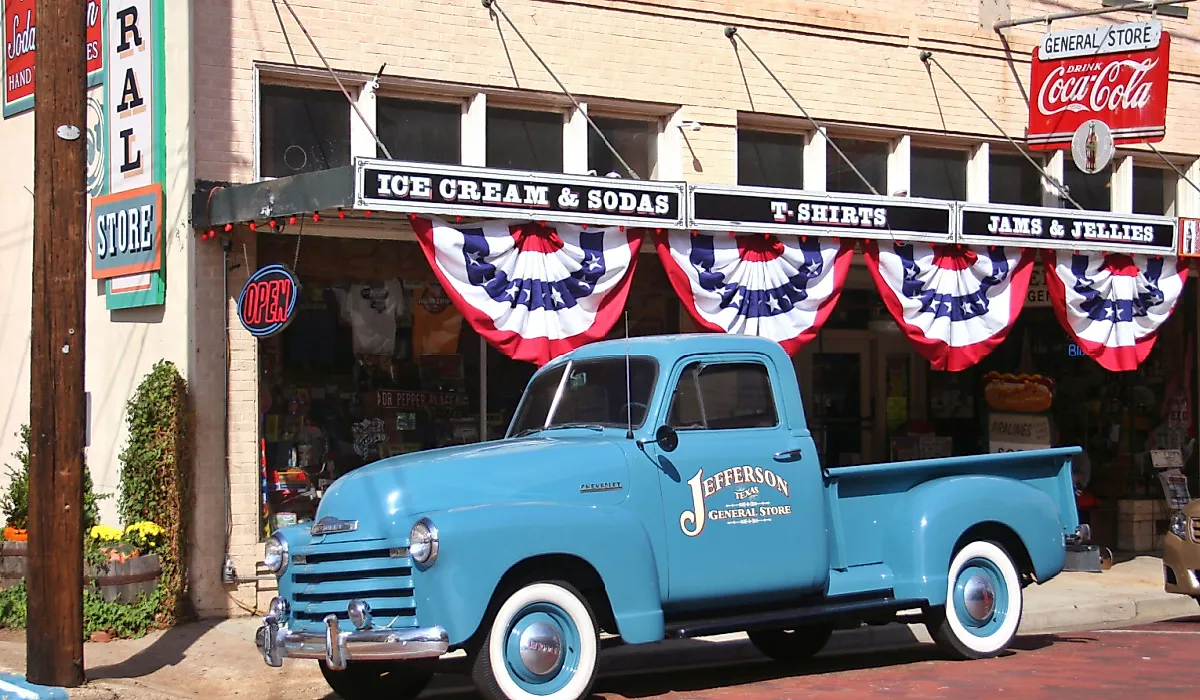
Alternatively, Big Cypress Bayou boat tours provide a slow, informative ride through a cypress-lined waterway. The tour covers a few river miles and includes details on the bayou’s ecology, past logging routes, and how river levels once controlled the town’s economy. Be sure to visit the Jefferson General Store. Beyond the old-fashioned counters and soda fountain, the store sells regional snacks, local books, and tools linked to East Texas crafts.
Rockport

Rockport developed as a working fishing town along Aransas Bay with a compact and coastal center. The town’s spine is Fulton Beach Road, which runs parallel to the bay and connects residential areas to public access points. Along this stretch, you find fishing piers, public benches, and boat ramps spaced every few blocks. One of the most used public spaces is Rockport Beach Park. The beach includes a designated swimming area, lighted fishing piers, kayak access, and a paved walking path along much of the shoreline.
Cultural history is best understood at the Texas Maritime Museum. The exhibits focus on Gulf Coast navigation, shrimping techniques, and storm survival. Finally, Connie Hagar Wildlife Sanctuary keeps flat gravel trails and raised observation decks over coastal marshland. The layout allows close viewing of spoonbills, herons, and wintering shorebirds without disturbing nesting areas.
Bastrop

Bastrop sits along the Colorado River and functions as a true river town. The center of activity is Main Street Bastrop, a four-block historic corridor built largely between the 1880s and early 1900s. A highlight is the Bastrop County Museum & Visitor Center, which provides a detailed account of settlement, trade, and disaster recovery. Exhibits include original land grants, early railroad artifacts, and a permanent section on the 2011 Bastrop Complex Fire.
Just off Main Street sits Fisherman’s Park, a riverfront public space built for daily use. The park includes a paved riverwalk, shaded picnic tables, fishing access points, and a canoe launch. The trail runs directly along the Colorado River, allowing clear views of water levels and current. Entertainment comes through at The Bastrop Opera House, a working performance venue built in 1889. Today, it hosts live theater, film screenings, concerts, and community events. The interior retains its balcony seating and wood detailing, and performances are small enough that audiences often interact with performers afterward.
Comfort

Comfort was founded in the 1850s by German immigrants who rejected slavery. A defining landmark is the Treue der Union Monument, located in a small public square. Built in 1866, it is one of the only Union monuments in the former Confederacy. Plaques explain the Civil War-era tensions that shaped the town.
Local history continues at the Comfort Heritage Foundation Museum, housed in a former school building. Exhibits include immigration records, early farming tools, and maps showing how Comfort developed along trade routes. Outdoor time stays social at Comfort Park, which sits directly on the Guadalupe River. The park includes picnic tables, a playground, and direct river access for wading or fishing. Comfort Pizza operates out of a historic building and serves as a casual meeting point for residents and visitors alike.
Palestine

Palestine grew as a railroad hub in the 1870s, and its layout still reflects that history with a walkable downtown built around historic routes and active community spaces. A standout experience is riding the Texas State Railroad. This scenic attraction operates vintage steam and diesel trains on a roughly 25-mile round trip through the Piney Woods between Palestine and Rusk. The depot area includes interpretive panels on railroad lore and early East Texas rail development.
In town, the Railroad Heritage Center showcases detailed model trains and historic rail artifacts tied directly to the town’s identity. Tracks and displays make clear why the railroad shaped local commerce. Palestine Main Street District covers about 44 blocks of preserved 19th-century storefronts, including boutiques, antique shops, cafés like Oxbow Bakery, and rotating public art exhibits along the sidewalks. The Texas Theatre, opened in 1930, hosts live shows and film events. Its Spanish Colonial architecture frames community performances and touring acts.
Mineola

Mineola functions as both a railroad town and a daily-use community, where civic spaces and entertainment overlap rather than compete with each other. The Mineola Historical Museum keeps exhibits such as original railroad tools, early town maps, and photographs documenting Mineola’s role as a regional shipping point. Across downtown, the Lake Country Playhouse adds cultural weight. Opened in 1920, it still operates as a movie and event venue. The single-screen layout, balcony seating, and classic marquee make it a social hub, especially on weekends.
Outdoor access comes through the Mineola Nature Preserve, a city-owned property covering roughly 2,900 acres. Within town boundaries, it offers more than 20 miles of marked trails, fishing ponds, birding platforms, and kayak access. A short drive from town, Lake Holbrook offers fishing access, picnic areas, and shoreline paths used for casual recreation.
Wharton

Wharton developed as a courthouse and river town, and its structure still reflects that dual role. The 1889 Wharton County Courthouse stands tall, dominating the space. The building’s classical design, clock tower, and central square make it both a working courthouse and a visual landmark. Alternatively, the 20th Century Technology Museum focuses on historic innovations, such as radios, early medical equipment, household appliances, and transportation tools. All equipment is displayed with explanations of how it changed daily life in rural Texas.
Entertainment and gatherings take place at the Wharton Civic Center, which hosts concerts, theater productions, and festivals throughout the year. Outdoor time stays integrated at Riverfront Park, set along the Colorado River. The park includes a short, paved trail, benches facing the water, and open lawn areas.
Bay City

Bay City grew around agriculture, shipping, and county administration, and the town still runs on that rhythm. Local history is best understood at the Matagorda County Museum. The museum focuses on rice farming, cattle ranching, and the impact of hurricanes on coastal towns. Le Tulle Park sits directly along the Colorado River and attracts visitors with a walking loop, a fishing pier, playground equipment, shaded picnic tables, and open lawn space used for community events. Benches face the river, which makes short visits worthwhile. Entertainment stays local at the Bay City Players, which hosts plays, musicals, and small productions year-round. Performances are intimate, and audiences often include cast members’ families and neighbors, reinforcing the town’s relaxed pace.
Across the United States, many small towns are losing their centers, but the towns on this list have kept theirs active and usable. These easygoing small towns in Texas share practical traits. History in these towns is accessible and specific, whether through preserved depots, county museums, opera houses, or Civil War landmarks. Entertainment stays regional, with community theaters, live music halls, and seasonal events that don’t overwhelm the town’s pace. Together, these towns promise a version of Texas that runs on familiarity and continuity. They reward wandering, short visits, and conversation. That steady rhythm is what makes them easy to spend time in and easy to return to.