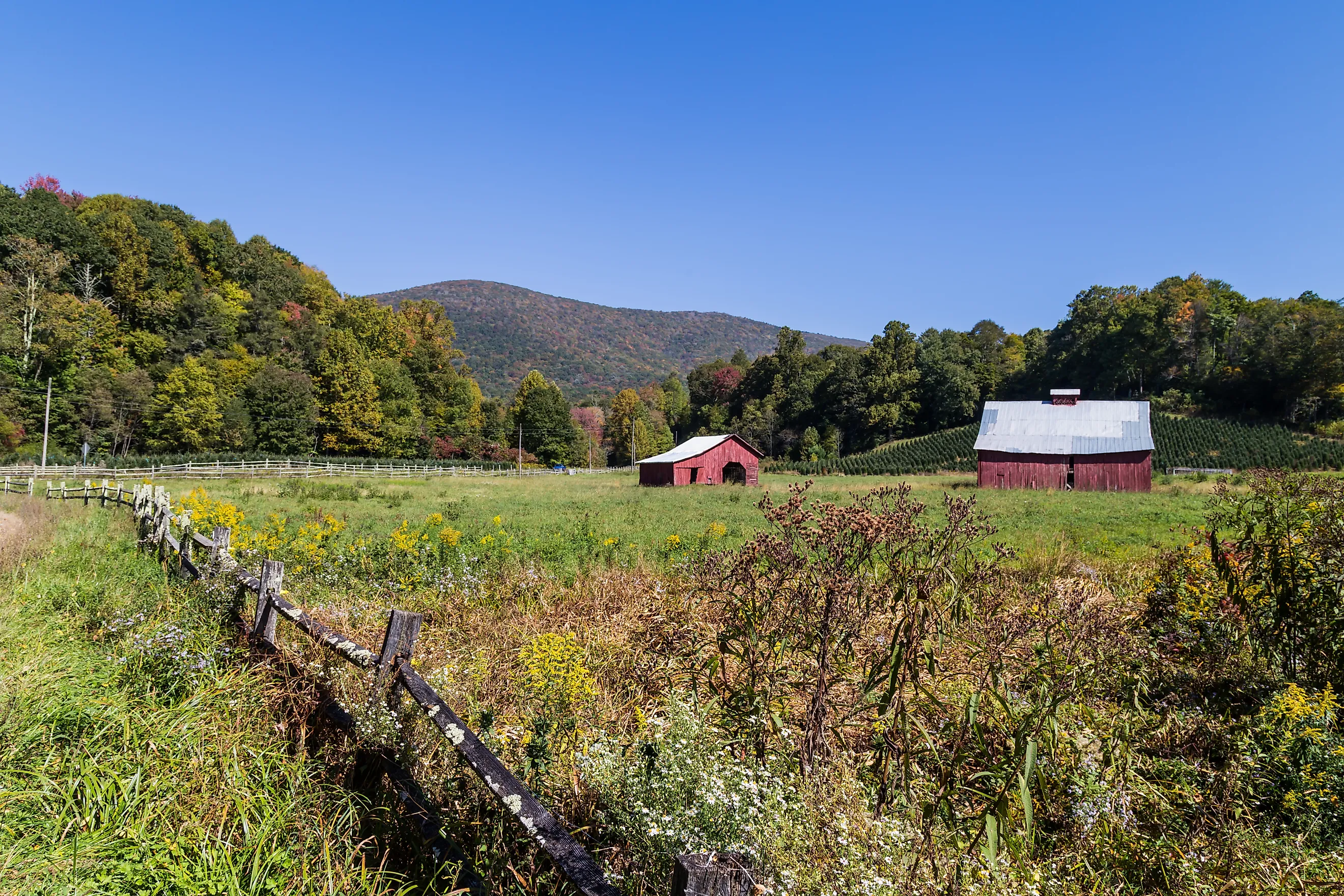
12 Most Breathtaking Towns In Virginia
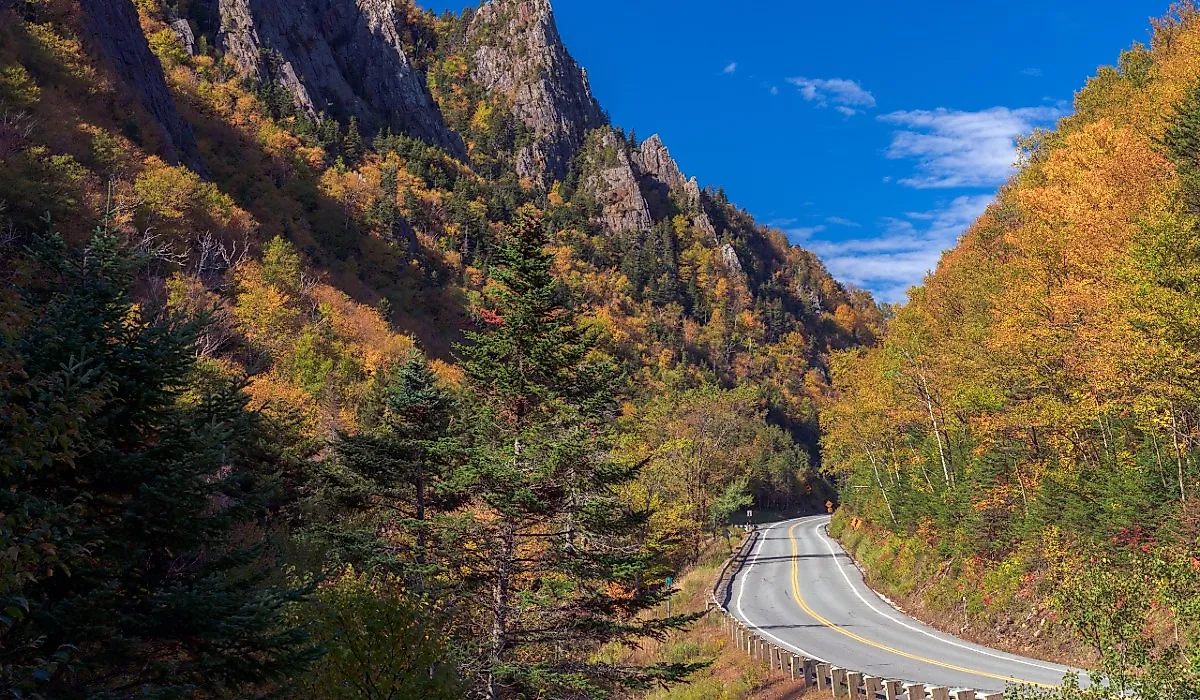
Scenic Virginia is a state of dramatic contrasts, and its most breathtaking towns make the most of them. Abingdon sits amid Blue Ridge scenery and the trestle-lined Virginia Creeper Trail, while Cape Charles faces west across the Chesapeake Bay for spectacular sunsets. Luray pairs Shenandoah Valley views with immense caverns below ground, and Bedford sits beneath the Peaks of Otter. From barrier islands and tidal rivers to mountain ridges and rolling horse country, these towns showcase Virginia at its most striking.
Abingdon

At roughly 2,000 feet in Virginia's Blue Ridge Highlands, Abingdon marks where a National Register historic district ends and where the mountain trail network begins. The Virginia Creeper Trail runs 34 miles from its downtown trailhead to Whitetop Station, crossing 47 trestles above creeks, pasture, and mountain forest. Most riders shuttle to the top and coast the descent, which takes about three hours with stops. 10 minutes away on Main Street, Barter Theatre has staged plays since 1933 and stages 17 to 19 productions a year across its two stages. The dress code stays casual, so a matinee works fine straight off the bike.
Uphill on Academy Drive, the William King Museum of Art stands in a 1913 school building, with an outdoor sculpture garden. Galleries rotate around nine exhibitions a year alongside student and local-artist shows. Another 2 miles, the Southwest Virginia Cultural Center & Marketplace features work from more than 180 juried Appalachian artisans, including a hand-carved wooden map of the region's 19 counties. Thursday nights bring live music to a hall built for its acoustics.
Cape Charles

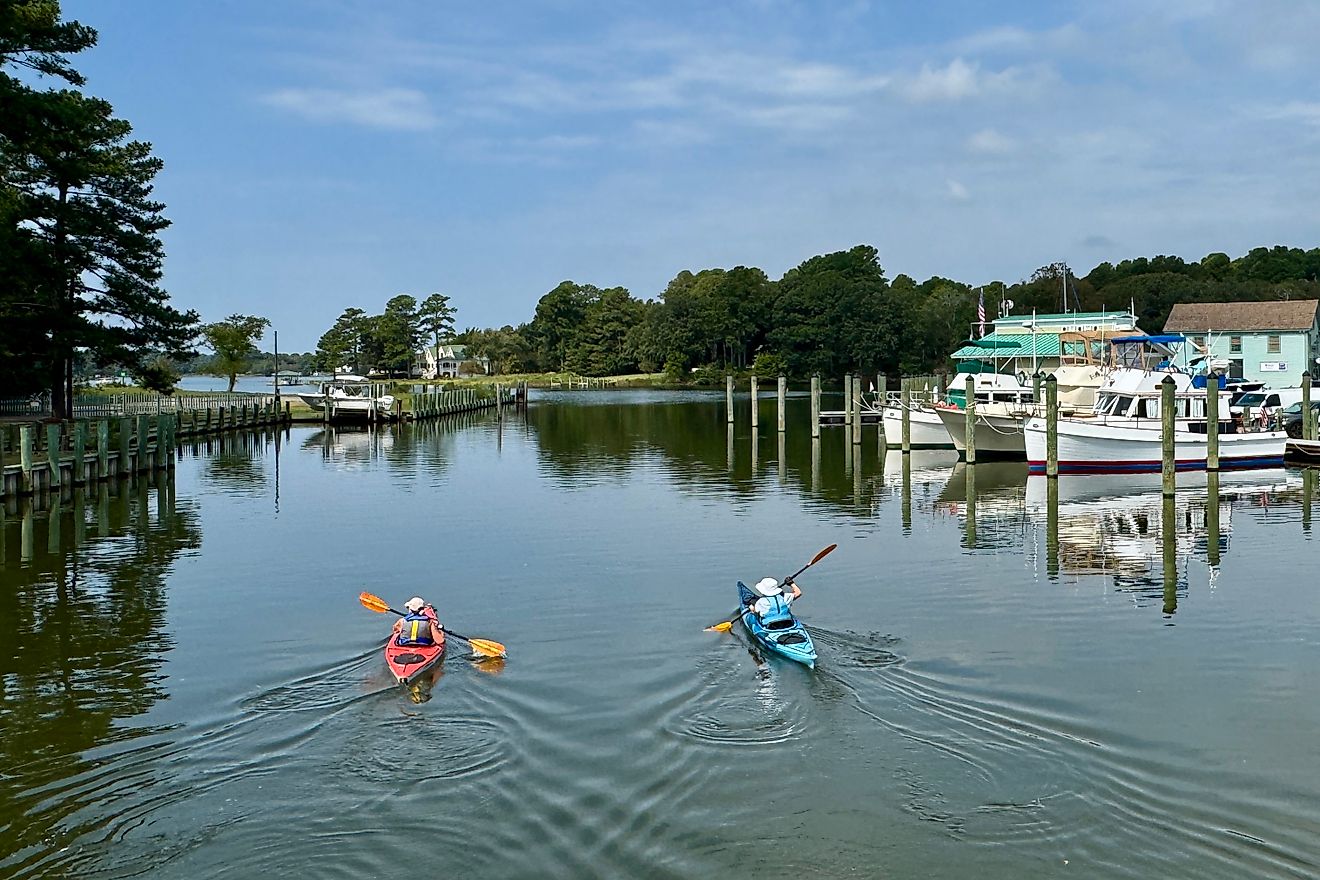
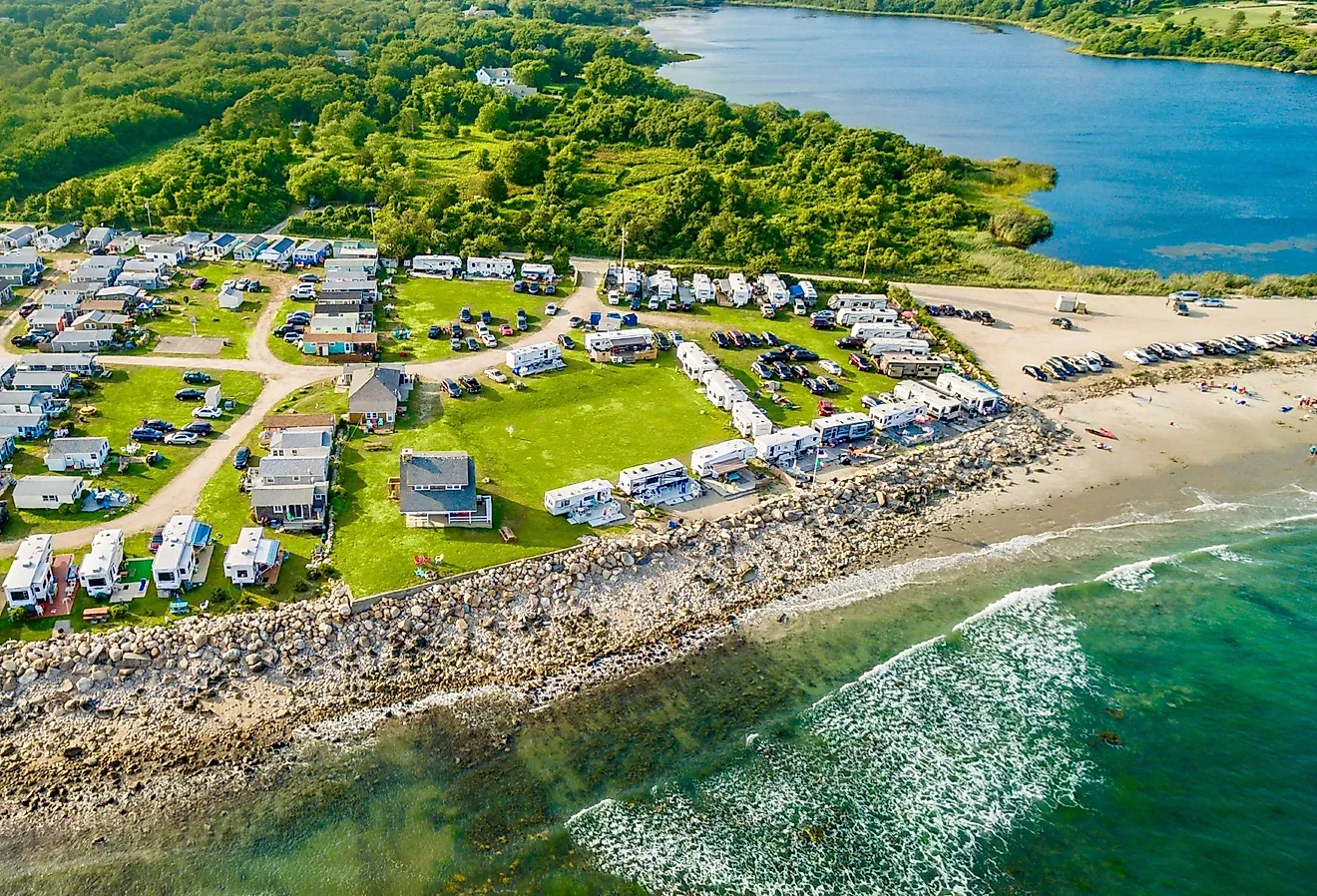
About 45 minutes from Norfolk, Cape Charles is one of the few East Coast beach towns where the water faces west, and the sun sets over it. Cape Charles Beach runs along the harbor at the end of Bay Avenue, where the Chesapeake arrives without surf, and the shallows extend far out. A fishing pier anchors the south end, and the sand fills up most clear evenings for the sunset. Ten miles south, Kiptopeke State Park spreads across 562 acres with roughly five miles of trails through maritime forest and dunes, plus a lighted fishing pier open around the clock. Nine World War II concrete ships lie half-sunk offshore as a breakwater, close enough to paddle out to on a calm morning.
Back on Mason Avenue, The Lemon Tree Gallery and Studio carries work from 60+ regional artists and mounts four shows a year, with resident painters often at their easels in the room. Friday evenings there bring live music and limoncello. Smack between the beachfront and the gallery is Gull Hummock Gourmet Market. It stocks Virginia wine, cheese, locally roasted coffee and Eastern Shore chocolate, and the owners will open a bottle to drink on the patio.
Luray

Luray's beauty shines through the South Fork of the Shenandoah, with "the largest cavern system in the eastern United States" directly underneath. Luray Caverns opens into chambers with ten-story-high ceilings, reached by a paved 1.25-mile walkway that holds at 54 degrees year-round. The Great Stalacpipe Organ plays the formations themselves as instruments, and Dream Lake sits still enough to double every stalactite above it. East on US 211, the Thornton Gap entrance leads onto Skyline Drive in Shenandoah National Park, a 105-mile ridge road with 75 overlooks. Hawksbill Summit, the park's highest point at 4,051 feet, is a 1.7-mile round trip from the Hawksbill Gap lot.
Down the same highway, Cooter's in Luray keeps a free Dukes of Hazzard museum with a General Lee, Boss Hogg's Cadillac, and Cooter's tow truck parked inside. The garage band plays free on Saturday afternoons, and bluegrass fills Sunday. Downtown on Virginia Avenue, Hawksbill Trading Company fills two floors with vendor booths selling Page County produce, baked goods, antiques, and handmade home goods.
Williamsburg

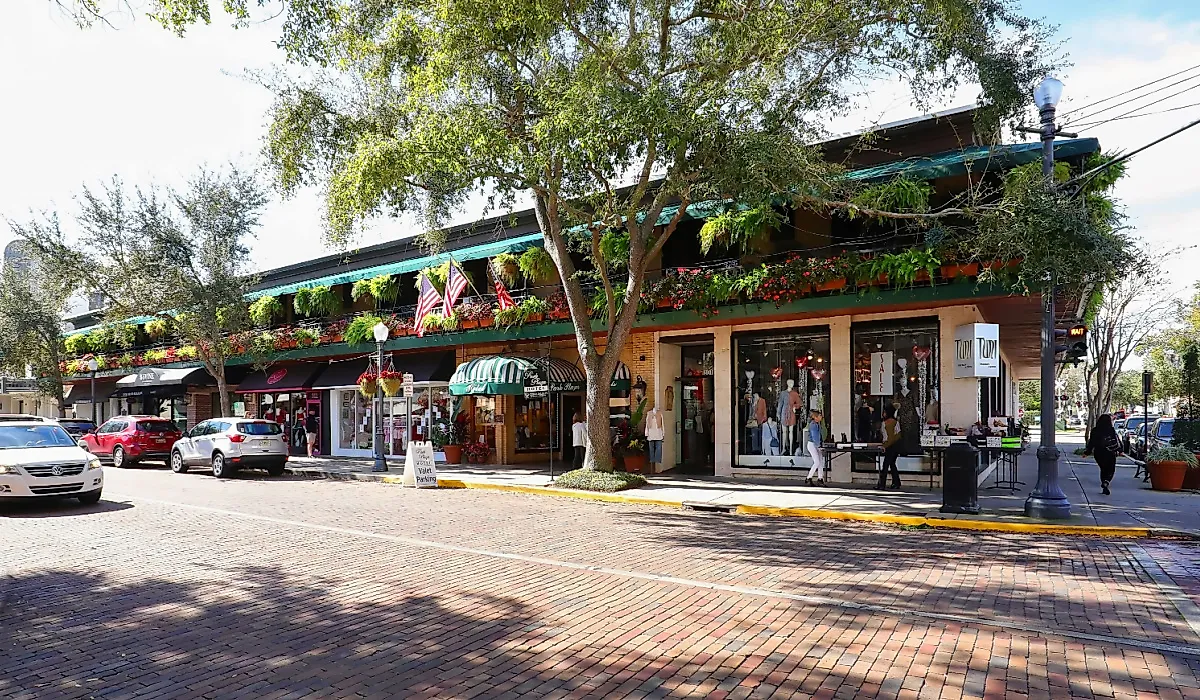
Williamsburg inhabits the neck of land between the York and James rivers, where 88 buildings from the 18th century still stand across a 301-acre historic area. Colonial Williamsburg mesmerizes you with its exceptional architecture, with a mile of brick walkways and white fences lined with working trade shops where blacksmiths, wigmakers, and printers use period methods. The Governor's Palace at the north end opens onto formal gardens and a boxwood maze. Nearby is Merchants Square, a brick-lined block of more than 40 shops and restaurants laid out in the 1930s as one of the country's first planned shopping districts. The Cheese Shop and the winery's satellite tasting room both spill onto the sidewalk in warm weather.
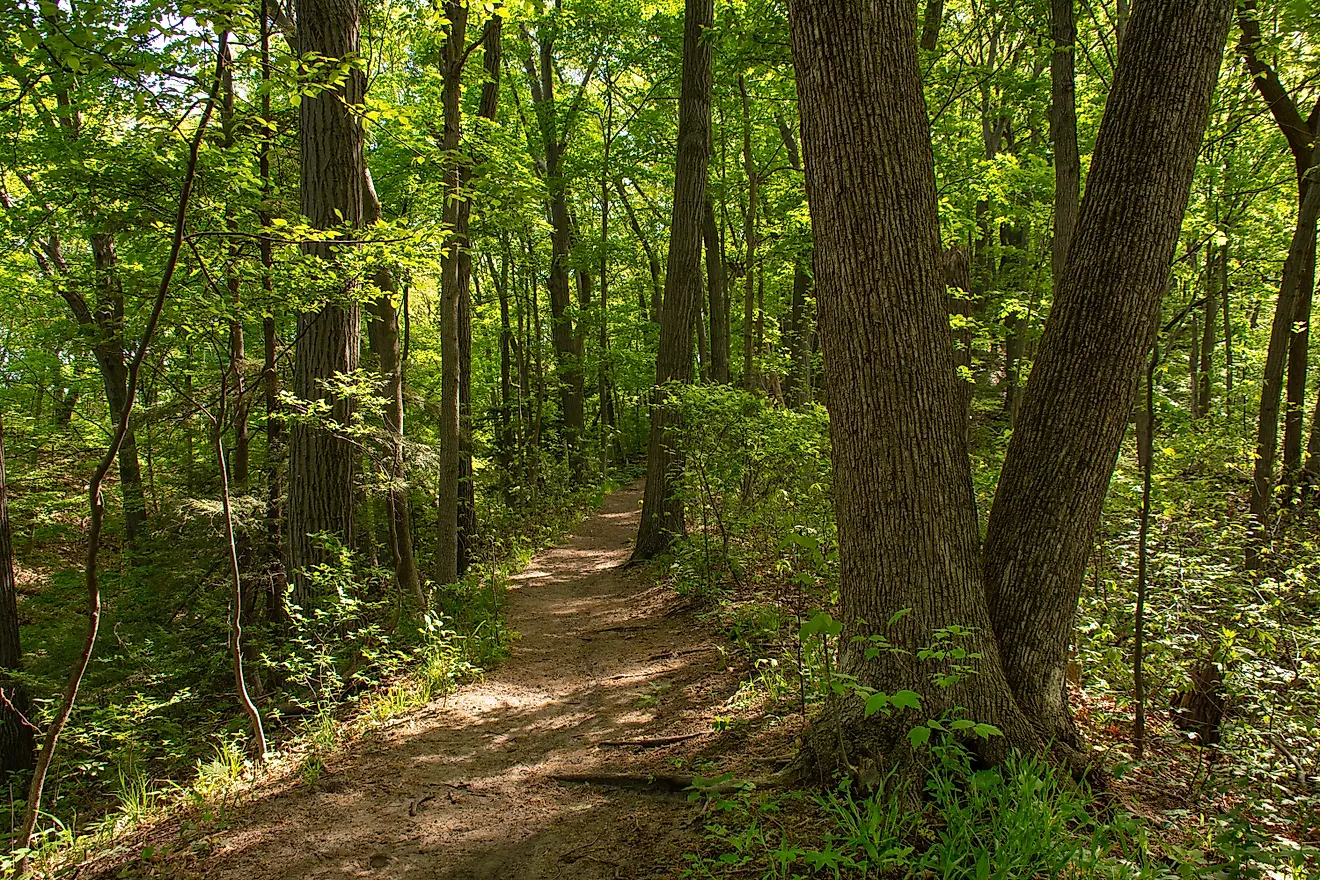
South of the historic area, Williamsburg Winery works a 300-acre farm called Wessex Hundred, with daily barrel cellar tours and flights poured on a two-level pavilion above the vines. The Gabriel Archer Tavern serves lunch on a brick patio under a wisteria canopy. Eleven miles west, York River State Park covers roughly 2,500 acres of tidal marsh and forest. The 1.8-mile Taskinas Creek Trail reaches four viewing platforms, and Fossil Beach turns up shells from the shoreline bank.
Chincoteague

Chincoteague is a seven-mile island of marsh and harbor on Virginia's Eastern Shore, shielded from the open Atlantic by Assateague and the wild pony herds that graze it. Chincoteague National Wildlife Refuge protects over 14,000 acres across the barrier island, with a 3.2-mile Wildlife Loop that walkers and cyclists have all day and cars get after 3 p.m. Over 300 bird species pass through, and the ponies usually turn up along the loop or the Beach Road pull-offs. Rising above the pines inside the refuge, the Assateague Lighthouse has thrown its double flash since 1867 from a red-and-white tower 142 feet tall. The 175-step climb is free on Fridays and Saturdays through Labor Day, and the gallery takes in marsh, dunes, and both islands at once.
Beach Road reaches only the front of Assateague; the back marshes, where the herds spend most of their time, are boat access only. Two outfits run there from Curtis Merritt Harbor. Assateague Explorer does 90- to 120-minute narrated cruises with island-native captains and finds dolphins on most trips, while Saltwater Pony Tours ranges wider through the bays and adds a shorter loop past the lighthouse plus a sunset run. At the end of that same harbor road, Mariner's Point sits high enough to open a view across Tom's Cove to Wallops Island and the Atlantic, with the Waterman's Memorial plaques set on the rise.
Galax

Galax is under Fisher Peak at the edge of the Blue Ridge, where Chestnut Creek drops toward the New River. New River Trail State Park leaves the Galax trailhead as a 57-mile rail-trail, following Chestnut Creek for 12 miles before meeting the New River, which it then parallels for 39 more. The crushed-stone surface takes bikes, horses, and walkers, and the Chestnut Yard stretch keeps water in view the whole way. The trail runs straight past New River Outdoor Adventures, a shop on the bank at Fries Road renting canoes, kayaks, tubes, and bikes with shuttles included. Its numbered floats scale from a two-mile drift you can finish in an hour by boat, or stretch to three by tube, up to a 14.5-mile run down from Independence.
About ten miles south, the Blue Ridge Music Center hosts free Midday Mountain Music every day it opens between May and October, plus Saturday concerts in an amphitheater aimed straight at Fisher Peak. The Roots of American Music exhibit indoors costs nothing either. On West Stuart Drive, Matthews Living History Farm works 21 rolling acres as a circa-1900 Grayson County farm and features weekly fiddle, banjo, and guitar jams from late May into September. You may also pet Gulf Coast sheep, Jersey cows, and a Jerusalem donkey, or watch blacksmiths and soap makers work in the barn and shops.
Staunton

Staunton's beauty comes equally from nature and the historic buildings present in its downtown. Frontier Culture Museum sets original farmsteads from West Africa, England, Ireland, and Germany across 300 acres of hillside, alongside American farms that trace those same settlers forward. Interpreters work the fields, keep heritage livestock, and cook over open hearths in every building. Downtown, the American Shakespeare Center's Blackfriars Playhouse is the only recreation anywhere of Shakespeare's indoor theatre, built in oak and lit by chandeliers over roughly 300 seats. One company performs in repertory year-round: Twelfth Night, As You Like It, and Our Town all ran in 2026; The Tempest holds the stage this fall.
Gypsy Hill Park covers 214 acres, a few blocks north, with a stocked fishing lake, a duck pond fitted with feed dispensers and a short, steep 18-hole public course. The Gypsy Express mini-train circles the grounds on weekend afternoons, and the bandstand features free summer concerts. If you'd like to admire wider scenery, Betsy Bell Wilderness Park is about 3 miles south. It climbs to a 1,959-foot platform facing the Blue Ridge and Shenandoah Valley, where a one-mile loop with 275 feet of gain links two wooden overlooks, and picnic tables sit at the top.
Middleburg

No town in Virginia offers relaxation amid big scenery better than Middleburg, set in the Blue Ridge foothills with its own viticultural area and horse farms in every direction. Chrysalis Vineyards at The Ag District farms 71 acres of vines across a 412-acre estate and holds "the largest Norton planting in the world," with a creamery and bakery running on the same land. Boxwood Estate Winery is a more formal option, pouring Bordeaux blends from 26.5 acres on a National Register farm, while Lost Barrel Brewing swaps grapes for beer on a 70-acre horse farm with the taproom set above the paddocks. Meanwhile, Salamander Middleburg takes 340 acres of that same countryside as a Forbes Five-Star resort. It features a 23,000-sq-ft spa, guided trail rides from a 25-acre equestrian center, and the Blue Ridge filling the view from the Grand Lawn.
Right in the middle of the wineries and Salamander, Four Lucky Ducks Farm works the gentler side of the landscape in its 66 acres. They deliver hands-on hour-long tours where you feed and scratch miniature Highland cows, mini donkeys, and Kerry Hill sheep in an open pasture. In town on Washington Street, the Red Fox Inn & Tavern has stood in fieldstone since 1728, with low-beamed ceilings and a fireplace in nearly every dining room. The kitchen cooks modern Southern off Piedmont farms, and the crab cakes with goat cheese grits are the order.
Fredericksburg

60 minutes and miles north of Richmond, Fredericksburg finds you at the fall line of the Rappahannock, where the river drops out of the Piedmont, and a historic district stretching 40 blocks meets it. The 860 wooded acres of Motts Run Reservoir Recreation Area are around a 160-acre reservoir west of downtown, with six miles of hiking trails and eleven more for mountain bikes. Kayaks, canoes, and Jon boats are available, and only electric motors are permitted, so the water stays quiet. Also along the river, Old Town features stunning streets with colorful stores and trees. Walk down Caroline Street past Riverby Books and a row of antique dealers, with Hyperion Espresso holding the corner at William. Sophia Street closes it out at Riverfront Park, where an amphitheater and overlook sit right on the water with Stafford County on the far bank.
One of the oldest buildings on Caroline Street, the 1760s Rising Sun Tavern is a beautiful sight with flowering trees around and the iconic hanging sign. Guides in 18th-century dress lead 30-minute tours through the taproom, where a reconstructed bar cage, playing cards, and a wall of English and American pewter are laid out as they were. South of downtown, A. Smith Bowman Distillery allows you to take free hourly tours of "Virginia's oldest distillery." The tasting at the end pours the John J. Bowman Single Barrel, named the world's best bourbon at the 2017 World Whiskies Awards, and the gift shop keeps the Mary Hite Bowman caramel cream.
Bedford

Most streets of Bedford offer a picturesque view of the Peaks of Otter, three Blue Ridge summits. Liberty Lake Park boasts roughly 60 acres on Burks Hill Road around a small fishing lake, with an accessible nature trail and half a mile of flat paved paths. Fishing docks, shelters, and courts take up the rest, and the mountains stay on the horizon the whole time. Go seven miles north where the Claytor Nature Center opens 491 conserved acres to the public, with more than eight miles of trails through fields, woodland, riverside cliffs, and wetland. The Big Otter River cuts through it, and the Rich Cove Trail climbs hardest for the best views.
Families often stop by the 200 acres of Johnson's Orchards. This 1910s family farm promises apples, peaches, and cherries as pick-your-own in season, and the on-site Peaks of Otter Winery pours fruit wines. Continue to the Blue Ridge Parkway, where Peaks of Otter Lodge stands at milepost 86. The mesmerizing property has 63 rooms and a dining room facing Abbott Lake and Sharp Top. A one-mile trail circles the lake.
Occoquan

Occoquan fits an entire town into about six blocks on a tidal bend of the Occoquan River, where the water widens toward the Potomac and boats tie up below Mill Street. Mamie Davis Park holds a shaded lawn and gazebo where Washington Street meets Mill, opening straight onto the town boardwalk and public pier. Weddings fill it most weekends, but on a quiet afternoon, the pier is the best spot in town to watch the river. Follow the boardwalk and River Mill Park takes over, a one-acre stretch of bank with an event pavilion, paved path, and the restored Nathaniel Ellicott footbridge crossing to Fairfax County.
Up Mill Street, the Mill House Museum is in a cute little building that was a mill in the 1750s. It holds documents, photographs, and artifacts from the town's shipping years. Down the street, The Secret Garden Cafe is behind two ivy-covered buildings, up brick stairs to a walled patio. The 1840s house belonged to the town pharmacist; the kitchen now makes crab cakes, shrimp and grits, and coconut-pecan cake from scratch.
Leesburg

With the Potomac to the east and the Blue Ridge foothills to the west, Leesburg has no shortage of breathtaking sights. Historic Leesburg Walking Tours cover downtown on foot, passing the courthouse green, Civil War sites, and the oldest surviving houses in about 90 minutes. They also have evening ghost walks. A mile northwest, Morven Park is spread across 1,000 acres of lawn, boxwood gardens, woods, and riding trails. The Greek Revival Davis Mansion opens on weekends alongside the Winmill Carriage Museum and the Museum of Hounds & Hunting.
Eight miles south on Route 15, Oatlands Historic House & Gardens keeps four acres of walled, terraced gardens below an 1804 Federal mansion. Plus, there are eight miles of trails and an 1810 greenhouse, the second-oldest in the country. The vineyards start just outside town. Stone Tower Winery farms 95 acres of a 400-acre property on Hogback Mountain with tastings on a hilltop terrace, while Fabbioli Cellars works a 25-acre vineyard north of town and pairs each pour with a food course.
From the tidal bend of the Occoquan River to the Blue Ridge views surrounding Bedford, Virginia's landscapes give each town its own visual character. Cape Charles faces west for the sunset, while Bedford keeps the Peaks of Otter visible from Liberty Lake Park. Together, these places show why the most breathtaking towns in Virginia have made their mark in the United States. Whether you pick one or choose to travel to all, you will return with some dazzling camera shots.