12 Best Small Towns in the Great Lakes Region For Retirees
The Great Lakes region has an unusual concentration of small towns where retirement actually pencils out. Home prices in the inland villages still run well below the national average. Most of the towns ahead pair that affordability with a walkable downtown and a local hospital within ten minutes. Mackinac Island bans cars and runs on bicycles and horse-drawn carriages. Galena was Ulysses S. Grant's adopted hometown and preserves his 1860 Italianate residence as a state historic site. The twelve towns each give retirement a different specific draw.
Mackinac Island, Michigan

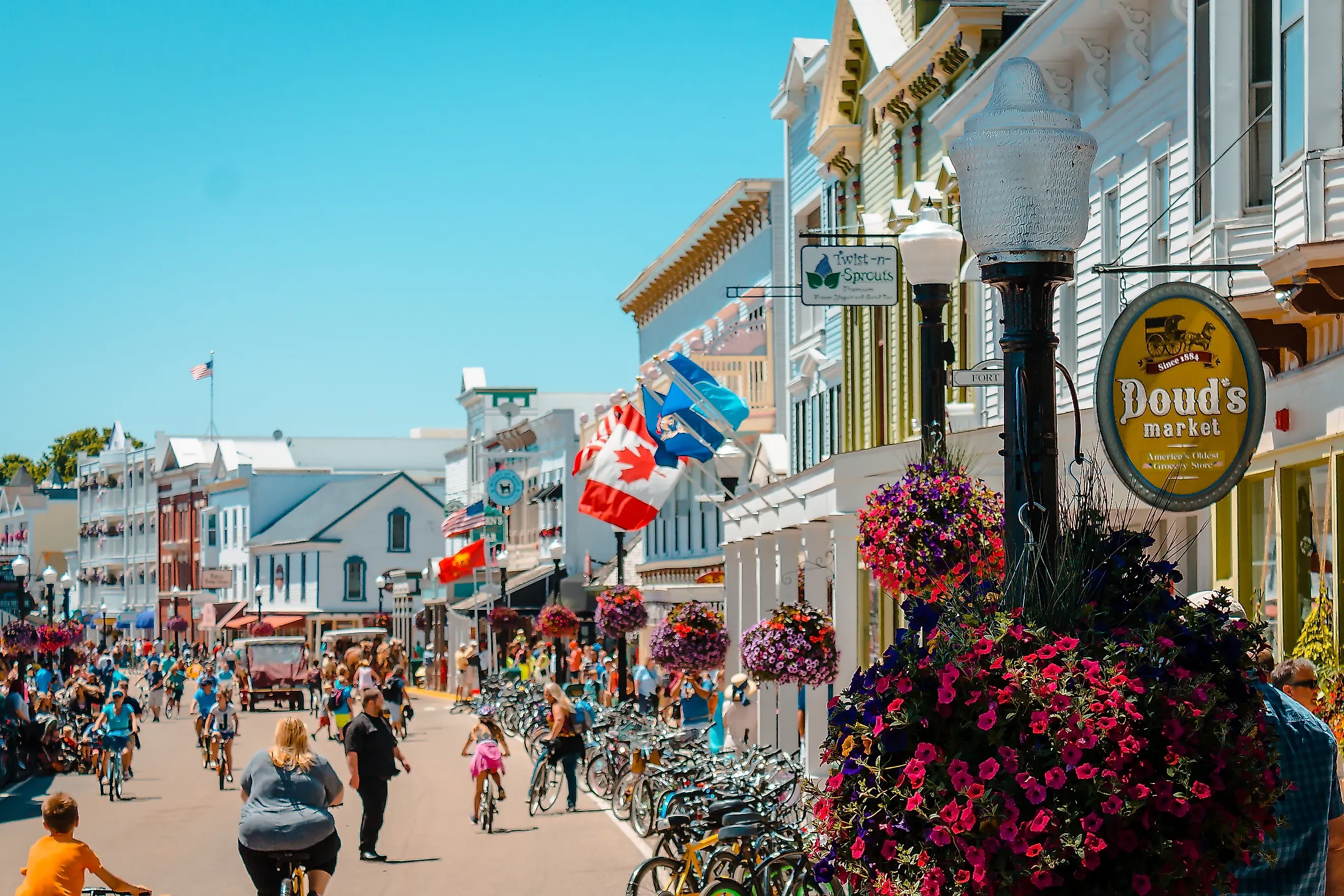
Mackinac Island, in Lake Huron between Michigan's Upper and Lower Peninsulas, has banned motor vehicles since 1898. The 3.8-square-mile island runs about 580 year-round residents, and the only ways around town are foot, bicycle, or horse-drawn carriage. Fort Mackinac, built by the British in 1780 atop a 150-foot limestone bluff, is Michigan's oldest standing structure and runs costumed-interpreter tours through the summer.
The Grand Hotel, built in 1887 and still the largest summer resort hotel in the United States, anchors the bluff with the world's longest front porch at 660 feet. The Mackinac Island Medical Center, on Market Street, runs primary, urgent, and diagnostic care, with emergency transports going by Mackinac Island Ferry to Mackinaw City. About 80 percent of the island is preserved as Mackinac Island State Park, with Arch Rock (a natural limestone arch over Lake Huron), Sugar Loaf, and Skull Cave all reachable on foot or by carriage. The Lilac Festival each June, Fort Mackinac Independence Day fireworks, and the Mackinac Island Fudge Festival in late August round out the calendar. The cost of living runs higher than Michigan's average, and winters require a settled temperament given the seasonal ferry service.
Galena, Illinois

Galena, in the northwest corner of Illinois, runs about 3,200 residents in a town where 85 percent of the buildings sit within the Galena Historic District on the National Register. The Ulysses S. Grant Home, an 1860 Italianate residence given to Grant by grateful Galena citizens in 1865 and inhabited by him through his presidency and after, is the town's defining attraction and operates as an Illinois state historic site with the original Grant family furnishings preserved in their 1868 arrangement.
Midwest Medical Center on Galena Square Drive runs as the local hospital, with primary care, surgery, and emergency services. The Galena River Trail runs four paved miles along the river for walking and cycling. Grant Park, on the bluff above the river, runs picnic areas, the Grant statue, and broad views over the downtown. Galena's Jo Daviess County has the highest elevation in Illinois and produces some of the state's better-known wineries (Galena Cellars, Massbach Ridge). Public transportation is limited; most retirees rely on private vehicles or scheduled Jo Daviess County Transit rides. Cost of living sits a few points below the state average.
Port Clinton, Ohio

Port Clinton sits on the Lake Erie shore in Ottawa County and is locally promoted as the "Walleye Capital of the World," based on the spring run of walleye through the western basin of Lake Erie. The town runs about 5,800 residents and serves as the gateway to the Lake Erie Islands, with the Jet Express ferry running to Put-in-Bay on South Bass Island.
Magruder Hospital on East Second Street is the local 25-bed critical access hospital, with broader specialty care available 30 minutes east at Firelands Regional Medical Center in Sandusky. The annual Walleye Madness at Midnight on New Year's Eve drops a 600-pound fiberglass walleye named Wylie at midnight from the historic downtown. The Walleye Festival in May and the Lake Erie Shores & Islands Lighthouse Festival in October bring crowds. African Safari Wildlife Park nearby in Port Clinton runs a drive-through with giraffes, zebras, and bison. Cost of living runs about 11 percent below the national average.
Shipshewana, Indiana

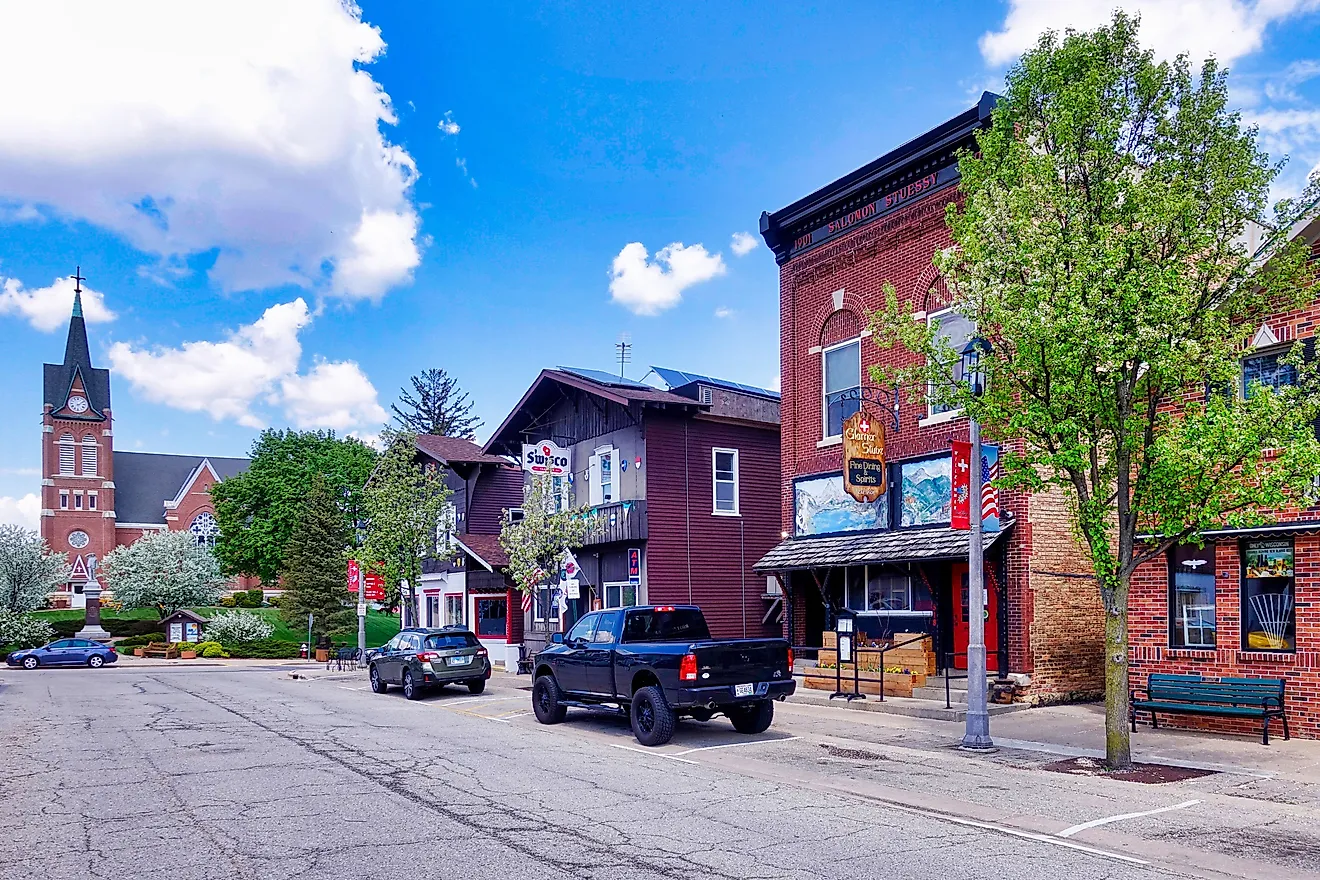
Shipshewana, in LaGrange County, runs about 690 residents in town but serves as the commercial center for the third-largest Amish community in the United States, with more than 28,000 Amish residents living across the surrounding county. The Shipshewana Flea Market, running since the 1920s on every Tuesday and Wednesday from May through September, is the largest outdoor flea market in the Midwest with up to 700 booths.
The Blue Gate Restaurant and Theatre at the four-way stop in downtown Shipshewana runs family-style Amish cooking, with 6 dining rooms, 750 seats, and a 1,200-seat performing arts theatre attached. Menno-Hof Visitor Center, a Mennonite-Amish history museum, runs exhibits on Anabaptist history from 16th-century Switzerland to modern Indiana. The Pumpkinvine Nature Trail, a 17-mile paved rail-to-trail conversion, connects Shipshewana to Goshen and Middlebury for cycling and walking. Healthcare options include Parkview LaGrange Hospital nine miles south in LaGrange. Cost of living runs significantly below the larger urban areas of Indiana.
Two Rivers, Wisconsin

Two Rivers sits at the mouth of the East and West Twin Rivers on Lake Michigan, about 35 miles southeast of Green Bay. The town runs about 11,000 residents and claims the invention of the ice cream sundae in 1881 by local soda fountain owner Edward Berners, a claim contested by Ithaca, New York, but supported by a Smithsonian-documented marker on Two Rivers' Washington House Museum.
The Rogers Street Fishing Village Museum, on a working commercial fishing harbor, runs exhibits on the Lake Michigan commercial fishing industry, the 1886 North Pier Lighthouse, and the wreck of the Rouse Simmons (the Christmas Tree Ship, lost in a 1912 Lake Michigan storm). Neshotah Park on the Lake Michigan shore runs a 0.5-mile sandy beach, picnic shelters, and a playground. The Mariners Trail is a paved 6-mile path along the Lake Michigan shoreline connecting Two Rivers to Manitowoc. Aurora Medical Center in Manitowoc, 10 minutes south, handles emergency and specialty care. Cost of living runs well below the national average.
Albert Lea, Minnesota

Albert Lea, in Freeborn County near the Iowa border, runs about 18,000 residents on the shores of Fountain Lake and Albert Lea Lake. The town was named by surveyor Albert Miller Lea in the 1830s and incorporated in 1878. The historic downtown along Broadway Avenue runs preserved late-19th-century commercial buildings and the restored 1922 Marion Ross Performing Arts Center, named for the Albert Lea native who played Mrs. C on Happy Days.
Mayo Clinic Health System has a hospital in Albert Lea, part of the Rochester-based Mayo network, providing primary care, specialty care, surgery, and emergency services. The Freeborn County Fair, running since 1882, fills the town each August with grandstand shows, livestock competitions, and free music. The Blazing Star State Trail runs six paved miles from Albert Lea east through prairie and wetland to Hayward. Senior options include Oak Park Place, Thorne Crest Retirement Community, and Prairie Senior Cottages. Cost of living runs about 22 percent below the national average.
Arcola, Illinois

Arcola, in Douglas County in east-central Illinois, runs about 2,800 residents and is the commercial center for the local Old Order Amish community. The town was settled in 1855 along the Illinois Central Railroad and quickly became the broomcorn capital of the country, supplying the brooms manufactured across the Midwest. The town hosts the annual Broomcorn Festival each September, with a parade, a broom-making demonstration, and the Lawn Rangers (a precision lawn-mower drill team that has marched in presidential inaugural parades).
The Arcola Welcome Center on Locust Street runs information on Amish heritage tours and the local Raggedy Ann doll connection (the doll's creator, Johnny Gruelle, was born in Arcola in 1880). The Hippie Memorial, a 62-foot found-object sculpture by local artist Bob Moomaw, sits in front of the welcome center. Sarah Bush Lincoln Health Center is 15 miles northwest in Mattoon, handling emergency and specialty care. Carriage Crossing Senior Living offers assisted living. Cost of living runs well below the national average.
St. Joseph, Michigan

St. Joseph sits on a bluff above Lake Michigan and the St. Joseph River, about 90 miles east of Chicago by car or just under three hours by Amtrak. The town runs about 7,500 residents and serves as the seat of Berrien County. Silver Beach County Park, a 0.3-mile sandy public beach with a 1908 carousel pavilion and the Silver Beach Carousel, anchors the waterfront, and the 1907 St. Joseph North Pier Inner and Outer Lighthouses run alongside the breakwater.
Corewell Health Lakeland Hospitals St. Joseph Hospital on Napier Avenue is the regional medical center, with broad specialty care and emergency services. The Krasl Art Center on Lake Boulevard runs rotating exhibits and an annual Art Fair on the Bluff every July. Warren Dunes State Park, 12 miles south, preserves three miles of Lake Michigan shoreline and the Tower Hill dune. The Box Factory for the Arts, in a former Lakeshore Box and Lumber Company building, runs working artist studios open to the public. Cost of living runs near the Michigan average.
Angola, Indiana

Angola, the seat of Steuben County in Indiana's northeast corner, runs about 9,000 residents and sits in the heart of the Indiana Lake Country, with more than 100 natural lakes in the surrounding county. The 1868 Steuben County Soldiers Monument, a 35-foot column topped by a Civil War soldier in the downtown public square, anchors the historic commercial district.
Cameron Memorial Community Hospital, a 25-bed critical access hospital on Wohlert Street, runs primary care, emergency care, and outpatient surgery. Pokagon State Park, four miles north on Lake James, preserves 1,260 acres of woodlands and the 1928 Potawatomi Inn, with a quarter-mile refrigerated toboggan run that operates from Thanksgiving through February. Trine University, a private engineering and STEM school of about 5,000 students, runs in town. Cost of living sits below the Indiana state average.
Brainerd, Minnesota

Brainerd, in central Minnesota's lakes country, runs about 14,400 residents on the upper Mississippi River. The town is the commercial center for the Brainerd Lakes Area, which holds more than 460 named lakes within Crow Wing County. The 1919 Brainerd Water Tower, a 134-foot reinforced-concrete structure in the shape of an inverted cone, is the town's most recognizable landmark and was the tallest all-concrete tower in the country at the time of its construction.
Essentia Health-St. Joseph's Medical Center on St. Joseph Place runs the regional hospital with a Level III Trauma Center, cardiology, and oncology. Cuyuna Regional Medical Center in nearby Crosby, 18 miles east, provides additional specialty care. The Paul Bunyan State Trail runs 120 paved miles from Brainerd north through Bemidji as a rail-to-trail conversion. Gull Lake (10,000 acres) and Whitefish Chain (14,000 acres of interconnected lakes) provide the area's main water recreation. Cost of living runs close to the national average, with median home values around $260,000.
Huron, Ohio

Huron sits on Lake Erie's southern shore in Erie County, about 10 miles east of Sandusky. The town runs about 7,000 residents. The Huron Lighthouse, at the end of a 1,200-foot pier extending into Lake Erie, anchors the harbor and dates to 1939 in its current Art Deco form.
Firelands Regional Medical Center, 10 minutes west in Sandusky, handles emergency and specialty care for Huron. The Sheldon Marsh State Nature Preserve, a 472-acre coastal marsh on the western edge of town, runs 2 miles of trails through woodland, wetland, and Lake Erie beach, supporting more than 300 bird species. The Nickel Plate Beach on Huron's east side runs a 1,500-foot sandy beach, fishing pier access, and the Huron Boat Basin Marina. Cost of living runs below the national average but slightly above other Ohio small towns.
Johnstown, Pennsylvania

Johnstown sits at the confluence of the Stonycreek and Little Conemaugh Rivers in the Allegheny Mountains of western Pennsylvania, about 70 miles east of Pittsburgh. The town runs about 18,500 residents. The 1889 Johnstown Flood killed 2,209 people when the South Fork Dam, owned by an exclusive hunting and fishing club above the city, failed during heavy rains and sent a 40-foot wall of water through town in 10 minutes.
The Johnstown Flood National Memorial, on the site of the failed dam 14 miles upstream, runs interpretive exhibits on the flood and its aftermath, including Clara Barton's American Red Cross response in its first major U.S. disaster relief operation. The Johnstown Inclined Plane, built in 1891 and at a 71.9 percent grade, is one of the steepest vehicular inclines in the world and still operates as a functional commuter cable car connecting downtown to the Westmont neighborhood on the bluff. Conemaugh Memorial Medical Center is the primary regional hospital. The Grand Halle on Broad Street, a restored Bethlehem Steel Cambria Iron Company former structure, runs as the downtown event venue. Cost of living runs significantly below the national average, with median home values among the lowest of any town on this list.
What Makes Retirement Work in the Great Lakes Region
The twelve towns above share a useful combination for retirees on a fixed income: median home values well below the national average, a hospital within ten minutes of town, and walkable historic downtowns where the local cafe, the post office, and the pharmacy still sit within three blocks of each other. The water (whether Lake Michigan, Lake Erie, Lake Huron, the upper Mississippi, or one of hundreds of smaller inland lakes) is rarely more than a short walk from anywhere downtown. The state income tax treatments vary widely (Pennsylvania doesn't tax retirement income, Illinois exempts Social Security and most retirement income, Indiana taxes most retirement income but at low rates, Michigan and Minnesota tax retirement income with phased exemptions). The right town depends as much on which winter you can handle as on which downtown you'd most like to walk.