6 Off-The-Beaten-Path Towns In Northern California
Northern California's famous small towns tend to arrive pre-packaged, their main streets tidied up for the weekend crowds. The six towns here never got that treatment, and they are more interesting for it. Gold, timber, or dairy built each of them. When those industries faded, the towns stayed lived-in and working rather than polished up for visitors. Weaverville still runs the Taoist temple its Chinese miners built in 1874, and its brewery still fills up on weekends. Dunsmuir still looks like the 1920s rail town it was, with anglers working the river that runs through the middle of it. These are the places that reward getting off the interstate.
Ferndale

Ferndale is one of California's most completely preserved Victorian-era towns. Sitting on the Eel River delta about 10 minutes from the larger town of Fortuna, it makes an easy day trip. Much of the town is protected by its California Historical Landmark and National Register of Historic Places designations. The best examples are its "Butterfat Palaces," the ornate Victorian mansions that prosperous dairy farmers built in the late 1800s.
The town's Main Street keeps its 1890s look, with original storefronts housing long-running businesses like the Ferndale Meat Company, founded in 1903, and the Ferndale Enterprise, a local newspaper publishing since 1878. A block off Main Street, the Ferndale Museum documents the area's agricultural heritage and holds a collection of blacksmith tools and antique farming equipment.
For an overnight stay, the Victorian Inn Bed & Breakfast occupies an 1890 mansion on Main Street, while Hotel Ivanhoe offers simpler lodging in a restored 1875 building that once served stagecoach travelers. Nearby sits the Lost Coast, California's longest undeveloped stretch of shoreline, along with Centerville Beach County Park and its nine-mile beach. Russ Park, just above town, protects about 100 acres of forest with hiking trails through second-growth redwoods.
Weaverville

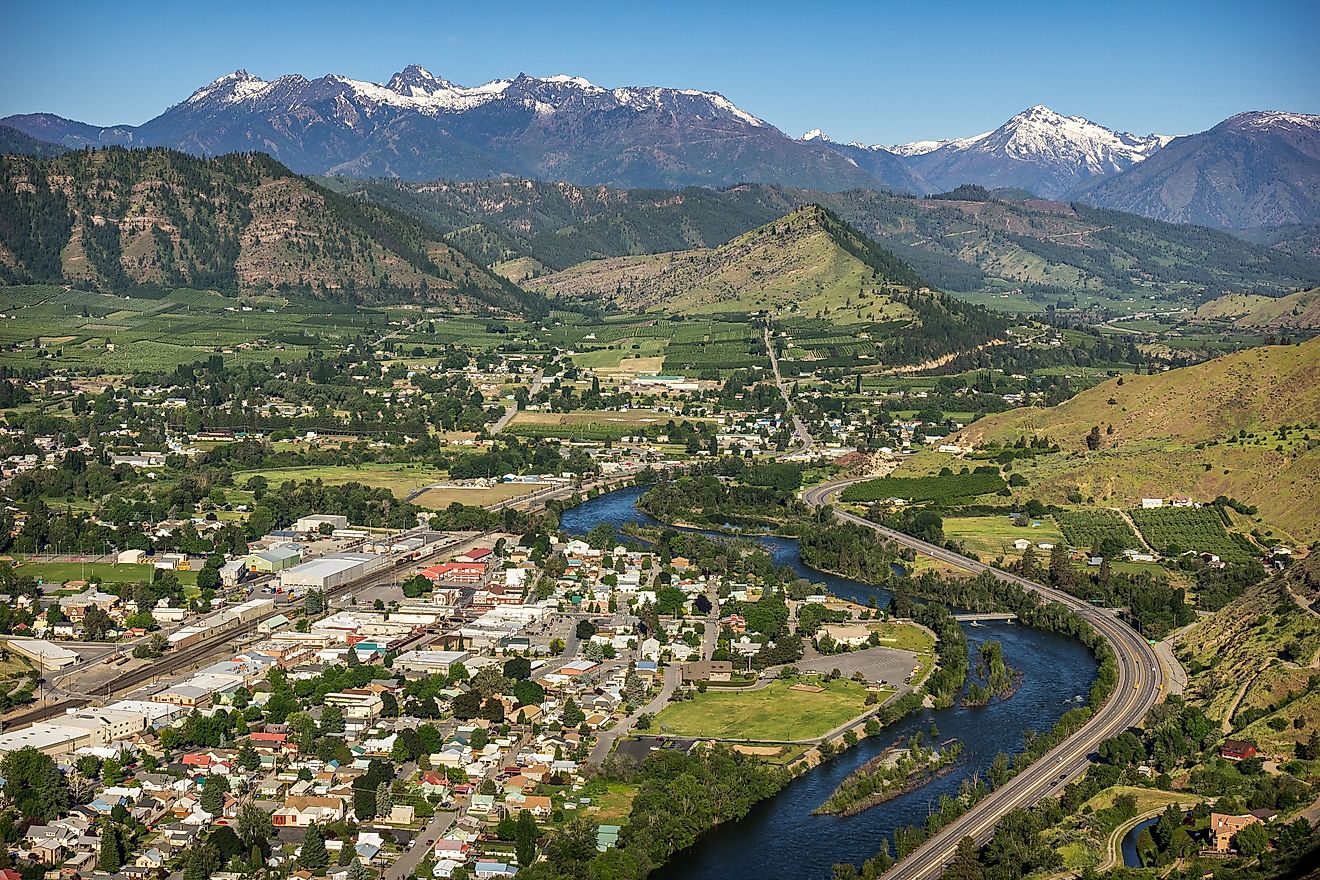
Weaverville anchors Trinity County, a place so rural it has no incorporated cities and no traffic signals at all. Founded in 1850, the town drew more than 10,000 people at the height of the Gold Rush and now holds around 3,600. Its four-block historic district on Main Street sits on the National Register of Historic Places, with more than 30 buildings dating to the 1850s. Several carry the unusual spiral iron staircases built when a building's upper and lower floors had separate owners.
The standout site is the Joss House, a Taoist temple that Chinese gold miners first built in 1853 and rebuilt in 1874 after fires. It is California's oldest continuously used Chinese temple, now protected as the Weaverville Joss House State Historic Park. A short walk away, the Jake Jackson Museum keeps hand-forged tools, mining artifacts, and a working blacksmith shop in a yard scattered with old stamp-mill parts. The Trinity County Courthouse, built in 1856, remains one of the oldest still in active use in the state.
The Trinity Alps Wilderness begins at the edge of town, and trailheads into some of California's most rugged alpine country start 15 minutes or less from downtown. Trinity Lake and the Trinity River support fishing and boating through much of the year. Back in town, the Trinity County Brewing Company pours local beer on weekends, and Mamma Llama Eatery & Cafe handles the morning coffee and breakfast crowd.
Grass Valley

An hour's drive from Sacramento, Grass Valley sits in the heart of California's Gold Country and once made fortunes for mining families across the region. Downtown centers on Mill and Main Streets, where Gold Rush-era buildings like the Holbrooke Hotel still operate. The Holbrooke has run since 1862 and hosted US Presidents including Ulysses S. Grant and Grover Cleveland.
On the edge of town, the Nevada County Narrow Gauge Railroad Museum preserves the area's transportation history and runs rides on its Railbus. A short drive away, Empire Mine State Historic Park covers 856 acres around one of California's oldest, largest, and richest gold mines, which produced 5.8 million ounces of gold between 1850 and 1956. Guided underground tours run seasonally, and year-round exhibits explain hard-rock mining techniques and the lives of the workers.
The surrounding Sierra Nevada foothills hold plenty of room to roam. The 15-mile South Yuba River Trail follows historic mining flumes and railroad grades, and Condon Park has swimming spots along the South Yuba River.
Nevada City

Nevada City is another former Gold Rush town that rewards a slower look, and its downtown core is worth the walk. The compact center holds dozens of original 1860s commercial buildings and Victorian-era homes. Two stand out: the Nevada Theatre, built in 1865 and California's oldest existing theater building, and the Firehouse No. 1 Museum, with its Gold Rush artifacts and old fire equipment.
The town hosts the Nevada City Film Festival each summer, with venues like the Nevada Theatre screening independent films, and the First Friday art walks and the Nevada City Live concert series draw crowds through the warmer months. Three Forks Bakery & Brewing Company pairs a sweet or savory bite with a house brew. For an overnight, the National Exchange Hotel has offered rooms since 1856, while the Outside Inn, a few minutes from downtown, is known for its themed rooms.
Dunsmuir

Dunsmuir sits in a narrow Sacramento River canyon about 12 miles south of Mount Shasta City, and its downtown still wears the look it had in the 1920s and 1930s. The railroad built the place: the Central Pacific arrived in 1886, a huge roundhouse and rail yard followed, and the town was named for a coal baron who donated its fountain. When Interstate 5 bypassed the commercial district in 1961, it quietly preserved that early-century main street, and the downtown joined the National Register of Historic Places in 1982.
The town remains a fly-fishing draw, with anglers working the upper Sacramento River for wild and rainbow trout right below the freeway overpass. Just north of town, the Hedge Creek Falls trail leads on a short walk to a waterfall you can step behind, ending at a viewing platform that looks out toward Mount Shasta. Farther up the tracks, Mossbrae Falls spreads a wide curtain of spring-fed water into the river, though the only route to it runs along active rail lines and is currently closed to the public. Downtown, the Dunsmuir Brewery Works serves a nut brown ale with live music, and the Amtrak Coast Starlight still stops daily at the historic station.
Fort Bragg

Fort Bragg started as a military outpost in 1857 and grew into a working lumber town whose last large sawmill ran until 2002. The Mendocino Coast Model Railroad & Historical Society keeps detailed scale-model displays inside the historic California Western Railroad depot. From the same depot, the Skunk Train carries passengers through redwood forest toward Willits, tracing a route that logging trains used in the 1880s.
The Guest House Museum, built from local redwood in 1892, lays out the town's logging past through period furnishings and lumber-industry artifacts. The best-known stop is Glass Beach, where decades of discarded bottles have been worn by the surf into smooth sea glass along the shoreline. It sits within MacKerricher State Park, which protects miles of coast and offers good chances to spot harbor seals.
Off The Main Road
Each of these six towns held onto the thing that built it. Weaverville keeps a Gold Rush county seat with no stoplights, Dunsmuir keeps a canyon rail town frozen at its 1920s peak, and Ferndale keeps a dairy fortune's worth of Victorian storefronts intact. Grass Valley and Nevada City preserve the mines and theaters of Gold Country, while Fort Bragg holds the depots and beaches of a coastal logging era. They reward the traveler willing to leave the interstate and spend an unhurried afternoon.