8 Most Scenic Small Towns on the Pacific Coast
From the San Juan Islands off Washington to the southern Oregon coast and central California's Big Sur region, the Pacific Coast holds a dense stretch of scenic small towns. The eight below cover the range: working harbours, preserved Victorian downtowns, lighthouse stations, whaling-era settlements, coastal state parks, and the artist colonies that developed around them. Each is worth a weekend trip or a longer stay.
Friday Harbor, Washington

Friday Harbor is the main town on San Juan Island, accessible by state ferry from Anacortes. The town has about 2,500 residents and serves as the cultural and supply centre for the San Juan Islands. The historic waterfront holds independent shops, art galleries, and local restaurants. Lime Kiln Point State Park, the main draw outside town, is one of the best land-based orca whale watching spots in the world; Southern Resident killer whales pass the park's shoreline from late spring through early fall, and the Lime Kiln Lighthouse (active since 1919) marks the viewing spot. Commercial whale-watching boats also operate from the harbour in season.
Cambria, California

Cambria sits on California's central coast between San Simeon and Morro Bay. The town developed in the 1860s as a mining and timber community, and its East Village (the inland half of the two-village layout) preserves Victorian-era commercial architecture and now houses galleries, boutiques, and independent cafes. The Cambria Historical Society runs a local museum. Hearst San Simeon State Park ten minutes north contains Hearst Castle, William Randolph Hearst's hilltop estate designed by Julia Morgan and built between 1919 and 1947. The castle is open for guided tours of its main rooms, gardens, Neptune Pool, and private zoo remains. Moonstone Beach in Cambria offers a boardwalk and tidepool exploration along the rocky shoreline.
Mendocino, California

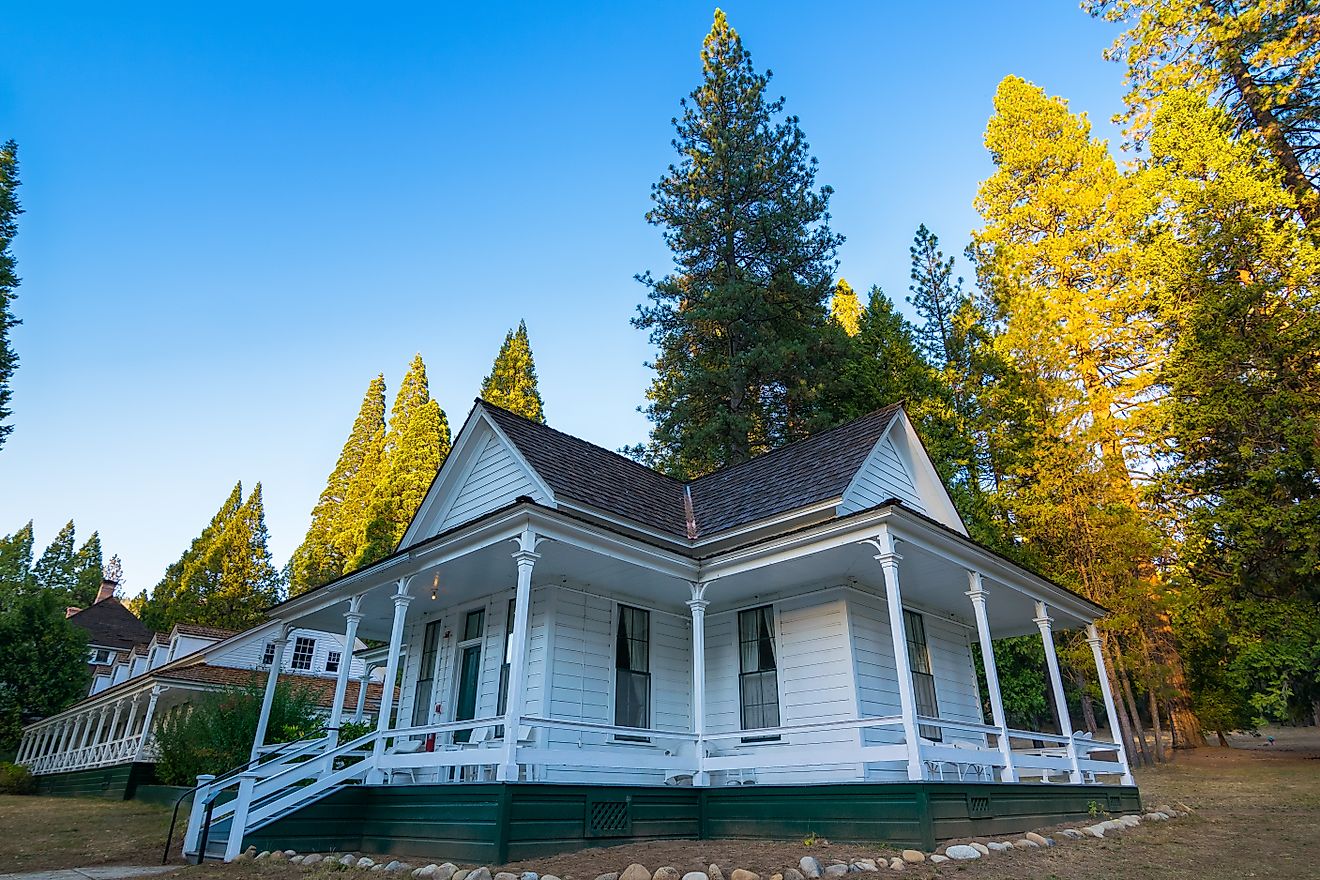
Mendocino is a preserved 19th-century New England-style village on a cliff above the Pacific, about 155 miles north of San Francisco. The village was founded in 1850 by lumbermen from the East Coast, and its Cape Cod-inspired white-frame architecture remains largely intact. The Mendocino Art Center (founded 1959) offers rotating exhibitions, classes in ceramics, painting, and textiles, and a sculpture garden. Mendocino Presbyterian Church, built in 1868, is one of California's oldest continuously operating Protestant churches (not 1854 as sometimes stated). Point Cabrillo Light Station north of town preserves a 1909 lighthouse, several outbuildings, and a keeper's cottage.
Carmel-by-the-Sea, California

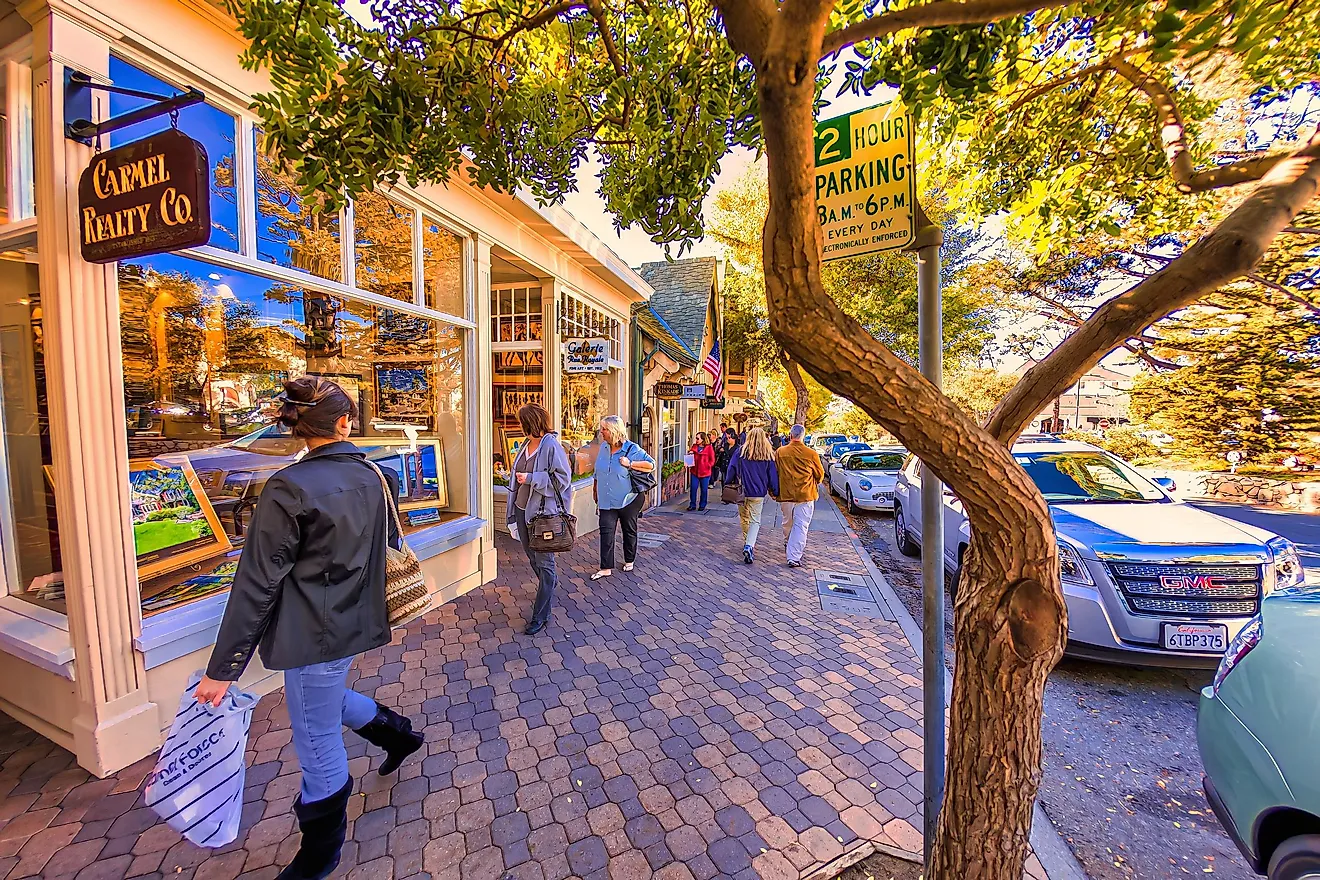
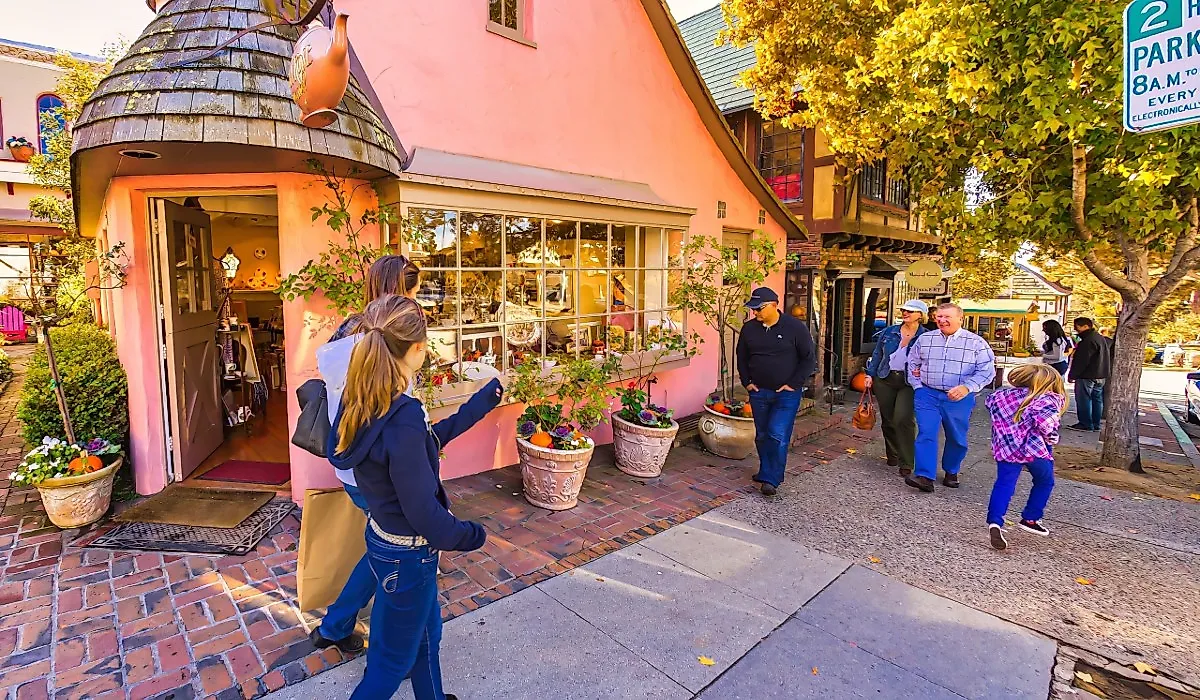
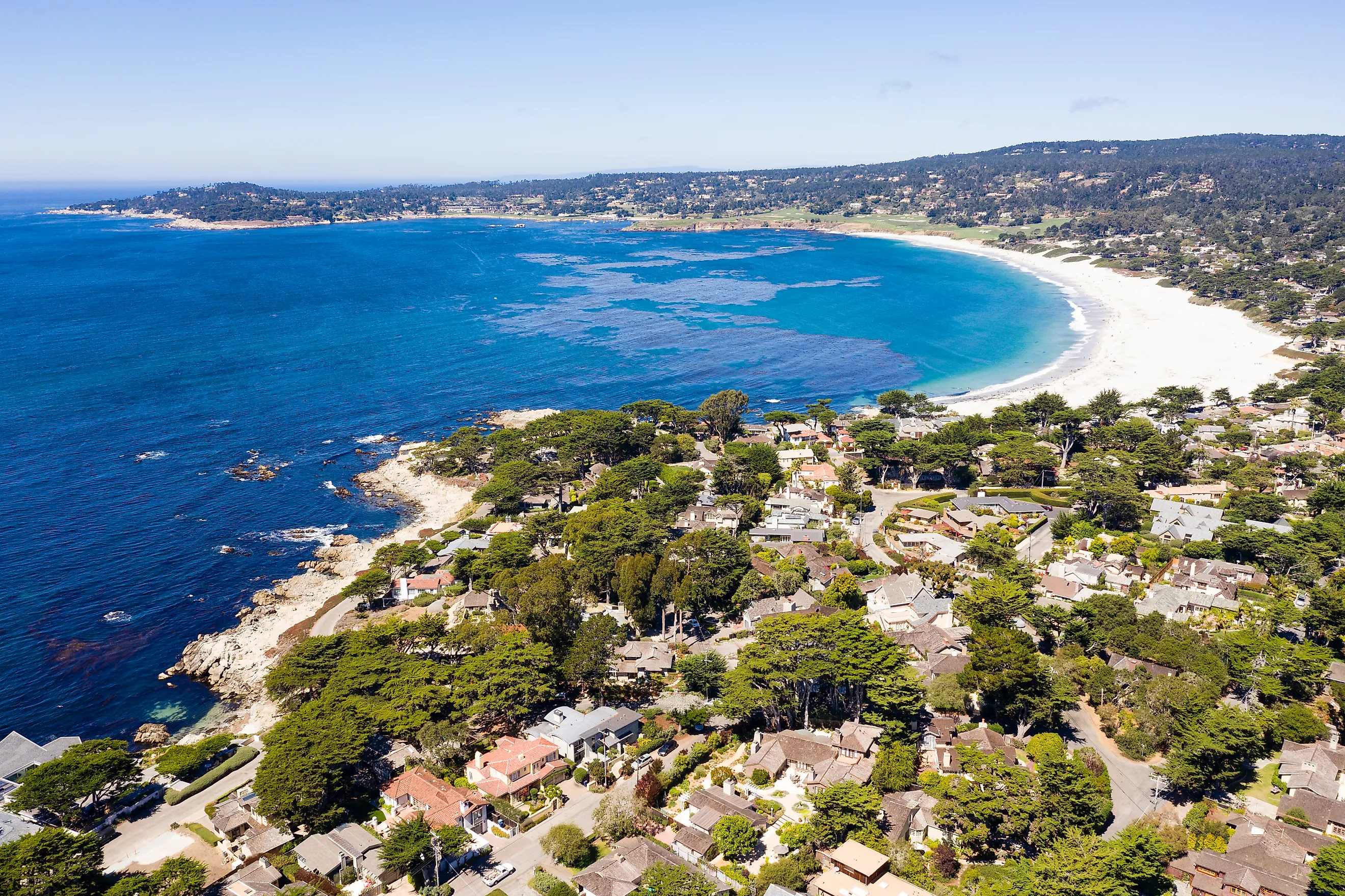
Carmel-by-the-Sea is a walkable artist colony town that formally incorporated in 1916. The one-square-mile city famously has no street addresses (residents use descriptive directions); no chain stores; and no traffic lights. The town was once home to the Robinson Jeffers Tor House, which the poet built between 1919 and 1924 from stones he pulled from the Pacific shoreline below. Tor House is now open for guided tours Fridays and Saturdays. The Carmel Mission (officially San Carlos Borromeo de Carmelo, founded 1770) is one of the California missions and holds the tomb of Junípero Serra. Carmel Beach below Ocean Avenue is a white sand crescent with cypress trees framing the views.
Astoria, Oregon

Astoria is the oldest American settlement west of the Rocky Mountains, founded in 1811 as a fur trading post by the American Fur Company of John Jacob Astor. The town's Victorian-era downtown, built on the Columbia River at its meeting with the Pacific, preserves a surprising density of 19th-century commercial and residential architecture. The Astoria Column atop Coxcomb Hill offers panoramic views of the Columbia River estuary and the Pacific. Fort Stevens State Park covers historic Civil War-era through World War II-era military fortifications at the Columbia's mouth. The Columbia River Maritime Museum in town covers the 2,000-plus shipwrecks along the Columbia Bar (nicknamed the Graveyard of the Pacific for good reason).
Port Townsend, Washington

Port Townsend is a Victorian seaport on the Olympic Peninsula, preserved from its 1880s boom as a candidate for the "New York of the West." The expected transcontinental railroad never arrived, and the town was economically stranded, but the Victorian architecture remained intact. Today, Port Townsend is one of only three Victorian seaports in the US formally recognised as a National Historic Landmark district. Fort Worden State Park, a former coastal artillery installation built in 1902, now operates as a park with hiking trails, historic military buildings, and beach access. The Jefferson Museum of Art and History downtown covers the region's maritime, logging, and Native American history. The town is also a major sailing centre; the Wooden Boat Festival each September is the largest of its kind in the country.
Bandon, Oregon

Bandon sits on Oregon's south coast where the Coquille River meets the Pacific. Face Rock State Scenic Viewpoint is the town's most photographed location, named for a sea stack that appears to be a human face rising from the surf. The Coquille River Lighthouse at Bullards Beach State Park is a preserved 1896 lighthouse at the river's north bank. The Bandon Historical Society Museum downtown covers local Coquille Indian, cranberry farming (Bandon is one of Oregon's main cranberry growing regions), and shipwreck history. Bandon Dunes Golf Resort, just north of town, has hosted multiple major golf championships on its Scottish-style links courses.
Cannon Beach, Oregon

Cannon Beach is best known for Haystack Rock, a 235-foot-tall sea stack that rises just offshore and is one of the most photographed landmarks on the Oregon coast. The rock is a marine wildlife refuge; during low tide, tidepools at its base reveal anemones, starfish, and nesting tufted puffins seasonally. Ecola State Park north of town covers Tillamook Head, offering panoramic views of the coastline and several beach access points. Captain William Clark and a small party from the Corps of Discovery reached Ecola in January 1806 searching for a beached whale; Clark described the viewpoint in his journal as one of the most pleasing prospects he ever surveyed.
Eight Towns, One Coast
These eight Pacific Coast towns trade on distinct histories: San Juan Island ferry culture in Friday Harbor, Hearst Castle architecture in Cambria, New England-style lumber town architecture in Mendocino, poet-colony walkability in Carmel, fur-trade origins in Astoria, preserved Victorian seaport in Port Townsend, Oregon-coast lighthouse and cranberry country in Bandon, and the Oregon coast's signature sea stack at Cannon Beach. Pick based on what kind of coastline you want to wake up to.