These Kentucky Towns Have The Best Views In The State
The best views in Kentucky come with a good deal of the state's history attached. In the years leading up to the American Revolution, settlers from Virginia and Pennsylvania crossed the Appalachian Mountains in search of good farming land. They built stagecoach stops and plantation homes and earned a reputation for hospitality, and the places they left behind went on to shape a state anthem, a president's family story, and a set of utopian religious communities. Farther east, an untamed stretch of wilderness rises into natural wonders that wouldn't look out of place in the great American West, among them towering sandstone arches and waterfalls. These four Kentucky towns have the best views in the state.
Bardstown

Songwriter Stephen Collins Foster drew on Bardstown for the words to Kentucky's state anthem, My Old Kentucky Home. The town is the second oldest in the state, settled in 1780 and named for the Bard family after William Bard laid out the lots and gave land for the courthouse. One building predates the settlement, though: the Old Talbott Tavern, constructed in 1779 as a stagecoach stop. It ranks among the oldest buildings in Kentucky, and its guest book over the years included Andrew Jackson, Abraham Lincoln, and Foster himself.
The song is tied to the Federal Hill Mansion, a Federal-style plantation completed around 1818 for Judge John Rowan, a cousin of Foster's. By tradition Foster visited the house and began the song there, though historians still debate whether he ever saw it in person, and most credit his reading of Uncle Tom's Cabin as the stronger influence on the lyrics. The state bought the property and renamed it My Old Kentucky Home in the 1920s, and it is now a state park. Visitors can tour the three-story home, hear the complicated and at times tragic history of the place, including the enslaved people who lived and worked here, and sample Bardstown's most famous product: Bourbon whiskey.

There are many stories surrounding how Bourbon whiskey was first made, but the most common one is that a Baptist minister named Elijah Craig first began distilling whiskey and storing it in oak barrels in 1792. The name Bourbon comes not from the barrels themselves but from the House of Bourbon, a French royal family. Bourbon is everywhere in Bardstown today, poured at distilleries such as the Bardstown Bourbon Company and displayed as vintage bottles in the collection of the Oscar Getz Museum of Whiskey History.
Slade

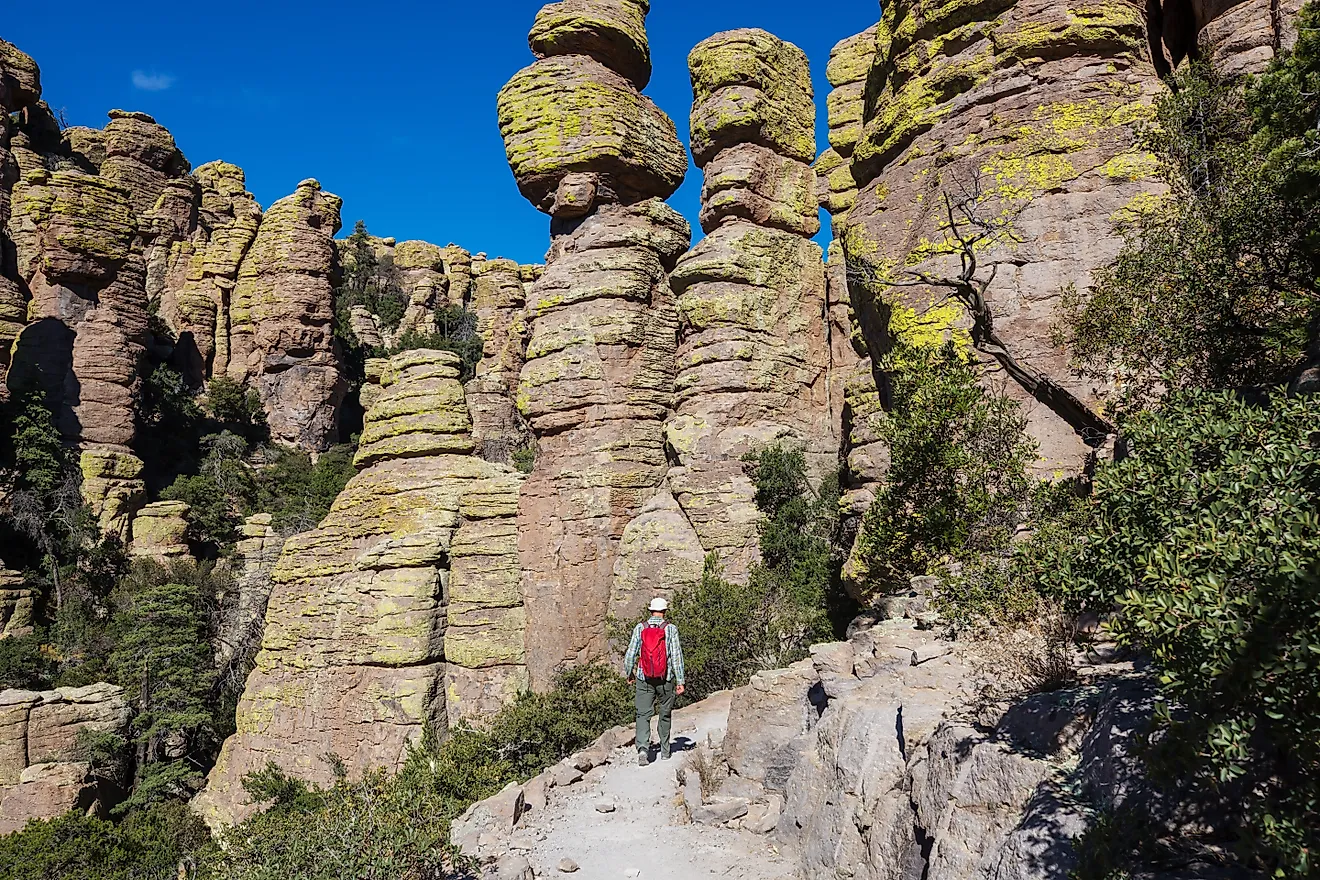
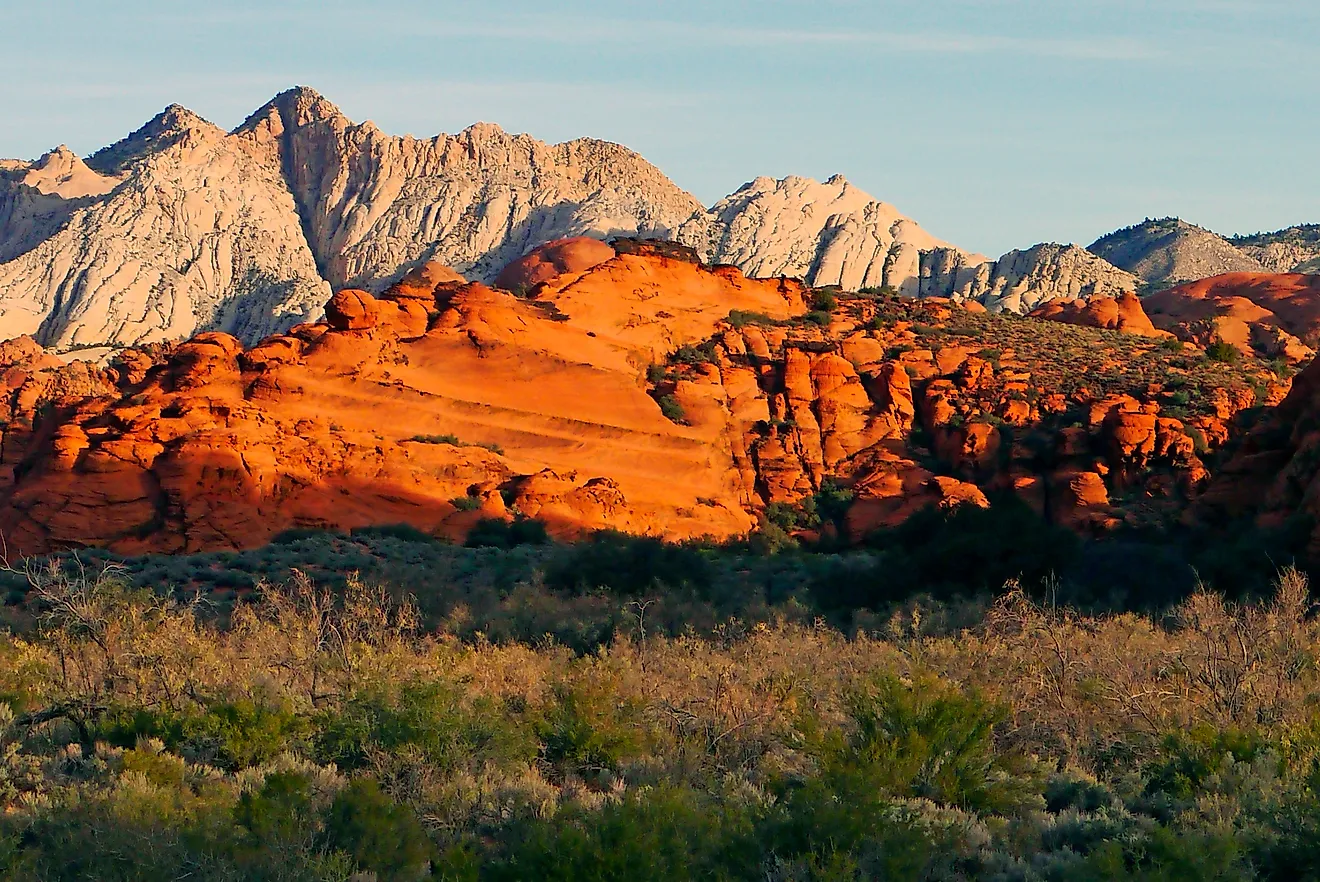
Slade is the only community within the lesser-known natural wonder of Kentucky, the Red River Gorge Geological Area. The canyon would not look out of place in the Western US, with more than 100 natural sandstone arches shaped over hundreds of millions of years.
The canyon began forming 340 million years ago, when sands were deposited by an ancient river. These sediments were then buried in a process known as diagenesis, and lastly, the original bedrock was eroded away, creating both the gorge and the natural arches and bridges found throughout the area.
One of the greatest examples of this process is at the Natural Bridge State Resort Park, located within the Red River Gorge. The park is named after a 78-foot-long by 65-foot-high natural sandstone arch. Unlike other arches, hikers are allowed to walk up a set of stairs right onto the bridge and go across it. But be warned, there are no guardrails up here, and it's a long way down into the gorge.

That doesn't deter climbers, however, as the Red River Gorge Geological Area ranks among the top sport-climbing destinations in the eastern US, with more than 3,000 bolted routes up the sandstone cliffs. Hikers reach high overlooks such as Chimney Top, which stands 400 feet above the Red River. The river itself shifts along its course, running fast through the upper section and settling into gentler water downstream that suits canoeing and fishing.
Despite being a remote part of Kentucky, climbers and hikers can find good company and food at Miguel's Pizza.
Harrodsburg

Harrodsburg is the one community that outdoes Bardstown for sheer age. It is the oldest community in Kentucky, dating back to 1774, two years prior to the Declaration of Independence and 18 years before Kentucky became a state. The community got its name from James Harrod, who led a group of 31 men west of the Appalachian Mountains to establish a small fort here. It would originally serve as part of Kentucky County in Virginia, before being organized as Mercer County.
Harrodsburg lays out much of Kentucky's story in one place, starting at Old Fort Harrod State Park. This full-scale recreation of the 1774 fort lets visitors walk through 18th-century frontier life, with tools, weapons, and artifacts set inside blockhouses, barracks, and even a schoolhouse for the children of the settlement. Inside the grounds stands the Lincoln Marriage Temple, a brick shelter built around a log cabin traditionally identified as the one where Thomas Lincoln and Nancy Hanks married in 1806. The wedding actually took place near Springfield, Kentucky, and the cabin was later moved here. Abraham Lincoln had a complicated relationship with his father, made harder after his mother Nancy died when he was nine.

One of the town's most interesting places is not related to its founding at all, but rather a preserved village where a community of Shakers lived from 1805 to 1910, known as the Shaker Village at Pleasant Hill. The Shaker religious movement began in England when a woman named Ann Lee claimed to see visions of Christ. She believed that Christ would reappear as a woman through the second coming, and the way to salvation was through celibacy, simple lifestyles, and egalitarian communities. Shakers spread across the US, including in Kentucky, where they gained their name due to their dancing and "shaking" during their religious services.
Today the nonprofit that runs Shaker Village at Pleasant Hill keeps up 3,000 acres of historic buildings, farmland, and meadow, along with a farm-to-table restaurant. The staff work to protect the Shaker legacy and to let guests experience the plain, ordered kind of life the Shakers built here.
Corbin

The eastern Kentucky town of Corbin sits beside one of the country's great waterfalls. By volume, nearby Cumberland Falls is second only to Niagara Falls among waterfalls east of the Mississippi.
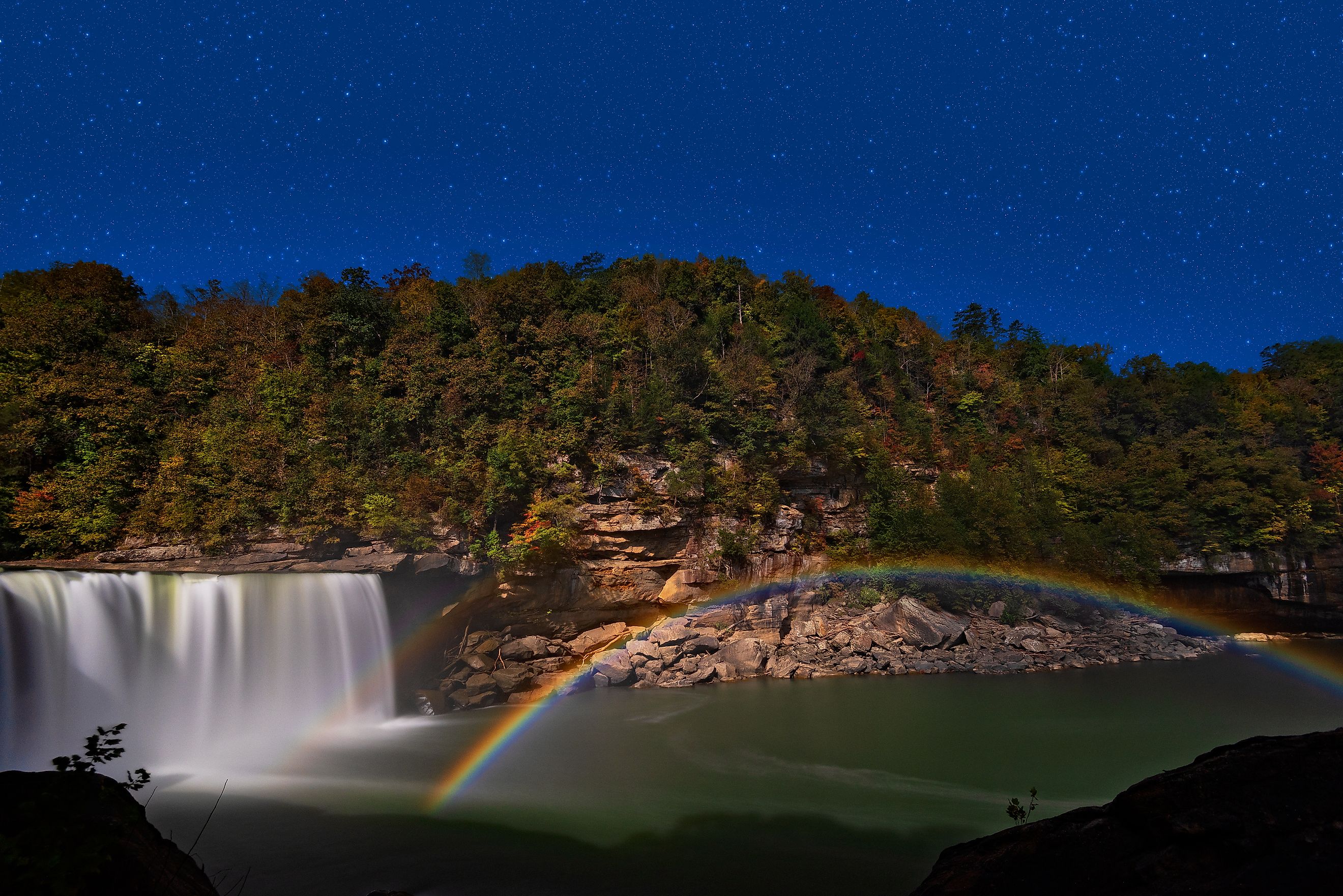
Cumberland Falls drops 68 feet over a 125-foot-wide ledge, and about 3,600 cubic feet of water hits the rocks below every second. Locals call it the Niagara of the South, and it is the centerpiece of Cumberland Falls State Resort Park. Its real claim to fame comes at night: the falls throws up enough mist to form a moonbow, a rainbow lit by a full moon rather than the sun. On clear nights around the full moon, visitors crowd the overlooks for a chance to see it, one of the few predictable moonbows anywhere in the Western Hemisphere.
The Cumberland River also washes up gems and fossils including quartz, moonstones, and sapphires, and gem mining is a popular activity for kids and adults in the park. Beyond the water, 17 miles of hiking trails run through the park, where bird watchers keep an eye out for wood thrushes and migrating wood warblers.

Corbin also lays claim to one of Kentucky's biggest exports: Kentucky Fried Chicken. During the Great Depression, Harland Sanders owned a small cafe where he sold his family recipe of fried chicken. When the concept took off, he sold the cafe and began KFC. Today that cafe operates as both a working KFC and a small museum, the Harland Sanders Cafe & Museum. Each spring, Corbin residents honor the Colonel at Colonel Fest, complete with a Colonel Sanders lookalike contest.
Where The Views Come With History
What these four have in common is that the view and the history come as one. In Bardstown, the best prospect is a three-story house behind Kentucky's state anthem. In Harrodsburg, it is 3,000 acres that a religious community cleared and farmed. In Corbin, it is a waterfall that throws a moonbow, and in Slade, a sandstone arch that took millions of years to cut.
The welcome is just as old as the views. Innkeepers at the Old Talbott Tavern were taking travelers before Bardstown was even laid out, and the crew at Miguel's Pizza still feeds climbers at the edge of the gorge. In these four towns, neither the scenery nor the hospitality is in short supply.