11 Picturesque Towns in Florida for a Weekend Retreat
A handful of Florida towns are picturesque enough to plan a weekend around. St. Augustine still looks like a 1500s Spanish port. Apalachicola crowds its waterfront with shrimp boats and old warehouses. Matlacha turns a row of fishing shacks into a rainbow. Destin lays sugar-white sand against a green pass. Each one earns the trip on looks alone.
Marco Island

Marco Island ends the Gulf coast in a long ribbon of white sand. Tigertail Beach curves around a tidal lagoon on the Gulf of Mexico. Shell hunters work the flats at low tide. Wading birds crowd the lagoon behind the dunes.
Downtown, the Marco Island Center for the Arts hangs work by local painters and sculptors and teaches classes year round. The Marco Island Farmers Market sets up at Veterans Community Park on Wednesday mornings in season with produce stands and baked goods. For the deep history, the Marco Island Historical Museum tells the story of the Calusa shell mounds dug up on the island, including a replica of the wooden Key Marco Cat, a Calusa carving more than a thousand years old.
Matlacha

Matlacha paints its fishing shacks hot pink, turquoise, and lime green. The art village covers a sliver of land on the pass between Pine Island and Cape Coral. A working bait shop or two still hangs on near the Matlacha Pass bridge.
The Leoma Lovegrove Gallery and Gardens is the heartbeat of the town, where the artist's bright canvases share space with a tropical garden of mosaics and sculpture. A few steps away, Matlacha Community Park covers about nine acres with a fishing pier, a boat launch, and a playground. The drawbridge over the pass gets photographed more than any other span in this corner of the state, mangroves crowding both banks, and Olde Fish House Marina sells the day's catch straight off the dock.
Naples

Naples frames its main beach with a long wooden pier. The first version went up in 1888, and storms have prompted rebuilds ever since. Fifth Avenue South lies a few blocks inland, lined with sidewalk cafes and seafood counters.
On the south side of town, the Naples Botanical Garden spreads across 170 acres of themed grounds planted with tropical species from Florida, the Caribbean, and Brazil. Down on the Gordon River, Tin City turned a row of old waterfront warehouses into a shopping and dining strip with the boats still bobbing outside. Families gravitate to Lowdermilk Park at the north end of the main beach for its volleyball courts and duck pond.
St. Augustine

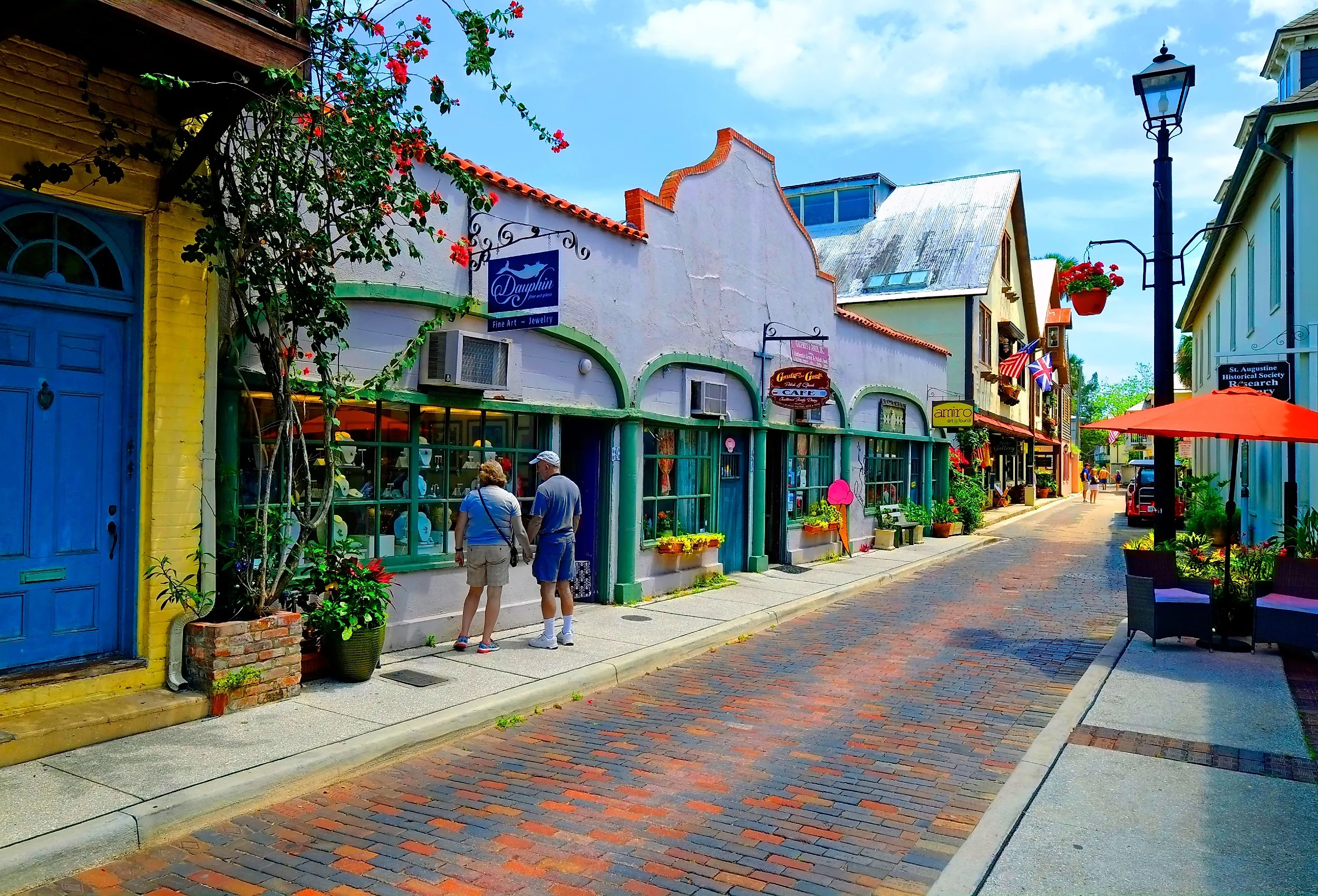
St. Augustine packs its old town with coquina walls and narrow Spanish streets. Spanish admiral Pedro Menéndez de Avilés founded it on September 8, 1565. It claims the title of oldest continuously occupied European-settled city in the continental United States. The Castillo de San Marcos guards the harbor, finished in 1695, its coquina walls once soft enough to swallow cannonballs.
The St. Augustine Alligator Farm Zoological Park has pulled in visitors since 1893 and claims to house all 24 living crocodilian species, a roster no other park can match. A few blocks over, St. George Street still wears its cobblestones, its restored colonial storefronts packed with shops and cafes. The Cathedral Basilica on Cathedral Place, the seat of the local diocese, took its present form in 1797.
Winter Park

Winter Park threads a chain of lakes through a canopy of live oaks. Narrow canals link the water from one lake to the next. The Winter Park Scenic Boat Tour has cruised the route since 1938. The hour-long pontoon ride slips past lakefront mansions and cypress knees.
Park Avenue itself shades its main shopping blocks under a tunnel of live oaks. Out on Lake Maitland, the Kraft Azalea Garden has bloomed under giant cypress trees since the city opened it as a park in 1938. Two museums round out a day here. The Rollins Museum of Art holds around 6,000 works on the college campus, and Casa Feliz, a 1932 Andalusian farmhouse, was rolled across town in 2001 to save it from the wrecking ball.
Santa Rosa Beach

Santa Rosa Beach lines the Scenic 30A corridor with pastel beach cottages. Architects planned the 30A towns as carefully as the shoreline. Seaside lies a few miles east, tidy enough to play suburbia in The Truman Show. The Saturday farmers market lines its central square with local growers and bakers.
Bud and Alley's has been grilling Gulf catch on the Seaside dunes since 1986, and its rooftop bar is the spot locals point newcomers toward at sunset. West of town, Grayton Beach State Park covers about 2,000 acres around Western Lake, one of the rare coastal dune lakes found in only a handful of places on Earth. The beach inside the park lands on national top-ten rankings almost every year.
Fernandina Beach

Fernandina Beach wears a Victorian downtown on Amelia Island. Eight different national flags have flown over the town across its history. No other place in the country can match that count. The Amelia Island Museum of History lays out the story inside the old Nassau County jail.
Centre Street downtown is home to the Palace Saloon, opened in 1903 inside an 1878 building and long called the oldest continuously operating bar in Florida. Around the corner, the Amelia Community Theatre stages a full season of plays in a small downtown house and counts among the oldest community theaters on this side of the state. When the history lesson wraps, Peters Point Beachfront Park offers low-key dune access on the Atlantic side.
Destin

Destin meets the Gulf in water the color of green glass. Locals call it the World's Luckiest Fishing Village. The East Pass drops into deep water fast, putting the 100-fathom curve close to the harbor. Charter boats leave HarborWalk Village at dawn and come back with coolers that explain the bumper stickers.
Out in the bay, Crab Island is a submerged sandbar where summer crowds raft up their boats for swimming and floating snack shacks. The Destin Fishing Rodeo has crowned its biggest catches every October since 1948, the longest-running tournament of its kind in the state. For a quieter afternoon, Henderson Beach State Park guards about 200 acres of dunes with a half-mile of sand, three nature trails, and a campground for tents and RVs.
Captiva

Captiva Island lines one shaded lane with cottages and marinas. The island picks up where Sanibel ends. Shell-seekers head straight for Turner Beach on Blind Pass at low tide. No chain stores break the view.
Captiva Cruises heads out of McCarthy's Marina for dolphin tours and sunset trips, plus ferries to Cabbage Key and Useppa Island, two spots you can reach only by boat. Back on land, the Mucky Duck has poured drinks on the beachfront since 1976 and remains the go-to perch for sunset. The Bubble Room, open since 1979, packs three floors with 1940s memorabilia and sends its Orange Crunch Cake to nearly every table.
Apalachicola

Apalachicola lines its downtown with two-story brick storefronts and shaded porches. The town grew up on oysters at the mouth of the Apalachicola River. Its bay once produced close to 90 percent of the state's harvest. The fishery hit hard times, and wild harvesting paused in recent years.
The 1838 Raney House Museum shows off a cotton merchant's home with its original furnishings and a porch facing the water. The Gibson Inn, built in 1907 and brought back to life in the 1980s, holds down the center of town with its wraparound Victorian porches. By the working shrimp docks, Oyster City Brewing Company pours regional craft beer, and the Apalachicola Maritime Museum on Water Street tells the river's steamboat story.
Vero Beach

Vero Beach spreads low and green along the Treasure Coast. Its biggest draw floats just offshore. Theodore Roosevelt made nearby Pelican Island the country's first national wildlife refuge in 1903. A boardwalk and nature trail cross the Indian River Lagoon to the rookery that started the whole system.
In town, the Vero Beach Museum of Art focuses its collection on American work and sets a sculpture park out front. McKee Botanical Garden traces back to a 1932 jungle attraction that once covered 80 acres along U.S. 1; today about 18 acres survive, complete with the original Sterling cottage and waterlily ponds. When it is beach time, South Beach Park gives downtown an easy, lifeguarded place to swim.
Where Florida Earns Its Postcards
The prettiest corners of this state never needed a roller coaster to earn their crowds. Pelican Island protected its first egrets while Orlando was still pasture. Captiva's shells wash in on a tide that does not care what season it is, and Winter Park's lakes have carried the same kind of pontoon boats for almost ninety years. Fernandina counts its eight flags, Seaside counts its film cameos, and every one of these places rewards anyone who slows down long enough to look around.