9 Most Hospitable Towns In The Pacific Northwest
Ask anyone who has driven the back roads of the Pacific Northwest, and they will tell you the mountains and coastline are only half the reason to go. The other half is the people. In the small towns scattered across Washington, Oregon, and Idaho, a stranger who wanders into the coffee shop or the museum tends to leave with directions, a recommendation, and sometimes a story. These nine towns have each turned that instinct for welcome into something you can feel the moment you arrive, whether it comes from a Norwegian bakery, a lavender farmer, or a docent who has been giving the same tour for thirty happy years. Here is where the region's warmth actually lives.
Poulsbo, Washington

Norwegian families began settling the shore of Liberty Bay in the 1880s, on land the Suquamish had lived on for generations, and the town they built still leans hard into its Scandinavian roots. Locals call Poulsbo "Little Norway," and every May the whole place turns out for Viking Fest to mark Norway's Constitution Day. Wander Front Street and you will pass Nordic gift shops, bakeries selling lefse and cardamom bread, and shopkeepers who seem genuinely pleased you stopped in. The Suquamish Museum, a short drive away, tells the older and deeper story of the people who fished these waters first.

Down at the Port of Poulsbo, the marina sits right at the edge of downtown, so a morning walk takes you past fishing boats and sailboats without leaving the shops behind. Verksted Gallery, a working cooperative, fills its walls with pieces from local artists who are usually happy to talk you through their work. When hunger hits, the waterfront restaurants pour a glass of wine with a view of the bay and the Olympics beyond, and few visitors are in any rush to leave.
Florence, Oregon

Every spring the rhododendrons bloom so thoroughly here that Florence earned the nickname "City of Rhododendrons," and residents hold a festival in their honor each May. Historic Old Town sits along the Siuslaw River rather than the ocean, a working waterfront of bookshops, galleries, and chowder houses where the fishing boats still tie up. Stop into the Siuslaw Pioneer Museum, housed in a 1905 schoolhouse, and the volunteers will happily walk you through the coast's settlement history and the story of the local Native peoples.

About twelve miles north on Highway 101, the Heceta Head Lighthouse has guided ships since 1894 from its perch above the surf, and its former keeper's house now runs as a bed and breakfast where the hosts serve a famously long breakfast. Nearby, an elevator drops visitors into the Sea Lion Caves, the largest sea cave in North America, where Steller sea lions bellow below. Golfers can walk the links-style fairways at Sandpines, and anyone hungry after a day in the dunes can grab a burger on the Boardwalk and watch the river slide by.
Montpelier, Idaho

Oregon Trail pioneers knew this spot as Clover Creek, a resting place after the brutal descent down Big Hill, before Brigham Young renamed the town for the capital of his native Vermont. That trail history is the heart of the welcome here. At the National Oregon/California Trail Center, costumed guides load visitors into a covered wagon and walk them through a re-created 1850s wagon camp, spinning the stories as they go. It is hands-on, a little theatrical, and the kind of thing families remember for years.

Montpelier's other claim to fame is a genuine piece of Old West lore: on August 13, 1896, Butch Cassidy and his gang robbed the Bank of Montpelier and rode out of town, and the old bank building now houses a museum devoted to the heist. Just outside town, the Bear Lake National Wildlife Refuge spreads across marshland where moose wade through the reeds and migrating birds crowd the open water, a quiet counterpoint to all that frontier drama.
Sequim, Washington

The Olympic Mountains block most of the rain that soaks the rest of the peninsula, leaving Sequim with roughly sixteen inches a year and a climate close enough to Provence that lavender thrives. More than thirty farms grow it across the Sequim-Dungeness Valley, which is how the town became the "Lavender Capital of North America." Come the third weekend of July, growers throw open their gates for the Lavender Festival, and the same farmers who spend the rest of the year quietly tending their rows spend that weekend handing out sprigs and stories.

The Olympic Game Farm, open from late spring through early fall, once trained animals for Walt Disney films, and today you drive slowly through its grounds while bison and elk amble up to the car. Along the Dungeness River, staff at the nature center lead family walks and birding outings from a boardwalk built on an old railroad bridge. The Northwest Native Expressions Gallery rounds out a day with jewelry and carvings made by artists of the Jamestown S'Klallam Tribe.
Cottage Grove, Oregon

Six covered bridges stand in and around this Lane County town, the densest cluster anywhere on the West Coast, which is how Cottage Grove came to call itself the "Covered Bridge Capital of the West." Volunteers built the little Centennial footbridge downtown from timbers salvaged off two demolished spans, and it makes the perfect starting point for the self-guided bridge tour. The Bohemia Gold Mining Museum keeps the town's mining past alive, and the Oregon Aviation Historical Society down the road fills a hangar with restored vintage planes and volunteers eager to explain every one.

The showpiece is the Chambers Covered Railroad Bridge, built in 1925 to carry logging trains across the Coast Fork of the Willamette River and restored in 2011. It is the last covered railroad bridge west of the Mississippi, and you can now walk straight through its tall timber frame while the river runs below. Out at Saginaw Vineyard, families are welcome in the tasting room, and back in town the cooks at Jack Sprats turn out comfort food to a dining room full of regulars and newcomers alike.
Winthrop, Washington

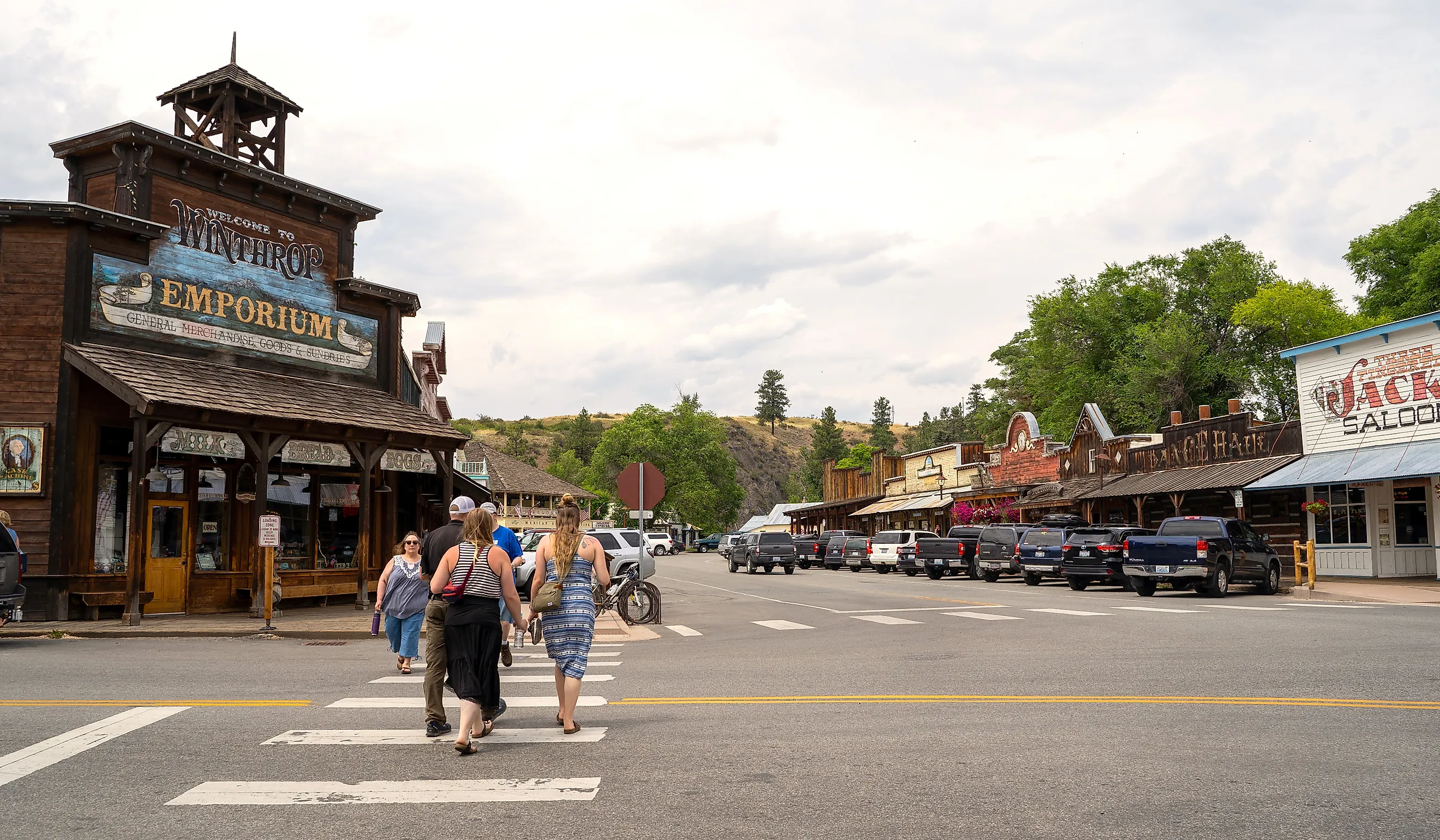
Since 1972, a local ordinance has required every storefront on Riverside Avenue to keep its frontier look: wooden boardwalks, hitching rails, and false-front facades. The effect is less a theme park than the work of a community that chose to hold onto its own past, and it brings a steady stream of visitors to a place of only a few hundred residents. Up on the hill, the Shafer Historical Museum centers on "The Castle," an 1897 log home built by town founder Guy Waring, whose Harvard roommate Owen Wister visited and later wrote "The Virginian," the first great Western novel.

Just outside town, Pearrygin Lake State Park spreads across nearly 1,200 acres with a swim dock, campsites, and trails, and the surrounding Methow Valley is laced with one of the largest cross-country ski networks in North America, groomed daily through the winter. For a lower-key afternoon, families pile into Sheri's Sweet Shoppe for ice cream, and anyone with a fly rod can spend a morning at the Winthrop National Fish Hatchery watching salmon and trout in the rearing ponds.
Moscow, Idaho

Home to the University of Idaho and more than sixty working artists, Moscow goes by "Heart of the Arts," and it wears the title without pretense. The Saturday Farmers Market, running May through October, started as a grassroots gathering and grew into the social center of the week, with produce, crafts, live music, and enough friendly conversation to fill a morning. At the McConnell Mansion, an 1886 house built for Idaho's third governor in the ornate Stick-Eastlake style, guides lead tours through period rooms and out into the garden.
The Appaloosa Museum tells the story of Idaho's state horse, the spotted breed the Nez Perce developed, with a small gift shop that kids gravitate toward. The University of Idaho Arboretum invites long walks past native plantings and open lawns, and downtown, the baristas at Bucer's Coffee House pour house-roasted coffee in a brick-walled room full of students and regulars. Moscow also throws itself into festivals, from the Lionel Hampton Jazz Festival to a National Lentil Festival celebrating the crop that surrounds the town.
Klamath Falls, Oregon

They call it "Oregon's City of Sunshine," and with roughly 300 clear days a year the nickname is earned. Klamath Falls boomed as a timber and railroad town in the 1920s, and that era left behind one of the finest historic Main Streets in the state. The Baldwin Hotel Museum, a four-story brick building from 1905 and the oldest public building in town, still holds much of its original furniture, and the docents pack every tour with local history. Families can spend an easy afternoon at the Children's Museum, where the exhibits are made to be handled.

The Ross Ragland Theater, an art deco house that first opened in 1940 and was rescued from demolition by townspeople in the 1980s, now hosts concerts and stage productions all year. The town also sits on the Klamath Basin, one of the great migratory bird flyways in North America, where birders come to spot hundreds of species. Add a walk along the Link River Trail through the middle of town, and you have an easy weekend in a place that never feels like it is trying too hard.
McCall, Idaho

Set on the southern shore of Payette Lake and more than 5,000 feet up in the mountains two hours north of Boise, McCall began as a logging town and grew into one of Idaho's favorite year-round retreats. Its warmest tradition runs coldest: the McCall Winter Carnival, which traces back to a 1924 sports gathering on the frozen lake and now brings tens of thousands of visitors together for towering snow sculptures and fireworks over the ice. At the Central Idaho Historical Museum, eight log structures built by the Civilian Conservation Corps in 1937 sit on a wooded campus, and the old Fire Warden's House is open for tours.

Payette Lake stays clear and cold from its glacial past, ringed by forest and open to swimmers, paddlers, and anglers all summer. Fifteen minutes up the road, Brundage Mountain Resort is known for some of the most reliable snow in the state, with skiing in winter and downhill biking once the runs melt out. Jug Mountain Ranch has golf and quiet trails nearby, and after a day outside, the kitchen at Pueblo Lindo turns out fajitas and margaritas to a room with family-reunion energy.
The Warmth Behind the Scenery
What ties these nine towns together is not a single landscape but a shared instinct. A Poulsbo baker, a Sequim lavender grower, a Montpelier trail guide, and a Klamath Falls docent are all doing the same thing in their own way: making a newcomer feel like part of the place rather than a passerby. The mountains, lakes, and coastline are what first draw travelers to the Pacific Northwest, but the people are what turn a stop on the map into a town you plan to return to.