11 Most Hospitable Towns In Iowa
Iowa's small towns have a well-earned reputation for hospitality. Pella plants over 300,000 tulips annually, drawing crowds each May to a festival that has run for decades. Decorah backs its Norwegian-American identity with the 59,000-object Vesterheim museum, a nationally accredited institution offering year-round folk art classes. Le Mars has been crowned Ice Cream Capital of the World since 1994 and now houses the world's largest single-location ice cream novelty producer. The eleven towns on this list express through preserved landmarks, community festivals, and tangible local pride.
Pella

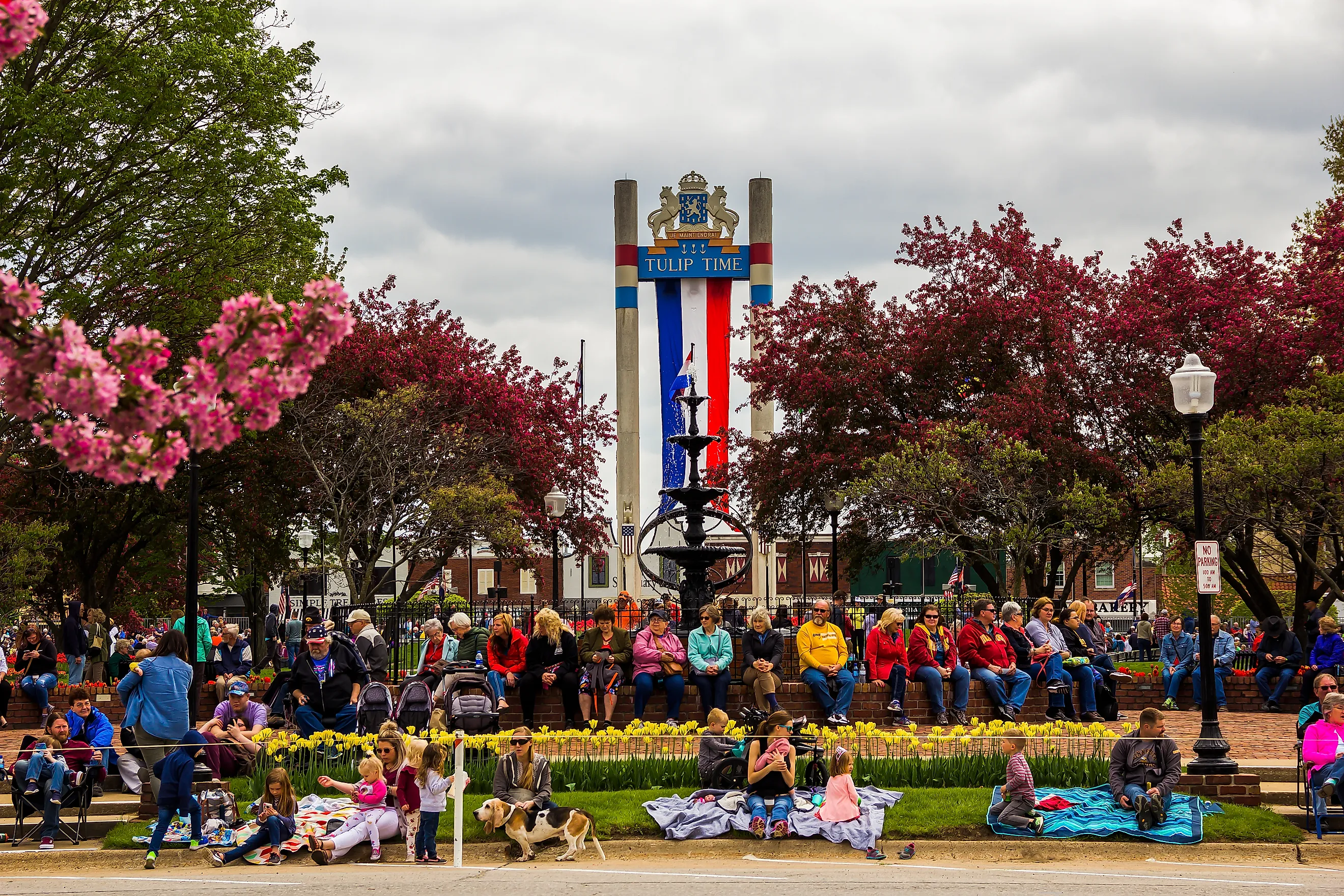
Pella wears its Dutch heritage proudly, and that identity gives the town one of Iowa's most welcoming downtowns. Each spring, Tulip Time fills the community with more than 300,000 tulips, Dutch dancing, parades, traditional costumes, and food-centered festivities. The Pella Historical Museums campus adds another essential stop, with the Vermeer Windmill, Dutch displays, a recreated historical village, and the Wyatt Earp Experience. Nearby, the Scholte House Museum and Gardens tell the story of founder Dominie Hendrik P. Scholte, while downtown Pella's Dutch-style storefronts and Klokkenspel make an easy stroll feel like part of the visit.
Decorah

Decorah combines small-town warmth with one of the Midwest's strongest Norwegian-American cultural identities. Vesterheim, the National Norwegian-American Museum and Folk Art School, anchors the town's visitor experience with more than 59,000 objects and national museum accreditation. Its folk-art programming, including rosemaling, woodworking, fiber arts, jewelry making, and blacksmithing, keeps that heritage active rather than static. In late July, Nordic Fest brings music, food, demonstrations, and cultural events to town. For a quieter stop, Dunning's Spring Park offers wooded trails, limestone scenery, and a spring-fed waterfall close to downtown.
Amana

Amana is the best town-centered entry point into the Amana Colonies, a group of seven villages founded in Iowa in 1855 by the Community of True Inspiration. For nearly 80 years, the colonies operated under a communal system, and that history remains visible in their architecture, museums, shops, and food traditions. Visitors can begin with Amana's historic village core, then explore communal-era buildings, locally made goods, bakeries, meat shops, and craft traditions that still shape the area's identity. The result is a community where hospitality feels rooted in preservation, not performance.
Winterset

Winterset welcomes visitors with a classic courthouse square and two major claims to fame: Madison County's covered bridges and the birthplace of John Wayne. The Covered Bridges Scenic Byway links the town with some of the county's most recognizable rural scenery, while the John Wayne Birthplace & Museum preserves the actor's childhood home and interprets his film legacy. Downtown, the Iowa Quilt Museum highlights a distinctly Midwestern art form through rotating exhibitions and educational programming. The town square itself, with local shops and restaurants, gives Winterset the kind of easygoing center that makes visitors want to linger.
Clear Lake

Clear Lake is one of Iowa's most hospitable lake towns, pairing summer recreation with a landmark place in American music history. The Surf Ballroom, now a National Historic Landmark, hosted the final performances of Buddy Holly, Ritchie Valens, and J.P. "The Big Bopper" Richardson on February 2, 1959, and remains an active music venue today. On the water, Clear Lake State Park offers beach time, boating, fishing, and access to the natural glacial lake. McIntosh Woods State Park, on the lake's northwest shore, adds a quieter outdoor option with Iowa's only two state-park yurts and a 1.5-mile boardwalk through mallard-marsh habitat.
McGregor

McGregor is a tiny Mississippi River town with an unusually rich outdoor setting. Just north of town, Effigy Mounds National Monument preserves more than 200 American Indian mounds in the Upper Mississippi River Valley, a sacred landscape connected to numerous Tribal Nations. Nearby Pikes Peak State Park offers trails, Bridal Veil Falls, and a dramatic overlook above the confluence of the Wisconsin and Mississippi Rivers. Yellow River State Forest adds another layer of Driftless Area scenery, with forested trails, camping, and trout streams. McGregor's small riverfront downtown rounds out the visit with 19th-century character and a relaxed pace.
Elkader

Elkader, set along the Turkey River in northeast Iowa's Driftless Area, offers a welcoming mix of history, scenery, and small-town culture. The Motor Mill Historic Site, southeast of town, preserves a six-story limestone flour mill and related 19th-century stone buildings; guided tours are offered on summer weekends. In town, the Elkader Opera House, a restored 1903 venue, continues to host performances and community events. The Turkey River adds paddling and trail appeal, while Elkader's historic downtown and Keystone Bridge give the community a strong architectural identity.
Le Mars

Le Mars has built one of Iowa's most cheerful civic identities around ice cream. Known as the "Ice Cream Capital of the World" since 1994, the town celebrates its connection to Wells Enterprises and the Blue Bunny brand through the Wells Visitor Center & Ice Cream Parlor, where exhibits and scoops share the same address. Around town, more than 50 colorful ice cream cone sculptures create a playful public-art walk. Each June, Ice Cream Days brings parades, entertainment, and community celebration to the streets, making Le Mars feel especially welcoming to families and road-trippers.
Burlington

Burlington's hospitality begins with the Mississippi River and one of the most unusual streets in the country. Snake Alley, built in 1894 and listed on the National Register of Historic Places, winds down a steep brick-paved slope and has become the city's signature attraction. Nearby, the Phelps House Museum and Des Moines County Heritage Center add context for Burlington's 19th-century prosperity and river-city history. Heritage Hill's historic homes and churches give the area architectural depth, while the riverfront and Crapo Park provide scenic places to walk, picnic, and take in views of the Mississippi.
Keokuk

Keokuk sits at Iowa's southeastern corner, where the Mississippi River has shaped the town's history and visitor appeal. Lock and Dam No. 19, completed in 1913, was an engineering landmark of its era and remains one of Keokuk's defining sights. The old bridge observation deck gives visitors a broad view of the river, dam, Illinois shoreline, and surrounding riverfront. Nearby, the George M. Verity Riverboat Museum lets guests board a retired Mississippi towboat, while the Keokuk-Hamilton Dam Museum adds another look at the construction and impact of the dam.
Fairfield

Fairfield is one of Iowa's most distinctive small cities, known for its arts scene, walkable square, and independent spirit. The Fairfield Arts & Convention Center and Stephen Sondheim Center for the Performing Arts bring music, comedy, dance, theater, and touring performances to a town far smaller than its programming might suggest. On the first Friday of each month, the First Fridays Art Walk turns downtown into a community-wide arts event. Fairfield's courthouse square, centered on Central Park and surrounded by local businesses, gives the city a welcoming public heart, while Maharishi International University contributes to its unusually global character.
Iowa Hospitality
The strongest case for Iowa's small-town hospitality is not a slogan but a pattern. These places invite visitors into traditions that are still active: Pella plants tulips, Decorah teaches folk art, and Le Mars turns ice cream into civic pride. Together, these 11 towns show that hospitality in Iowa is practical, local, and easy to experience, whether you arrive for a festival, a museum, a river view, or a simple walk around the square.