This Is The Most Welcoming Town In The United States
The most welcoming town in the United States also happens to be one of the most unique communities in the country: Amana, Iowa and its Amana Colonies. The colonies are its main attraction, which is a network of 7 villages including Amana, East Amana, High Amana, Middle Amana, South Amana, West Amana, and Homestead. These settlements combined have below 2,000 people, but they make up for it in intriguing history, German festivals, and food and drink.
The Amana Colonies were founded by a group of German Pietists who fled the German states for a new land in America, free of religious persecution. For nearly a hundred years, they lived together communally as a utopian society: one of the longest latest in America. Ever since then, the Amana Colonies have welcomed guests to experience their heritage at multiple communal buildings, eat their delicious German food, and join in on festivals held all year long. Read on to see why this is the most welcoming town in the United States.
History

The history of Amana goes back to the 18th century in Germany, when a religious group called the Pietists was formed. This community opposed the established Lutheran Church and believed in personal revelation from God through the gift of inspiration, as well as in the separation of church and state. This group faced intense persecution from Lutheran authorities, prompting many of them to move first to Hesse and then overseas to America in the 1840s.

These German Pietists planned for this community in the New World to be a utopia where all land and structures were held communally, with settlers pooling resources to cover expenses. They initially settled in a region just outside Buffalo, New York, which they called Ebenezer. However, due to a growing population and concerns about negative influences from Buffalo, the church decided to move from New York to Iowa, where they founded Amana in 1855.
The Pietists established seven villages that would come to be known as the Amana Colonies, where they maintained their lifestyle of communal eating, working, and centralized planning (even with marriages and childbearing) until 1932. By then, the Great Depression was deeply affecting the community, so the Great Council decided to split the community into a nonprofit Amana Church Society and a for-profit Amana Society, bringing an end to their great experiment.
Heritage sites

The Amana Colonies today are open to the public, providing a welcoming place to explore a multitude of historic sites from this quirky community. The main place to learn about Amana's history is the Amana Heritage Society, which comprises four buildings. The first is the Amana Heritage Museum, which houses artifacts from Amana's communal period from 1855 to 1932, including textiles, needlework, carpets, paintings, lithographs, and other goods made by the townsfolk.

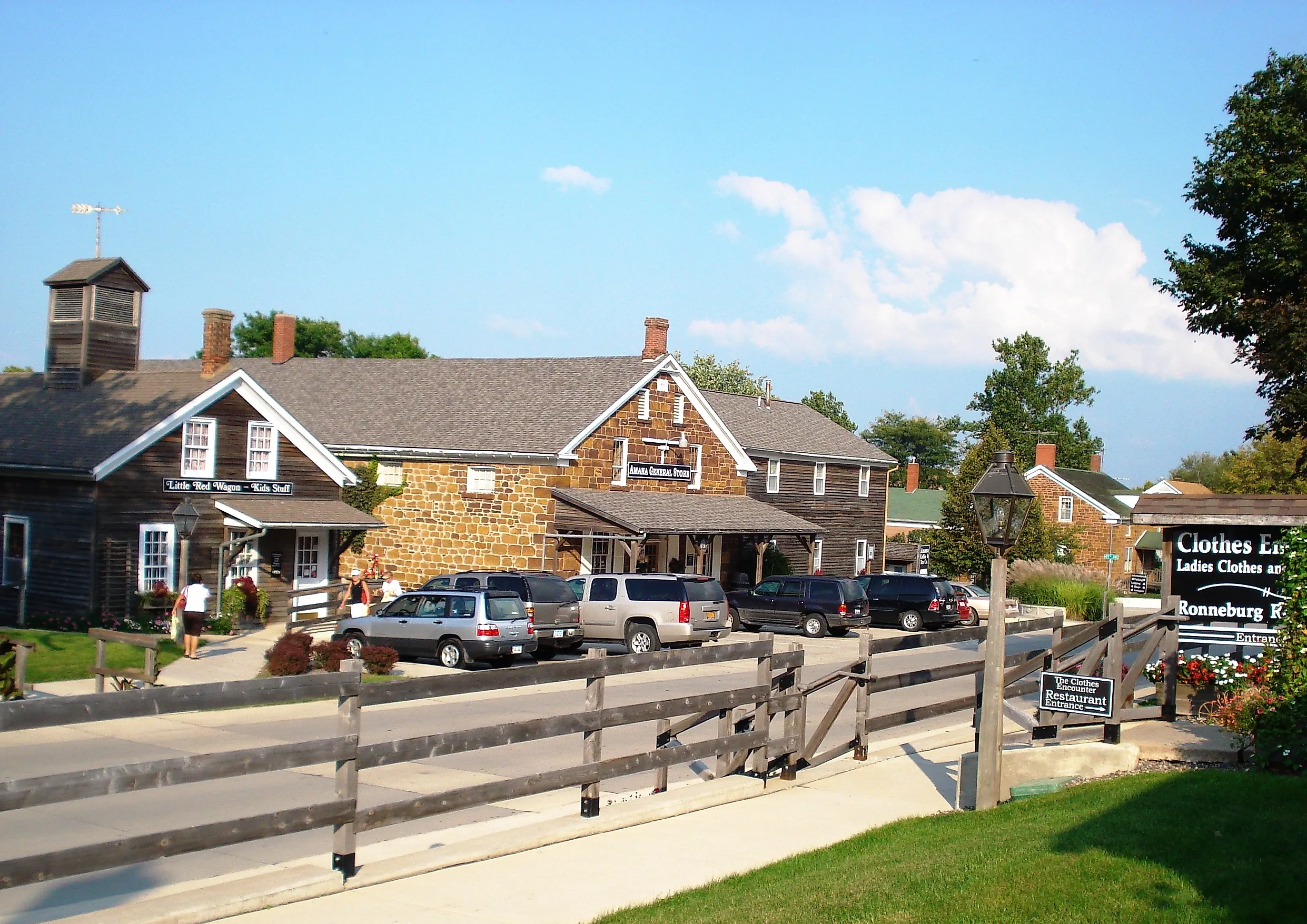
Another building within the society is the 1857 Amana General Store, which has changed little over the years, still maintaining its tin ceiling, flooring, and glass-topped display cases. The store is still open for business, selling locally made soaps and gifts. The other two buildings to check out are the 1863 Communal Kitchen & Cooper Shop, where 40 to 50 people ate together, and the 1865 Homestead Church. Here, tour guides will explain the beliefs and practices of the Amana Colonies.
Festivals

The Amana Colonies' German heritage is front and center with the many German-themed festivals held throughout the year. The biggest event is the Oktoberfest, usually held in early October. It's been going on for 60 years now with polka, beer, and food. During the spring, the community comes together for the Maipole Festival, decorating poles with beautiful ribbons and bringing in traditional Maipole Dancers to dance around these poles.
For a great summer festival, you'll want to come to the Wurst Festival, featuring some of the best sausages in the Midwest, along with an adorable Dachshund Derby competition. Lastly, Amana really comes alive in the winter with a Winterfest and Tannenbaum Forest display, when Festhalle Barn is transformed into a German holiday forest with Christmas trees filling up the barn from wall to wall.
Shops And Restaurants

Amana has many welcoming shops selling unique wares. For example, at Renate’s Antique Gallery, you can find gifts from the Victorian or Mid-Century along with vintage beer cans and tools, while Renate's Antique Gallery sells pottery, primitives, and glassware. If you want to take back something that was made locally in Amana, go to the Creative Colony. It prides itself on carrying a number of styles in quilts, baskets, pottery, hand-woven rugs, soy candles, glasses, garden art, and much more.

As for restaurants, Amana is a treasure trove of German cuisine. You can sample beers and German pub food at the Millstream Brau Haus, or eat like the original settlers at the Ronneburg Restaurant, located in an old communal kitchen serving German and American food. If you just want a slice of pizza or a burger, go to the Taverne in Middle Amana.
Escape Into Nature In Solon

By driving just over 25 miles to the east, you'll arrive in the scenic town of Solon, Iowa. Named after an ancient Athenian statesman and poet, Solon's high school mascot is the Spartans, who were historically enemies of Athens. Despite this contradiction, Solon is a great outdoor escape, with several parks, including Lake Macbride State Park and Turkey Creek Nature Preserve.

Lake Macbride has multiple hiking trails through oak forests and an Iowa prairie, along with a beach for swimming, canoeing, or paddleboarding. Fishers come here to try to catch the legendary Kentucky spotted bass. Turkey Creek Nature Preserve is a 107-acre park with woods, pasture, and reconstructed prairie amid Turkey Creek. By hiking the nature preserve, you can see a waterfall, wildflowers, and endangered wildlife, making it a hidden gem in Iowa.
A Welcoming Utopia
Amana was a bit exclusionary when it began, but today it is a welcoming utopia that maintains many cultural artifacts and values. It is a firm example of how different types of people can come to America and be free not only from persecution but also to create their own communities as they see fit. Here in Amana, you can learn about their insight and religious wisdom from the Amana Heritage Society, or try out their German and American style food at the Ronneburg Restaurant. With Solon nearby, you can also escape into the prairies or enjoy a day at the lake while visiting Amana. This welcoming town and its larger network of colonies in the Midwest should definitely be on your travel plans in the United States.