11 Most Charming Cities In The Southern United States
The American South has produced some of the country's most distinctive cities, with legacies in music, cuisine, and history both proud and painful. "Southern charm" gets thrown around often, but the 11 cities below back up the descriptor with specific attractions. Charleston brings colonial streetscape, Nashville brings country music, New Orleans brings jazz, and each of the others carries its own angle on Southern city travel.
Charleston, South Carolina

Charleston is built around antebellum architecture and cobblestone streets. The Battery is a defensive seawall and promenade along the harbor, with Civil War-era cannons and White Point Garden at the tip. Rainbow Row, a series of 13 historic houses in pastel shades, dates to the 1740s; the modern pastel palette started in the 1930s when homeowner Dorothy Porcher Legge painted her house pink, and neighbors followed suit. The city's Lowcountry cuisine blends Southern, French, and West African flavors, named for the coastal region spanning South Carolina and Georgia's coast. For Civil War history, Fort Sumter (where the first shots were fired in April 1861) is a ferry ride into the harbor.
Savannah, Georgia

City squares and moss-draped live oaks define Savannah's layout, a legacy of Oglethorpe's 1733 urban plan that still structures downtown. The Historic District holds 18th- and 19th-century buildings arranged around 22 public squares. Bonaventure Cemetery sits on a bluff along the Wilmington River, known for Gothic tombs and Spanish moss; it is also the focal point of the city's ghost-tour circuit. Forsyth Park, with its central white cast-iron fountain installed in 1858, is the city's main public green space.
Asheville, North Carolina

In the Appalachian Mountains, Asheville is known for the Biltmore Estate, the largest privately owned home in America at 175,000 square feet, and the Blue Ridge Parkway, often called "America's Favorite Drive." The town was incorporated in 1797; the Smith-McDowell House, built in 1840, is the oldest surviving brick structure in the city. Asheville's River Arts District houses studios and galleries across converted industrial buildings along the French Broad River. The city is consistently ranked among the top U.S. beer destinations per capita, with a dense local brewery scene. Locally sourced Appalachian cuisine shows up on menus throughout downtown.
Nashville, Tennessee

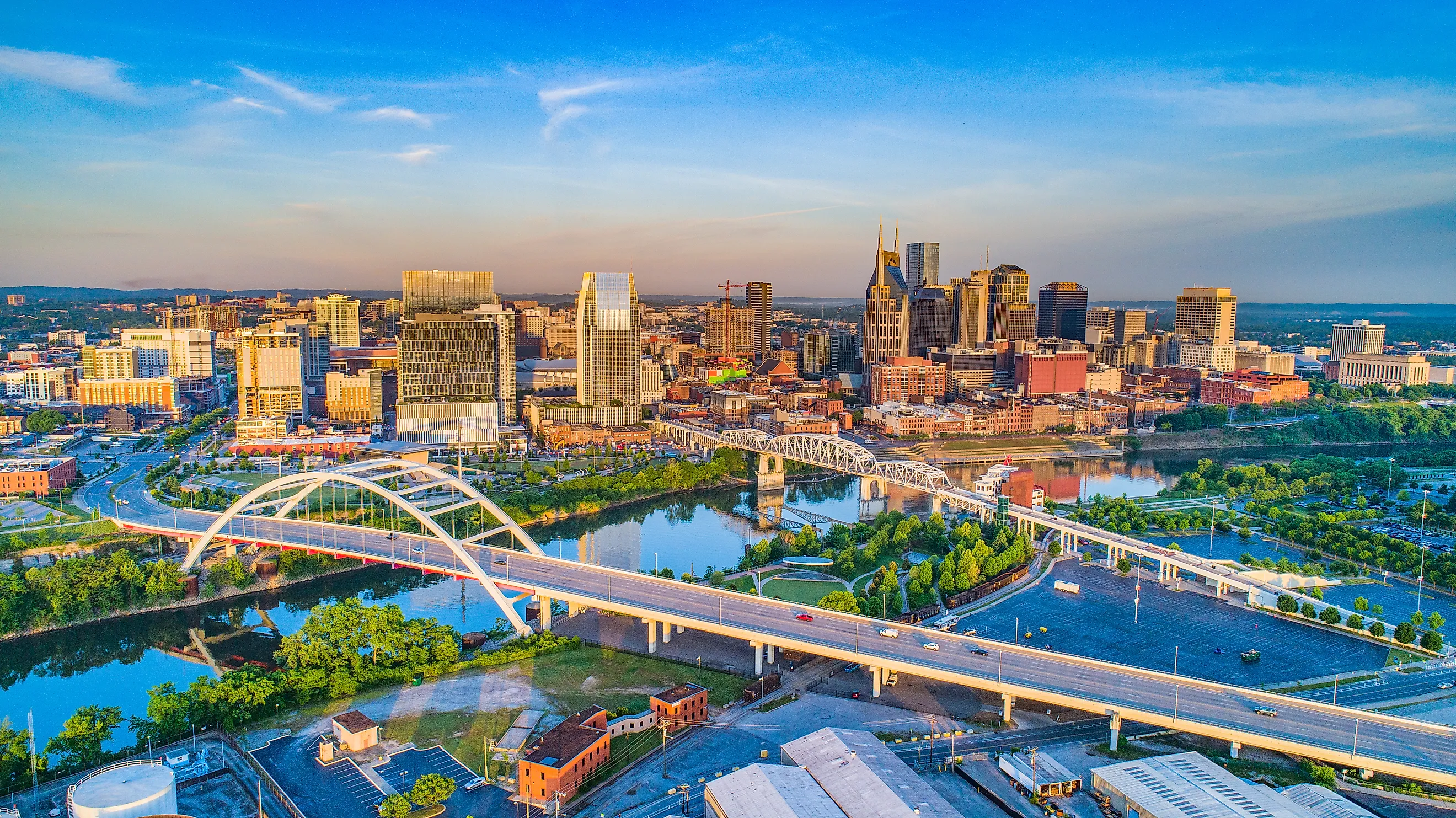
Nashville is the country music capital, home to the Grand Ole Opry, which has run as a weekly country-music radio broadcast since 1925. The Country Music Hall of Fame and Museum walks through the genre's history across multiple floors of exhibits. The city's music scene also covers blues, rock, and pop, audible from the honky-tonks lining Lower Broadway. Nashville hot chicken is the signature local dish. For Civil War-era history, the Belle Meade Historic Site sits on the former plantation grounds and now interprets the lives of the enslaved workers who built and ran the estate.
Austin, Texas

Austin calls itself the "Live Music Capital of the World," and the politics and culture skew noticeably more liberal than most of the surrounding state. The Texas State Capitol is one of the most distinctive statehouses in the country, faced in pink granite and taller than the U.S. Capitol. Zilker Park covers 351 acres along the Colorado River. Music options range from small local venues to festivals including South by Southwest and Austin City Limits. The food scene spans gourmet food trucks, Tex-Mex, and barbecue. Barton Springs Pool is a year-round spring-fed swimming hole, and the Congress Avenue Bridge hosts one of the largest urban bat colonies in North America (visible at sunset in summer).
New Orleans, Louisiana

A mix of French, African, Caribbean, and American influence runs through New Orleans. The French founded the city in 1718; it passed to Spanish control in 1763, back to France briefly, and then to the U.S. with the Louisiana Purchase in 1803. The French Quarter handles the city's most visible tourism, with Bourbon Street for nightlife, jazz venues throughout, and distinctive Creole-Spanish-French architecture. Café du Monde serves beignets around the clock, and gumbo shows up on almost every local menu. St. Louis Cemetery No. 1 is the oldest cemetery in the city, with above-ground tombs driven by the high water table. The city is the documented birthplace of jazz.
Richmond, Virginia

Richmond is Virginia's capital and served as the capital of the Confederate States of America for about four years during the Civil War. The Virginia Museum of Fine Arts houses a collection spanning roughly 5,000 years of art. Hollywood Cemetery is the burial place of two U.S. presidents (James Monroe and John Tyler) plus Confederate president Jefferson Davis, with views of the James River from its terraced grounds. The James River Park System offers urban whitewater rafting and hiking trails right through the city. The American Civil War Museum handles in-depth Civil War interpretation. Carytown, west of downtown, is known for independent shops and the 1928 Byrd Theatre.
Birmingham, Alabama

Birmingham, the seat of Jefferson County, built its identity on iron and steel production in the late 1800s, earning it the nickname "The Magic City" for its rapid industrial-era growth. The Birmingham Civil Rights Institute walks through the city's pivotal role in the Civil Rights Movement, including the 1963 16th Street Baptist Church bombing and the Children's Crusade. The Vulcan statue, the world's largest cast-iron statue, symbolizes the city's steel heritage and stands on Red Mountain overlooking downtown. The Barber Vintage Motorsports Museum draws motor enthusiasts with its large motorcycle and racing collection. Southern barbecue and soul food anchor the food scene, with Saw's BBQ among the local favorites. Good People Brewing Company leads the craft-beer scene near Regions Field.
St. Petersburg, Florida

St. Petersburg is known for its year-round sunshine and Gulf-adjacent beaches. The Dalí Museum holds the largest collection of Salvador Dalí's works outside Europe. Fort De Soto Park offers public beaches, kayak trails, and wildlife viewing across five barrier islands. The city's Central Arts District features galleries and a standout collection of street murals. Sunken Gardens, opened to the public in 1935, is among the oldest roadside attractions in the state. The St. Pete Pier, reopened in 2020 after a multi-year renovation, handles the waterfront district with restaurants, shops, and Tampa Bay views.
Lexington, Kentucky

Horse racing and bourbon define Lexington. Kentucky Horse Park is a working horse farm and educational center, and Keeneland Race Course runs spring and fall thoroughbred meets. Bourbon distilleries within an hour's drive include Woodford Reserve in nearby Versailles and the Buffalo Trace Distillery in Frankfort, both offering tours and tastings. Bourbon was declared America's Native Spirit by Congress in 1964. Old Frankfort Pike is a designated scenic byway running through Kentucky's rolling bluegrass horse-farm landscape. The revitalized downtown centers on the Lexington Farmers' Market and a strong independent food and drink scene.
Chattanooga, Tennessee

Chattanooga sits between the Appalachian Mountains and the Cumberland Plateau. The Tennessee Aquarium is one of the largest freshwater-focused aquariums in the world and covers both freshwater and ocean ecosystems across two buildings. Lookout Mountain, rising above the city, hosts Rock City's cliff-top trails and Ruby Falls, a 145-foot underground waterfall. The Tennessee Riverwalk is a roughly 16-mile paved greenway along the Tennessee River, built for walking, biking, and picnicking. The Southside District handles independent restaurants, bars, and music. The Battles for Chattanooga Museum covers the city's central role in the Western Theater of the Civil War.
Plan A Southern Cities Trip
From coastal Charleston and St. Petersburg to mountain-adjacent Asheville and Chattanooga, the Southern U.S. covers a wide range of city travel. Each city has its own rhythm: Nashville's honky-tonks, Birmingham's Civil Rights history, New Orleans' jazz, and so on. Pick the angle that matches the trip and the rest will follow.