8 Most Rattlesnake Infested Areas in Texas
Texas hosts one of the largest rattlesnake populations in the United States, from Big Bend's desert basins and the Franklin Mountains to the canyons of Palo Duro and Caprock, the coastal flats of Padre Island, and the pine forests of Sam Houston National Forest. Species such as the western diamondback, timber rattlesnake, and massasauga each occupy distinct ecological zones but often overlap in transitional areas where prey and shelter are abundant. As with most snakes, rattlers in Texas shift their activity patterns with temperature, with most movement occurring in spring and fall or during cooler hours in summer. Below, we focus on the specific locations where terrain, climate, and food sources consistently produce higher rattlesnake encounter rates, from remote nature preserves to cityside parks.
Chihuahuan Desert

The Chihuahuan Desert in West Texas holds some of the state's most consistent rattlesnake concentrations, particularly across its grasslands and dry, rocky arroyos. The region is dominated by the western diamondback rattlesnake, a thick-bodied species with a gray-brown base color, bold diamond-shaped dorsal markings, and a distinctly banded black-and-white tail. The area also supports the black-tailed rattlesnake, typically olive to yellowish in tone with a solid dark tail and a more slender build, often favoring higher, rockier terrain.

Each is highly adaptable to this otherwise hostile environment and is frequently encountered by visitors and farmers along ranch roads, canyons, and even near water sources during hotter months. Sparse vegetation and extreme heat drive local snakes of all kinds to seek shelter in burrows and crevices, often funneling them into predictable pockets across the landscape.
Big Bend National Park

A more specific locale within the Chihuahuan Desert, Big Bend National Park holds multiple rattlesnake species within a relatively confined stretch of desert and mountain terrain. One of only two national parks in Texas, its slopes and volcanic outcrops are prime habitat for the banded rock rattlesnake, a small, slender species with pale gray to lavender tones broken by crisp, dark crossbands that closely match local geology. They also tend to take on a whiter tone at higher elevations and a sandier hue closer to the desert floor.

Lower elevations are well known for western diamondback rattlesnakes, especially near washes and desert flats where rodents and other small prey are common. You may also see black-tailed rattlesnakes and the occasional Mojave rattlesnake. Seasonal heat pushes these reptiles into shaded crevices by day, with more movement at dawn and dusk. Big Bend's varied, craggy geography creates overlapping habitats, increasing the likelihood of encountering multiple species within a short distance on any of the trail systems within.
Palo Duro Canyon

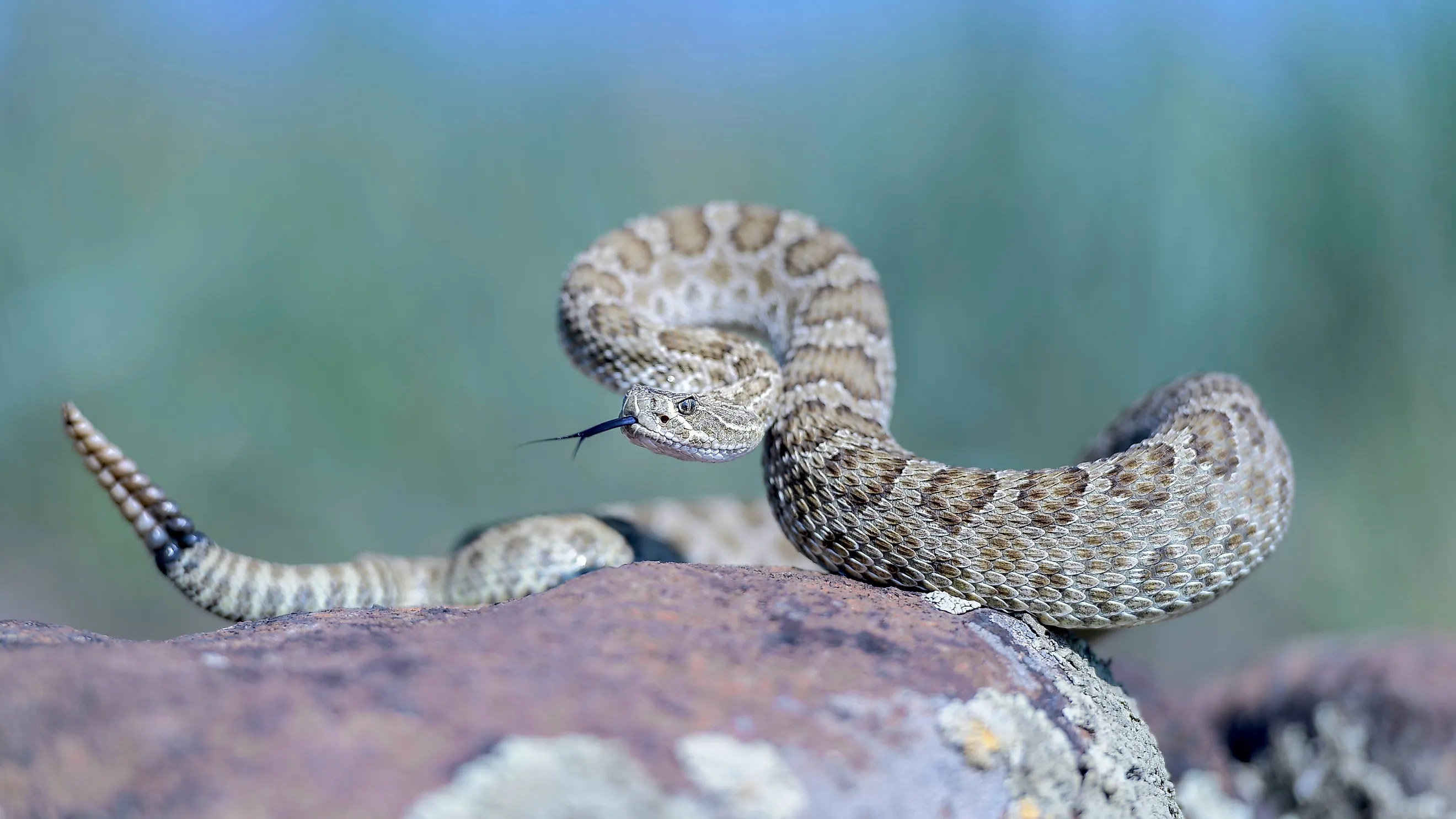
Up in Texas's panhandle, Palo Duro Canyon is another rattlesnake hotspot due to its steep walls, loose rock, and dry prairie floors. The canyon stretches for about 120 miles and is the second-largest in the United States. It holds large numbers of prairie rattlesnakes, a medium-sized species with a light brown to greenish base color and darker oval blotches running down their backs, often blending closely with sandy soils. These snakes favor open ground, cliff bases, and prey-rich flats where visibility is high, so keep an eye out around those spaces. As usual in Texas, western diamondback rattlesnakes are also common along trails and exposed areas of the canyon's rim.
Padre Island

Padre Island presents a very different setting, with coastal dunes and tidal flats in place of arid, rocky uplands. This long barrier island in the Gulf of Mexico, home to Padre Island National Seashore, is one of the places in Texas where the massasauga rattlesnake occurs near sea level. Unlike inland species that use rock cover, massasaugas here depend on vegetation and subtle terrain shifts for shelter.

The massasauga is a small, thick-bodied species, typically gray with darker rounded blotches and a comparatively short rattle, relying on camouflage in low grasses and sandy depressions. They tend to stay hidden in moist swales and on the edges of marshy ground, emerging more often at cooler times of day. Western diamondbacks are also on the island, so checking your step through shrubby, grassy areas is worthwhile, whether while hiking or making your way to the beach.
Lake Meredith

Lake Meredith National Recreation Area combines Texas's high plains grassland with the freshwater shoreline of Lake Meredith and its eroded bluffs, leading to steady rattlesnake activity along its margins. The area is a stronghold for the prairie rattlesnake, which uses the lake's edge as a travel corridor where food sources are abundant. Western diamondback rattlesnakes are also present, especially around less-visited, rockier points and dry side canyons.

Fluctuating water levels expose new ground on a regular basis, drawing prey and, in turn, snakes into freshly accessible areas. Rather than being spread evenly, activity tends to cluster on specific cutbanks, abandoned burrows, and shoreline debris where cover and food overlap. Just north of Amarillo, the lake is one of the larger freshwater bodies in the region, drawing boaters, anglers, and swimmers in summer.
Sam Houston National Forest

Sam Houston National Forest shifts the focus to denser woodlands and humid ground conditions. Rattlesnake encounters are possible near water and in areas with low cover, where hunters, fishermen, and hikers alike can be surprised on foot. The 163,000-plus-acre forest notably supports the timber rattlesnake, a heavy-bodied species with a yellowish to tan base color crossed by dark, jagged bands and a distinct rust-colored stripe running down its spine. This species, more often found across the eastern half of the country, favors leaf litter, fallen logs, and the edges of creeks. Western diamondback rattlesnakes may appear in drier clearings and along service roads, while timber rattlesnakes are more closely associated with the forest interior.
Franklin Mountains State Park

Near the borders of both Mexico and New Mexico, Franklin Mountains State Park covers a stretch of steep desert slopes that rise directly above urban El Paso. It is one of the few places in Texas where you might spot the Mojave rattlesnake, a relatively slender species with a greenish or olive tint and sharply defined diamond markings that often appear more contrasted than those of the western diamondback.

Black-tailed rattlesnakes and banded rock rattlesnakes are common as well, this time in higher, rockier sections, and often sheltering in crevices during the day. Climbers should be careful where they place their hands. Proximity to El Paso's busy streets also increases reported encounters, especially where residential development meets undisturbed desert habitat.
Caprock Canyons State Park
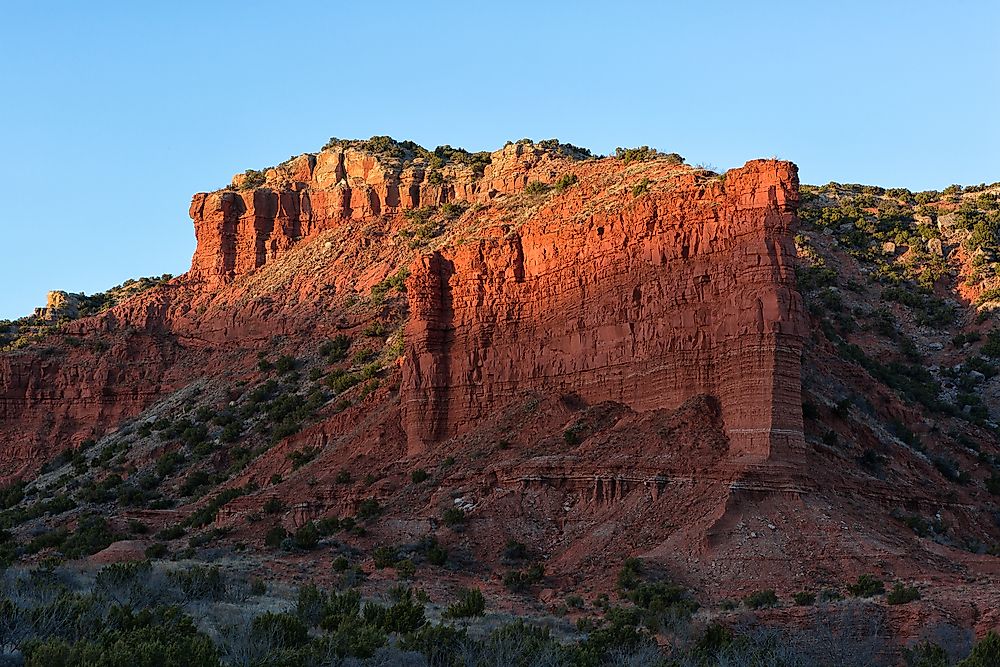
Caprock Canyons State Park features a blend of prairie and canyon habitats, where rattlesnakes are consistently present and occasionally encountered along trail systems and exposed breaks. Roughly halfway between Lubbock and Amarillo, the park supports healthy populations of prairie rattlesnakes, a species well adapted to the region's open grasslands and rugged terrain, typically marked by a light brown to greenish base color with darker blotches that blend into the surrounding landscape. Overall snake diversity in the park is high, with dozens of species recorded. Rattlesnakes here may move between the canyon rim and floor, using shifts in elevation to regulate temperature and access different prey, primarily rodents and other small animals.
Watch Your Step In These Texas Hot Spots
Rattlesnake presence in Texas is dictated by the state's often rugged terrain, where these venomous predators show up across arid deserts, canyons, forests, and coastal areas. Whether the setting is mountains or beach, the state's diversity of landscapes gives these animals room to thrive, which makes awareness essential for anyone exploring the backcountry. Understanding species-specific habits and habitats reduces unexpected encounters and, for anyone interested in ecology, highlights the role these snakes play across Texas ecosystems.