8 Great Road Trips to Take in Florida
Florida is a state best experienced on the road. A drive through St. Augustine uncovers centuries of Spanish and early American history in the narrow streets and coastal fortifications. Farther south, the edge of the Big Cypress National Preserve opens into vast wetlands. Whether you are drawn to the surf towns of New Smyrna Beach or the tropical energy of Key West, there is a route here that fits most paces.
Historic North Florida

Historic North Florida unfolds through the state's oldest coastal corridors, where Spanish forts, cobblestone streets, and quiet barrier islands stand in place of modern high-rise beach development. Along the way, the landscape shifts to oak-draped streets, waterfronts, and historic districts that preserve colonial and early American influence. This road trip is an alternative to Florida's busier shoreline drives.
The 120- to 140-mile journey begins in St. Augustine, where Spanish colonial architecture defines the atmosphere. Landmarks like the 17th-century Castillo de San Marcos anchor the city's identity, while narrow streets and centuries-old buildings invite slow exploration. From here, the route follows portions of the A1A Scenic & Historic Coastal Byway, a stretch known for its proximity to dunes, marshes, and uninterrupted Atlantic views.
Heading north, the scenery becomes rural. Coastal preserves and intracoastal waterways dominate the landscape, with fewer signs of development. The drive leads into Fernandina Beach on Amelia Island, a town where Victorian-era architecture meets a working waterfront. Shrimp boats line the docks, and historic blocks are filled with cafés, galleries, and locally owned shops.
Although not open to the public, fans of Pippi Longstocking might want to snap a photo of the 1880s Victorian home at 212 Estrada Street in the Old Town neighborhood of Fernandina Beach, where the 1988 film was shot. Right across the street is Fernandina Plaza Historic State Park, the site of the former Spanish Fort San Carlos, with scenic views of the Amelia River.
Space Coast Discovery

The Space Coast blends surf culture and protected shoreline with space exploration. The route follows Florida's Atlantic edge, where sandy beaches and rocket launch sites coexist, creating a trip that feels both grounded in nature and slightly science-fiction.
Starting at Daytona Beach, you will find the boardwalk and pier with arcade games, rides, shops, and fishing. Nearby, the Historic Seabreeze District has a more local energy, with independent restaurants, small bars, and boutiques just off the busier beachside.
Heading south, the route reaches Ponce Inlet, home to the Ponce de León Inlet Lighthouse & Museum (Florida's tallest lighthouse at 175 feet). The surrounding waterways work for kayaking and paddleboarding. A short drive further leads to New Smyrna Beach, a laid-back surf town known for consistent waves and a strong sense of community. As the drive continues, the environment shifts into protected coastal terrain at Canaveral National Seashore. Nearby, the Kennedy Space Center Visitor Complex on Merritt Island adds a different kind of stop, with space-flight exhibits and (on the right day) rocket launches.
The journey concludes in Cocoa Beach, where a wooden pier stretches into the Atlantic and surfers line the shore. Nearby waterways open up kayak access through mangroves and dolphin or manatee spotting.
Panhandle Escape

The Panhandle Escape is Florida's classic Gulf Coast road trip, defined by white-sand beaches, emerald water, and relaxed coastal towns. It runs along the northwestern edge of the state, where development is lighter and beach towns hold onto a laid-back feel.
The 200- to 220-mile trip begins in Pensacola, where calm waters encourage a beach day. Downtown Pensacola centers around the historic district near Plaza Ferdinand VII, where brick streets, preserved 19th-century buildings, and shaded squares reflect the city's long Spanish and American history (first Spanish settlement attempted in 1559, permanent from 1698). The Pensacola Museum of History fills in more detail. Nearby Palafox Street, the heart of downtown, features restored storefronts with locally owned boutiques, cafés, galleries, and restaurants.
Heading east along US-98, the drive follows the Emerald Coast through Destin and Fort Walton Beach. Scenic Gulf Drive offers frequent access points to the beach. Past Panama City Beach, the shoreline opens into quieter stretches of protected coast, including St. Andrews State Park on the way through.
The trip concludes in Apalachicola, a historic fishing town known for its oysters and maritime heritage. Art galleries, boutiques, and seafood restaurants fill the compact historic district.
Florida Keys Drive

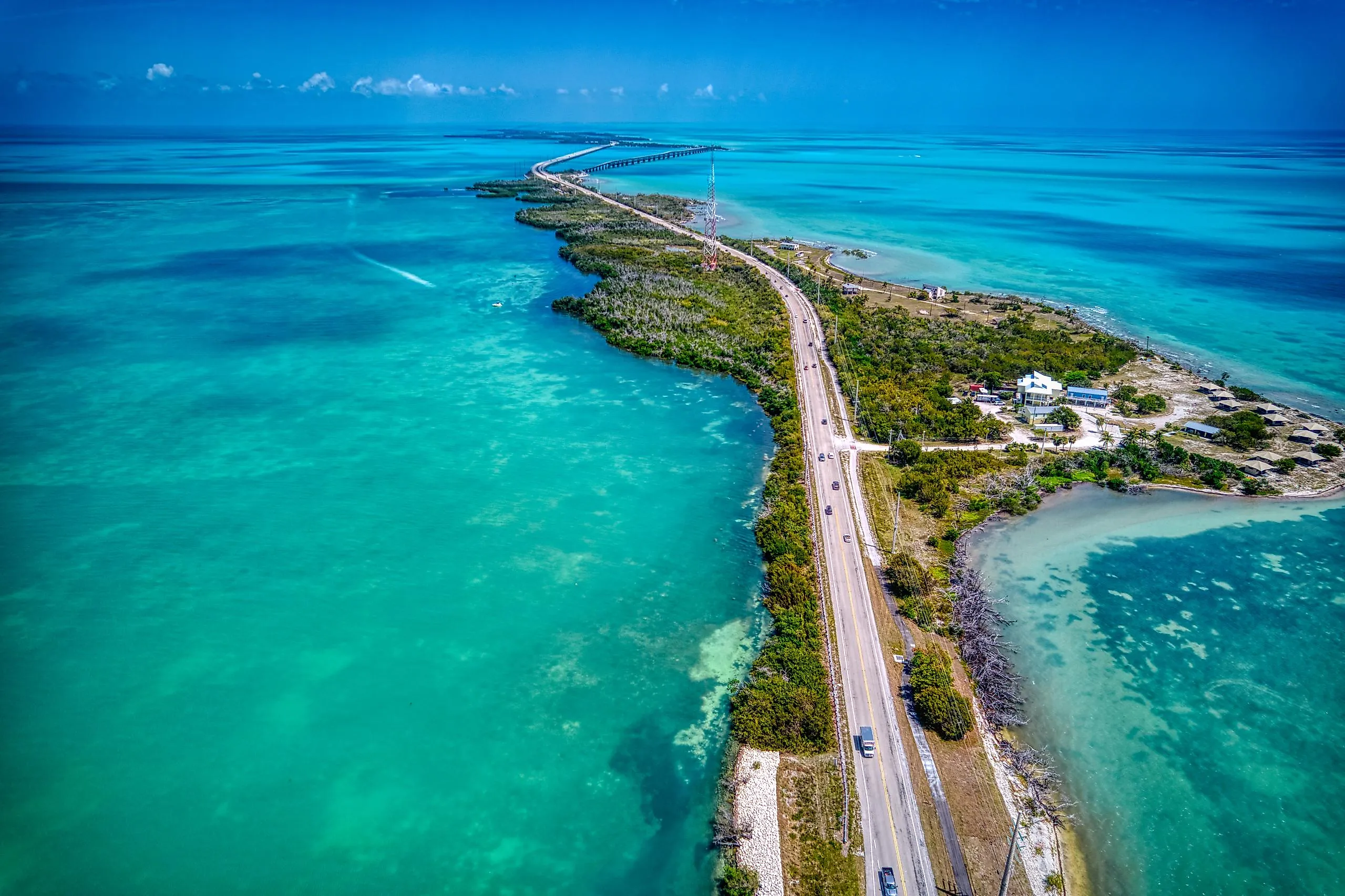
The Florida Keys Drive is one of the most recognized road trips in the United States. It follows the Overseas Highway, a 113-mile route across 42 bridges and roughly 40 inhabited islands that feel completely separate from mainland Florida.
The journey begins in Florida City, where the transition from mainland to island chain happens almost immediately. Entering through Key Largo, the landscape opens into shallow, clear waters with mangroves and coral formations. This is the gateway to the reef, with snorkeling, kayaking, and glass-bottom boat tours widely available. Islamorada comes next, and the pace slows noticeably. Fishing boats, weathered docks, and open-air cafés line the roadside. Artisan markets and roadside attractions add local character along the way. Farther on, the road stretches across open water toward the Seven Mile Bridge (actually 6.79 miles long), with ocean views on both sides.
The trip concludes in Key West, where narrow streets, pastel homes, and tropical foliage define the setting. The waterfront becomes a focal point at sunset, and nearby streets fill with music, dining, and nightlife.
Gulf Coast Run

The Gulf Coast Run stretches along Florida's western shoreline for nearly 300 miles and begins in Tampa Bay. A 90-minute guided tour of Ybor City and the Riverwalk covers the city's history and Cuban influence. From Tampa, causeways and bridges lead to barrier-island beaches including Clearwater Beach, named after the town of Clearwater (reportedly named for a clear freshwater spring once active on the shore).
Continuing south along US-19, the Gulf stays in close reach, and barrier islands create frequent detours to beaches and state parks. The drive passes through coastal towns like Tarpon Springs, known for its Greek heritage, and St. Petersburg, home to waterfront parks and multiple arts districts.
Farther south, the Suncoast and Nature Coast regions take over, where spring-fed rivers and quiet shorelines replace dense development. Past Fort Myers and Sanibel Island, the beaches become more natural and shell-covered. Naples closes the route, where upscale waterfront districts meet Gulf beaches and protected coastal preserves.
Central Florida Loop

The Central Florida Loop shifts the focus away from the coast. Lakes, citrus groves, and theme parks combine into a trip that balances nature with entertainment.
The 185-mile route begins and ends in Orlando, letting travelers choose when to work in the city's theme parks and entertainment districts. Moving outward along major highways, the scenery transitions from urban development into suburban corridors and open landscapes. The drive toward Winter Haven features interconnected lakes and small towns, with the Chain of Lakes accessible by boat. Continuing east along Highway 60, the route reaches Kenansville, where Wild Florida Airboats & Gator Park offers closer looks at wetland wildlife.
As the loop turns back toward Orlando, a stop in Kissimmee adds some nostalgia. The Old Town Entertainment District is an open-air complex with retro-themed shops, dining, classic car shows, and live entertainment before returning to Orlando to close the loop.
Everglades Explorer

The Everglades Explorer road trip runs through one of the most distinctive ecosystems in North America, crossing wetlands, sawgrass prairies, and coastal landscapes between the Gulf and the Atlantic.
The trip begins near Naples, but the landscape shifts quickly from developed coast into the remote wilderness of Big Cypress National Preserve. Wildlife sightings, including alligators, are common along the roadside. Driving east along the Tamiami Trail, the environment becomes more untamed, leading to Shark Valley, an accessible area of Everglades National Park. Visitors can explore a 15-mile loop by bike or tram and climb an observation tower for panoramic views of the surrounding wetlands. Continuing south through Homestead into the park, the landscape shifts into subtropical terrain. The Royal Palm area features the Anhinga Trail, a short boardwalk with close-up wildlife viewing.
Farther south, the road reaches Flamingo, where freshwater marshes give way to mangroves and coastal waters, with chances to see manatees, American crocodiles, and dolphins. The trip concludes by looping back toward Miami, with a sharp contrast between untouched wilderness and urban coastline.
Atlantic Coast - The A1A

The A1A Atlantic Coast Drive covers the full spectrum of Florida's eastern shoreline, from quiet northern barrier islands to the energy of South Florida. Stretching roughly 400 miles, it is one of the state's most continuous oceanfront routes.
Start on Amelia Island, where 50 blocks of downtown Fernandina Beach combine history, dining, and shopping. Heading south, St. Augustine comes next, and from there A1A closely follows the shoreline with frequent beach access, especially between St. Augustine and Daytona Beach. Daytona picks up the pace with its wide beach, boardwalk, and pier. Continuing south, New Smyrna Beach returns to a slower rhythm known for surf culture and an understated coastal scene.
A quieter stretch follows at Canaveral National Seashore, where undeveloped beaches break up the busier destinations. Farther south, the Treasure Coast offers river views, waterfront parks, and less crowded shorelines. Development picks up through Palm Beach and Fort Lauderdale. The journey concludes in Miami Beach, with Art Deco architecture, active nightlife, and busy beaches.
Plan Your Next Florida Trip
What makes these road trips memorable is not just the destinations themselves but the transitions between them. In a single journey, you might move from the quiet beaches of Amelia Island to the energy of Miami Beach, or from the calm Gulf waters near Naples to the open, untamed landscapes of the Everglades. Each route captures a different version of Florida, shaped by natural environments and the communities that have grown around them. The best way to experience the state is to keep moving, with each mile revealing something new.