11 Ideal Texas Destinations for a 3-Day Weekend in 2026
There is a 1,500-ton dome of pink granite west of Austin that groans at night. Enchanted Rock creaks as the stone cools and contracts after dark, and the Tonkawa heard it long before geologists explained it. That is the kind of thing Texas keeps within three days' reach of almost anywhere in the state.
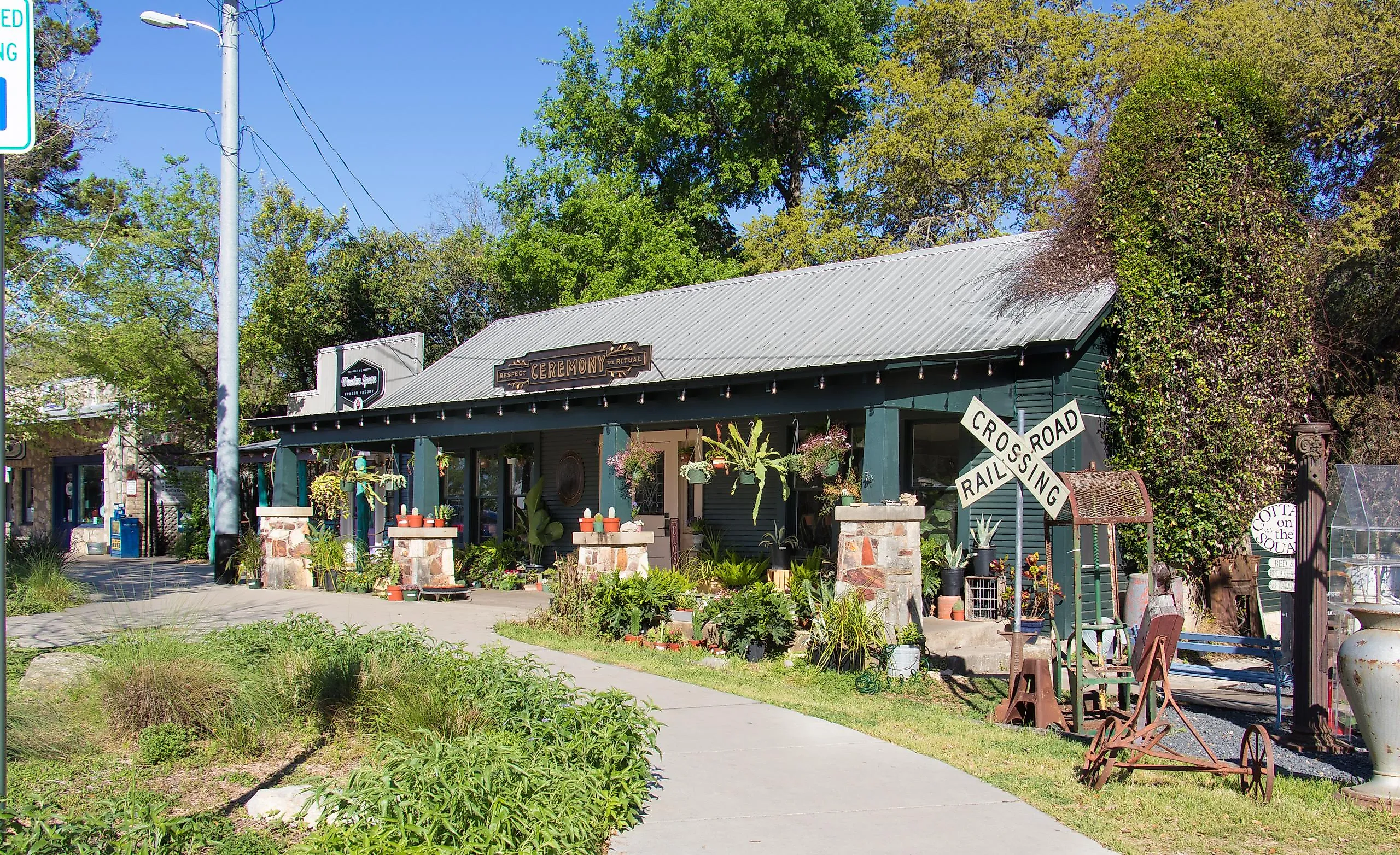
The advantage of a state this size is that a long weekend can land you in genuinely different country depending on which direction you point the car: bayou cypress in the east, a canyon in the Panhandle that runs 120 miles, Gulf beaches in the south, and high desert out west. These eleven are organised by region rather than ranked, so pick the direction first and the town second.
Fredericksburg

German immigrants founded Fredericksburg in 1846 and signed a peace treaty with the Penateka Comanche the following year that, unusually for the period, held. The town still runs on that inheritance, from the biergartens on Main Street to the Sunday Houses that farming families kept for weekend trips into town.
Enchanted Rock State Natural Area is about 17 miles north, and the dome rises roughly 425 feet above the surrounding country. The summit walk is short, steep, and entirely exposed, so go early. Backcountry camping is available at Walnut Springs, Moss Lake, and Buzzard's Roost, and the park caps daily entry, so reserve a slot rather than turning up.
In town, the National Museum of the Pacific War is the surprise: a genuinely substantial institution covering the entire Pacific theatre, here because Fleet Admiral Chester Nimitz was born in Fredericksburg. The Pioneer Museum handles the German settlement story. Sunset Grill on Adams Street does breakfast; Hoffman Haus on Creek Street handles the night.
Wimberley

Start with the disappointing part, because it will save you a drive. Jacob's Well, the artesian spring that feeds Cypress Creek, has been closed to swimming since June 2022. Four consecutive summers of drought have dropped flow in the Trinity Aquifer to roughly a quarter of normal, and the natural area remains open for hiking and viewing only. Check before you plan around it.
Blue Hole Regional Park is the one still operating as a swimming hole, with cypress trees leaning over the water and rope swings, and it works on a reservation system in summer. Book ahead.
Beyond the water, Wimberley Square is a compact run of galleries and shops, and the first Saturday of each month from spring through autumn brings Wimberley Market Days, one of the oldest and largest outdoor markets in the Hill Country. The Devil's Backbone, the ridge road running west on RM 32, is the drive, with long views over the Hill Country from the overlook. Eat at the Leaning Pear.
Granbury

Granbury has a limestone courthouse square that was the first in Texas listed in its entirety on the National Register, and the restoration happened early enough that the buildings around it are original rather than reproduction. The 1886 Granbury Opera House on the square still runs a full season.
Lake Granbury wraps the town on three sides, and City Beach Park puts a swimming beach and splash pad within walking distance of the square, which is an unusual combination for a Texas town of 11,000.
The local legend worth knowing is that Granbury has long claimed both John Wilkes Booth and Jesse James lived out their later years here under assumed names. Neither story survives scrutiny, but the cemetery has a grave marked for the latter and the town has never been in a hurry to settle the argument.
Glen Rose

You can stand in a dinosaur footprint here. Dinosaur Valley State Park preserves sauropod and theropod trackways pressed into the Paluxy riverbed around 113 million years ago, and when the water is low you walk out onto the limestone and put your boot in one. Check river levels before going, because high water hides them entirely.
Fossil Rim Wildlife Center is the other half of the weekend, a 1,800-acre drive-through conservation centre with giraffes, rhinos, and cheetahs, running a serious breeding programme for endangered species rather than a petting-zoo operation.
The town itself holds around 2,500 people, with a courthouse square, a working 1950s-style diner, and Big Rocks Park, where the Paluxy runs over boulders the size of cars. Inn on the River on Barnard Street is the established place to stay.
Mineral Wells

The town's water was marketed from the 1880s as a cure for what was then called hysteria, which is how the brand name Crazy Water came about, and it is still bottled and sold here. The Crazy Water Festival each autumn leans into the whole business.
Lake Mineral Wells State Park has the best rock climbing in North Texas at Penitentiary Hollow, a maze of sandstone walls and slots that is bolted and popular with beginners. The Lake Mineral Wells State Trailway runs 20 miles along an old rail bed toward Weatherford.
Mineral Wells Fossil Park lets visitors collect 300-million-year-old crinoids and shark teeth and keep what they find, which is rare and excellent. Towering over downtown is the 1929 Baker Hotel, fourteen storeys and derelict since 1972. Restoration has been under way since 2019 and the current target is 2028, so it remains a thing to photograph rather than a thing to book.
Jefferson

This is the Texas nobody pictures. Jefferson sits in the East Texas piney woods on Big Cypress Bayou, and in the 1870s it was one of the largest inland ports in the state, with steamboats running up from the Red River through a natural log jam called the Great Raft. The Army Corps blew the raft out in 1873, water levels dropped, the boats stopped coming, and the town simply stopped.
What is left is a bayou town of about 2,000 with brick streets, ironwork balconies, and more antebellum architecture than anywhere else in Texas. Riverboat tours run out onto the bayou among bald cypress hung with Spanish moss, which looks considerably more like Louisiana than Texas.
Caddo Lake is twenty minutes east and is the only large natural lake in Texas, a maze of cypress sloughs with marked paddling trails through it. The Jefferson General Store has been trading on Austin Street since 1870 and still sells sarsaparilla at the counter.
Port Lavaca

Port Lavaca is the quiet alternative to the Gulf resort towns, a working bay community of under 12,000 about a hundred miles southwest of Houston. Lighthouse Beach and Bird Sanctuary has a swimming beach, a fishing pier, and boardwalks through the marsh, and the birding here is genuinely good because the town sits on the central flyway.
The ghost of Indianola is the reason to come. Eight miles southeast, Texas's second-busiest port in the 1870s was destroyed by hurricanes in 1875 and 1886 and abandoned entirely. A statue of La Salle stands on the beach where the town used to be, and almost nothing else does.
The Calhoun County Museum covers that history downtown. The Flip Flop Festival takes over in early September with live music and a decidedly low-key attitude.
Port Isabel

The Port Isabel Lighthouse went up in 1852 to cut the wreck rate on this stretch of the Gulf, and it is the only one of sixteen Texas coastal lighthouses open to the public. Climb the 75 steps for a view across the Laguna Madre to South Padre Island.
Pirate's Landing Fishing Pier runs 1,253 feet into the bay and is the longest pier in Texas, open around the clock with no fishing licence required from it. That combination makes it a genuinely different proposition from a resort beach.
Port Isabel has about 5,000 residents and functions as the mainland counterweight to South Padre across the causeway: cheaper, quieter, and with better seafood. Joe's Oyster Bar and Dirty Al's at Pelican Station are the two names locals give. The Treasures of the Gulf Museum covers the three Spanish ships wrecked off Padre Island in 1554.
Sonora

The Caverns of Sonora are widely held to be among the most beautiful cave systems on earth, and the specific reason is the helictites: crystal formations that grow sideways and upward in defiance of gravity, in a density found almost nowhere else. The National Speleological Society's founder said of them that their beauty could not be exaggerated.
The cave sits eight miles west of town, became a National Natural Landmark in 1965, and has operated as a show cave since 1966. Tours run about two hours and involve real stairs, and there is camping and RV space on site.
Sonora itself is a ranching town of around 2,500 on the edge of the Edwards Plateau, roughly halfway along I-10 between San Antonio and the turn south toward Big Bend. Sutton County Steakhouse and Pit Stop BBQ handle dinner. It is a stop rather than a destination, but the cave justifies the detour entirely.
Marfa

In 1979 the minimalist artist Donald Judd left New York, bought a decommissioned army base outside Marfa, and spent the rest of his life installing permanent large-scale work in it. The Chinati Foundation is the result, and it is the single reason this high-desert railroad town of under 2,000 people draws an international art crowd. Tours are long, scheduled, and need booking.
The Marfa Lights appear on the horizon southeast of town and have done since at least the 1880s. There is a viewing platform on US 90. The leading explanation is atmospheric refraction bending headlights from US 67 across the Mireles Flat, which does nothing to reduce the turnout.
Prada Marfa is not in Marfa. The sculpture by Elmgreen and Dragset sits 26 miles northwest near Valentine, built in 2005 and designed to decay in place. Chinati Hot Springs is about an hour southwest near Ruidosa, and the Marfa and Presidio County Museum covers the rest.
Canyon

Palo Duro is the second-largest canyon in the United States, 120 miles long and up to 800 feet deep, and almost nobody outside Texas has heard of it. The town of Canyon sits at its gate, twenty minutes south of Amarillo, and the drive down into the canyon from the rim is the moment the Panhandle stops being flat.
The Lighthouse Trail is the signature walk, about six miles round trip over level ground to a free-standing rock column 300 feet tall. Go early; there is no shade and the canyon floor runs hot. The park has been open since 1934, and much of its stonework was built by the Civilian Conservation Corps.
In town, the Panhandle-Plains Historical Museum is the largest history museum in Texas, holding Comanche and Kiowa material, Charles Goodnight's ranching collection, and a reconstructed pioneer town. Through the summer the outdoor musical TEXAS plays in the canyon amphitheatre against the cliff wall.
Picking A Direction
Three days does not go far in a state 800 miles across, so the useful move is to choose a region rather than a route. The Hill Country cluster of Fredericksburg and Wimberley sits within ninety minutes of Austin and San Antonio, and Granbury, Glen Rose, and Mineral Wells form a similar triangle southwest of Fort Worth, each within an hour of the others.
The rest are standalone trips. Jefferson is five hours east of Dallas and feels like Louisiana. Port Lavaca and Port Isabel are both Gulf towns but 300 miles apart. Marfa and Sonora are West Texas, and Canyon is the Panhandle, which means flying into Amarillo or committing to a long drive. Two things to book before anything else: entry to Enchanted Rock, which caps daily numbers, and Chinati tours in Marfa, which sell out well ahead.