10 Prettiest Downtown Strips In Oregon
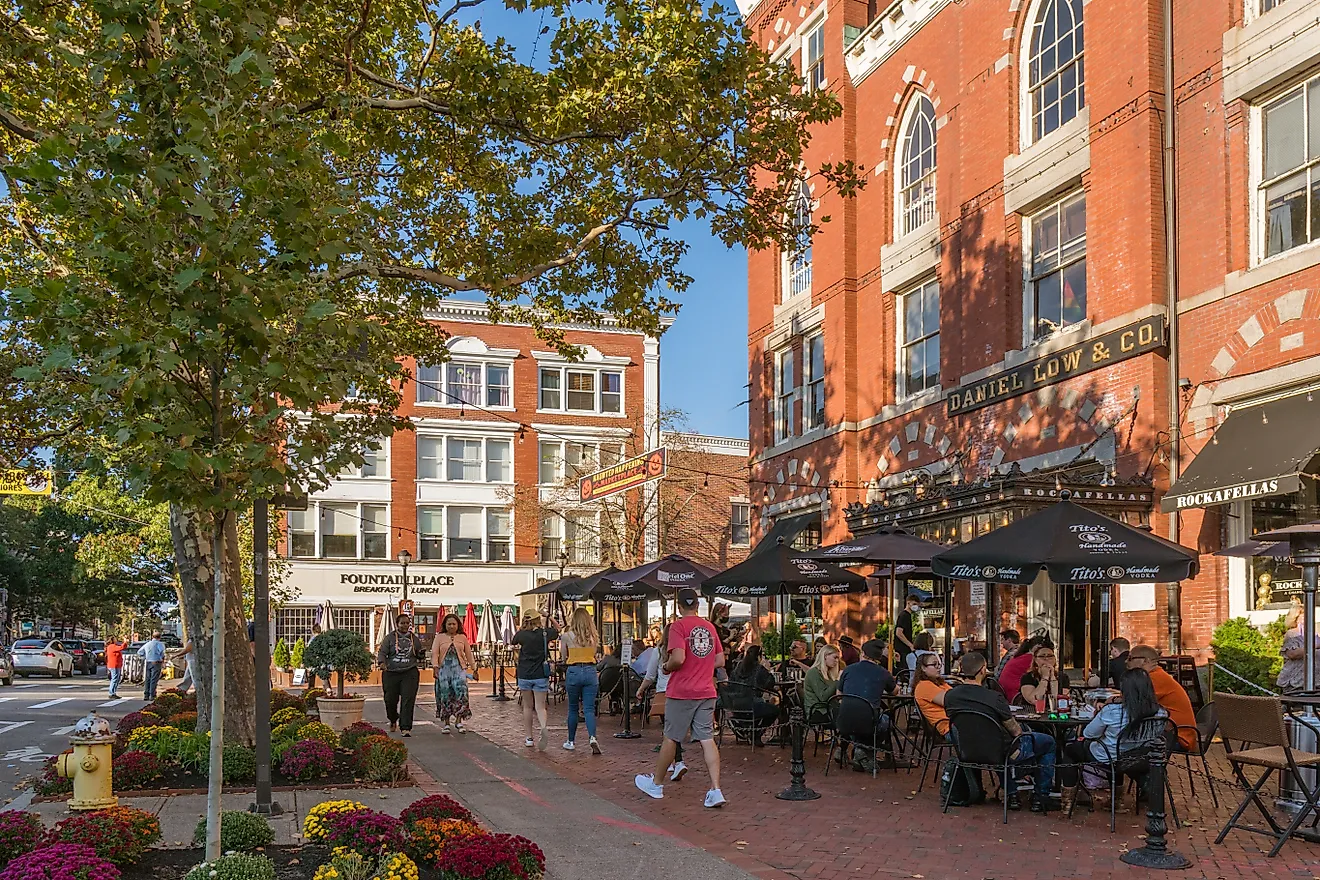
Its Pacific coastline and mountain scenery do a lot of heavy lifting, but some of Oregon's prettiest places are in the heart of its small towns. These main drags pack murals, theaters, tasting rooms, and historic architecture into a few city blocks. McMinnville's Third Street cuts through wine country, where you can work through dozens of tasting rooms without moving the car. Silver Creek runs through downtown Silverton, where more than 30 murals include one devoted to Bobbie the Wonder Dog. In Ashland, the theater season runs from March into late October, and Lithia Park opens onto the plaza. Nye Beach in Newport sits on a bluff above the sand, an arts village where you can watch glass being blown in real time. These ten prettiest downtown strips show off the color, character, and accessibility that make Oregon a rewarding state to explore on foot in 2026.
Silverton

Silver Creek runs directly through the middle of Silverton, and the downtown is built along both banks with pedestrian bridges connecting them. The murals are the reason to walk it. More than 30 are scattered throughout the district, most of which have been funded and maintained by the Silverton Mural Society since 1992. The long one on Water Street tells the story of Bobbie the Wonder Dog, who was lost in Indiana in 1923 and walked more than 2,500 miles home. Others honor political cartoonist Homer Davenport, photographer June Drake, and astronaut Don Pettit. There is a mural walking tour map online.
The Palace Theatre on North Water Street is a 1936 art deco single-screen house with a chevron-patterned facade and a wire-suspended marquee. It is a contributing property in the Silverton Commercial Historic District. Creekside dining is the other draw, with cafes and restaurants overlooking the water from North Water Street. Mac's Place does live music and comfort food. For a small landmark, look for the model of Bobbie and his doghouse between the Silverton Coffee Station and the covered pedestrian bridge.
McMinnville

Third Street is the commercial spine of Willamette Valley wine country. McMenamins Hotel Oregon sits at the corner at Third and Evans, a four-story 1905 building restored in 1998 with 42 rooms, a rooftop bar, and a cellar bar. The alien-themed artwork inside references the 1950 Trent UFO photographs taken outside town, and every May the hotel becomes the centre of the UFO Festival, second in size only to Roswell's, with a costumed alien parade down Third.
The street holds roughly two dozen tasting rooms and wine bars within a few blocks, which means you can work through Yamhill County producers without driving between vineyards. The McMinnville Farmers Market runs on Thursdays from May into October, and the McMinnville Downtown Association operates out of the historic Cozine House at Highway 99W and Third, where you can pick up building histories. The Sage has been on the street for over thirty years, doing homemade bread and soups, and the block-long stretch between Evans and Cowls has the densest concentration of restaurants.
The Dalles

Second Street runs through two historic districts and more than 70 properties on the National Register, in a commercial core built between 1860 and 1938, when this was the trading hub of the interior Northwest. The Granada Theatre on East Second Street opened in 1929 in Moorish Revival style, designed by William Cutts. Judy Garland and Louis Armstrong both performed here. It was restored in 1996 and now runs concerts, films, and local music.
As in Silverton, downtown murals cover the district. The Dalles Mural Society started the program in 1993, and a 2022 MuralFest roughly doubled the count, to more than thirty. Subjects include Lewis and Clark, the Columbia River Highway, and Oregon Trail pioneers. Some even have audio elements. Klindt's Booksellers & Stationers is the oldest bookstore in Oregon and still operates on Second Street. The Wasco County Courthouse was the first territorial courthouse west of the Rockies and one of the last surviving. There is a museum inside covering 19th-century incarceration. The National Neon Sign Museum is the newest addition, housed downtown in a restored building.
Pendleton

Main Street spans four blocks in the foothills of the Blue Mountains, and it keeps more century-old businesses in operation than almost any Oregon downtown. Pendleton Underground Tours leaves from Emigrant Avenue for a 90-minute walk beneath the sidewalks. The nonprofit has been running since 1989. The route covers the Shamrock Card Room, Hop Sing's Laundry, the Empire Ice Cream Parlor, a Prohibition card room, and a duck pin bowling alley, then 31 stairs up to the Cozy Rooms, one of Pendleton's 18 former bordellos. Reservations are strongly recommended.
Hamley & Co. has outfitted working cowboys since 1883 and still makes saddles the same way. The store, steakhouse, and coffee shop occupy adjoining Main Street buildings. The Rainbow Cafe is one of the oldest taverns in Oregon, with its history hanging on its walls. Virgil's at Cimmiyotti's, founded in 1959, is the steakhouse locals send visitors to. The Heritage Station Museum preserves Umatilla County history in the old railroad depot, and the Pendleton Farmers Market runs Fridays from May through October.
Florence

Bay Street anchors Florence's riverfront district, and the Siuslaw River Bridge is one of the town's notable landmarks. Conde McCullough designed the double-leaf bascule span, completed in 1936 with four Art Deco obelisks, and it is on the National Register. The Siuslaw River Bridge Interpretive Center has walkways and signage explaining the construction, and the old ferry wharf pilings are still visible in the water.
Bay Street itself is a wide avenue with river views, flower gardens, and a string of historic buildings, many of which were salvaged from nearby communities and moved here. The Port of Siuslaw boardwalk runs past moored fishing and sail boats and a three-masted tall ship replica. Boats in from the sea sometimes sell fresh catch to walk-up customers, and harbor seals are common in the marina. The Siuslaw Pioneer Museum is the place to go for a deep dive into the area's logging and fishing history and serves as the starting point for a self-guided walking tour of 21 historic buildings and sites in Old Town.
Newport

Newport has two historic districts, and Nye Beach is the prettier one. It was a top attraction on the Oregon coast in the early 1900s and rebuilt itself as an arts village. The district sits on a bluff with direct beach access, connected to four miles of sand running between the Yaquina Head and Yaquina Bay lighthouses. The Nye Beach Turnaround is the main access point. Hotel Sylvia, originally the New Cliff House, has stood on the bluff since 1913 and still operates without televisions or telephones.
The Newport Performing Arts Center is the main venue on the Oregon coast and sits within the district. Galleries are also a highlight. For ArtSake is an artist-owned cooperative, the Yaquina Art Gallery has been running for decades, and there is a working glass-blowing studio where you can watch and take classes. Over the hill, the Historic Bayfront is the working counterpart, with commercial fishing boats, sea lions on the docks, and fish processing plants next to art galleries.
Cottage Grove

Main Street sits within a National Historic District that contains what is described as the largest intact grouping of early 20th-century buildings in the area, built with logging and mining money. The street has appeared in more films than most. Buster Keaton shot The General here in 1926, and the parade sequence in Animal House was filmed on this stretch of Main. Murals, once again, are the organizing feature. Almost 20 are mapped citywide, with ten clustered near Main Street, and there is a self-guided walking tour.
The Opal Whiteley mural is the celebrated one, honoring a controversial local child prodigy from the late 1800s. The 1920s Main Street mural reproduces a period photograph of the same buildings you are standing among. A Buster Keaton mural decorates the building where he stayed. The Centennial Covered Bridge crosses the Coast Fork Willamette alongside Main Street, built in 1987 from timbers salvaged from two dismantled historic bridges. It carries pedestrians and bikes only. Coast Fork Brewing and the Axe & Fiddle serve food and host live music on the strip.
St. Helens

The Riverfront District runs ten blocks along the Columbia, all of it nationally registered, with residences, businesses, and civic buildings dating back close to a century. The Columbia County Courthouse and its plaza form the centre. The plaza is the venue for most of the town's events and the backdrop in most of its photographs. Columbia View Park sits on the river next to the old courthouse, with summer concerts and views out to Mount Hood, Mount St. Helens, and Mount Adams.
The district is best known as a filming location. Disney shot Halloweentown here, and the Twilight film adaptations used the town as well. From mid-September through October 31, the Spirit of Halloweentown takes over the plaza with a giant pumpkin, a lighting ceremony, and haunted attractions. General admission to walk around is free; individual attractions are ticketed. Weekdays outside event hours are free and much quieter. 13 Nights on the River runs through summer as the warm-weather counterpart.
Ashland

The plaza and Main Street sit at the base of the Siskiyous, and the theater season keeps the strip hopping from March into late October. The Oregon Shakespeare Festival runs three stages here, including an outdoor Elizabethan theatre. The free Green Show happens beforehand. Lithia Park starts at the plaza and runs up along Ashland Creek through a Japanese garden and past the Lower Duck Pond. The Ashland Springs Hotel, a nine-story 1925 landmark restored and reopened in 2000, sits directly on Main with a wraparound mezzanine off the lobby. The Oregon Cabaret Theatre occupies a converted church a block off the plaza and runs musicals and comedies. Downtown holds independent bookstores, galleries, and a dense restaurant scene, all within a few blocks of the theaters.
Jacksonville

The railroad bypassed Jacksonville in 1884, and it stopped growing, which is why the entire gold rush downtown is intact. The district is a National Historic Landmark. The Walk Through History tour is free, runs about an hour, and is led by docents in period dress from late May through September. The Jacksonville Trolley Tour covers more ground in 45 minutes, running several times daily in high summer and weekends in shoulder season.
The Beekman House Museum belonged to Cornelius Beekman, an express rider who founded what is now the oldest bank building standing in Oregon. Costumed docents run themed Victorian tours through the 1870s home. Reservations are required, and groups are capped at eight. The Britt Music & Arts Festival runs from June through September in a natural amphitheatre on the hillside estate of pioneer photographer Peter Britt.
The Prettiest Streets In Small-Town Oregon
If you want to see Oregon at street level, give one of these downtowns an afternoon. From the tasting rooms along McMinnville's Third Street to the intact gold rush storefronts of Jacksonville's California Street, these ten strips show how much of Oregon's commercial past is still standing, still occupied, and still worth walking. Whether you're drawn to creekside murals, coastal bridges, or a theater season that runs from spring into fall, Oregon's prettiest downtowns are the best way to see the state on foot.