10 of the Most Charming Towns in Florida
The charm of Florida lives in its small towns. In Ponce Inlet, the tallest lighthouse in the state rises 175 feet over the dunes, first lit in 1887. In the rolling hills north of Tampa, Dade City lines up its 1916 storefronts and throws a kumquat festival every January. Islamorada calls itself the Sport-Fishing Capital of the World and still puts on dolphin shows at an open-water theater. These are the towns that give Florida its charm, one specific detail at a time.
Anna Maria Island

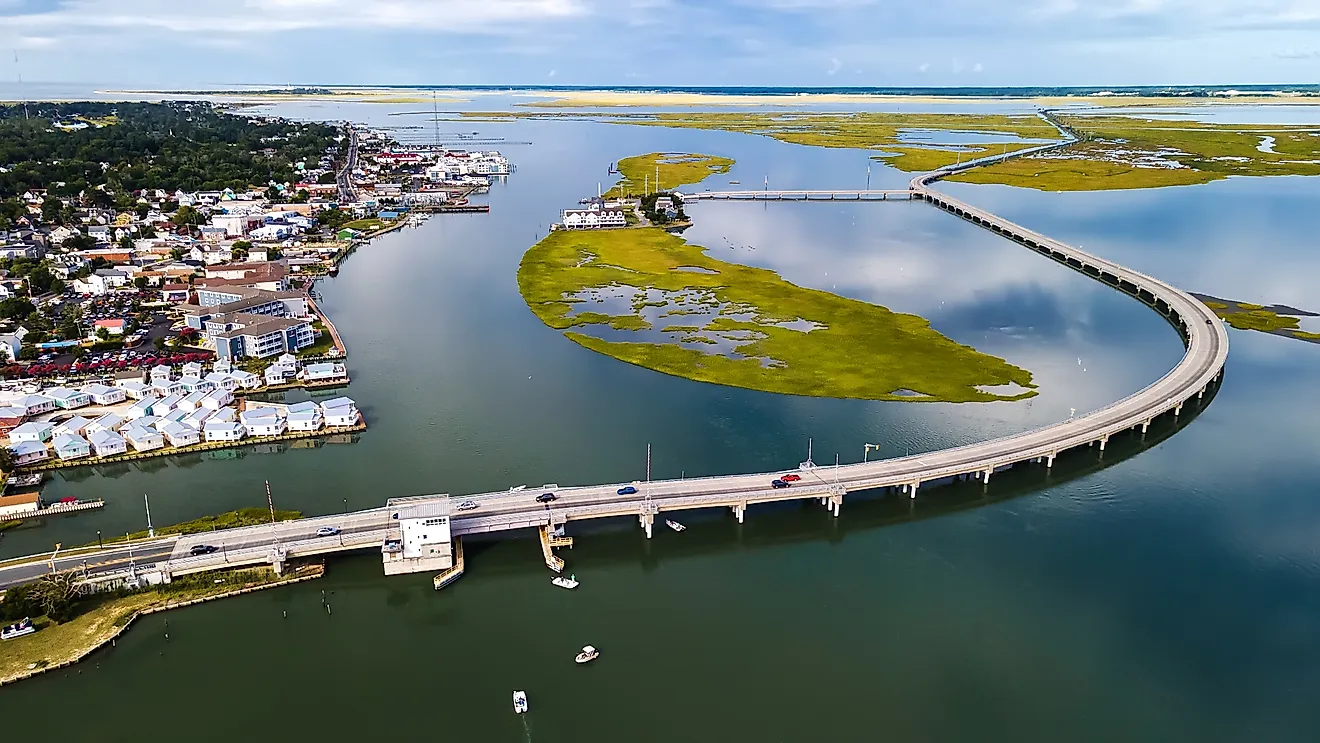
The Bradenton Beach pier on Anna Maria Island, Florida
Anna Maria is a 7-mile barrier island between the Gulf of Mexico and the Bradenton mainland, and it has worked hard to stay low-slung. Strict building-height and business rules mean the chain hotels never moved in. The island is family cottages, small inns, and no-name beach bars. Bean Point, at the north tip, is the quiet end, where bottlenose dolphins turn up close to shore and the whole island doubles as a bird sanctuary.
The three towns on the island share Bridge Street and a walkable stretch of boutiques and seafood joints. The Sandbar has put plates of grouper on the sand since the 1970s, and Ginny's and Jane E's serves breakfast out of a converted old grocery store. The days on the water go to kayaks, paddleboards, and fishing off the city pier at sunset.
Apalachicola

Apalachicola made its living on oysters, and for a long time it pulled around 90 percent of Florida's supply out of the bay, which is how it earned the name Oyster Capital of the World. Hundreds of buildings from the 1830s still line the old working waterfront, the cotton warehouses and ship chandleries now art galleries, raw bars, and cafes. Up the Creek Raw Bar serves the local catch on a deck right over the Apalachicola River.
Two state parks tell the history, the 1838 Orman House mansion above the river and the John Gorrie Museum honoring the local doctor who built an early ice machine here in the 1840s. Offshore lie two barrier islands, St. Vincent and the long, thin St. George, where a reconstructed 1800s lighthouse looks back at the mainland. The John Gorrie Memorial Bridge carries US-98 across the bay to Eastpoint, on the edge of the Gulf of Mexico.
Atlantic Beach

Atlantic Beach is the quiet corner of the Jacksonville beaches, north of the busier Jacksonville Beach and sharing a line with tiny Neptune Beach. It still has its sand dunes and a low-key downtown, a few walkable blocks of coffee shops and restaurants like Southern Grounds. Kathryn Abbey Hanna Park, on the north edge of town, protects more than a mile of beach plus a freshwater lake for paddling and a well-liked campground.
Lodging splits between the oceanfront One Ocean Resort and the retro Hotel Palms, a restored mid-century motor court. The Dutton Island Preserve, on the Intracoastal side, has boardwalks and a fishing pier, and the Atlantic Beach Country Club is one of the better public golf courses around Jacksonville. Sunrise is the show here, since this is the Atlantic and the sun comes up over the water.
Dade City

Dade City is one of the rare Florida towns with actual hills, rolling ranch country about 40 miles north of Tampa. The Pioneer Florida Museum and Village preserves the older version of that country, with an 1860s pine farmhouse and cane-syrup demonstrations every fall. The paved Withlacoochee State Trail stretches 46 miles past town for cyclists, and the Withlacoochee River Park adds 13 miles of hiking closer in.
The oddest draw is the Giraffe Ranch, a 47-acre spread southeast of town where visitors ride camels past giraffes, zebras, and pygmy hippos. Downtown has a 1916 building that now houses Kafe Kokopelli, plus the Joy-Lan Drive-In, which still shows first-run movies on weekends. In January the Kumquat Festival takes over Main Street for the little citrus fruit the area grows.
DeFuniak Springs

DeFuniak Springs grew up around Lake DeFuniak, a spring-fed lake that is very nearly a perfect circle, roughly a mile around. A ring of Victorian houses lines Circle Drive on the shore, close to 200 of them, along with the 1909 Chautauqua Building from the town's years as a winter education center. The town lies in the Panhandle, about 45 minutes inland from the Destin beaches.
Freshwater springs are the other draw. Ponce de Leon Springs State Park, 15 minutes east, has a cold, clear swimming hole, and Vortex Spring nearby is a training site for scuba and cave divers. Back in town, the restored 1920 Hotel DeFuniak marks the historic district, and the Chautauqua Vineyards and Winery pours a few doors from downtown.
Islamorada

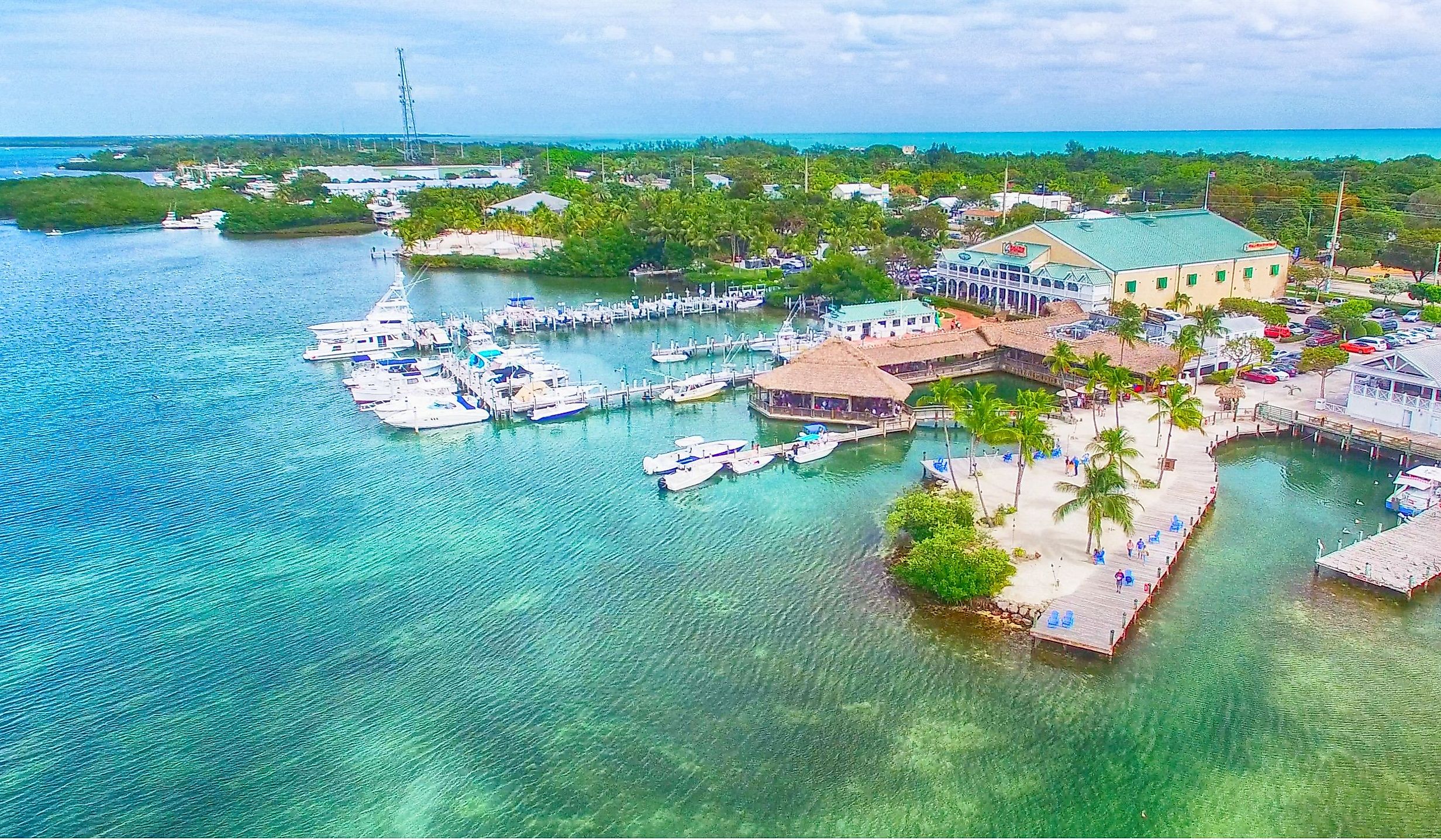
Robbie's Marina in Islamorada, Florida. Image credit: lazyllama via Shutterstock.
Islamorada strings together 5 islands in the Upper Keys, including Plantation, Windley, and the two Matecumbe keys. It goes by the Sport-Fishing Capital of the World, and the flats and reefs off the village bring tarpon, bonefish, and permit that pull anglers down from all over. At Robbie's Marina, the tradition is simpler, since visitors hand a fish over the railing and let the resident tarpon jump for it.
Theater of the Sea, one of the oldest marine parks in the country, still puts on dolphin and sea lion shows. Windley Key Fossil Reef Geological State Park cuts into an old quarry of fossilized coral, and boats head out to Indian Key and Lignumvitae Key, both state historic sites. Offshore stands the iron-frame Alligator Reef Lighthouse, lit in 1873 and named for a US Navy schooner that wrecked on the reef.
Marathon

Marathon spreads across a chain of 13 little islands in the middle of the Florida Keys, about an hour up US-1 from Key West. Two animal hospitals are the real draw, the Dolphin Research Center on Grassy Key, where the dolphins are studied rather than made to perform, and the Turtle Hospital, which rehabilitates injured sea turtles and takes in the ones that cannot go back. Alongside them, the old span of the Seven Mile Bridge is open again for walking and biking out over the water.
Sombrero Beach is the town's swimming and snorkeling beach, with the reef a short boat ride out. Crane Point Hammock protects a patch of native hardwood and a small natural history museum near the highway, and Curry Hammock State Park, just east, has camping and kayaking through the seagrass flats. Keys Fisheries is an open-air fish house where the stone crab and conch come straight off the boats.
Ponce Inlet

Ponce Inlet lies at the south end of the barrier island below Daytona Beach, with a landmark that is impossible to miss. The Ponce de Leon Inlet Lighthouse rises 175 feet, the tallest in Florida, first lit in 1887 and still climbable up all 203 steps. The red-brick tower and its restored keepers' houses are a National Historic Landmark, with a lighthouse museum at the base.
Just up the road, the Marine Science Center rehabilitates sea turtles and seabirds and has a touch tank for kids. Green Mound, a Native American shell midden built up over centuries, spreads across about 41 acres between the Halifax River and the Atlantic. Down the Hatch serves seafood on the inlet where the fishing boats come in.
Venice

Venice, on the Gulf coast just south of Sarasota, calls itself the Shark Tooth Capital of the World, and it earns the name. Fossilized shark teeth wash up on its beaches by the handful, worn out of an old reef a quarter mile offshore, and hunters comb the sand at Caspersen Beach with wire scoops. The town of about 25,000 has 14 miles of coast and a fishing pier that reaches 700 feet into the Gulf.
The downtown was laid out in the 1920s on an Italian-inspired plan, with low stucco buildings and broad, oak-shaded streets that gave the town its name. Centennial Park hosts free summer concerts and a Saturday farmers market, and the Venetian Waterway Park Trail follows the Intracoastal for a flat, easy bike ride. Oscar Scherer State Park, just north, adds scrub-jay habitat and about 15 miles of trails.
Williston

Williston, about 22 miles southwest of Gainesville, is built over water. Devil's Den is a prehistoric spring inside a collapsed cavern, open to the sky through a hole in the ground, where divers descend into 72-degree water year-round. Blue Grotto, nearby, is one of the largest clear-water cavern dives in the state and pulls divers in for training.
Above ground, Cedar Lakes Woods and Gardens turns an old limestone quarry into waterfalls, ponds, and walking paths. Two Tails Ranch, an elephant refuge on the edge of town, offers tours and up-close visits, and the Kirby Family Farm has a narrow-gauge railroad on weekends. Every October the town throws a Peanut Festival for the crop that grows in the surrounding fields.
Where the Charm Comes From
The charm in these towns is never vague. Venice has its shark teeth and its 1920s Italian streets, Marathon has a hospital for sea turtles, and Williston hides a prehistoric spring down a hole in the ground. Each one earns the word charming with something real, the kind of detail worth seeing up close.