8 Quirkiest Chesapeake Bay Towns To Visit In 2026
The Chesapeake Bay is home to some of the East Coast's most appealing waterfront communities. But beyond the marinas and historic harbors lies a collection of towns that embrace the unusual side of things. These destinations are full of quirky traditions and eccentric landmarks that set them apart from the ordinary. On some islands, golf carts outnumber cars. Others celebrate sea monsters or guard centuries-old dialects found nowhere else. If you want offbeat attractions and a town with real personality, these eight quirky Chesapeake Bay towns deliver something strange and unusual.
Onancock, Virginia

Perched along Virginia's Eastern Shore, Onancock is one of the Chesapeake Bay region's quirkiest small towns. Home to fewer than 1,300 residents, this waterfront community blends maritime history, artistic flair, and a quirky personality that feels worlds away from the modern city. Once an important colonial post, Onancock today is known for its colorful galleries, Victorian architecture, and laid-back atmosphere.
One of Onancock's most unique attractions is the Ker Place Museum, a grand Federal-style mansion built in 1799 that preserves the history of Virginia's Eastern Shore through exhibits and artifacts. Art lovers can stroll through the historic downtown district where local galleries and shops occupy the preserved buildings. The town itself is an art walk, with countless murals depicting the town's heritage filling the streets. Onancock is also home to the Roseland Theatre, a historic cinema that has been operating since the 1950s. Outdoor enthusiasts can explore the scenic Onancock Creek by kayak or paddleboard, winding through quiet marshes and coastal scenery.
Tangier, Virginia

Just a hop and a skip from Onancock is Tangier, a small island community in the middle of Chesapeake Bay. Tangier is only accessible by boat or small aircraft and is one of the most unusual communities on the East Coast. Home to fewer than 500 residents, this isolated town feels like a trip back in time. Tangier is famous for its unique dialect, which has developed over centuries of separation from the mainland and often surprises first-time visitors. The island's narrow lanes are largely free of cars, with residents relying on golf carts and bicycles to get around. Tangier offers an experience unlike anywhere else in the world.
Widely celebrated as the "Soft Shell Crab Capital of the World," Tangier is known for its waterfront crab shanties, fishing boats, and shops. Visitors can stop by the Tangier History Museum to learn about the island's maritime heritage and participation in the War of 1812 or take advantage of the museum's free self-guided kayak and canoe tours. Tangier is a town with a unique structure, with the island being constantly eroded away from the elements. Just north of the main residential area is a marshy landmass known as the "Uppards." This area was once a bustling community, but severe erosion has reduced it to open marsh and scattered remains, a stark illustration of the land loss that continues to reshape the island.
Cape Charles, Virginia

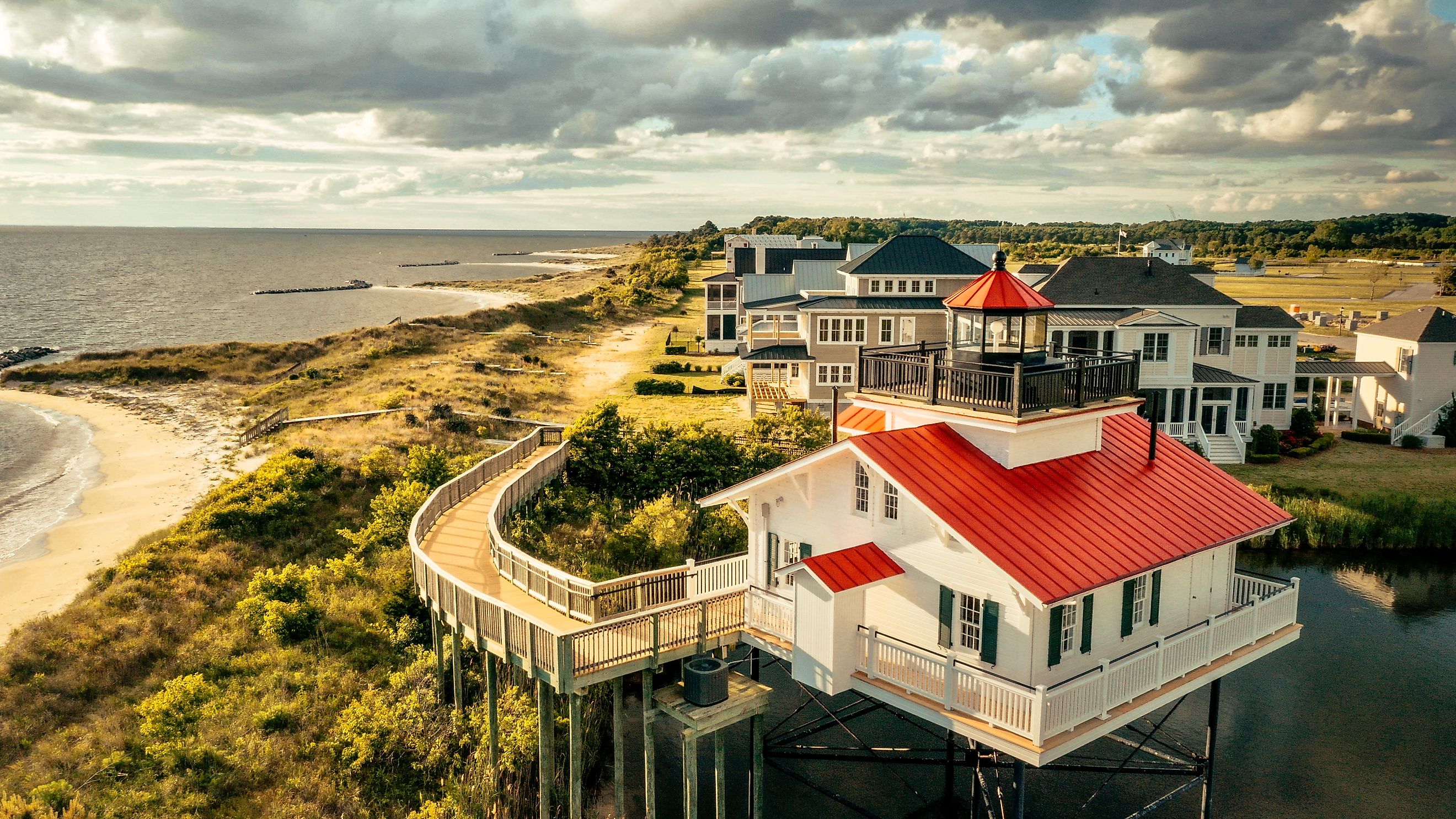
Located at the southern tip of Virginia's Eastern Shore, Cape Charles is a bayside town that is renowned for its Victorian architecture, sandy beaches, and unusual attractions. What started as a railroad town has now bloomed as one of Chesapeake Bay's most distinctive getaways. Historic buildings, vibrant public art, and an old-fashioned feel give Cape Charles a more than unique personality.
One of Cape Charles' most unusual attractions lies just offshore. The Concrete Ships, often called the Sunken Fleet, are a series of World War II-era vessels intentionally sunk to create a breakwater for the ferry terminal. Today, they form one of the area's most recognizable landmarks and can be viewed from the beach or explored by kayaking. While on the paddling side of things, Cape Charles is also known for its unique kayak winery tours, where visitors can paddle along protected waterways that wind through local vineyards. A favorite local stop is Peach Street Books, a bookstore with more than 10,000 titles set inside a former 1930s gas station and the neighboring 1950s service garage that perfectly captures the town's unique spirit.
Havre de Grace, Maryland

Positioned where the Susquehanna River meets the Chesapeake Bay, Havre de Grace is a waterfront town filled with quirky attractions, maritime history, and artistic traditions. This community has long attracted visitors with its scenic harbors and walkable city streets. Beyond its scenic beauty, Havre de Grace stands out for its unusual museums, centuries-old landmarks, and local culture.
One of the most recognizable landmarks is the Havre de Grace Promenade, a scenic boardwalk stretching along the waterfront. The pathway leads visitors to the historic Concord Point Lighthouse, Maryland's oldest publicly accessible lighthouse. Havre de Grace is also widely known for its decoy carving traditions. Visitors can explore the Havre de Grace Decoy Museum, which showcases the intricate craftsmanship and history behind the hand-carved waterfowl. History buffs can continue their journey to the nearby Lock House Museum, a restored canal lockhouse that tells the story of the historic Susquehanna and Tidewater Canals.
Chestertown, Maryland

Set along the banks of the Chester River, Chestertown is a historic waterfront town that proudly emphasizes its colonial roots while maintaining a unique personality all of its own. This Eastern Shore community is known for its beautifully preserved 18th-century architecture, lively festivals, and deep historic roots.
The town's most famous event is the annual Chestertown Tea Party Festival, a spirited celebration inspired by a local legend that states that residents staged their own protest against British taxation in 1774. Each spring, the festival transforms the waterfront with colonial reenactments, tall ships, parades, and a recreation of tea being tossed into the Chester River. With history being such a point within the Chestertown community, the Schooner Sultana is another must-see attraction. The Schooner Sultana is a replica 18th-century sailing vessel that serves as a floating classroom. Visitors can participate in educational programs that bring the Bay and its history to life.
Smith Island, Maryland

Located deep within the Chesapeake Bay and accessible only by ferry or private boat, Smith Island is one of the most unusual destinations in Maryland. The island itself is made up of three distinct communities, Tylerton, Rhodes Point, and Ewell. Smith Island is the last inhabited island in Maryland that is not accessible by car. Smith Island preserves traditions that have largely disappeared elsewhere along the Chesapeake.
Perhaps the island's most famous claim to fame is the Smith Island cake, Maryland's official state dessert. Visitors can sample authentic versions at local bakeries and restaurants while learning about a recipe that has been passed down through generations. The entire northern half of Smith Island is preserved as the Martin National Wildlife Refuge, a 4,500-acre coastal wetland that draws thousands of migratory waterfowl. Its quiet marsh creeks and eroding sod banks are best explored by kayak, and the refuge is a favorite among birdwatchers.
Chesapeake City, Maryland

Right along the banks of one of the East Coast's most important waterways, Chesapeake City is a small town with a surprisingly unusual identity. This historic community is split by the Chesapeake and Delaware Canal, commonly known as the C&D Canal, a massive man-made waterway connecting the Chesapeake Bay to the Delaware River. The C&D Canal is undoubtedly the town's centerpiece. Visitors can watch oceangoing vessels pass through and walk the boardwalks during high tide.
Another interesting landmark is the Chesapeake City Waterwheel, a striking feature located near the waterfront. Nearby, the canal-side promenade and trails offer excellent opportunities for walking, cycling, and ship-watching. The Ben Cardin C&D Canal Trail stretches along the waterway, providing scenic views of passing vessels and wildlife. Beyond its waterfront opportunities, Chesapeake City draws visitors with its historic Victorian downtown and locally owned restaurants.
Delaware City, Delaware

Situated along the Delaware River at the eastern edge of the Chesapeake and Delaware Canal, Delaware City is a small waterfront community with historic character. The town combines Civil War landmarks, local legends, and thriving wildlife conservation into one of the most distinctive destinations in the region.
The town's biggest attraction lies just offshore on Pea Patch Island, home to the imposing Fort Delaware. Accessible by ferry, the massive Civil War-era fortress offers living history demonstrations, cannon firings, and costumed recreations that bring the fort's past to life. The fort is equally famous for its paranormal reputation, with ghost hunts and tours drawing visitors eager to explore one of the Mid-Atlantic's most reportedly haunted sites. Back on the mainland, Fort DuPont State Park preserves more history through its walking trails, historic structures, and scenic waterfront views.
Explore Chesapeake Bay's Strange and Unusual
From isolated islands and sinking marshlands to shipwrecks and colonial recreations, the Chesapeake Bay is filled with communities that proudly embrace the unusual. The region is celebrated for its seafood, waterfront scenery, and maritime heritage, but the eccentric side of things might offer some new and exciting experiences. The quirks of these towns are what make them memorable. They preserve traditions, landmarks, and local stories that have survived generations. For travelers seeking something beyond the ordinary, these Chesapeake Bay communities provide some strange and unusual excitement.