8 Off-The-Beaten-Path Towns In Mississippi
Mississippi's smaller towns sit well outside the tourist corridor but carry some of the most specific history in the South. Port Gibson escaped the Civil War largely intact because Grant reportedly found it too beautiful to burn. Mound Bayou was founded in 1887 by formerly enslaved men and became one of the first self-governing Black towns in the country. Corinth's downtown sits where two Civil War railroads crossed. These eight towns each make a different case for slowing down in Mississippi.
Port Gibson

Standing along Highway 61 in Claiborne County, Mississippi, Port Gibson is a photogenic, historic, yet largely overlooked town that is well worth a detour. One of its standout attractions is the Windsor Ruins, the remains of a Greek Revival mansion built in 1861. An accidental fire in 1890 destroyed everything except its towering columns, leaving behind a peaceful, slightly eerie landmark.
Also worth visiting is the First Presbyterian Church of Port Gibson, which has stood for more than 150 years. Its distinctive gold hand atop the steeple points toward the sky, inspired by the enthusiastic preaching style of the church's first pastor, Zebulon Butler, who was known for gesturing heavenward during his sermons.
Port Gibson escaped much of the destruction of the Civil War because, according to local legend, General Ulysses S. Grant declared it "too beautiful to burn." Many of the town's historic buildings are now listed on the National Register of Historic Places, including the elegant City Hall, built in 1840. Each spring, the annual Port Gibson Main Street Heritage Festival brings the community together with food, live music, a cook-off, and guided tours of the town's most notable historic sites.
Mound Bayou

Also known as the "Jewel of the Delta", Mound Bayou was founded in 1887 by former enslaved people Isaiah T. Montgomery and Benjamin T. Green, making it one of the first African American-run towns in the United States. The community quickly flourished, with black-owned schools, banks, a post office, and other businesses springing up to serve its entrepreneurial residents. This town served as a haven for African Americans for many years, including for Emmett Till's mother during the trial of her son's killers.
You can learn more about the town's extraordinary history at the Mound Bayou Museum of African American Culture and History. Many buildings within the Mound Bayou Historic District are listed on the National Register of Historic Places, and it's worth taking a stroll to see the First Baptist Church (built in 1887), the permanently closed Taborian Hospital (1942), and the various informational plaques and historic houses scattered throughout the town.
Iuka

Located near the Tennessee border in Tishomingo County, northeastern Mississippi, Iuka is an off-the-beaten-path town with Civil War history, forested hills, and hot springs.
In 1904, Iuka won an award for its hot mineral springs, which were said to have healing properties, and today you can see them for yourself at Historic Mineral Springs Park. Alongside the springs, the park features a walking trail, a playground, a pavilion, a tennis court, a skate park, and regularly hosts community events.
Other things to do in Iuka include visiting the Iuka Battlefield site, which is now mostly overgrown, and the Goyer Cemetery remains. You can also drive just over twelve miles to reach J. P. Coleman State Park, where you can camp, sail, swim, fish, and enjoy views of the Tennessee River.
Woodville

Woodville, located in southwestern Mississippi, is a historic, friendly, and often overlooked small town with about 140 of Woodville's historic district buildings listed on the National Register of Historic Places, many of which date to the early 1800s to early 1900s. You can learn more about Woodville's history at the Wilkinson County Museum and the African American Museum.
The Woodville Republican, a newspaper founded in the 1820s, is still in operation today. A conscious lack of development means the town has retained much of its original character, and it's worth taking a tour to see St. Paul's Episcopal Church (1820), Woodville Baptist Church (1809), and the Wilkinson County Courthouse (1903). Woodville has a strong sense of community, with festivals and events such as the Woodville Community Festival, the Juneteenth Festival, and the Woodville Deer & Wildlife Festival that bring neighbors together.
Just under two miles out of town, Rosemont Plantation is a historic house and gardens that was once the childhood home of Confederate President Jefferson Davis. There are guided tours, a cemetery, a lake, and cottages available for rent.
Belzoni

Belzoni proudly holds the title of the "Catfish Capital of the World." The town has embraced this heritage, molding its identity around the fish. Located in the Mississippi Delta, Belzoni is home to the annual World Catfish Festival, held each April. This lively event celebrates all things catfish, with activities including a catfish-eating contest, the crowning of the Catfish Queen, the world's largest fish fry, a 5K run, live music, and a variety of local vendors.
Outside of the festival, you can learn more about Belzoni's special relationship with catfish at the Catfish Museum. Colorful fiberglass catfish statues are also dotted around town, making it fun to wander the streets and see how many you can spot. Aside from catfish, Belzoni is close to some of the world's oldest bald cypress trees in Sky Lake Wildlife Management Area, located just over ten minutes outside town.
Water Valley

Despite living in the shadow of nearby Oxford, Water Valley has a lot to offer in its own right. This historic, creative little town is filled with colorful murals, old-timey buildings, and informative markers dotted throughout the area. Water Valley was incorporated in 1858, and since 1905, the Turnage Drug Store has served the community with a pharmacy, soda fountain, ice cream, milkshakes, jewelry, and more.
Water Valley began as a railway town, and the Casey Jones Railroad Museum (open from 2-4 p.m. on Fridays and Saturdays) tells the story of legendary train engineer Casey Jones, who lived and worked here before his fatal 1900 wreck at Vaughan. Every year, during the first weekend in August, the town hosts the popular Watermelon Carnival.
Corinth

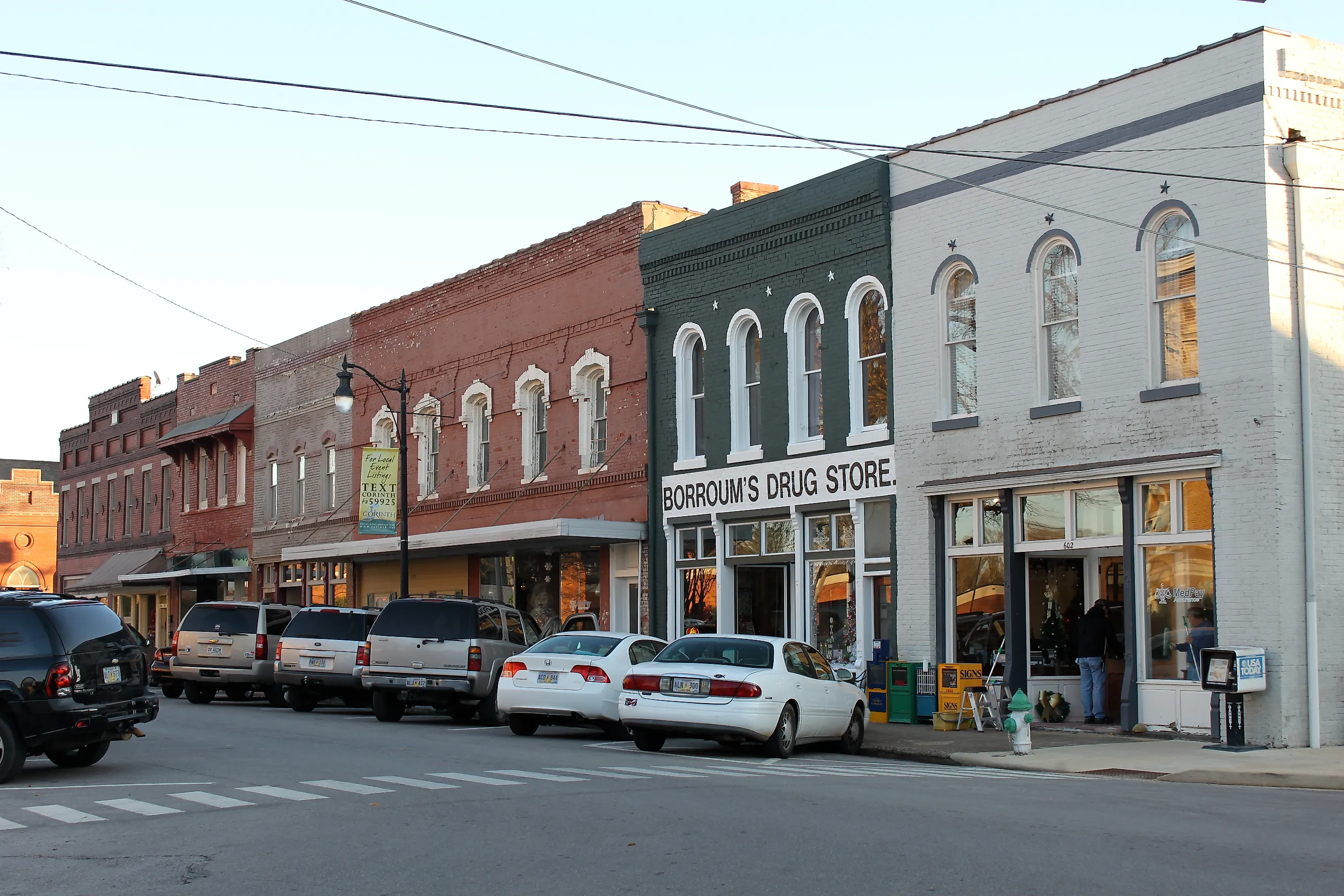
An important Civil War site in northeast Mississippi near the Tennessee border, Corinth (originally known as the "Crossroads of the South" because of the intersecting railroad tracks in its town center) is a walkable destination packed with history. In the 1860s, war descended on Corinth because of its strategic transportation routes.
Those wanting to learn more about the town's role in the Civil War should check out the 22-stop Corinth Civil War Driving Tour, a self-guided route that allows visitors to explore key historic sites at their own pace. Stops include the Corinth Civil War Interpretive Center, Corinth National Cemetery, and the Beauregard Line. You can also delve into local history, including plenty of railroad-focused displays, at the Crossroads Museum.
Throughout the year, Corinth hosts festivals, markets, and community celebrations. One highlight is the annual summer Slugburger Festival, which was named one of Tripadvisor's "Wackiest Summer Events" and celebrates a Corinth-original burger recipe made with potato flakes and flour rather than slugs. The festival features live music, a singing contest called "Slug Idol," and a carnival.
Bay Springs

This small, rural, and peaceful Southern town sits off the beaten path in Jasper County, southeastern Mississippi. Bay Springs is known for its creative floral displays, and each year it hosts Bayfest, a community festival featuring music, art, and food. Just a 20-minute drive from town lies Bienville National Forest, which has 178,000 acres of trails, campgrounds, and lakes.
Farther afield (but still less than an hour's drive away), you'll find Dunn's Falls Park, home to a 65-foot man-made waterfall, as well as the infamous Stuckey's Bridge, which crosses the Chunky River and is said to be haunted by the ghost of former gangster "Old Man Stuckey."
Worth the Detour
Whether eating slugburgers in Corinth or spotting fiberglass catfish statues in Belzoni, these eight towns make a strong case for exploring Mississippi beyond the obvious stops. Port Gibson's columns, Mound Bayou's founding story, and Woodville's 200-year-old newspaper are the kind of details that stay with you long after the drive home.