Most Expensive Cities For Gasoline In The United States
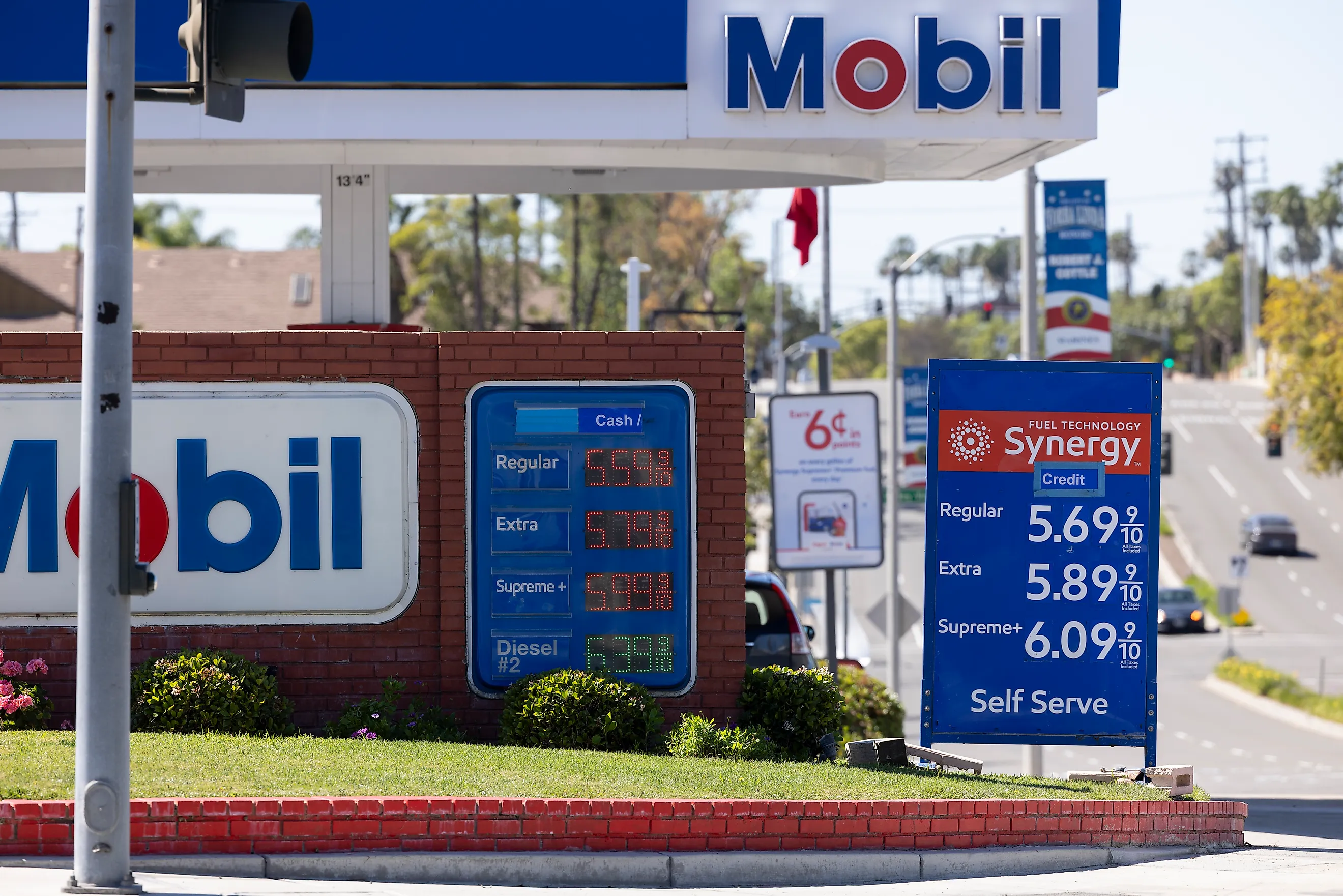
Any specific gas price in this article is already wrong. By the time you read it, the number at your local station will have moved, probably up, and it will not match whatever it was when this was written. So this is not a list of prices. It is a list of the cities where gas is reliably, stubbornly, year after year more expensive than almost anywhere else in the country. The striking part is how little the cast changes. Zoom out and the map of expensive gas looks the same every year: the West Coast and Hawaii, over and over, while much of the middle of the country fills up for a dollar or two less per gallon. That is not bad luck. It is taxes, chemistry, and geography doing exactly what you would expect. Every city below has more than 100,000 people, and every one of them has camped near the top of the pump-price charts for a long time.
Why It's Almost Always the West Coast
Before the cities, it helps to know why they all cluster in one corner of the map. California sets the tone, and California has built the most expensive gallon of gas in the country almost on purpose. Start with taxes. The state charges around 61 cents a gallon in excise tax, the highest in the nation. On top of that sit a cap-and-trade program worth roughly 23 cents a gallon and a low-carbon fuel rule worth another 14 or so.
Then there is the fuel itself. California requires a special cleaner-burning blend that only certain refineries are equipped to make. That adds a little cost directly, but the bigger problem is that it leaves almost no backup when something breaks. And something often breaks, because the West Coast is basically an energy island. No major pipeline carries gasoline in from the big refineries of the Gulf Coast, so when a local refinery stumbles, prices jump and stay up until a tanker can sail in from somewhere far away. Hawaii runs on a harsher version of the same math, since nearly every drop of its fuel arrives by ship across a couple thousand miles of ocean.
San Francisco, California

If there is a heavyweight champion of expensive gas among big American cities, it is the San Francisco Bay Area. Year after year, California posts the highest big-metro prices in the continental United States right here, usually a comfortable margin above even Los Angeles. Part of the reason is simple. The Bay Area pays California's full tax-and-regulation stack and then piles its own high-cost-of-everything premium on top. The rest is supply. The region just lost the Valero refinery in nearby Benicia, which shut down in the spring of 2026, thinning the small group of refineries that feed Northern California. Less local supply means less cushion, and less cushion means a San Francisco pump price has a long way up it can travel and not much room to fall.
Los Angeles, California

Los Angeles is the other California giant, and it shows off a different flavor of the same problem: volatility. LA is huge, it drives almost constantly, and it leans on a handful of nearby refineries to feed all those cars. When one of them has an unplanned outage, or when the state makes its seasonal switch to a pricier summer blend in spring, prices across the region can lurch upward within days. The margin got thinner in late 2025, when the Phillips 66 refinery in the Wilmington area closed for good. Between that shutdown and the Bay Area one, roughly a sixth of California's refining capacity went offline in about half a year, which is not the direction you want supply moving in a market that has none to spare.
Honolulu, Hawaii

Honolulu is the exception that proves the West Coast rule, mostly because it is not on the West Coast at all. It just has the same problem, worse. Its fuel arrives by tanker from thousands of miles away, and a small island market has no cheap fallback when supply gets tight. Hawaii trades the top spot for priciest gas back and forth with California most years. None of this will surprise anyone who lives there, since Honolulu has also sat near the top of the country's cost-of-living rankings for decades, for the same reason: on an island, almost everything costs more to bring home.
Seattle, Washington

Washington quietly turned into one of the most expensive gas states in the country, and Seattle is where drivers feel it most. The state already had a high fuel tax. Then in 2023 it launched a cap-and-invest carbon program that added a noticeable chunk to the pump price almost overnight, and people noticed. Washington now routinely lands just behind California and Hawaii, which is not a podium anyone campaigns to reach.
Portland, Oregon

Oregon rounds out the West Coast pattern for the same family of reasons. It sits in the same isolated fuel market as California and Washington, and it runs its own clean-fuels program that nudges the price up a little further. Oregon gives Portland no single dramatic villain to blame, just the steady drag of being on the expensive side of the country, which is enough to keep it well above the national average.
Reno and Las Vegas, Nevada

Nevada is the interesting case, because it does not have California's taxes or its rules, and its drivers still pay a premium. The reason is plumbing. A large share of Nevada's gasoline arrives by pipeline from California refineries, so when California's prices climb, Reno and Las Vegas inherit the bill. Reno, fed mostly from the Bay Area, tends to track Northern California especially closely. It is a little like living next to an expensive restaurant and getting charged for the smell.
Why This List Won't Change Much
The exact order shuffles all the time. Some weeks Hawaii is first, some weeks California, and the metro rankings swap places depending on which refinery is having a bad month. What does not change is the guest list. Every driver of these prices is structural rather than temporary. Some of it is tax law, some of it is fuel regulation, and a lot of it is plain geography, since the West Coast depends on a shrinking set of local refineries and has no cheap way to import more. If anything, the trend points higher. California has now lost four refineries since 2020, and analysts expect the most recent closures to keep upward pressure on prices for years, because the state increasingly has to ship in finished gasoline from Asia to cover the gap. Whatever the pump says on the day you read this, the map behind it will probably look familiar for a long time.