10 New England Towns With A Slower Pace Of Life
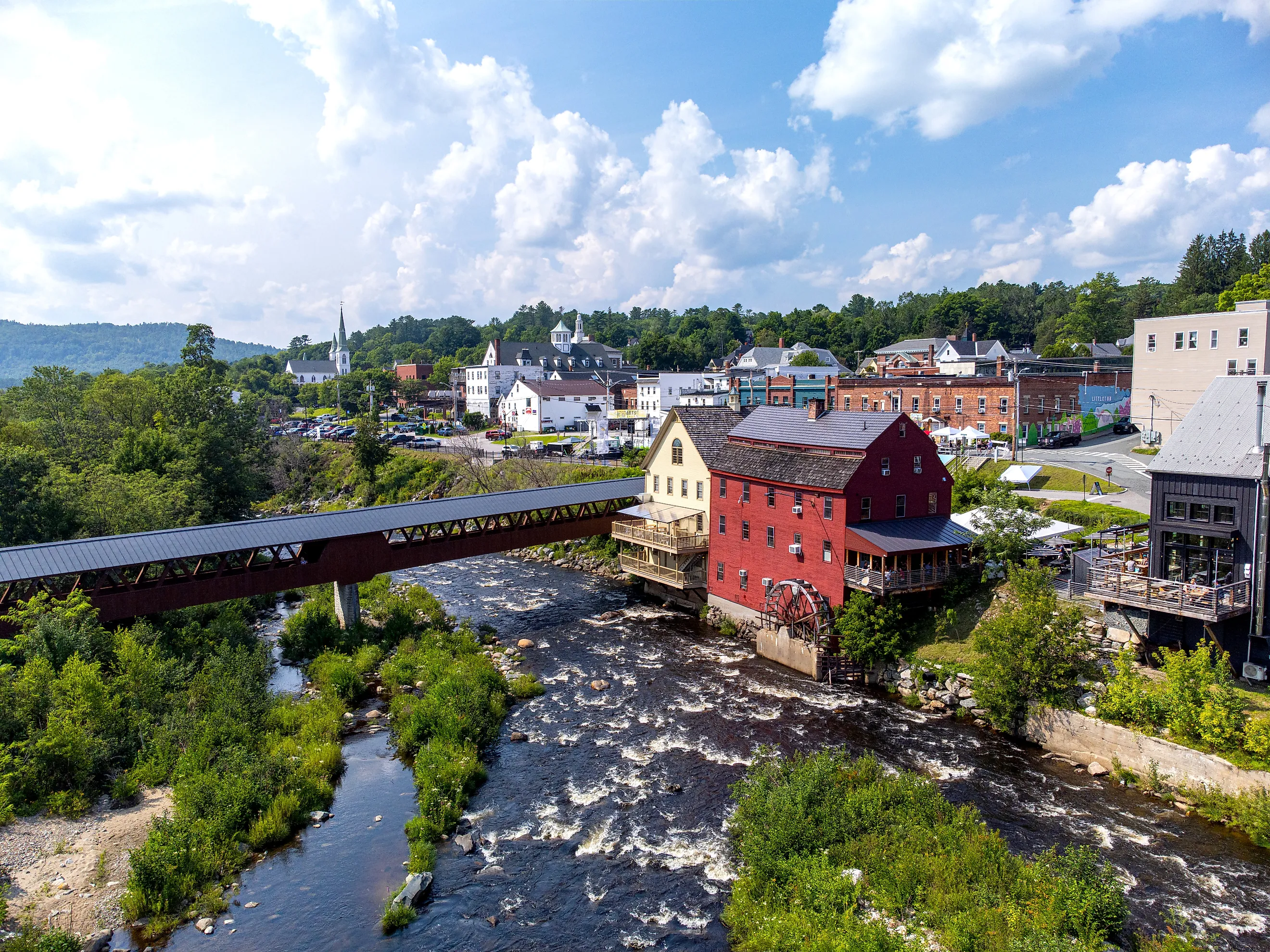
Head out to the rural towns of New England to avoid the rush of big cities. The slower pace of life can be found in the mountains of New Hampshire, like Littleton where you can walk along riverfront pathways. The narrow highway leading to the outer reaches of Cape Cod help keep rural Truro a quieter summer destination. And climbing the highest peak in Rhode Island means hiking out on a woodland path. These small towns offer a tranquil reprieve from the busy bustle of big cities, but still deliver plenty to do.
Camden, Maine

Located on the mid-coast of Maine, Camden is known as a place "where the mountains meet the sea." The Camden Hills loom over the town, while the harbor opens up into West Penobscot Bay. Settlers arrived in 1768 when the District of Maine still was part of the Commonwealth of Massachusetts. Like many coastal harbors in Maine, cod and lobster fishing drove the economy for much of the early history. Today, the small town hosts the annual Windjammer Festival, a celebration of that maritime history. Each year, the fleet gathers in the harbor with live music, local artists, and exhibitors. The highlight is the lobster crate race, where participants attempt to cross the water by running on floating lobster crates. On the peak overlooking the town stands the 26-foot tall stone Mount Battie Tower. Built in 1921, the tower serves as a memorial to those who died in World War I. It marks the end of a short hiking trail of the same name. The downtown includes a variety of independent shops. A must-stop for treasure hunters is Antiques at 10 Mechanic, a huge space filled with all sorts of vintage items from small pieces like jewelry to larger furniture and home decor. You never know what you will find in this vast collection. The same is true at Stone Soup Books, where pre-loved books are stashed in every nook and cranny of this two-story shop.
Rye, New Hampshire

Head down the coast, and you will come to the seaside town of Rye, New Hampshire. The sandy beaches began attracting summer tourists in 1899 with the arrival of a trolley line. Jenness Beach Village and Rye Beach Village were established by 1905. Today, Jenness State Beach includes a bathhouse on a sandy swimming beach with onsite parking. Just north of the beach, Rye harbor boasts a protected marina for mooring leisure craft and a sportfishing fleet. You can charter a vessel from one of several companies, like Seacoast New Hampshire Sportfishing Charters. The family-owned company operates a 34-foot, 700 horsepower Yellowfin. At the northside of town, the Seacoast Science Center offers interactive exhibits. The skeleton of Tofu, the humpback whale, hangs from the ceiling, impressing visitors with the size of the 32-foot wide body. If you rather just relax and enjoy one of New England's best boiled lobsters, stop by Petey's Summertime Seafood. This classic sea shanty restaurant sits riverside with outdoor tables and screened in porch overlooking the water. Or let Petey's cater your own classic New England style clam bake with lobsters, clams, corn on the cob, and chowder.
Truro, Massachusetts

European settlers first arrived in Truro in 1620. The Pilgrims landed at Corn Hill named so because they discovered a stash of corn belonging to the Nauset tribe. The corn fed the hungry travelers. Today, Truro is a quiet, rural community just south of Provincetown spanning the narrow spit of land between the Atlantic Ocean and Cape Cod Bay. Here you are just as likely to find a small holding farm as you are a lighthouse. The Highland Light overlooks the north Atlantic and offers guided tours. Visitors can climb to the top of the light on a narrow spiral staircase. Also known as Cape Cod Light, the first wooden lighthouse was commissioned by George Washington in 1797. The current 66-foot tall structure replaced a brick tower in 1857. Part of the National Seashore, the site also includes a walking path with a scenic overlook of the ocean below. Just down the road, the Payomet Performing Arts Center hosts events throughout the summer including musical acts and a circus. And if you have ever dreamed of running away to the circus, sign up for one of the circus classes. In the pint-sized downtown, you can stock up on provisions at the Salty Market Farmstand where you will find a selection of curated pantry items, sandwiches, and liquor. And after a long day climbing the lighthouse stairs, check out Truro Vineyards where you can sip local wines and distilled spirits. The vineyard hosts tastings and live music.
Jamestown, Rhode Island

Historic Jamestown dates back to 1678, named for James, the Duke of York. The town sprawls across Conanicut Island in the middle of Narragansett Bay. Newport harbor and the fleet of sailing boats sits just to the east, and on summer afternoons the bay fills with flowing sails catching the wind. Jamestown offers a slower pace than the nearby bustle of Newport but with many of the same amenities. At the southern tip of town, Fort Wetherill State Park sits on 100-foot high granite cliffs providing a great viewing location for the tall ships and sailing regattas that pass by. The park had once served as the area's coastal defense and the ruins of these fortifications remain. The 61 acres provide opportunities for picnics, boating, fishing, and hiking with scenic overlooks throughout. In the center of town, the Jamestown Historical Society maintains 45,000 records and hosts exhibits on local history. The society also maintains the Jamestown Windmill. The first mill was constructed as early as 1730 producing milled grain for the community. The current three-story, octagonal structure opens for visitors seasonally. On Windmill Day, sails are raised to catch the breeze and turn the bonnet. The non-profit Jamestown Arts Center hosts cultural events and offers design and art workshops. Artists founded the community-driven organization with the goal of promoting education and hands-on experiences.
Old Lyme, Connecticut

Further south along the coast, Old Lyme sits on the Long Island Sound at the mouth of the Connecticut River. Originally part of Old Saybrook during the colonial era, the town separated as South Lyme in 1665. It adopted the name Old Lyme in 1857. At one time it had been a center of shipbuilding and sea shipping. In 1892, the Sound View Beach became "America's First Public Beach." Today, the sandy beaches along the coastline attract summer visitors. Inland, preserved woodlands provide hiking and outdoor recreation. The Old Lyme Land Trust oversees 19 parcels, like the Lay-Allen Preserve, the largest of the tracts. That 205-acre parcel has long, winding trails through woodlands and over rocky ledges. The marked paths offer moderate hiking challenges like stream crossings and some steep climbing. Visual arts play a major role in town too. As the age of steam began to disrupt the sailing and shipping industry in the 19th century, Old Lyme's prospects dwindled. Miss Florence Griswold, the daughter of a seaship captain, converted her stately home into a boarding house to make ends meet. When artist Henry Ward Ranger arrived as a boarder, Old Lyme's natural beauty moved him to establish an American school of landscape painting and he launched an artists' colony. Today, the Florence Griswold Museum honors those traditions with art exhibitions and events like an annual midsummer festival.
Foster, Rhode Island

Heading north, Foster, Rhode Island borders Connecticut to the west. Originally part of Providence, the town separated from the city in 1730 along with Scituate. Finally, Foster incorporated in 1781. Foster is home to Rhode Island's highest point. Jerimoth Hill stands 812 feet high. For decades, the site has been used by Brown University as an astronomy observatory because of the low levels of light pollution. However, for many years a property owner limited access to the high point to the dismay of "highpointers," hikers who seek the highest point in various regions. However, as of 2014, the state acquired property around the hill, finally allowing regular public access on a short trail. Foster is also home to the Swamp Meadow Covered Bridge, the only such bridge on a public road in the state. Proposed in 1986, the bridge honors Rhode Island's 350th Anniversary. Near the bridge, Borders Farm Preservation operates a 300-year-old interactive museum. The working farm provides educational, recreational, and community resources. The 200-acre dairy farm is run by volunteers. Hiking trails cross hay fields and pastures, and a farmhouse museum highlights historic equipment. This rural town is also a great place to find antiques. Old Man Mercantile has a selection of vintage agricultural tools, home decor, and furniture.
North Adams, Massachusetts

Back in Massachusetts, the one-time milltown of North Adams now serves as a center for art and culture. Powered by the Hoosic River, water mills powered the industrial revolution. The mills manufactured products like leather, textiles, machinery, and even biscuits. But by the 20th century, many of the manufacturing companies had abandoned the small town. Today, led by the conversion of one mill campus into MASS MoCA, a contemporary art museum, this small town offers a rich cultural community celebrating the arts. The museum has reimagined the campus of the Arnold Print Works into a world-renowned museum exhibiting both established and emerging artists. The vast buildings allow for large format installations and the museum hosts performance artist residencies as well. Also in town, the Barbara and Eric Rudd Art Foundation hosts exhibits in two locations. The foundation's mission is to preserve and present the work of Eric Rudd, a sculptor and mixed-media artist who relocated to North Adams. He has been instrumental in advocating for artists' studio spaces in converted factories. North Adams also offers outdoor recreation. On the outskirts of town, the Cascades Trail wends along a bubbling creek. The 2.1 mile trail ultimately leads to a scenic, towering waterfall. Across town, Natural Bridge State Park includes a 550 million-year-old bedrock marble slab carved by glacial melt 13,000 years ago. The bridge spans Hudson Brook and a 60-foot gorge. The park also includes an abandoned marble quarry visitors can tour.
Bennington, Vermont

Heading inland, Bennington, Vermont sits in the southern foothills of the Green Mountains. The town gets its name from the colonial Governor of New Hampshire, Benning Wentworth, who chartered the town back in 1749. Bennington College, a small liberal arts college dominates the town. The college hosts numerous public events throughout the year such as art exhibits and lectures. The Bennington Battle Monument looms over the town. The limestone tower, built in 1891, stands just under 307 feet tall. It commemorates the Battle of Bennington, a Revolutionary War battle. The battle saw General John Stark with 2,000 American militia and Colonel Seth Warner's Green Mountain Boys defeat John Burgoyne's British regulars, providing a major strategic success for American independence. Bennington's historic downtown includes several independent shops like The Bennington Bookshop. Dating back to 1928, the store is the oldest independent bookstore in Vermont. It hosts book signings and author events throughout the year. Across the street you can also find the Madison Brewing Company. The local brewery focuses on fresh, high-quality draft beers in a full spectrum of styles. The pub menu includes bar food, sandwiches, and burgers.
Grand Isle, Vermont

Grand Isle sits in the middle of Lake Champlain. Bridges link the island to Vermont, but only the ferry connects it to Cumberland Head, New York. Following the Revolutionary War, the island had been divided into lots for veterans. Few of the Green Mountain Boys claimed their properties and much of the land reverted to the state. The early settlers built cabins along the shoreline in the 1780s, like the Hyde Cabin. This historic building was erected in 1783 and inhabited by the Hyde family for 150 years. Today the cabin is maintained by the Grand Isle Historical Society and operates as a museum. The Grand Isle State Park offers a great way to access the natural beauty of Grand Isle. The state purchased the private summer resort, Birchliff, in 1959, converting the area into a public park. The park provides camping sites, and a looping 1-mile long Ironwood Nature Trail. The park also has a small beach area along the lake. To boat on the lake, check out Vantine's West Shore Boat Launch with direct access to the lake with a standard concrete boat ramp.
Littleton, New Hampshire

Littleton, New Hampshire has one of the best downtowns in the state. Main Street is a great place to find the perfect gift. The town is a must-stop for antiquing with three shops on the same block. Revive 365, Purple Peacock, and Just L Modern have a mix of trinkets, furniture, vintage toys, and more. This small town has always been tied to the river. The Ammonoosuc River provided power for local mills through the industrial revolution. You can still see one of these historic mills today, now converted into a brewery. The Schilling Beer Co. tasting room now occupies the 18th-century grist mill. The brewery also has a pub serving a mix of pizza, burgers, and internationally inspired dishes with local ingredients. Next door, the Riverwalk Covered Bridge spans the Ammonoosuc River and provides scenic views of the old mill. The 350-foot long bridge is part of a 19-mile long trail running alongside the Ammonoosuc River connecting Woodsville to Littleton. Parker Mountain rises over Littleton to over 1,300 feet. From town, you can climb the Parker Mountain Trails to the peak, or follow some of the 25-miles of community-built trails around the mountain. The trails allow walking, running, hiking, mountain biking and winter recreation like snowshoeing and skiing.
Slowing Life Down
The slower towns in New England can be found along the coastlines or in the mountains. They tend to be rural communities like Truro on Cape Cod. They can even be nearby larger, busier communities like Jamestown's proximity to Newport, where they benefit from some of the same experiences like America's Cup, without all the rushing around. And places like North Adams host great works of contemporary art, or Old Lyme celebrating the landscape art of the past.