Why Some States Have No National Park At All
While California has nine national parks, more than any other US state, and 20 states actually do not have any national parks at all, according to World Population Review as of August 13, 2026. Many of these states have other sites run by the National Park Service (NPS), such as Pennsylvania's Edgar Allan Poe National Historic Site, New York's Harriet Tubman National Historical Park, and Cedar Breaks National Monument in Utah. Although sites like these are often confused with the national parks, there are 433 "units," as they are termed by the NPS, and just 63 are official national parks. Entities must pass strict criteria to receive the national park status, and follow a step-by-step process to possibly receive the coveted designation. Most times, however, units are given other designations more specific to what the site is preserving.
Qualifications for National Park Status

The designation of an official national park is typically reserved for land areas that contain numerous natural resources which would be protected by being given the title. National parks often have significant scenic, natural features that many people would even describe as natural wonders. In fact, they are more likely to become national parks if they have not just one, but several such features. National parks should also be of great interest to a large number of people, not just to one group of people such as a tribe, or those who live in that area.
For example, Yellowstone National Park was the US's and the world's first national park, established by Congress and made official when President Ulysses S. Grant signed the Yellowstone National Park Protection Act on March 1, 1872. Yellowstone was chosen for national park status after an expedition to explore the area found its still-active volcano, about 500 geysers, vast canyons, and evidence of geological processes like glaciers, earthquakes, and others having formed its terrain over millions of years.
Size is Not Always a Factor

Yellowstone covers 3,472 square miles, or 2.2 million acres, while the median size of all national parks is 220,000 acres. The largest US national park is Wrangell-St. Elias in Alaska, at 13M acres. Yet, the smallest park, the Gateway Arch in St. Louis, is only 91 acres. It was chosen for national park status not because of its size or natural wonders, but because of its significance to the entire country. The arch is a symbol of Thomas Jefferson's land purchase that greatly expanded the US borders. St. Louis was the gateway to the west for people who wanted to move to the new territory.
Many Other Unit Designations

The NPS manages 433 units covering 85+ million acres of land. These include the 63 national parks, but also national battlefields, military parks, historic sites, monuments and memorials, preserves and reserves, lakeshores and seashores. All have the word "national" in their names and are commonly referred to as parks. These examples exist in every state, the District of Columbia, and US territories, so it is easy to make the leap to thinking that these are national parks.
For example, Maryland is one of the states that has no national parks. The state does have Antietam Battlefield, however, which is run by NPS, preserved as where 23,000 soldiers were wounded, killed, or missing after the battle on September 17, 1862. The various exhibits show weapons used and uniforms worn in the battle, as well as artifacts found at the site. Antietam was a major battle of the Civil War, yet the site is not a national park.
Steps to Become a National Park or Other NPS Unit

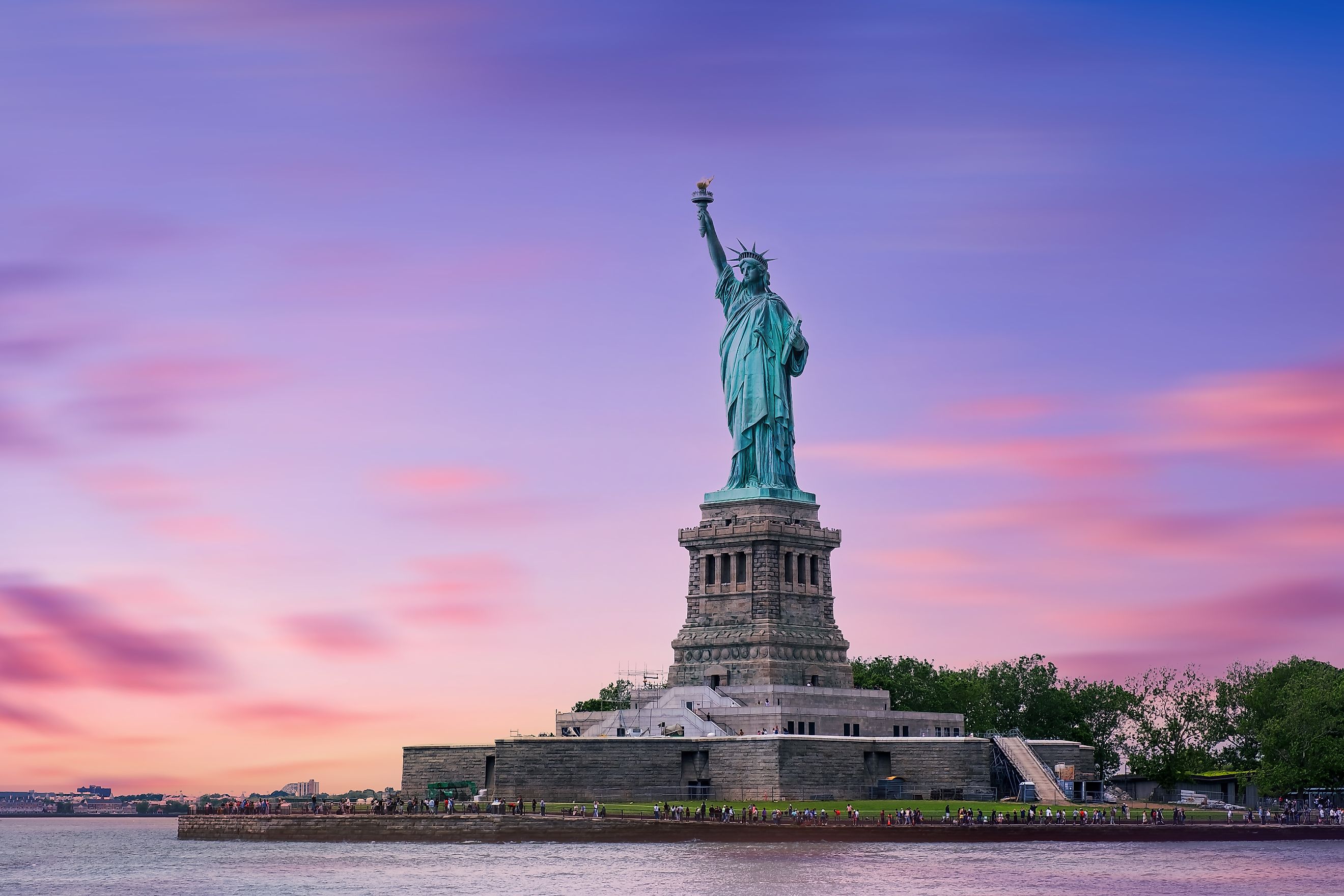
Through the Antiquities Act of 1906, US presidents can establish national monuments. Devils Tower and the Statue of Liberty are two examples of national monuments. A president cannot designate national parks, however. Only Congress can designate a national park. Before doing so, they must follow specific steps:
- Nomination - Someone must nominate the park, monument or other site for consideration. Congress may reach out to the Secretary of the Interior, who is advised by the National Park System Advisory Board, which is made up of private citizens.
- Research - Congress typically authorizes a Special Research Study of the monument or other site. A committee visits the site and makes observations according to four criteria: whether the site's natural or cultural resources or intention have national significance, if this site is the best example of these resources, how feasible the site is (e.g. is it large enough to accommodate visitors and a parking lot?), and how the park or site would best be managed, e.g. through NPS or another agency.
- Hearings - Several hearings are usually held to discuss the study's results and debate different possibilities, such as whether the site meets the criteria for a national park or if it would be better as a different unit, and who would manage it.
- Vote - Congress votes for or against national park status or other unit designation.
- Enact Law - When a consensus has been reached, Congress writes a law declaring the designation they have decided upon.
- Signing - The president signs the law (or not).
Modifying National Parks and Units

National parks and NPS units can also be scaled up or down after being created. Through the years, Congress has upgraded several units to national park status. For example, Grand Canyon National Park was established as a monument in 1908 by President Theodore Roosevelt, then upgraded to a national park by Congress in 1919.
Presidents can neither designate national parks nor modify them. While presidents can create national monuments, it is not clear whether they can reduce their size or eliminate them. Since President Donald Trump reduced the areas of both Bears Ears National Monument and Grand Staircase-Escalante National Monument, people for and against presidential ability to do so are debating both sides. As of August 2026, there is talk of Congress rewriting or amending the Antiquities Act to make it clear that reducing or eliminating national monuments by presidents is not permitted. Whether permissible or not, many other presidents, between Taft and Kennedy, altered national monuments without repercussions.
The Bottom Line
It is extremely difficult to establish a national park. It is so difficult, in fact, that 20 states do not have any national parks. The first hurdle is the four qualifications required: that the unit is nationally significant, is the best example of these resources, is feasible such as to accommodate visitors, and how it should be managed. Then there are the steps Congress must take, including ordering a Special Research Study, visits to the site, discussions, debates, hearings, votes, and obtaining the president's signature. Some states are simply not large enough to have the land typically required to host a national park. Others do not have resources that would benefit from the protection the national park designation provides. National park or not, every state has at least one NPS unit that tells an important story about its history, culture, or people.