This Atlantic Coast Downtown Is Made For Strolling
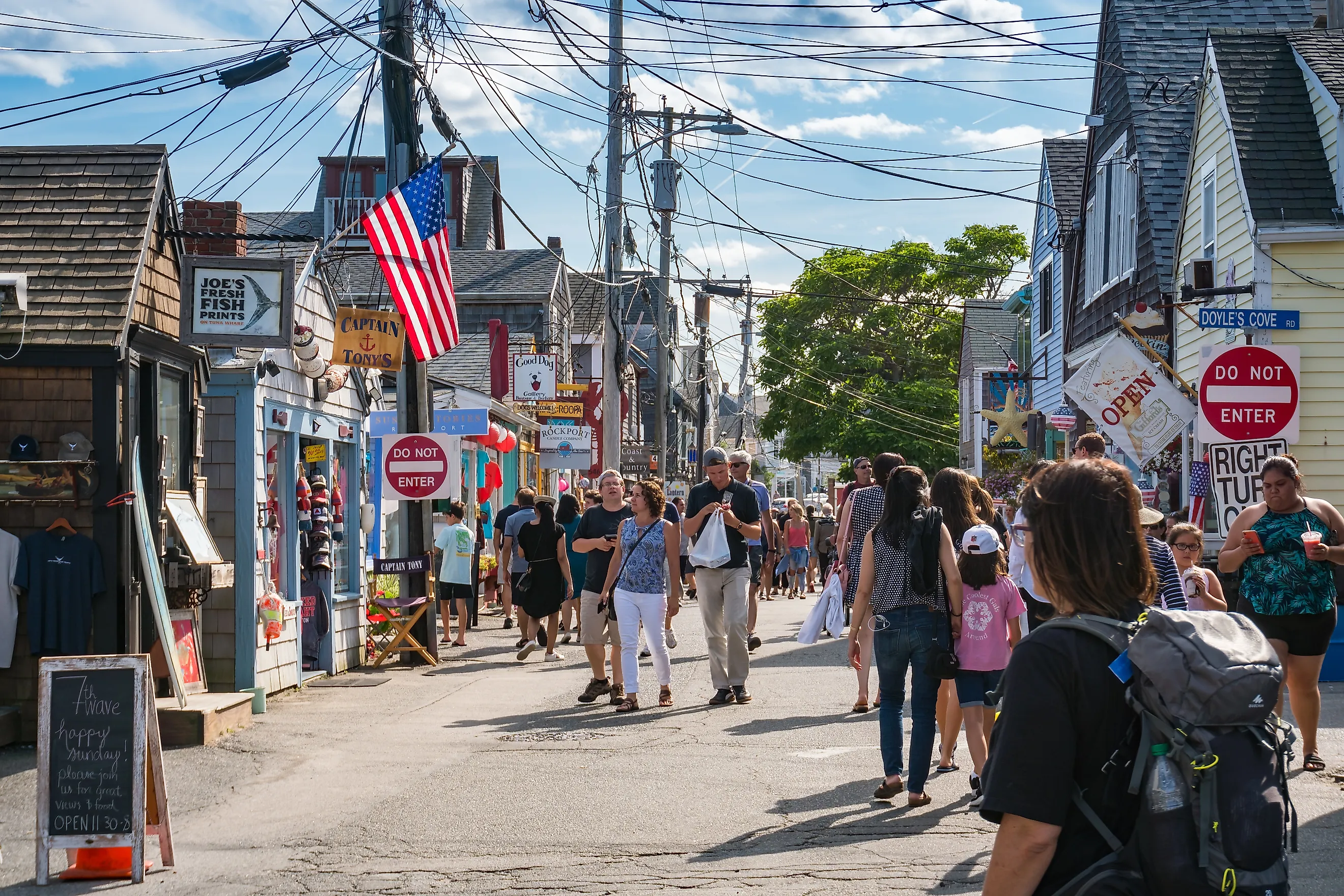
Less than an hour north of Boston, Rockport packs one of the Atlantic Coast’s most walkable downtowns into a 15-minute stroll from Cape Hodge Beach to Front Beach. Everything funnels toward Bearskin Neck, a narrow strip of local galleries, cafes, and historic fishing shacks that lead straight to the harbor.
Motif No. 1, the red fishing shack perched on the wharf, is one of the most photographed spots in town, but it's just the start of what draws visitors here. From the Neck, you can continue inland along Main Street past Dock Square, stopping at Roy Moore Lobster Company or Bean & Leaf Café for coffee. The tight streets, lined with 19th-century Italianate and Federal buildings, former quarry structures, and working studios, serenade you with Rockport’s maritime and artistic history at every step.
While the Atlantic coast is filled with downtowns worth exploring on foot, this small Massachusetts spot appeals to art lovers, lobster roll fanatics, and anyone who wants to sip a beer in an old-fashioned maritime environment.
Downtown Geography

Downtown Rockport’s core runs in a straight, readable line from Front Beach inland along Beach Street, which becomes Main Street, before narrowing and spilling onto Bearskin Neck, a slim peninsula that pushes directly into Rockport Harbor.
Front Beach sits right at the edge of downtown on Sandy Bay, with lifeguards in season and cafés, galleries, and shops immediately behind it. From there, Main Street leads past the Rockport Music-Shalin Liu Performance Center down to Dock Square, the town’s commercial crossroads, where restaurants and small retailers like Wicked Peacock cluster together. Continue east, and the street compresses into Bearskin Neck, once a working dock for fishing and granite shipping, now lined edge-to-edge with artist studios and seafood counters that are tucked within streets that feel as if they were torn from a movie set. At its tip sits Motif No. 1, the red fishing shack perched on the water, with open views back toward the town and across the bay.

Between these landmarks are Rockport’s wharves, T-Wharf, Bradley Wharf, and smaller landings. Everything sits within a compact footprint; the Rockport MBTA station is a short walk from Front Beach, and nearly every major attraction is reachable without a car.
A Brief History

Long before European settlement, the area was home to the Agawam people. In the late 17th century, English settlers began using what was then called Sandy Bay as a fishing outpost tied to nearby Gloucester. For more than a century, Rockport remained part of Gloucester, with docks built along the harbor in the 1700s to ship timber and fish.

In the early 1800s, granite quarrying reshaped the town, drawing immigrant laborers, many from Scandinavia, and funding the construction of wharves, narrow streets, and stone buildings clustered close to the water. Rockport formally separated from Gloucester in 1840. As granite declined in the early 20th century, artists moved in, drawn by the harbor, light, and tight-knit village layout. That same historic footprint now forms Rockport’s easily walkable downtown, centered on Main Street and Bearskin Neck.
Restaurants

Rockport’s downtown food scene spreads across Beach Street, Main Street, Dock Square, and Bearskin Neck, creating an easy row of restaurants and cafes to enjoy on foot. Especially if you begin at the far end of Front Beach, where The Cove at Rockport Hotel draws more than overnight guests with harbor views and an easy, sit-and-linger atmosphere. Walking southeast along Beach Street, the seasonal Fresco’s Seaside appears just steps from the water.
As Beach Street turns into Main Street, the density picks up. Near the intersection of Main and School, mornings belong to Brothers Brew Coffee Shop. Brackett’s Oceanview Restaurant is perched beside it, and not more than a few steps away is Feather & Wedge, which adds something unexpected. Its daily-changing menu draws from global flavors, like cod with harissa or pho with braised pork, and the granite-quarry photographs lining the walls ground the experience firmly in Rockport’s past.

At Dock Square, you'll find All Dough, which handles pastries and sweets, while The Fish Shack Bar & Restaurant delivers straightforward seafood in a lively setting. Turning south onto Mount Pleasant Street leads past The Lobster Roller food trucks and Rockport Kitchen, then down toward T-Wharf, where Delisi’s Red Skiff, Fleur Cuisine Harborside, and The Blacksmith Shop Café cluster near Harvey Park.

If you skip that turn and head east onto Bearskin Neck, you’ll find Rockport’s most compact eating stretch. Here, Bean & Leaf Café fuels gallery hopping, Roy Moore Lobster Company has been serving locally caught lobster since 1918, and spots like Not Your Ordinary Bistro, Little Sister Rockport, 7th Wave Restaurant, and My Place by the Sea carry you all the way to Cape Hedge Beach. As for dessert, or just mid-day fuel on a summer day, The Ice Cream Store is a must. It’s one of the prettiest, historic buildings in town and overlooks Back Harbor.
The Art Scene

If you orient yourself at Front Beach, where Beach Street becomes Main Street, and head north on foot, you'll see that Rockport's entire art scene is laid out for walkers. Within the first few blocks, you’ll pass Susan Lynn Gallery & Studio, followed by Découvert Fine Art and Gallery Montanaro, each spaced just steps apart along the sidewalk. Continue past Dock Square onto Bearskin Neck, and you'll find the strongest concentration of studios.

Before reaching Cape Hedge Beach, stop into the Lauri Kaihlanen Gallery, known for its bold and colorful wildlife paintings, and Morgan Dyer Gallery, focused on Cape Ann and Atlantic Coast landscapes. Just inland, a short walk from Main Street, the Rockport Art Association & Museum holds the art scene together with rotating exhibitions and historic works dating back over a century.
Atlantic Towns Like Rockport

Rockport, Massachusetts, shares a surprising number of qualities with other walkable Atlantic coast towns, including Beaufort, North Carolina, and Bar Harbor, Maine. Like Rockport, Beaufort’s downtown occupies a compact footprint. While slightly larger, Beaufort’s downtown is comprised of roughly 20 blocks along Bay Street, where historic 18th-century buildings now house similar businesses to those in Rockport. The waterfront location mirrors Rockport’s connection to the Atlantic, with the Henry C. Chambers Waterfront Park providing open harbor views and a pedestrian-friendly corridor for exploring the town. Beaufort’s colonial architecture bears a distinct antebellum flavor that Rockport doesn’t have, but both have been preserved in a way that echoes their maritime history, making visitors feel as though they’ve been transported back in time.

Bar Harbor, perched on Mount Desert Island, similarly emphasizes accessibility for travelers who’d rather explore on foot. It's small downtown, and the main street allows visitors to move effortlessly between hotels, restaurants, art galleries, and waterfront parks. Shore Path and Agamont Park provide scenic walking routes just minutes from Town Beach, which is akin to Rockport’s Front Beach and Bearskin Neck. Above all, both Rockport and Bar Harbor share that rugged, salt-sprayed New England architecture that encapsulates the wildness of the Atlantic Coast.
A Walkable Downtown
In Rockport, you can explore an entire Atlantic Coast downtown on foot in an afternoon. From Front Beach past Dock Square, along Main Street and Bearskin Neck, every gallery, shop, café, and restaurant is within a few minutes’ walk. You can stop for lobster rolls at Roy Moore Lobster Company, grab gelato at The Ice Cream Store with a Back Harbor view, and wander to Motif No. 1 without thinking about using a car. For anyone seeking small-scale New England charm and true Atlantic Coast walkability, Rockport is your next stop.