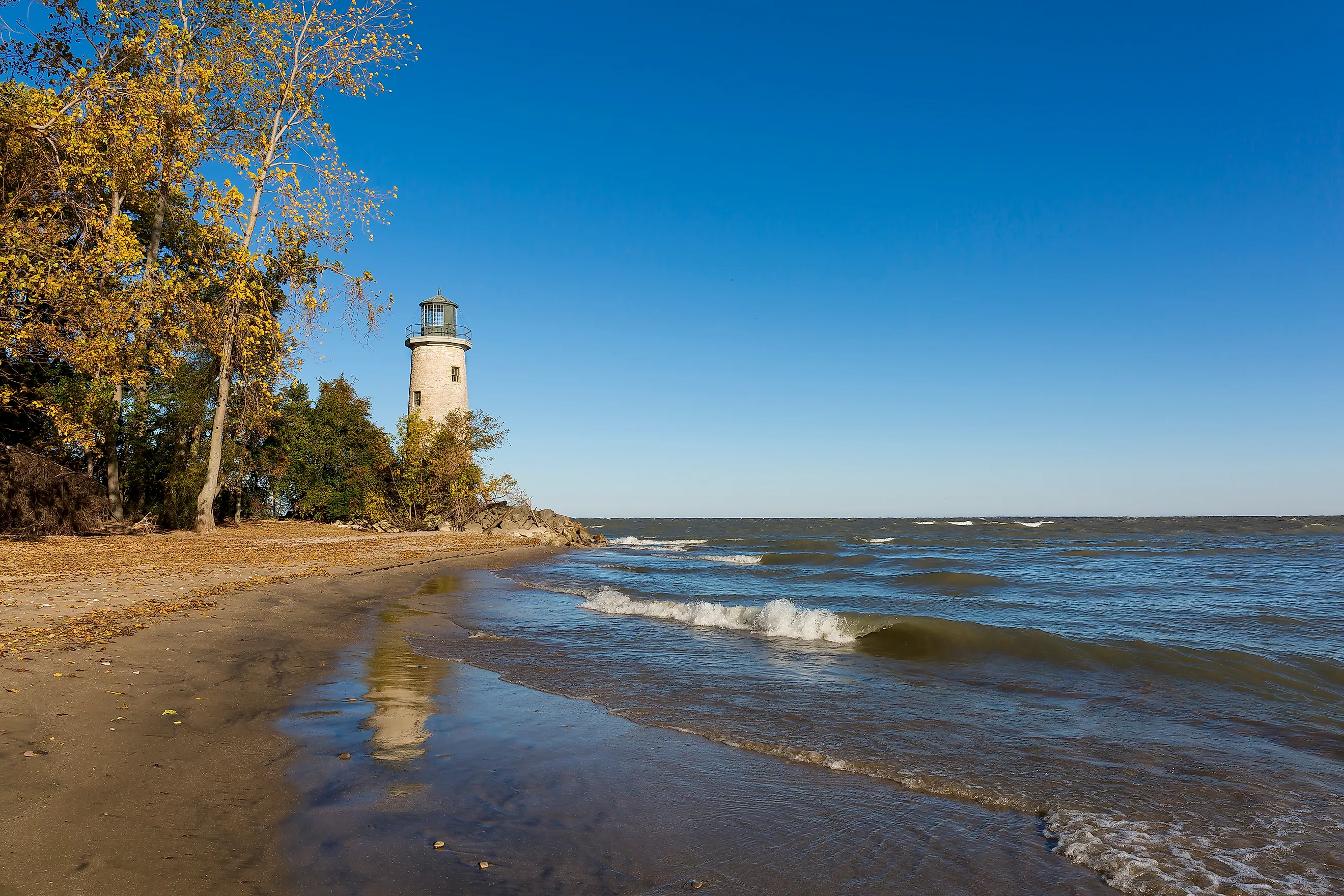
Pelee Island, Ontario
Pelee Island floats off Southwestern Ontario's mainland as one of Canada's best-kept secrets. The largest of the Lake Erie Islands has around 230 permanent residents and sits at a latitude roughly 800 kilometers further south than Vancouver. This is also Canada's southernmost inhabited place with milder winters and extended summers supporting beaches and vineyards. Three international ports of entry serve the island including two ferry docks and a landing strip set in canola fields. Around 70,000 cottagers and day-trippers visit each year alongside bird-watchers and pheasant hunters.
Having biked the entire perimeter myself on a sunny May long weekend, I was left wondering why more people don't ferry over from the Greater Toronto Area or from Ohio. The article ahead covers Pelee's history and environment along with the logistics and attractions worth a stop.
Pelee Island's History

Lake Erie and its chain of Western Basin islands share a common origin in the pressing, grinding, and eventual melting of late Pleistocene (or Ice Age) glaciers. An arrowhead dating back to 7,500 B.C. shows that Pelee Island's first visitors arrived soon after this climatic upheaval. A larger cache of artifacts, including stone adzes, demonstrates that several groups of Indigenous people used these grounds for hunting, fishing, and woodworking. Little is known about these earliest inhabitants, but burial mounds attributed to the Chippewa Nation emerge around 400 A.D. Their continued presence and cultural evolution persist through the late Woodland period (around 1,000 to 1,200 A.D.) in the form of pottery and pipe fragments, blades, and manipulated animal parts (for example, a perforated bear's tooth, perhaps a trophy).
It was the Chiefs and Sachems of the Chippewa, as well as the Odawa, who signed over the land rights to Pelee Island in 1788. They entered a 999-year contract with Thomas McKee, a man with whom they had good relations because of his mixed Native and European ancestry and his role as Deputy Indian Agent for the Canadian Colonial Government, in exchange for "three bushels of Indian corn or the value thereof." Neither Thomas nor his son Alexander, who inherited the lease, ever lived on the island. Instead, it was leased in 1804 to a few groups of temporary settlers, and then in 1823 sold to the man who would finally establish permanent settlements (though not for another nine years), William McCormick.

In 1834, William McCormick took up the position as the island's first lighthouse keeper. Having been built the previous year, Pelee Island Lighthouse marks the second-oldest beacon on the Canadian portion of Lake Erie. Shortly after his arrival, McCormick relocated his wife, their eleven children, and a few other relatives to Pelee Island. The 1838 Battle of Pelee Island sent them back to the mainland, but they returned the following year to resume development of their island home.
Fishing, lumber, and limestone quarrying were among Pelee Island's early industries, but in 1866 Vin Villa Vineyards (Canada's first commercial winery) was established on the northwest corner, demonstrating the potential of Pelee's fertile soils and extended growing season. However, before agriculture could truly kick into gear, the island's 4,000 to 5,000 acres of marshes (which actually divided Pelee into three separate islands) had to be drained, a Herculean task instigated by Dr. John Scudder (after whom the northside port town and marina is named).
Though this ecological transformation extirpated many amphibious species, it encouraged the arrival of migratory birds. It also spurred the tobacco industry, which for a time supplanted grapes as the key cash crop. Today, soya beans, wheat, canola, and once again grapes, constitute the island's agricultural backbone. However, as farming practices shifted away from manual labor over the years, Pelee Island's permanent population has dropped from its turn-of-the-20th-century peak of nearly 800 to a modest 230 (as of the 2021 census).

As for the name, Pelee Island, that was settled on after a long line of variations that began with the French in the 17th and 18th centuries. Pointe Au Pelée, meaning "bald point," referred to the lengthy sand spit off the island's south end (now Fish Point Provincial Nature Reserve), as well as a similar formation on the mainland at what is now Point Pelee National Park. Eventually, Pelee (pronounced "pee-lee") became associated with the entire island.
For more information on the formation, settlement, and development of Pelee Island, be sure to check out the Pelee Island Heritage Centre. Located in the 1911 Town Hall building directly across from the West Dock, this museum houses a large collection of ancient arrowheads, flora and fauna specimens, and interpretive displays illustrating how the landscape and culture have evolved.
Logistical Lowdown
Getting To Pelee Island

Situated in the heart of Lake Erie's Western Basin, Pelee Island can be clearly seen from Southwestern Ontario's mainland, and on a clear day, from atop the roller coasters of Ohio's Cedar Point amusement park (just over the shoulder of Kelleys Island). Getting to Canada's southernmost inhabited island is a simple enough undertaking, but it still requires some planning to ensure a fruitful trip.
Ferries
The Pelee Island Transportation Company offers seasonal ferries out of Leamington, Ontario (April through the end of July), Kingsville, Ontario (August through December), and Sandusky, Ohio (May through the end of September). The MV Pelee Islander has a capacity for 10 vehicles and 196 passengers, while the MV Pelee Islander II can accommodate 34 vehicles and 399 passengers. Recent one-way fares for the Canadian routes run around $7.50 for walk-ons and $16.50 for a regular-sized vehicle (plus individual fares for each occupant), with the Sandusky voyage at roughly $13.75/$30 (CAD); check the current schedule and pricing before booking. Larger vehicles, motorcycles, and bicycles can all be accommodated for modest additional fees. Regardless of your point of departure or means of travel, advance reservations are required.
Flights

The Pelee Island Transportation Company also offers regular winter flights into and out of the Pelee Island Airport, and Griffing Flying Service works year-round for those departing Port Clinton, Ohio, for Pelee and other Lake Erie Islands. Charter aircraft can be acquired through Windsor Flying Club (out of Windsor, ON), and private planes can make arrangements with Pelee's airport manager.
Personal Watercraft
Those with their own boat of less than 65 feet can dock at Scudder Marina on the north side of the island. Reservations are recommended during peak-season weekends but are not required. Like the West Dock and airport, this is an official port of entry into Canada, meaning U.S. visitors will need to bring a valid passport.
Getting Around Pelee Island

If you arrived with your own set of wheels, then you'll have immediate access to pretty much the entire island. The other option is to rent a bike, e-bike, or golf cart from any of the three agencies (two by the West Dock and one in Scudder). Assuming you have half-decent weather, I think this is a much better approach. Bikes, in particular, are environmentally friendly, match Pelee Island's daily pace of life, and induce that youthful summertime nostalgia. The perimeter road is a little over 30 kilometers (19 miles for you American visitors) and hits all of the island's key highlights, which we'll touch on shortly. There are also shorter circuits to choose from, depending on your priorities and timeframe. Of course, you can always just see where the wind takes you.

Walking can be a viable and pleasurable mode of transportation for Pelee Island, so long as you aren't staying in a remote B&B. If you are just coming over for the day, then you can putter around the town of Pelee Island and visit the Pelee Island Winery Pavilion about 10 minutes up the road. Committed walkers can make it to Fish Point Provincial Nature Reserve or the old Vin Villa estate, a distance of four and six kilometers, respectively, in opposite directions along the western shore.
One thing that Pelee Island doesn't have is taxis. So think about how you plan to arrive (knowing that long-term parking is available at the Leamington Ferry Port), and what sorts of leisure you hope to indulge in. If you want full flexibility, then it's probably worth bringing a car. If you're happy with an afternoon of exercise, then renting a bike is your best bet. And if you simply want to sample small-town island life, then your own two feet are all that you'll need.
Best Practices for Pelee

In addition to modes of transportation, another dynamic to be aware of before setting foot on Pelee Island is its old-fashioned approach. For instance, there is no ATM. Period. And while many businesses accept Visa, Mastercard, and Amex, it is still a good idea to have some cash on hand, just in case. American travelers don't necessarily need to change their currency, but they should be prepared to receive Canadian dollars back without conversion.
The hours of operation can also feel unusually limited by big-city standards. Even during the peak tourism season (May through September), some of the island's already-limited restaurants and shops open late, close down early, and are shuttered entirely early in the week. As for supplies, The Pelee Shop doubles as a bike rental agency and small convenience store, and up in Scudder, the Pelee Island Co-op acts as the token grocery store. Finally, accommodations span private cottage rentals, traditional inns, and Kiki's Westview Motel, but all are best reserved in advance.
Natural Attractions

Despite centuries of reshaping by human hands, Pelee Island occupies an ecological niche that is unique to the Great White North. Sitting at a latitude on par with Northern California and Northern Portugal, this Lake Erie enclave enjoys one of the mildest climates in Canada and the longest frost-free season in Ontario.
At over 10,000 acres, including 42 kilometers of shoreline, Pelee Island is, by far, the largest of the Lake Erie Islands (take that, Kelleys Island). 32% of this surface area has forest cover (Pelee Island is part of Carolinian Canada), and 20% is formally protected thanks to the combined purviews of Fish Point Provincial Nature Reserve, Lighthouse Point Provincial Nature Reserve, and 1,000 acres of Nature Conservancy of Canada sites, such as the Stone Road Alvar.

These refuges host many of Ontario's threatened and endangered species, including some found nowhere else in the country, and in some cases, the planet. For instance, the Lake Erie Water Snake (Nerodia sipedon insularum) exists only within its namesake basin, and the blue racer snake (Coluber constrictor foxii), having been extirpated from the Canadian mainland, can be found only on Pelee Island and in similar savannah habitats across the Midwestern United States. Ontario's sole native lizard, the five-lined skink (Plestiodon fasciatus), is found here, as are the endangered smallmouth salamander (Ambystoma texanum) and the endangered spotted turtle (Clemmys guttata).
Thanks to its position at the confluence of the Mississippi and Atlantic Flyways, Pelee Island is a globally designated Important Bird Area (IBA), with around 314 species documented to date during annual Spring and Fall migrations. But shorebirds, waterfowl, and birds of prey aren't the only ones to come feast on Lake Erie's fish; anglers come to Pelee Island in steady supply because of the region's renowned pickerel (walleye), perch, and smallmouth bass.
As with migratory birds, Pelee Island helps butterflies break up their continental journeys. Thanks to the educational services and the protective garden that have been fostered in a green desert over the last few years, the Pelee Island Butterfly Sanctuary is seeing an influx of common favorites and the return of species that gave up on these breeding grounds long ago.
A POV Tour of Pelee Island
Now that we have the lay of the land and a bit of historical perspective, let's hop on a bike and do a lap of Pelee Island. This sunny, 30-kilometer circuit starts steps from the West Dock and heads counter-clockwise (though feel free to reverse the direction).
Pick up your steed at The Pelee Shop or next door at Pelee Island Adventures.

Start things off right with a tasting at Pelee Island Winery Pavilion.

Take a walk through the woods and wetlands at Fish Point Provincial Nature Preserve.

Continue out to the southernmost point in Canada (save for little Middle Island).

Watch out for snakes sunning themselves on the road. This Lake Erie Water Snake had unfortunately been killed, but we saw another alive and well just past Fish Point.

Stretch the legs with another short stroll through Stone Road Alvar.

Stop to relax, and maybe even swim, at East Park Beach or Sunrise Beach.

Push on to Pelee's northernmost tip, where you'll find the marquee attraction of Lighthouse Point Provincial Nature Preserve.

Fuel up in Scudder.

And sightsee.

Check out the giant Stoneman Inukshuk.

Turn inland, just before the airport, and take a tour of the Pelee Island Butterfly Sanctuary.

Arrive back in time for the evening ferry, or to enjoy a gorgeous sunset.

Pelee's Eateries

Pelee Island does us overstimulated sapiens a favor by taking the onus of daily meal choice off our shoulders. A great place to grab breakfast is the Westview Tavern (good vibes and egg sandwiches). Then, for lunch & dinner, Westview Tavern once again has your back, as does The Dog & Goat Restaurant, and Stone House 1891. Expect live entertainment at the first two, and an old-fashioned interior at the latter.
As we saw on our bike tour, you can also stop in Scudder for takeaway breakfast, lunch, or dinner from The Island Food Shacks. They have all kinds of pizzas, burritos, and other cheat-day foods, but I personally dug the green smoothie.

Lastly, being a summer vacation spot, Pelee Island peddles its fair share of ice cream cones. If your sweet tooth is calling, head back to The Shacks, or look for the bright yellow facade of Pelee Island Coneheads.
Pelee's Festivities

A handful of signature events bring extra buzz to Pelee Island throughout the year. Starting with the love-child of the Pelee Island Bird Observatory and legendary Canadian author Margaret Atwood, the Annual Springsong Weekend takes place on Mother's Day weekend. The following weekend, The Main Station RV Park, Campground & Guesthouse, home of The Dog & Goat Restaurant, hosts Goat Fest. Then, at the end of May, hundreds of runners tackle the Pelee Island Winery Half Marathon (before indulging in post-race libations). Throughout the summer months, the Stone & Sky Music & Art Series hosts weekend concerts, and in September, this same art community puts on Flutter Fest. Finally, the Annual Fall Pheasant Hunt, having started in 1932 in response to the invasive population explosion, is still going strong.
Peace Out, Pelee

Pelee Island looks, feels, tastes, and even smells out of time and place. Its residents have shaped and been shaped by these gentle lands, forming the perfect counterbalance to Lake Erie's otherwise developed shorelines (Windsor, Detroit, Toledo, Cleveland, Niagara, and Toronto). So while it may take some highway hustle to board the ferry, upon disembarking, quiet streets utilized by bikes and golf carts instantly ease the tension. If you're looking for a unique and low-key getaway this summer, give Pelee Island a peruse.