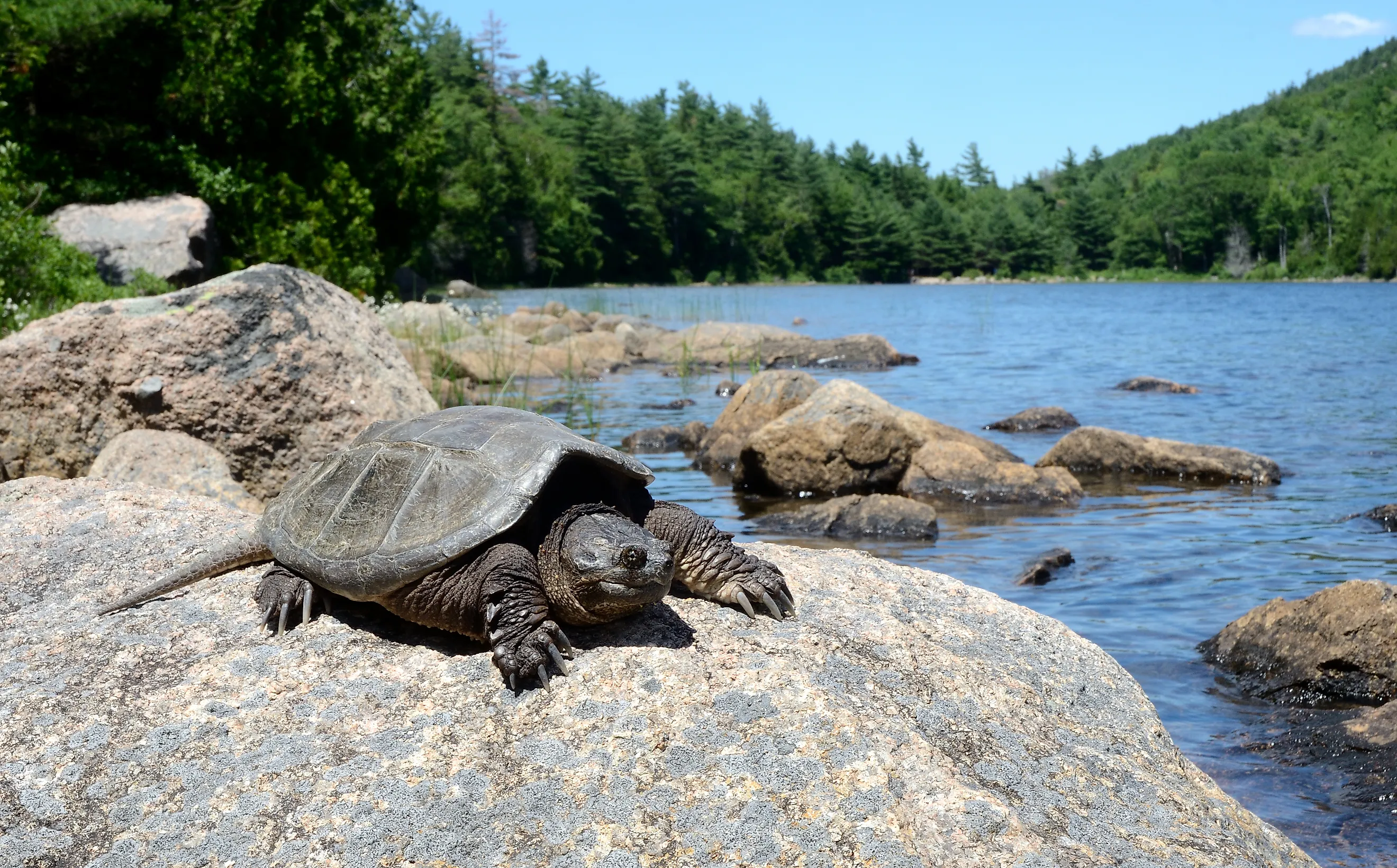
The US Lakes Where Snapping Turtles Live Past A Hundred Years
Drop a baited line into the right southern lake and you might haul up something that predates the dinosaurs. Alligator snapping turtles can top 200 pounds and live past a century. They spend those decades hunkered in the mud of warm, slow water. A few American lakes grow them bigger than anywhere else on Earth. Warm winters and deep cover and decades of easy food are the recipe. The five lakes below have all three in abundance. Each one has raised snappers to sizes that stop anglers cold.
Caddo Lake (Texas-Louisiana)

Caddo Lake sprawls across roughly 26,000 acres of bayous, sloughs, and low green islands, and it may be the most famous alligator-snapper habitat anywhere. You can read more about it on the WorldAtlas Caddo Lake page. Bald cypress crowd the water here, and their submerged roots make ideal ambush cover for a turtle waiting on lunch. The lake has a wild backstory to match. In the mid-1800s, the Texas town of Jefferson on Caddo's shore grew into the second-largest inland port in the country, its steamboats hauling cotton down to New Orleans. That ended in the 1870s when crews finished clearing the Great Raft, a massive logjam on the Red River, and the water level dropped too low for the boats. Oilmen came next. In 1911, the Gulf Refining Company completed the world's first over-water oil well right here, and drilling continued for decades. Today the U.S. Fish and Wildlife Service manages Caddo as a protected refuge, backed by treaties, state parks, and wildlife areas, so the snappers get the one thing a giant needs most: to be left alone for fifty years.
Lake Maurepas (Louisiana)

Northwest of New Orleans, Lake Maurepas holds exactly the kind of water a big snapper loves. It is a broad, low-salinity lake fed by slow bayous and swampy, tree-shaded river channels, all rich with fish, crayfish, and frogs. Bigger, saltier Lake Pontchartrain sits just to the east and stays too brackish for these turtles, which makes Maurepas the sweeter address. A snapper will settle into the soft bottom and lie perfectly still with its mouth open, wiggling a pink, worm-shaped lure on its tongue until a curious fish swims in. The population here took a hard hit in the last century from hunting and habitat loss. That story is turning around. The Louisiana-based conservation groups now breed young turtles and give them a head start before releasing them into the lake, and a few of the largest snappers on record have surfaced from these waters.
Lake Chicot (Arkansas)

Lake Chicot is the largest natural oxbow lake in North America and the biggest lake in Arkansas. It formed about six centuries ago when a bend of the Mississippi got pinched off from the main channel and left behind a 22-mile crescent of water through Chicot County. The lake carries deep local history, from cotton plantations to a Civil War skirmish along its banks. People once drank straight from it, too, until levee construction in the 1920s rerouted murkier runoff into the water and ended that. What remains is close to a snapper's ideal home. The soft, muddy bottom hides submerged logs and steady food, and Arkansas law protects both the alligator snappers and the habitat that lets them keep growing.
Lake Seminole (Florida-Georgia border)

Lake Seminole spreads across the spot where the Chattahoochee and Flint rivers meet to form the Apalachicola. Read more on the WorldAtlas Lake Seminole page. The reservoir is thick with sunken timber, weedy shallows, and shady canopy, and the sluggish current where the rivers join keeps it stocked with fish. That combination makes Seminole one of the most important alligator-snapper strongholds in the Southeast. Female turtles climb the sandy banks each summer to dig flood-safe nests in the loose soil. The danger here is the fishing line. Trotlines, which are baited hooks strung across the water, snag turtles that never meant to bite, and both adults and juveniles drown on them. Florida and Georgia have responded by making it illegal to catch, keep, harm, or sell these turtles, listing them as Threatened in Georgia and of Special Concern in Florida.
Lake Bemidji (Minnesota)

Head far north to Lake Bemidji and the species changes, because the alligator snapper never ranges this cold. The common snappers up here run smaller than their southern cousins, yet Minnesota grows genuine heavyweights. The state record snapper weighed 65 pounds with a shell over 19 inches long, and Bemidji's muddy bays and quiet streams give the biggest ones room to fatten for decades. Winter is where these turtles get truly strange. When ice seals the lake, a snapper burrows into the bottom mud and drops into a deep chill called brumation. Its body cools to just above freezing, its heart slows to around four beats a minute, and it stops eating entirely. Since it cannot surface to breathe, it pulls dissolved oxygen straight out of the water through the lining of its rear opening, a trick that lets it wait out months under the ice. When spring warms the shallows, the snapper hauls itself onto a log to bask, flushing out the winter's built-up acids and firing its metabolism back to life.
The Cleanup Crew Worth Protecting
Snapping turtles have paddled through American lakes, swamps, and rivers for tens of millions of years, outlasting nearly every creature they started with. They earn their keep as a cleanup crew, eating dead fish and rotting plants off the lake floor and keeping the water healthier for everything else that lives there. Life on the move is the risky part. Nesting females crossing roads get hit by cars, and their eggs get dug up by raccoons and poachers before they ever hatch. The good news is real. A wide net of state agencies and conservation groups across North America is helping these old survivors rebuild their numbers, so the biggest snappers in lakes like Chicot, Seminole, and Bemidji can keep doing the quiet work they have always done.