5 Snake-Filled Waters In Alabama
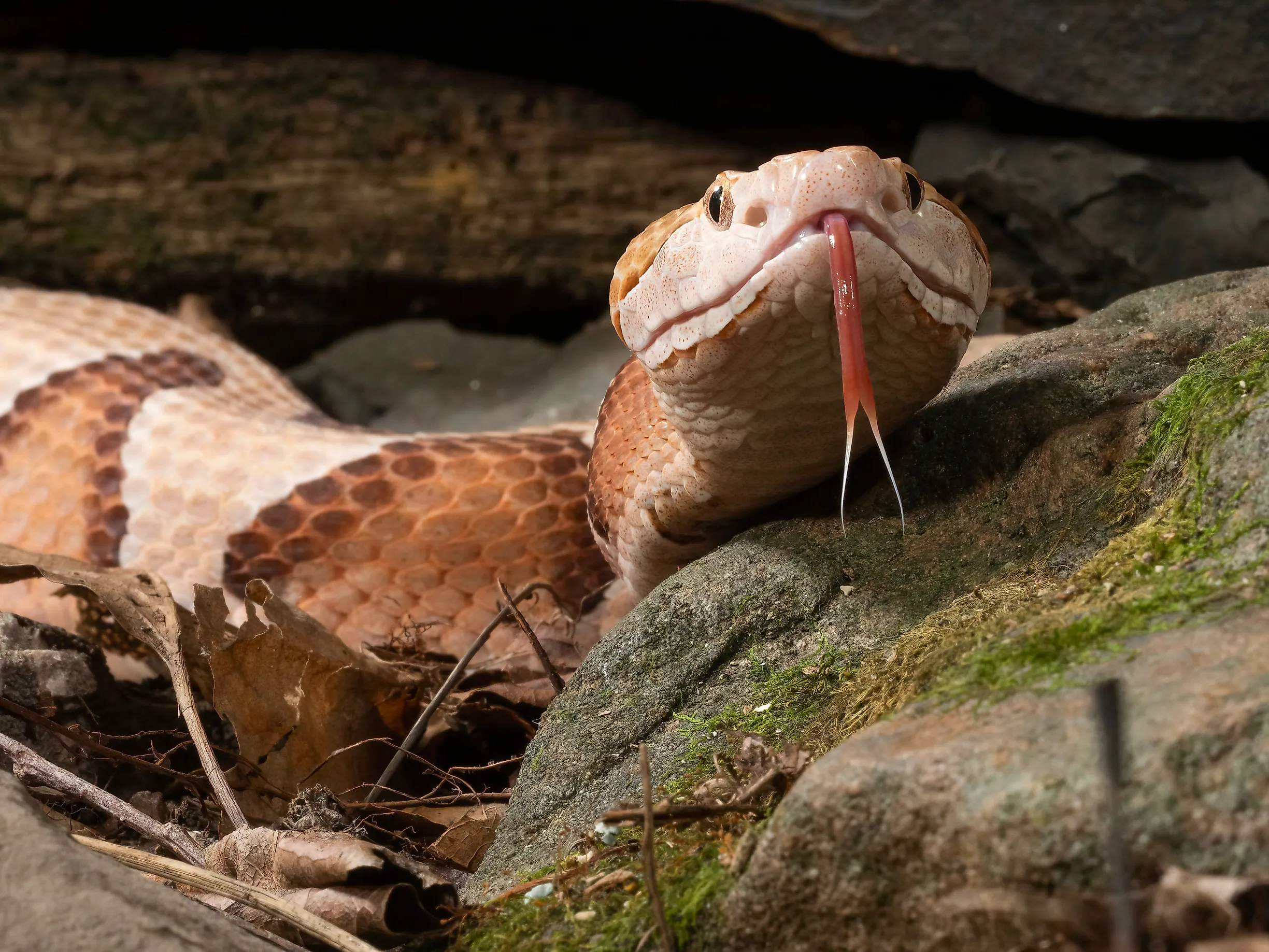
Alabama’s southern climate and diverse landscapes make it a paradise for snakes. The state is home to around 49 snake species, six of which are venomous. The most common dangerous snakes are the Copperhead and the Cottonmouth, both of which can be found near water.
Copperheads are easily identifiable by their reddish coloring at the top of their head and the distinctive hourglass pattern along their body. They are common statewide and can be found in forested bluffs, floodplains, swamps, and by streams. North America’s only venomous aquatic snake, Cottonmouths, takes its name from their habit of displaying their puffy, white gums when preparing to strike. They are dark-colored snakes with darker bands or spots along their body and prefer watery habitats such as marshes, ponds, and lakes. In those areas, they can frequently be found sunning themselves on branches, logs, or stones by the water’s edge.
If you’re spending a warm Alabama day by the water, pay close attention to your surroundings. While you should never let snakes keep you from enjoying the state’s beautiful lakes, reservoirs, and rivers, it’s important to remember that you’re not the only one enjoying the great outdoors. Read our guide to Alabama’s snake hotspots to learn more about the state’s serpents and be prepared if you encounter one in the wild.
Lake Guntersville

Alabama’s largest lake, Lake Guntersville, is 69,100 acres of pristine water habitats that provide homes for many different species of flora and fauna. The lake is known as a fishing hotspot, packed with largemouth bass, bream, crappie, and catfish. It’s also a prime destination for bird-watching and one of the best places in the state to see a bald eagle. Most visitors to Lake Guntersville come to Lake Guntersville State Park, which contains hiking trails, campsites, swimming beaches, boat rentals, and picnic pavilions.

If you’re spending the day enjoying the scenic shoreline of the lake, keep an eye out for its reptile residents. There are several venomous snake species in the area, including Cottonmouths and Copperheads, along with harmless water snakes, rat snakes, and garter snakes. You may find them lurking by the shoreline near logs and stumps where they can shelter undisturbed. Timber Rattlesnakes have also been spotted at Lake Guntersville State Park. These venomous pit vipers have thick bodies, triangular heads, and a telltale rattle at the end of their tail that they use to warn off predators when feeling threatened.
Little River

The Little River in northeast Alabama is one of the state’s most scenic spots, running along the crest of Lookout Mountain and through forests, canyons, bluffs, and cliffs. The Little River Canyon National Preserve protects the wilderness around the river while providing recreation amenities for those who want to enjoy the outdoors.

There are 18 snake species recorded at Little River Canyon, three of which are venomous. These include Coppermouths and Copperheads, as well as the striking Black Racer. These are long, slender, non-venomous snakes that are known for their quick movement and jet black appearance. Another eye-catching species that lives in this area is the Ringneck Snake, named for the bright yellow band that circles its neck.
Tennessee River

The Tennessee River flows south into Alabama from Tennessee before bending north across the border again. The 35,000-acre Wheeler National Wildlife Refuge covers a large area of the river near Decatur, preserving habitats for several important species, including many snakes. The refuge is open to the public and has a Visitor Center and Observation Building where you can learn more about the wildlife before heading out on the trails.

Snake species recorded in this area include the Yellow-Bellied Water Snake, the Rough Green Snake, and the Eastern Ribbon Snake. The latter is a very small snake that takes its name from its thin, ribbon-like appearance. It has very noticeable yellow stripes running down its sides and back and is frequently confused with the equally harmless Garter Snake. It’s also worth noting that snakes aren’t the only reptiles to be aware of in this area; the Wheeler National Wildlife Refuge is also home to the American Alligator.
Mobile-Tensaw River Delta

Known as ‘America’s Amazon’, the Mobile-Tensaw River Delta is a 200,000-acre network of marshes, swamps, and forests at the confluence of the Alabama and Tombigbee Rivers that’s one of the most ecologically rich areas in the world.

Around 40 snake species inhabit the delta, according to the Alabama Wildlife Federation. These include cottonmouths, ribbon snakes, and rainbow snakes. The latter are one of Alabama’s rarest and prettiest reptiles. They get their name from their multi-colored stripes and are semi-aquatic. Their preferred habitats are streams and rivers in the southeastern region of the state. Rainbow snakes are notoriously secretive; they shelter in woody debris along the water’s edge, in the pilings around boat ramps, and in the roots of Cypress trees.
Cahaba River

The Cahaba River is Alabama’s longest free-flowing river and is recognised by both the World Wildlife Fund and the Nature Conservancy as one of only eight Hotspots of Biodiversity in the world. The river is a popular destination for kayaking, boating, fishing, and birdwatching. It is protected by the 3,681-acre Cahaba River National Wildlife Refuge, which was established in 2002 to conserve its diverse habitats and the species they support.

Snake species in the Cahaba River area include Timber Rattlesnakes, Ringnecked Snakes, Brown Water Snakes, Queen Snakes, and Garter Snakes. Brown Water Snakes are often mistaken for Cottonmouths as they have similar coloring, but the water snake is non-venomous. They are typically found in slow-moving water in canals, lakes, and rivers. They will often sunbathe on logs and branches by the shore so they can slip into the water and make a quick getaway if disturbed.
Snake Smart in Alabama
Most of the annual snake bites in Alabama are from Copperheads, but these bites are very rarely fatal. The best way to prevent getting bitten is to give snakes plenty of space. If you see a serpent sunning itself by the lake, or lodged under a log along a hiking trail, don’t panic. Just back away slowly and give the reptile plenty of room to move away. Snakes want to avoid a confrontation. If you give them a way to escape, they’ll take it. Be particularly cautious from August to November, as this is when most bites occur, and in the late afternoons and evenings, as this is when snakes are most active. If you are bitten, stay calm and seek medical attention right away.
Most encounters with snakes in Alabama pass without incident. If you’re lucky enough to see one of these fascinating creatures in the wild, respect it and give it space so you can take home a treasured memory rather than a nasty bite. Alabama is an outdoor playground for visiting adventurers. Don’t let snakes stop you from exploring its ecologically rich waterways and lakeside parks.