5 Most Snake-Filled Bodies Of Water In Washington
Washington packs its biggest snake numbers around a handful of rivers and lakes in the dry country east of the Cascades. Along the Yakima River, the lower banks between Ellensburg and Benton City heat up with garter snakes and racers once spring arrives. Western rattlesnakes thrive in the Washington canyons of the Snake River near Asotin and Clarkston. Out near the Tri-Cities, the Columbia River cuts past basalt cliffs that gopher snakes and night snakes use for cover. Rattlesnake Lake near North Bend carries the scariest name and the fewest actual rattlers. Each spot rewards a little snake sense with very different odds of an encounter.
Yakima River

The Yakima River travels about 214 miles, the longest river contained entirely within Washington. Its lower corridor doubles as prime snake country. Side channels, rocky embankments, and shrub-steppe support strong numbers of the common garter snake (Thamnophis sirtalis) and the western yellow-bellied racer (Coluber constrictor mormon). The more secretive western rattlesnake works the same banks.
Cooler stretches near Cle Elum see few reptiles. The lower sections between Ellensburg and Benton City light up in the warm months. Sunny banks and thick streamside cover make this corridor especially active through late spring and summer. Watch your step around rocky outcrops and brushy launch points where a rattlesnake might be resting out of sight.
Snake River

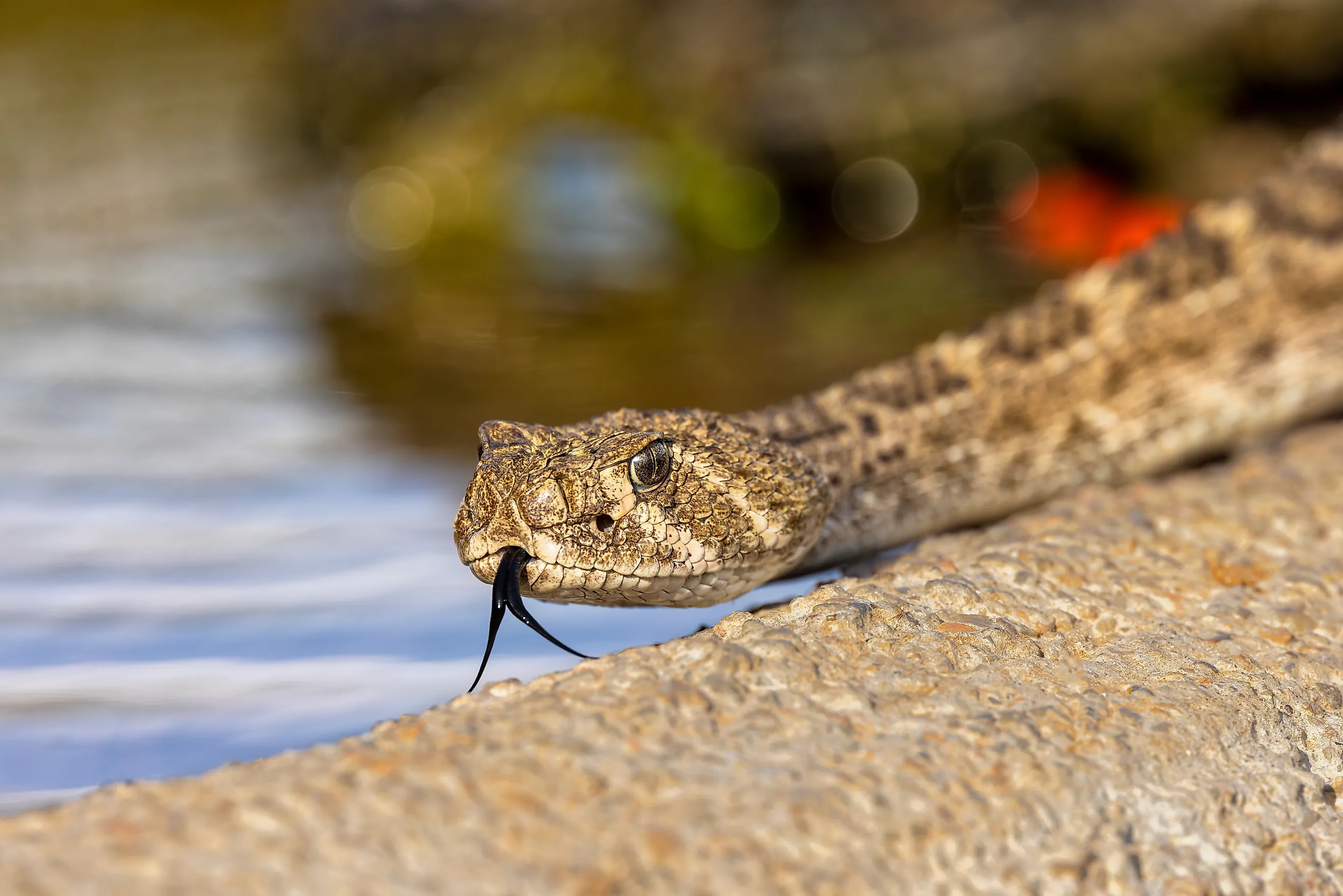
The Snake River earns its name in southeastern Washington. Dry canyon walls near Asotin and Clarkston shelter a heavy western rattlesnake population. Common garter snakes and racers patrol the banks too, especially where green growth meets sun-baked rock.
Summer cranks up the basking and hunting conditions, the same window when snakes across the Pacific Northwest turn most active. Rafters and anglers cross paths with snakes near driftwood piles, exposed slopes, and quiet coves. The encounters almost never turn dangerous. Stay alert stepping through brush or scrambling up the bank near the mouth of Hells Canyon and its tributaries.
Columbia River

The Columbia River turns reptile-friendly in its arid stretch near the Tri-Cities of Kennewick, Pasco, and Richland. Basalt cliffs and sagebrush flats deliver shelter and hunting ground in equal measure. The common garter snake, the quick racer, and the western rattlesnake all show up along these banks.
The gopher snake (Pituophis catenifer) and the night snake (Hypsiglena chlorophaea) work this shrub-steppe too. Islands and coves near Bateman Island and the Chamna Natural Preserve offer sun-exposed ground. Snakes hunt amphibians and small mammals across those open slopes through the heat of the day.
Lake Chelan

Lake Chelan stretches deep and narrow through dry hill country. The sunbaked lower slopes make easy living for gopher snakes and garter snakes. A few western rattlesnakes work the scattered boulders and brushy ravines as well.
Sightings climb away from the steep forested northern shore and toward the open undeveloped ground. The Chelan Butte area and parts of Lake Chelan State Park log regular encounters in late spring and summer. Move carefully near the rocky ledges, where a snake might rest or hunt in a shaded crevice midday.
Rattlesnake Lake

Rattlesnake Lake near North Bend carries a fierce name and almost no rattlesnakes. The cool wet ground west of the Cascades shuts out the heat-loving species. The common garter snake takes over the spot, harmless and plentiful along the marshy edges and forest trails.
The Rattlesnake Ledge Trail climbs through damp brush and rock where garters sun themselves and hunt. Higher elevation and cooler air push racers and rattlesnakes out of the picture. Dense ground cover offers the garters plenty of hiding spots, so a King County hiker spots these mild snakes far more often than any venomous cousin.
Snake Sense Goes A Long Way
Washington's snake water clusters in the hot dry east, where the reptiles earn their place by thinning rodents and feeding hawks and herons. Most species back off long before a person gets close. The rule is simple. Learn the local snakes. Watch where you plant a boot on warm rock. Leave a basking rattler the room to slide away. The Cascades draw a hard line through the state. The desert side owns the snake action. The wet west barely registers a hiss.