5 Most Snake-Filled Bodies Of Water In Texas
Texas contains a wide range of man-made reservoirs, forested wetlands, rivers, and a few natural lakes where snakes are numerous. Large systems such as Sam Rayburn Reservoir and Toledo Bend Reservoir have features like extensive flooded timber and foliage-blanketed shorelines that concentrate both predator and prey. In the greener, wetter east, Caddo Lake especially stands out for its lively cypress swamps and meandering backwaters, while southern, more desert-like reservoirs like Falcon International Reservoir reflect a warmer, semi-arid edge ecosystem.
Across these waters, species such as watersnakes, ribbon snakes, and cottonmouths are commonly encountered, particularly during the hotter months of the year, when reptile activity increases in general. Read on to learn more about these cold-blooded critters before you visit.
Caddo Lake

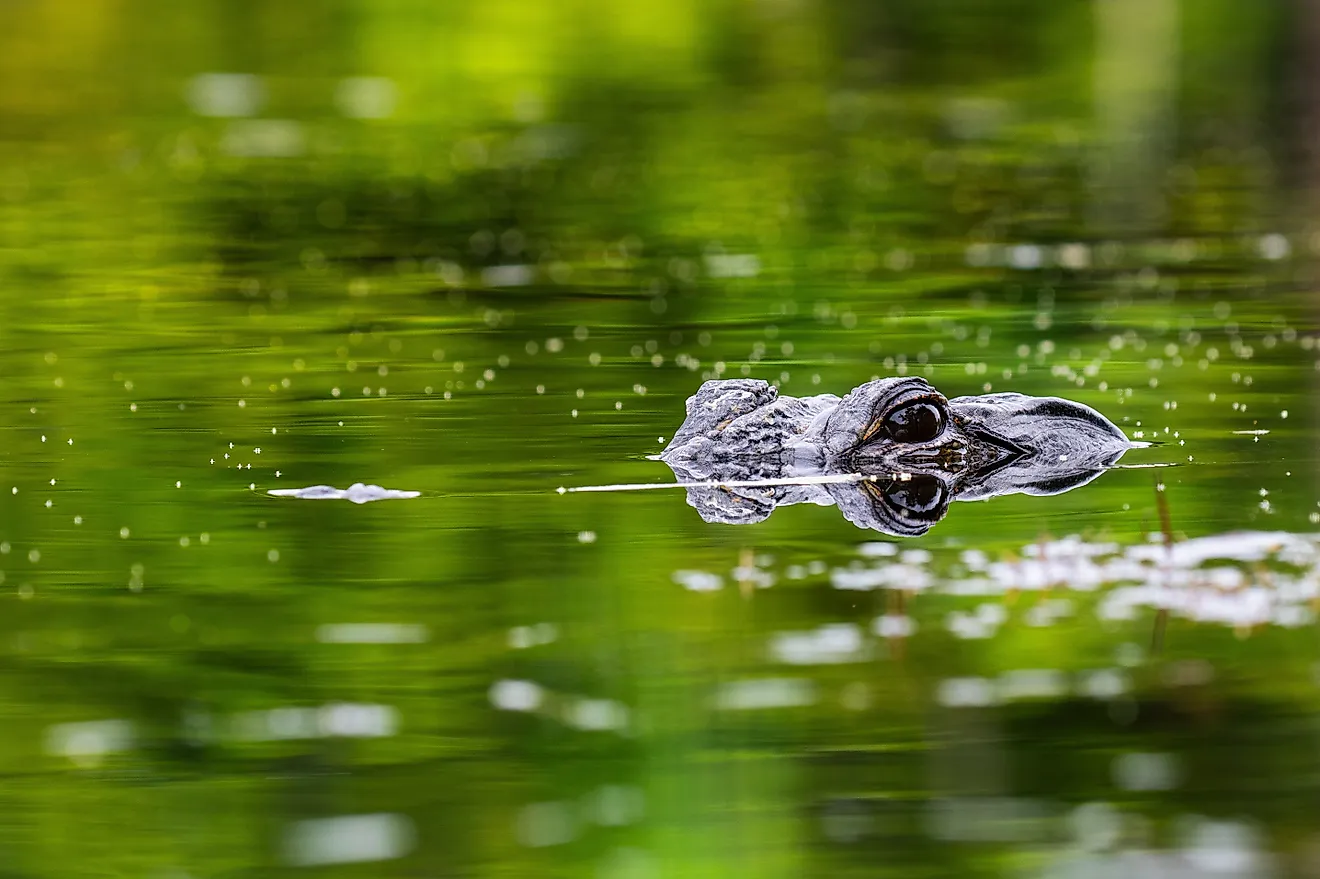
Sitting on the Texas and Louisiana border, Caddo Lake is widely regarded as one of the best places in Texas to encounter aquatic and semi-aquatic snakes, as well as a number of other reptiles, namely American alligators. Visitors paddling through quieter sections of the lake often report seeing multiple watersnakes, gators, and turtles during a single outing.
Its maze of bayous and cypress tree-lined channels supports several species, including western ribbon snakes, plain-bellied watersnakes, cottonmouths, diamond-backed watersnakes, and broad-banded watersnakes. Dense vegetation provides abundant cover, while its rich fish populations supply a steady food source for them.
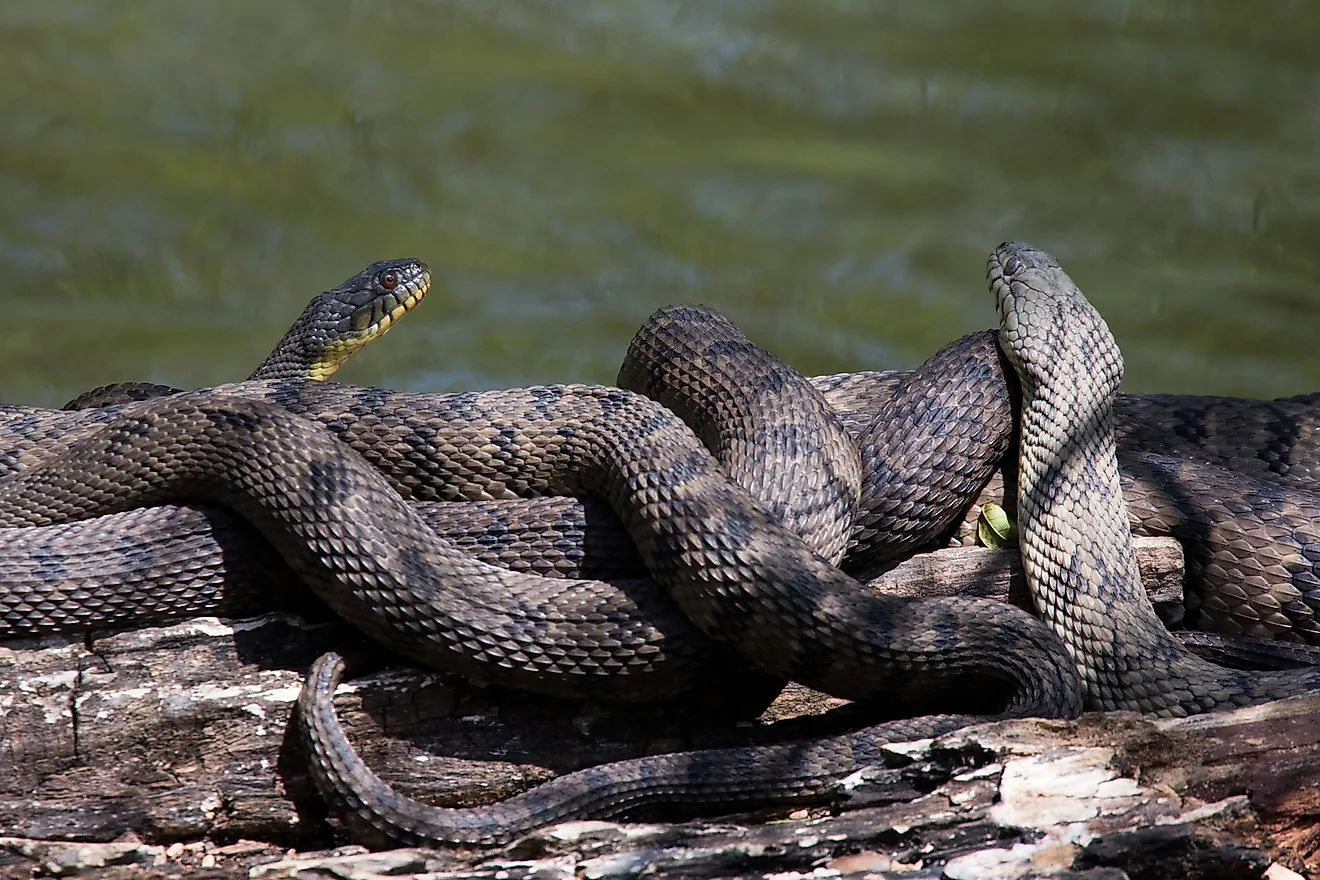
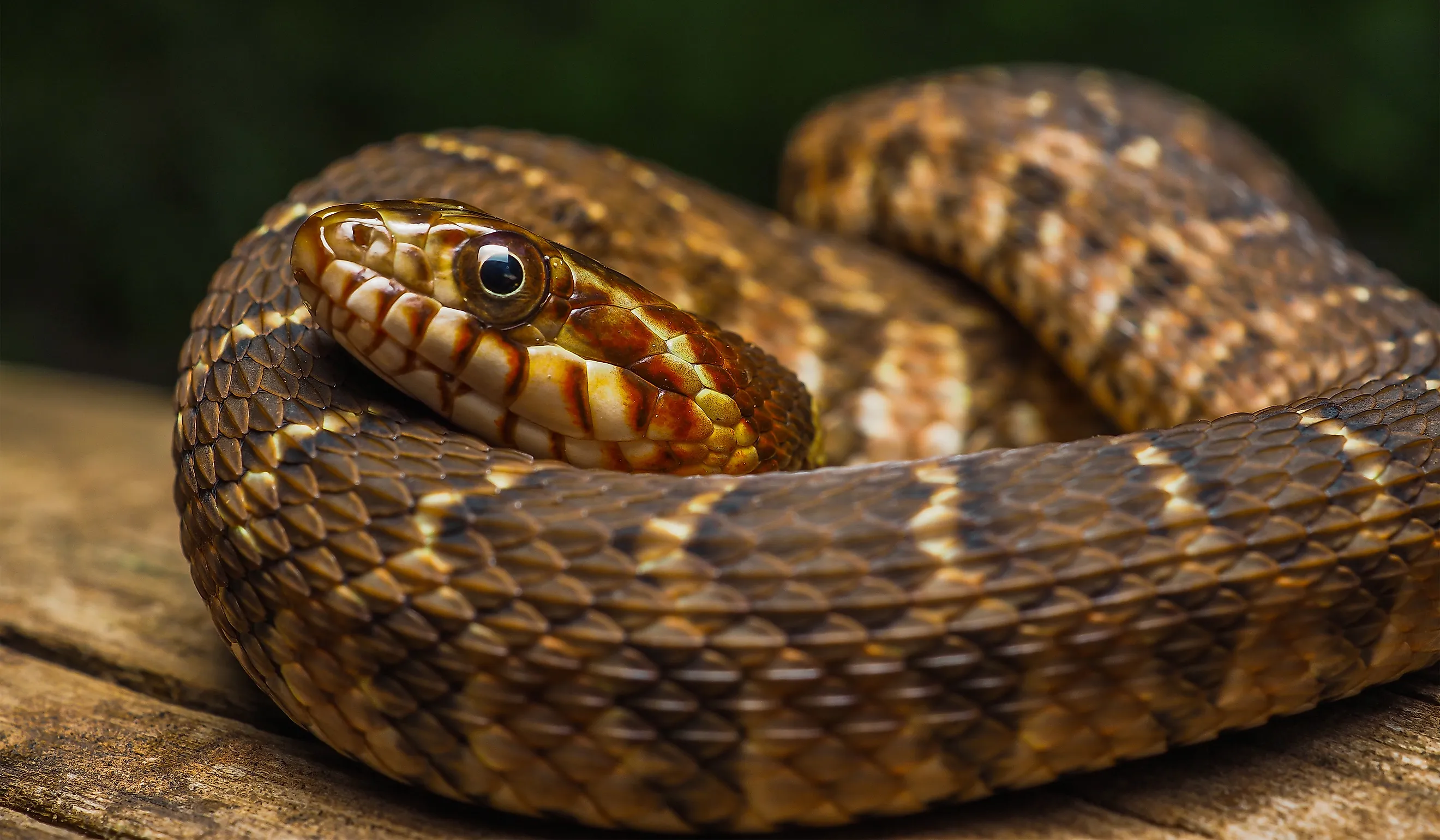
The diamond-backed watersnake deserves special mention in this case. This heavy-bodied species typically reaches 3 to 5 feet in length and is marked by a dark chain-like pattern across a brown or olive background. They are excellent swimmers and are frequently seen basking on logs or moving through shallow water in and around the lake in search of fish and amphibians to snack on.
Lake Corpus Christi

Lake Corpus Christi, deep in South Texas, houses a remarkable diversity of snakes thanks to its extensive shoreline, marshy coves, and warm Gulf Coast climate. Moreover, heavy seasonal fluctuations in water levels often expose mudflats and vegetated edges that attract amphibians, fish, and other prey, drawing snakes in increasing numbers to the shoreline.
It lies within an interesting region where subtropical and coastal ecosystems overlap, contributing to its wildlife diversity all around. Anglers, birdwatchers, and paddlers frequently encounter snakes and other water-dwelling critters around its coves, flooded plantlife, and creek mouths, especially during the warmer months when reptile activity peaks.
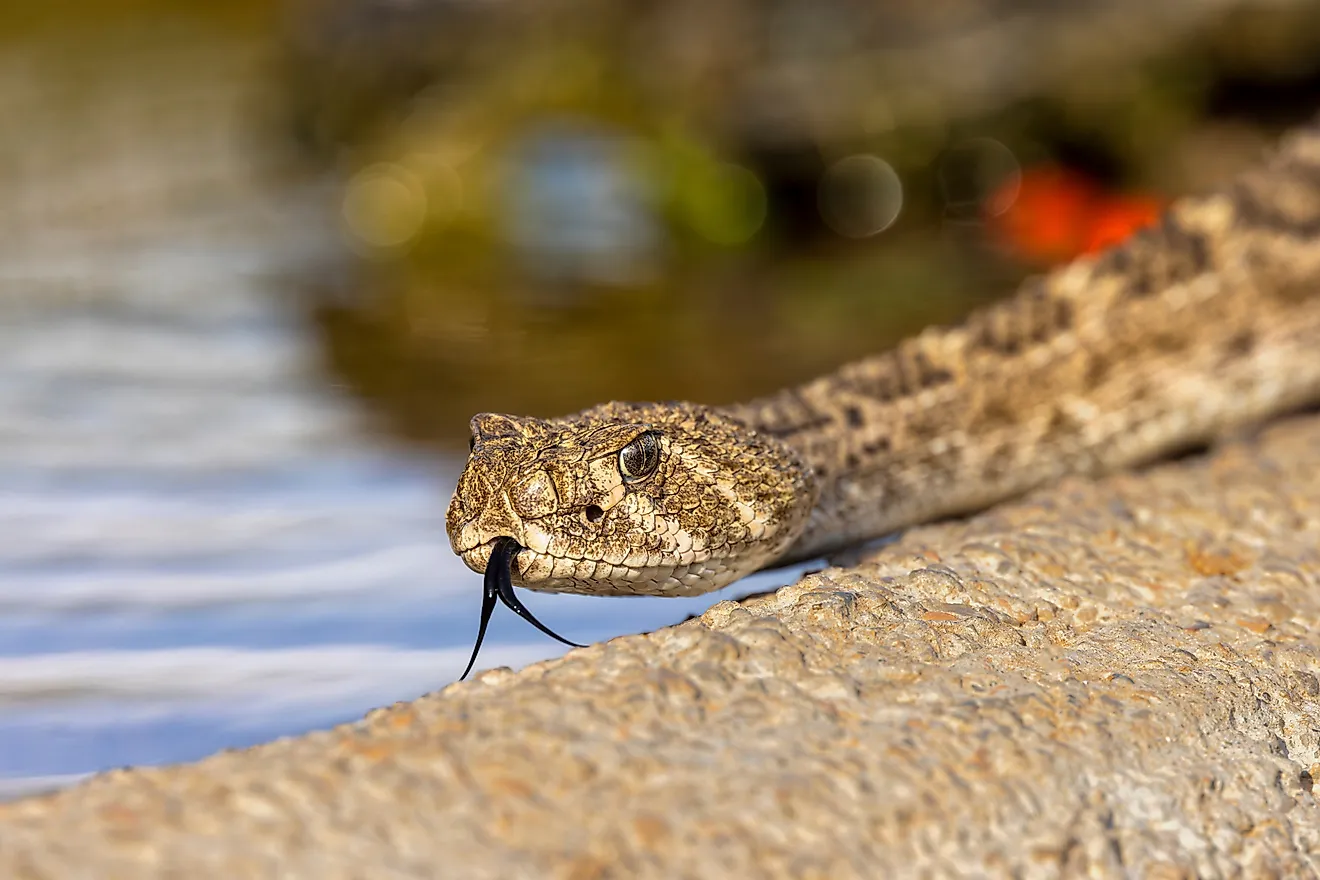
This reservoir is home to diamond-backed watersnakes, copperheads, western ribbon snakes, and the occasional cottonmouth, with the latter being particularly associated with the lake's quieter backwaters. The cottonmouth's stout-bodied pit viper typically has a thick neck, broad triangular head, and dark olive, brown, or nearly black coloration, while juveniles often display more distinct bands and a yellow-tipped tail.
Note that although cottonmouth bites are venomous and could potentially be deadly, they generally avoid confrontation and spend much of their time hunting along the water's edge or hidden inland.
Sam Rayburn Reservoir

Covering more than 114,000 acres in East Texas, Sam Rayburn Reservoir provides a vast habitat for water-loving snakes. Thousands of acres of waterlogged timber, creek channels, coves, and foliage-heavy shorelines create idyllic conditions for species such as Texas rat snakes, broad-banded watersnakes, diamond-backed watersnakes, cottonmouths, and plain-bellied watersnakes.
The broad-banded watersnake is perhaps the most common sight around the reservoir. This medium-sized species is recognized by its wide reddish-brown or chestnut bands separated by lighter spaces. Its pattern remains relatively bold into adulthood, unlike many watersnakes whose markings fade with age. Furthermore, the species spends much of its time in close proximity to water, wherever it is found, feeding on fish, frogs, and other aquatic food sources.
Sam Rayburn Reservoir is also known for its extensive standing timber nearby, which offers refuge for a number of unique flora and fauna. But during spring and summer, snakes are a common sight, usually observed resting on partially fallen, submerged logs or moving between shoreline vegetation and open water.
Toledo Bend Reservoir

The Texas side of Toledo Bend Reservoir and its surrounding lands contain hundreds of miles of rugged shoreline, forests, creek mouths, and secluded coves that all provide excellent living space for these slithery creatures. The sheer size of the reservoir creates an array of environments where many kinds of fish, reptiles, and amphibians alike can comfortably call home.
Unlike many Texas reservoirs that are surrounded by more open landscapes, Toledo Bend also borders extensive pine forests and wetlands. These conditions make way for a greater diversity of snakes than many other large lakes in this state.
Besides the average cottonmouths, Texas rat snakes, and others that inhabit much of the rest of Texas, another frequent inhabitant is the western mudsnake, a glossy black species marked with red or pink coloration along the sides and underside. Reaching lengths of more than 5 feet, this nonvenomous snake spends much of its life in swamps and marshes, where, of course, plenty of mud exists. They are particularly associated with habitats that similarly support amphiumas and other small aquatic prey.
Falcon International Reservoir

Stretching along the Texas-Mexico border, Falcon International Reservoir boasts a hardy snake community shaped by the hot, semi-arid landscapes of the Lower Rio Grande region. Despite being surrounded by seemingly impassible thornscrub and dry uplands, the reservoir's shoreline, inlets, and sparse adjacent wetlands provide surprisingly livable zones for numerous semi-aquatic and water-associated species. With that, western ribbon snakes and plain-bellied watersnakes are regularly documented in the area.
Another species that adds to the reservoir's diversity is the Texas indigo snake. This large, nonvenomous snake has smooth, glossy scales that appear bluish-black in sunlight and can exceed a length of 6 feet. Although it is not strictly aquatic, it is frequently found near the region's sparse water sources where prey is concentrated, feeding on a range of animals that include rodents, birds, lizards, and even other snakes at times.
The permanent waters provided by the reservoir are remarkably lively across the board, helping sustain a surprisingly rich snake population in an otherwise desert-covered region. In fact, Falcon International Reservoir sits within an important wildlife corridor used by several animals found nowhere else in the United States, notably a variety of bird and butterfly species.
Watch for Snakes in these Texan Waterbodies
Across the Lone Star State, snakes can be found near water ranging from the forested wetlands and slow bayous out east to the deserts of the west. These environments tend to combine ample food sources and cover, making surprise encounters especially common for outdoor adventurers like anglers, paddlers, campers, and hikers. While species composition does vary by region, the above-mentioned destinations call for extra caution, as they more often than not feature venomous snakes.