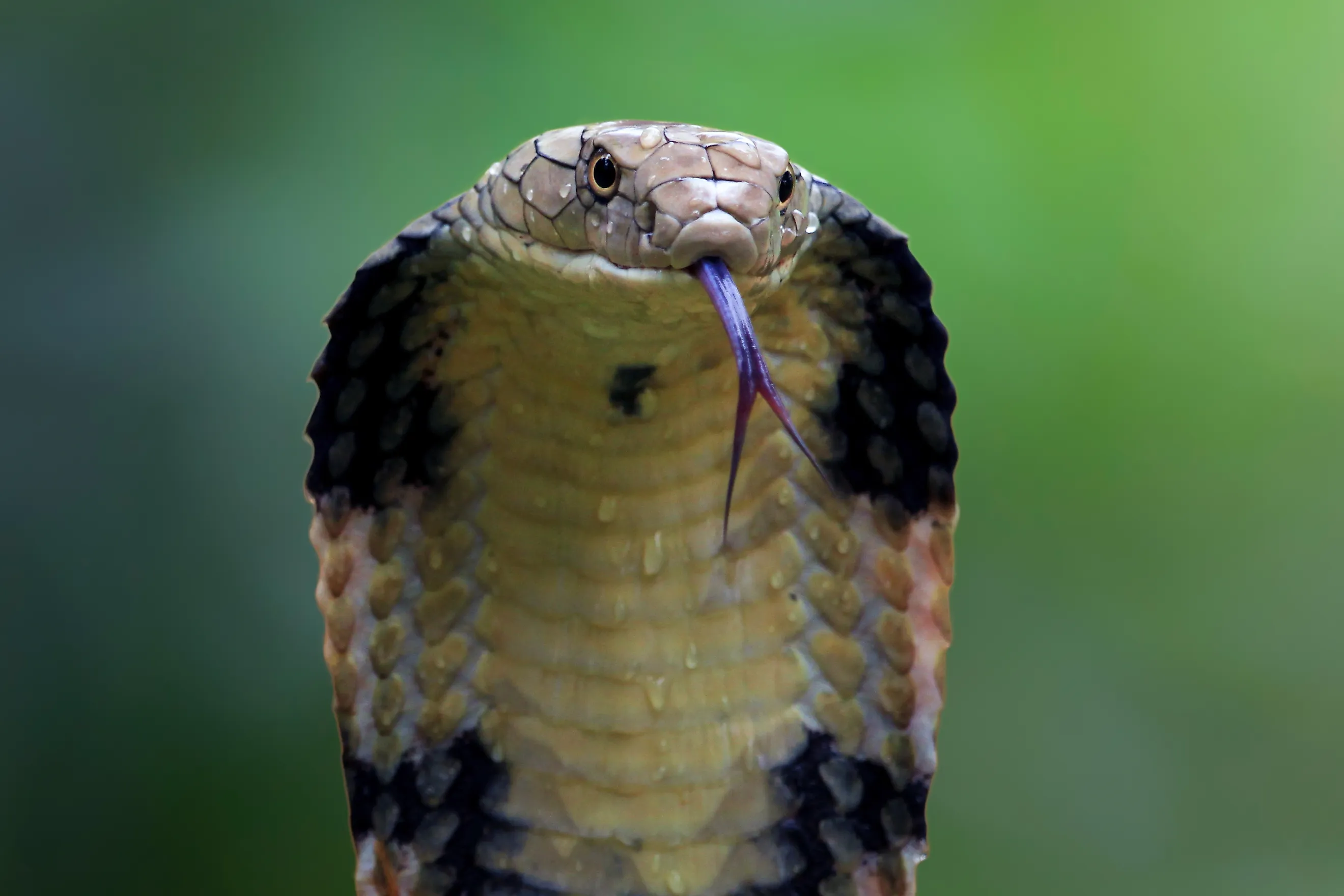
Cobras
Cobras are among the most recognizable snake species in the world, with their broad hoods, highly toxic bites, and abundant representation in popular media. Found across much of Africa and southern Asia, cobras are fascinating in a number of ways, from the wide variety of species they represent to their diverse range of habitats, their specialized behaviors and physical traits, and their unique effects on the environment around them.
Taxonomic Classification

Cobras are venomous snakes belonging to the family Elapidae, which includes some of the most medically important and highly venomous snakes worldwide. They are part of the broader order Squamata, which groups all snakes and lizards, and falls under the class Reptilia. The genus Naja encompasses what are often called “true” cobras, while related genera like Ophiophagus include notable species such as the king cobra (Ophiophagus hannah), the world’s longest venomous snake. Within Naja, species are usually differentiated by physical details like scale patterns, size, and hood markings, while geographic distribution also plays a major role in classification.
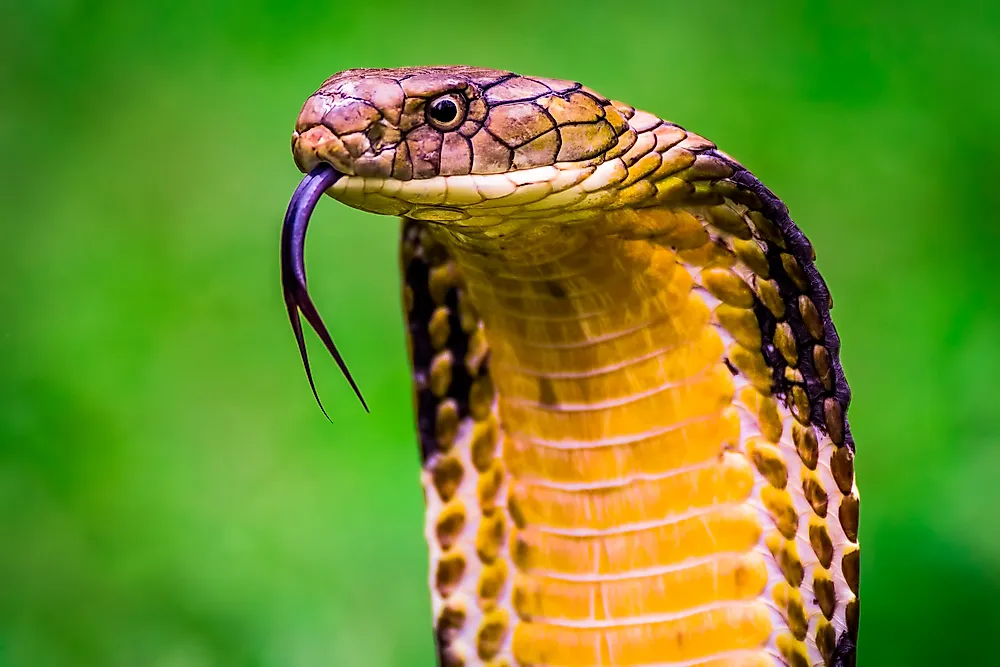
Some cobras, like the appropriately named spitting cobras, have evolved specialized fangs that allow them to project venom as a defensive mechanism. There is also the more recently recognized Luzon king cobra, which has only been found on the island of Luzon in the Philippines. Taxonomically, many seemingly similar cobras are further divided into regional populations, such as the Indian cobra (Naja naja), the Egyptian cobra (Naja haje), and the forest cobra (Naja melanoleuca), each with distinctive behaviors and ecological niches. Practically, this classification framework helps herpetologists track evolutionary relationships, venom composition, and conservation status across their diverse lineages.
Physical Description

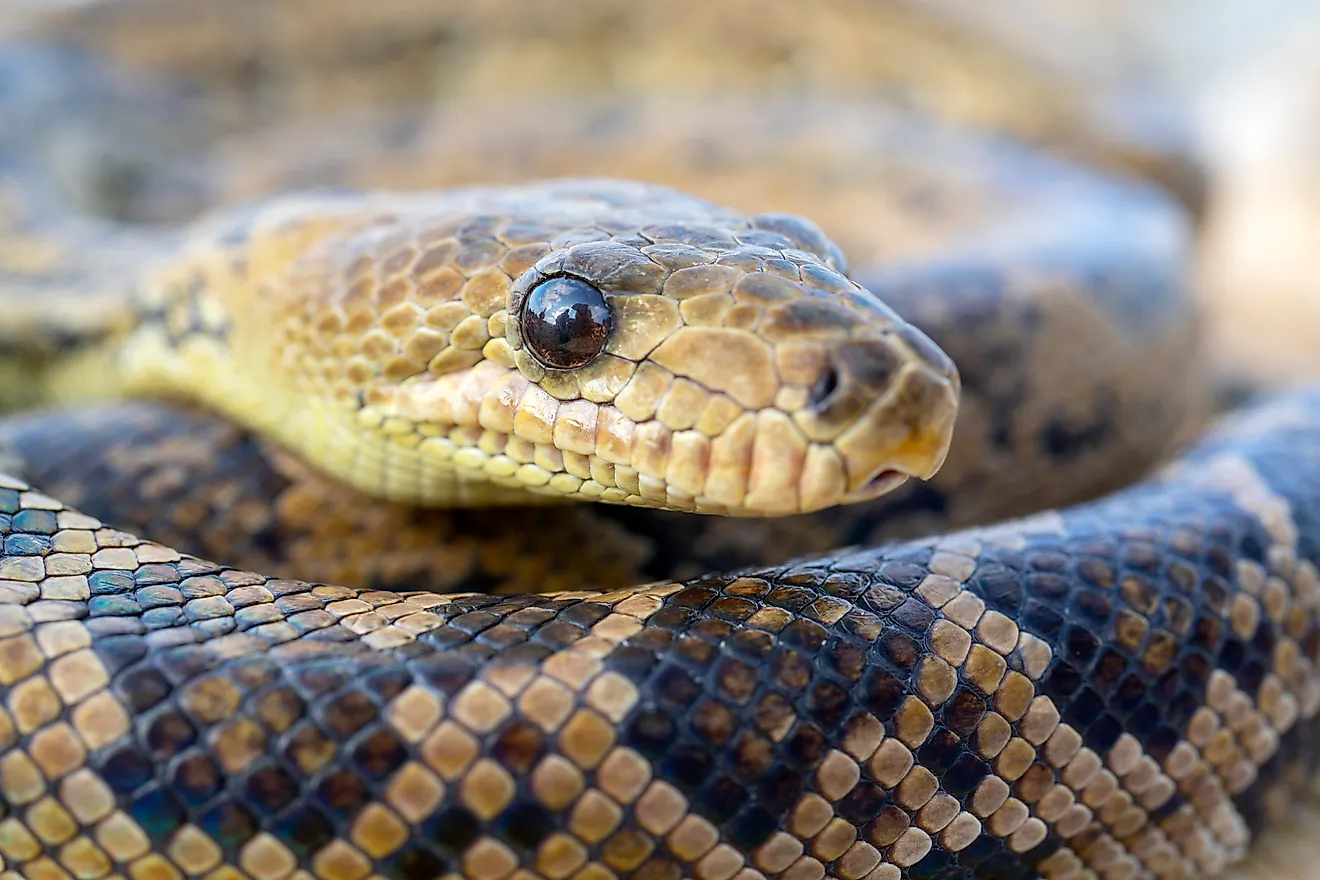
Cobras are medium to large-sized snakes, best recognized by their ability to expand the ribs of their neck into a flattened hood when threatened. Most cobra species range quite drastically from 1 to 4 meters in length, and the king cobra can sometimes exceed 5 meters. Their bodies are typically slender, with smooth scales and a head that appears relatively narrow at rest but broadens dramatically when the hood is displayed. Coloration varies widely by species and region, from solid browns and blacks to lighter tones with banding or distinctive hood markings, such as the spectacle pattern seen on Indian cobras. Generally, their eyes are round, and they possess short, fixed front fangs that deliver venom efficiently, supported by well-developed venom glands located behind the eyes.
Range and Habitat
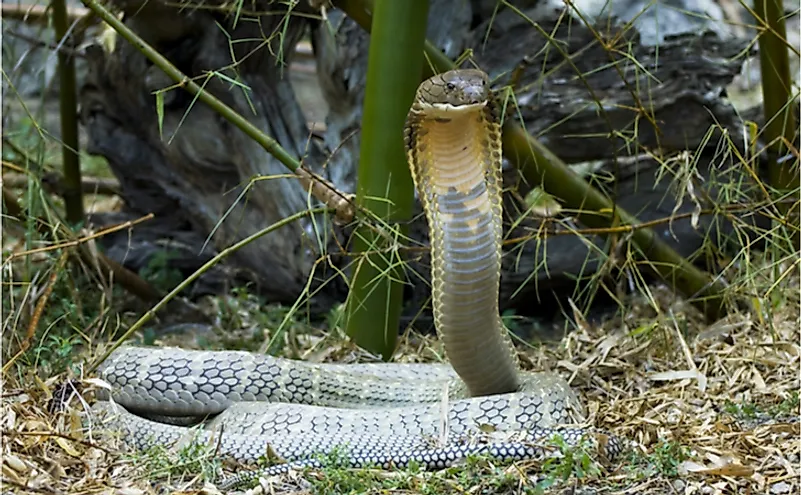
Cobras are distributed across much of Africa and southern Asia, occupying a wide range of climates and landscapes, from deserts to rain-soaked jungles. Species in the genus Naja are commonly found in savannas, grasslands, woodlands, and semi-arid regions, while some even adapt well to agricultural land and villages. African species such as the Egyptian cobra and forest cobra often occur in a range of habitats, including open plains, savannas, and tropical forests across much of the continent. The king cobra tends to stick to an area ranging from India through Southeast Asia, favoring dense forests, as well as bamboo thickets and areas with ample water.

Many cobras choose environments that provide cover, including burrows, termite mounds, rock crevices, and thick vegetation. Access to prey and moderate temperatures are other key factors shaping their distribution, and some species tolerate human-altered environments, which increases the likelihood of encounters, especially in rural regions where shelter and food sources overlap.
Diet

As carnivorous predators, cobras' diets vary by species, size, and habitat. Most feed on small mammals, such as rodents, as well as birds, lizards, and frogs, although some species exhibit more specialized feeding behavior. The king cobra primarily hunts other snakes, including venomous species, using its size and potent venom to overpower them. On the other hand, African forest cobras and Indian cobras take a more generalized and opportunistic approach, consuming whatever prey is locally abundant. Cobras rely on their potent venom to immobilize prey, then swallow it whole; juveniles naturally tend to target smaller, easier prey, while adults can handle larger animals. Their role as mid- to high-level predators helps regulate pest populations, particularly rodents in rural areas.
Behaviour

Adult cobras are primarily solitary and exhibit a mix of defensive and predatory behaviors depending on the situation. When threatened, most species raise the front of their bodies, spread their hoods, and produce a sustained, audible hiss as a warning display. Spitting cobras can even project venom toward the eyes of a perceived threat with incredible accuracy. When cobras are hungry, they rely on ambush and short bursts of pursuit, using venom to subdue prey as quickly as possible. They generally avoid confrontation with people, but, as with most snakes worldwide, they will defend themselves if cornered.

Activity patterns vary among species in several other ways. For one, many are diurnal, meaning they sleep at night and are active during the day, like humans, though some become nocturnal in hotter climates. Some are also more protective of their eggs, while others lay eggs and leave them at the most convenient location, otherwise performing minimal parental duties. Notably, the king cobra is one of the few snakes known to build and guard a nest.
Reproduction

Cobras reproduce by laying eggs, with most species breeding seasonally in response to conditions such as temperature and rainfall. After mating, females deposit clutches that typically range from about 7 to 50 eggs, though numbers vary by species and size. Eggs are usually laid in sheltered locations such as burrows, leaf litter, or termite mounds, where stable warmth supports their development. In some species, the female may remain nearby or guard the eggs, while the surrounding environment provides insulation. Incubation typically lasts around 45 to 80 days, depending on environmental conditions. Hatchlings emerge fully venomous and independent, capable of hunting small prey without parental care.
Threats

Like many reptiles around the world, cobras face a breadth of threats driven largely by human activity. Habitat loss from agriculture, logging, and urban expansion reduces available shelter and prey, particularly in places with limited legal protections. Other environmental pressures, such as drought and shifting climate patterns, can also affect food availability and breeding success. Many cobras are killed on sight due to fear of their venom, or captured illegally for their skins and for use in traditional medicine, while road mortality is another factor, as expanding infrastructure increasingly overlaps with their habitats. Natural predators include large birds of prey, mongooses, and other snakes, including larger species and occasionally other cobras. Despite these pressures, several species remain widespread, although localized declines have been documented in others. Conservation status varies considerably by species and region, particularly in areas with limited conservation resources.
Importance to the World

Cobras play a measurable role in maintaining ecological balance. As predators, they regulate populations of rodents and other small animals, which can reduce crop damage and limit the spread of diseases carried by pests to humans and livestock alike. This function is particularly relevant in agricultural regions where pest outbreaks can have serious economic impacts, highlighting both environmental and financial reasons for their conservation.
Cobras also contribute to scientific and medical research, with their venom containing complex proteins that have been studied for potential use in such areas as pain management, cardiovascular treatments, and neurological research. In some cultures, cobras also hold symbolic significance and are embedded in religious and historical traditions, especially in Hinduism, Buddhism, and other belief systems across Southeast Asia.
Despite their reputation, they are not aggressive by default and typically avoid human contact. In fact, their presence clearly reflects the functioning of ecosystems, making them indicators of environmental stability in their respective habitats.