10 Iconic Animals That Live Only In Kenya
Kenya is known for lions, elephants, and giraffes, but some of its most unusual animals are found nowhere else. This list looks at 10 species that live only in Kenya, from the hirola on dry northeastern plains to the golden-rumped sengi in coastal forest and the Shimba Hills reed frog in wet southern habitats. Some are little known. Several are in trouble. All are closely tied to specific places, which means habitat loss can hit them hard. Together, they show a side of Kenya’s wildlife that most visitors never see and why protecting forests, grasslands, and wetlands matters.
Hirola Antelope

The Hirola antelope (Beatragus hunteri) is native to northeastern Kenya. Its historical range included southwestern Somalia, but today it is found only within Kenya's borders. It is medium-sized with a tawny coat and finely marked facial patterns. Both sexes carry slender, lyre-shaped horns that curve slightly backward. The antelope grazes on short grasses, selecting young shoots rich in nutrients to sustain it. It is known to use abandoned termite mounds as lookout points, exploiting elevated ground to detect predators across flat grasslands.
With fewer than 500 adults remaining, the Hirola is critically endangered. Conservation practices, including community conservancies, anti-poaching efforts, and habitat restoration, offer a lifeline to this vulnerable animal.
Golden-Rumped Sengi

The Golden-rumped sengi (Rhynchocyon chrysopygus), or elephant shrew, is a small mammal that inhabits Kenya's coastal Dakatcha Woodland, including the Arabuko Sokoke Forest.
The shrew has glossy chestnut fur and a golden patch above its tail. As one of the largest elephant shrew species, it has a total length of up to 20 inches. Compact and agile, it constructs narrow trails through dense undergrowth, enabling quick escapes from predators. To hunt, its elongated snout probes leaf litter for insects and spiders. The IUCN lists it as endangered due to deforestation and habitat fragmentation. Forest restoration and targeted research support population recovery.
Hinde's Babbler

Found in central Kenyan dry forests, Hinde's babbler (Turdoides hindei) is a highly social songbird known for its constant chattering. This species makes its home within thickets, remnant natural forests, and shrubland around Mt. Kenya, the Abedares, and Machakos. It displays earthy brown feathers streaked with pale mottling on the head, throat, and chest. It has red-orange eyes, a black beak, and a cream-white belly.
This bird navigates life in dry thickets in tight-knit family groups. Cooperative breeding is central to its way of life. Older siblings and extended family assist in feeding nestlings. It forages low to the ground on a diet of insects, seeds, and small fruits. Territory loss has pushed it into Near Threatened status by the IUCN.
Sharpe's Longclaw

The Sharpe's longclaw (Macronyx sharpei) bird inhabits the highland Kinangop Plateau, Mau Narok, and Uasin Gishu grasslands. This endemic bird has a golden-yellow throat, chest, and belly. Its upperparts and tail feathers are cinnamon brown and rufous with black streaks and cream-yellow edges.
This passerine bird hunts insects across the highlands, especially grasshoppers and beetles, with sudden bursts of speed and precision. It lives within family groups of two to seven individuals and depends on tussock grasses for hunting and nesting. Grassland conversion has reduced its home range significantly, prompting an endangered IUCN classification. Current estimates suggest that 2,000 to 3,500 mature individuals remain.
Shimba Hills Reed Frog

Shimba Hills Reed Frog (Hyperolius rubrovermiculatus). Editorial credit: Wikimedia Commons
The Shimba Hills reed frog (Hyperolius rubrovermiculatus) is restricted to southern coastal Kenya, particularly the Shimba Hills region. Its territory includes coastal forests and humid savannas where temporary marshes and pools form after rain. Breeding occurs in these shallow wetlands where eggs develop into tadpoles that feed on algae and organic debris.
This small frog displays an olive-green to dark brown body with spotted to elongated red markings. It is classified by the IUCN as endangered due to habitat loss driven by agriculture and settlement expansion. Its small geographic distribution makes population stability closely tied to safeguarding coastal forests and wetlands.
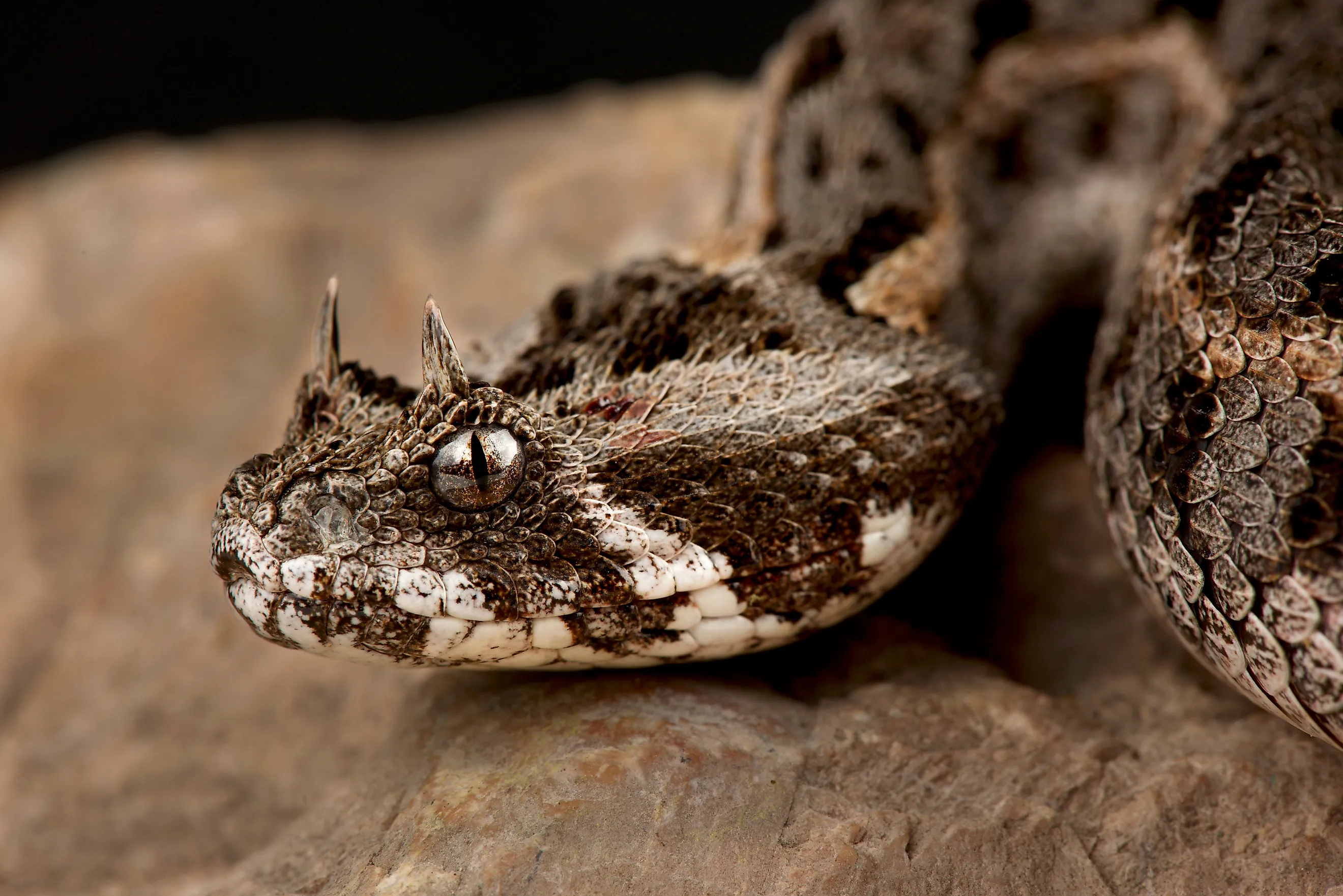
Kenya Horned Viper

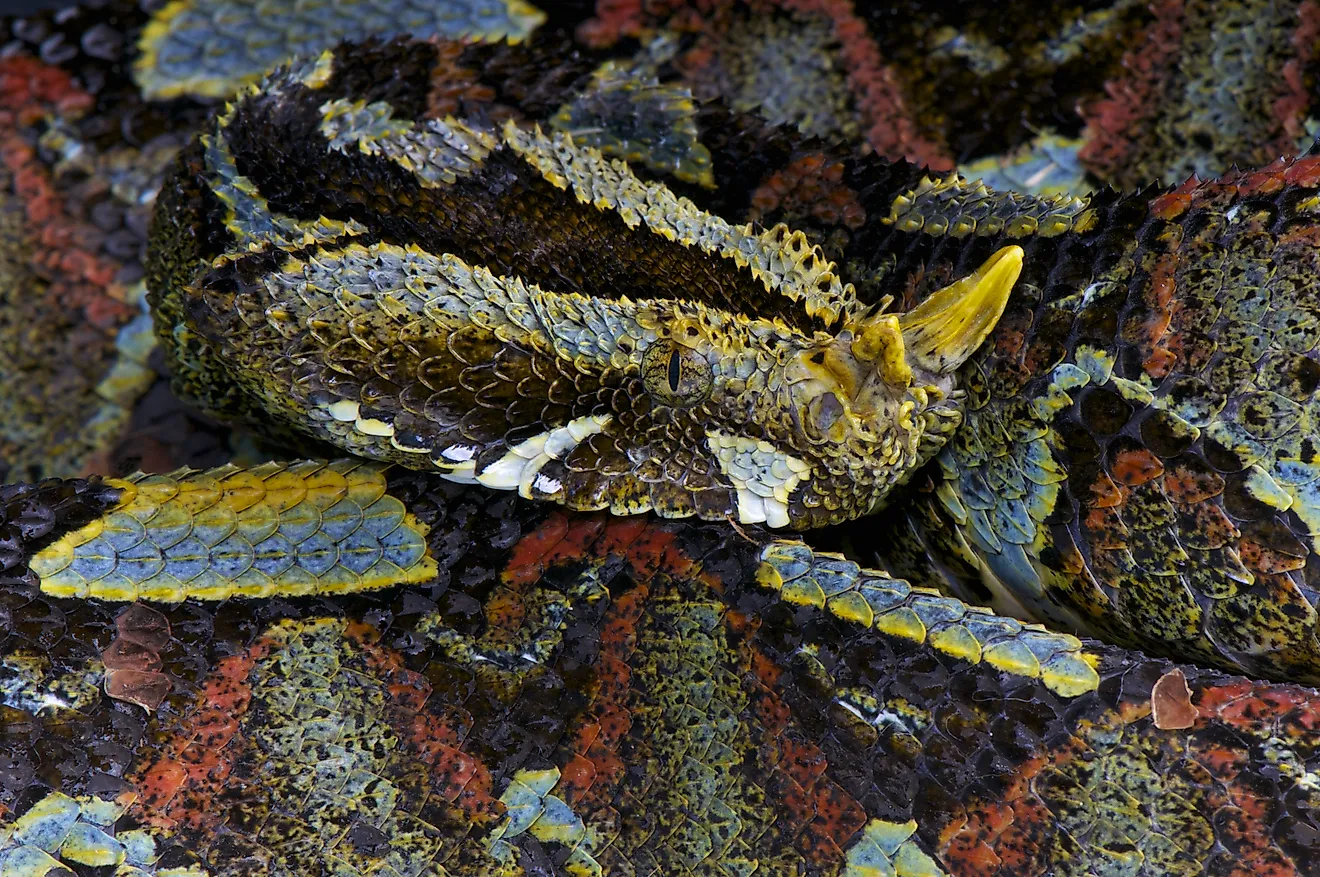
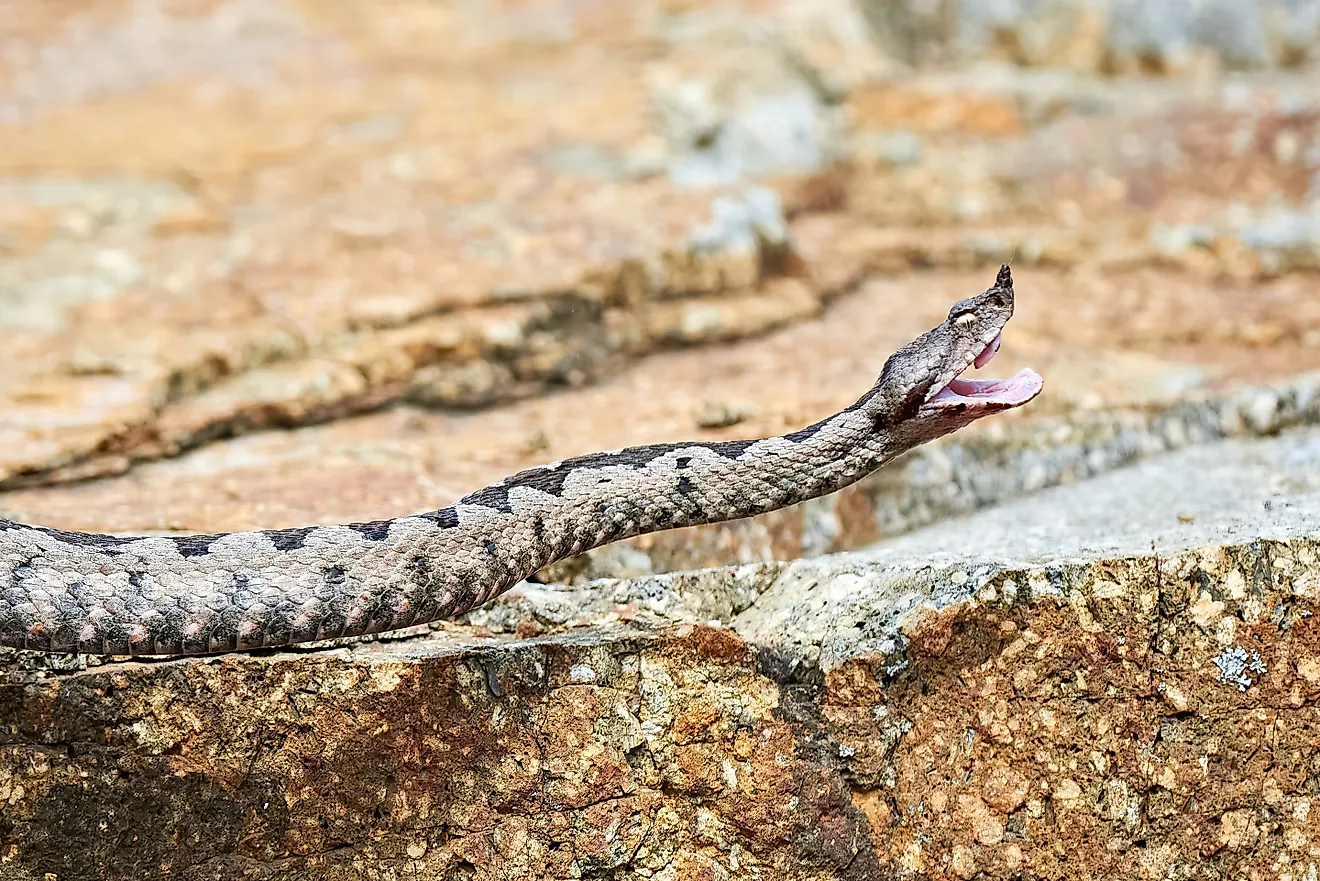
The Kenya horned viper (Bitis worthingtoni) is endemic to the high-altitude, central Rift Valley of Kenya. Its home range encompasses rocky areas, grasslands, and savannas. It inhabits these regions at elevations of 4,900 to 8,200 feet.
This venomous snake features a flattened, triangular head and distinct scales resembling horns above the eyes. Its body is patterned in earthy brown and grey with tan striping, providing camouflage among rocky slopes and dry scrub. It relies on dense ground cover to ambush prey, feeding primarily on rodents and small reptiles. Classified as vulnerable, its populations are sensitive to environmental disturbance and collection by snake traders and poachers.
Afroalpine vlei rat

The high moorlands of Kenya are home to the afroalpine vlei rat (Otomys orestes). This rodent has dense grey-brown fur, a stocky build, and is adapted to wet, high-altitude grasslands. Native to the montane moorlands of Mount Kenya and the Aberdare Range, it inhabits marshy slopes and stream edges. Its burrowing activity aerates soil and promotes vegetation turnover.
This herbivorous rat eats grasses, sedges, and herbaceous plants. Classified as data deficient, it is believed to be threatened by wetland drainage, overgrazing, and agricultural encroachment. Preservation efforts focus on wetland protection, improving water quality, and ensuring structural vegetation remains intact for breeding and foraging.
Kikuyu White-Eye

The Kikuyu white-eye (Zosterops kikuyuensis) is a small songbird found in the central Kenyan highland forests, scrub, and woodland edges. It can be found between 4,500 and 11,000 feet in elevation. It has an olive-green back and head, a yellowish underbelly, grey tail feathers, and a prominent white eye-ring.
Its diet consists mainly of insects, nectar, and small fruits. This colorful bird practices cooperative foraging behavior in mixed-species flocks, enhancing detection of both predators and food sources. While it is not currently endangered, protection of native trees and understory plants is essential for the Kikuyu white-eye's long-term survival.
Bohme's Two-Horned Chamaeleon

Bohme's two-horned chamaeleon (Kinyongia boehmei) is a medium-sized reptile that survives in the mountainous forests of southeastern Kenya, especially the Taita Hills. Its body is a greenish brown, but it can display a variety of mottled colorations. Males have two small cranial "horns" on the nose. It feeds on insects and small arthropods, capturing prey with a long, sticky tongue.
Its movements are slow and deliberate, relying on stealth and camouflage to avoid predators. The reproductive cycle is tied closely to seasonal rainfall, with egg-laying timed to improve juvenile survival. Classified as near threatened, it faces pressure from shrinking habitat and forest degradation.
Aberdare Cisticola

The Aberdare cisticola (Cisticola aberdare) is a diminutive warbler that lives in the highland grasslands and heathlands on both sides of the Rift Valley. It has rufous-brown upperparts with a reddish head, pale grey-tan underparts, and subtle cream streaking on the feathers. This bird builds well-concealed nests close to the ground, with both parents contributing to chick care.
It forages by hopping through short grasses and low shrubs, plucking insect prey from stems and leaf litter. Listed as vulnerable, this species is threatened by the conversion of its grassland home for agricultural development and livestock production. Preservation of the Aberdare cisticola emphasizes retaining natural grassland patches and minimizing disturbance.
Kenya's Iconic Endemics
Kenya's endemics perform crucial ecological roles that keep ecosystems functioning. They regulate prey populations, aerate soil, and disperse seeds. Despite pressure from human activity, holistic conservation strategies help sustain their survival. These animals also deepen scientific understanding of evolution, adaptation, and ecological balance within Kenya's diverse landscapes.
Continued habitat protection, scientific monitoring, and local stewardship will determine how these animals persist in the decades ahead. Their survival reflects more than conservation success. It demonstrates how intact ecosystems can support biodiversity found nowhere else on the planet.