The Real Reasons Athens and Sparta Went to War
Despite being one of the most famous events in ancient history, many do not understand the real reasons for the Peloponnesian War (431 BCE to 404 BCE). Indeed, Athens and Sparta went to war due to complex, multifaceted factors that can be traced back decades before the conflict. But in order to fully understand this conflict, it's important to first examine the Greco-Persian Wars that occurred during the first half of the 400s BCE. The shifting alliances, rapid expansion of Athenian power, and growing Spartan anxiety fundamentally altered the balance of power in Greece, leading to the first major war between Sparta and Athens.
The rise of the Athenian-led Delian League and the tensions between Athenian and Spartan allies led to a larger war and consequences that permanently reshaped the Greek world.
The Greco-Persian Wars
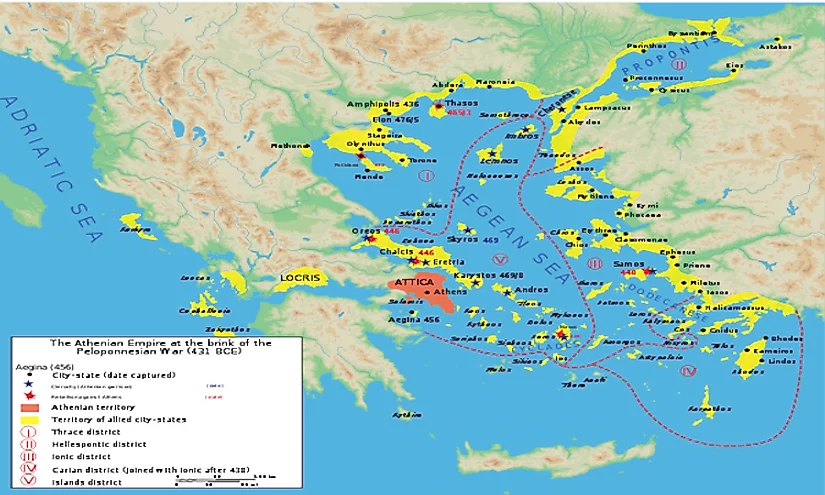
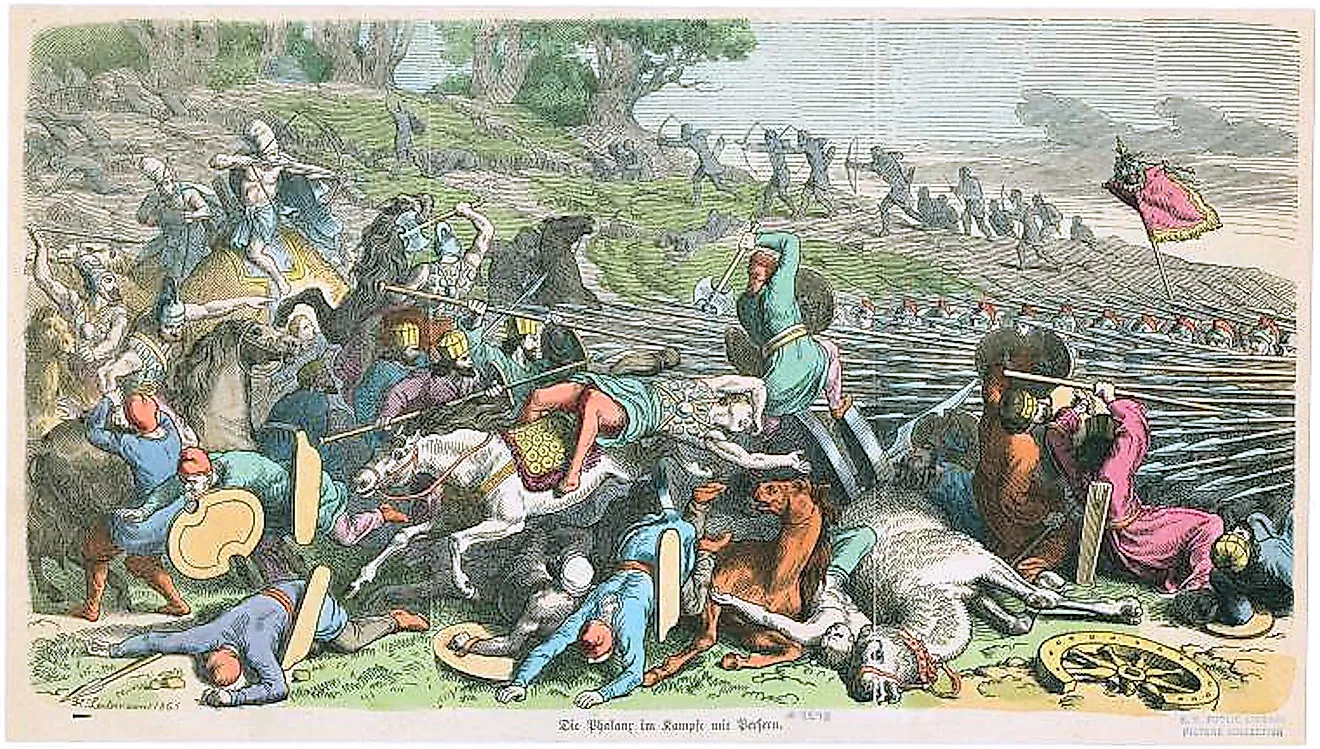
The seeds of conflict between Sparta and Athens were planted in the Greco-Persian Wars (499 BCE to 449 BCE). On the surface, these wars united and strengthened the Greek world against a common Persian threat. For instance, Athens established the Delian League, an alliance of hundreds of Greek city-states, to defend against the Persians. This complemented a similar alliance of Spartan-dominated states called the Peloponnesian League. Together, both alliances managed to push back the Persians. However, Athens emerged from the conflict much more powerful than before, which made Sparta uneasy, since it was the traditional dominant power in Greece.
The First Peloponnesian War

Sparta's anxiety about the power imbalance with Athens led to a war between the two from 460 BCE to 445 BCE. Known as the First Peloponnesian War, it was smaller and more intermittent than the conflict that followed. The conflict ended in a treaty in 445 BCE called the Thirty Years' Peace, which formally established a dual hegemonic system in Greece.
Among other terms, Athens was given authority over the sea, and Sparta was given dominion over the land. While a superficially positive development, this treaty actually entrenched the rivalry between Athens and Sparta by defining their spheres of influence. As both sides made incursions into each other's dominions over the coming decade, more tensions emerged.
The Continued Rise of Athenian Power

Athens, in particular, continued to accumulate power after the First Peloponnesian War. A major source of this power was the Delian League. Though it once functioned as an Athenian-led alliance, by the 440s and 430s BCE, member states were forced to pay tribute to Athens in the form of money and ships. Athens also forcibly put down revolts by member states, a notable instance of this being the Samian War (440 BCE to 439 BCE), which saw Athens besiege the island of Samos after it revolted against the Delian League. Samos was subsequently brought fully under Athenian control and made to pay a large tribute. In short, by the 430s BCE, the Delian League had become an Athenian Empire, further heightening Spartan insecurity.

Much of this increase in Athenian power was overseen by Pericles, one of its main political and military leaders. He believed that Athenian influence should be maintained and expanded, even if it caused Spartan anxiety. Therefore, Pericles led the navy in its siege of Samos and was largely responsible for Athenian domination of the Delian League. Furthermore, as a democratically elected leader, Pericles embodied the difference between Athens' democratic system and Sparta's oligarchy. This ideological difference was another source of competition between the two states, with Sparta worried that its allies would revolt to become democratic as well.
Immediate Tensions

While many long-term factors contributed to the outbreak of the Peloponnesian War, there were also some more immediate causes. The first was the Corcyra Crisis in 433 BCE, in which Corcyra and Corinth went to war. Athens provided Corcyra with help, which angered the Corinthian-allied Sparta. Thereafter, in 432 BCE, Potidea, a member of the Delian League and a Corinthian colony, rebelled after Athens demanded that all Corinthian officials be expelled. This resulted in a battle that brought Athens into direct conflict with one of Sparta's allies. Finally, in 432 BCE, Pericles issued the Megarian Decree, which cut off the Sparta-allied Megara from trade with the Delian League and severely damaged its economy. With so many allies threatened, Sparta decided that Athens had broken the terms of the Thirty Years' Peace and declared war.
Impact and Legacy
The Peloponnesian War had many long-term causes, as well as more immediate motivating factors. For instance, the Greco-Persian Wars established the alliance system that led to the first Peloponnesian War. The resolution of this conflict then formalised a dual system of power in Greece. Continued Athenian political, military, and ideological expansion across Greece further contributed to Spartan anxiety. Finally, tensions between Athenian and Spartan allies led to all-out war beginning in 431 BCE.