Fun Facts About Ancient India
- India established some of the world’s first universities.
- The first known mention of the solar system was found in the ancient Hindu text Rigveda.
- Yoga originated in India over 5,000 years ago.
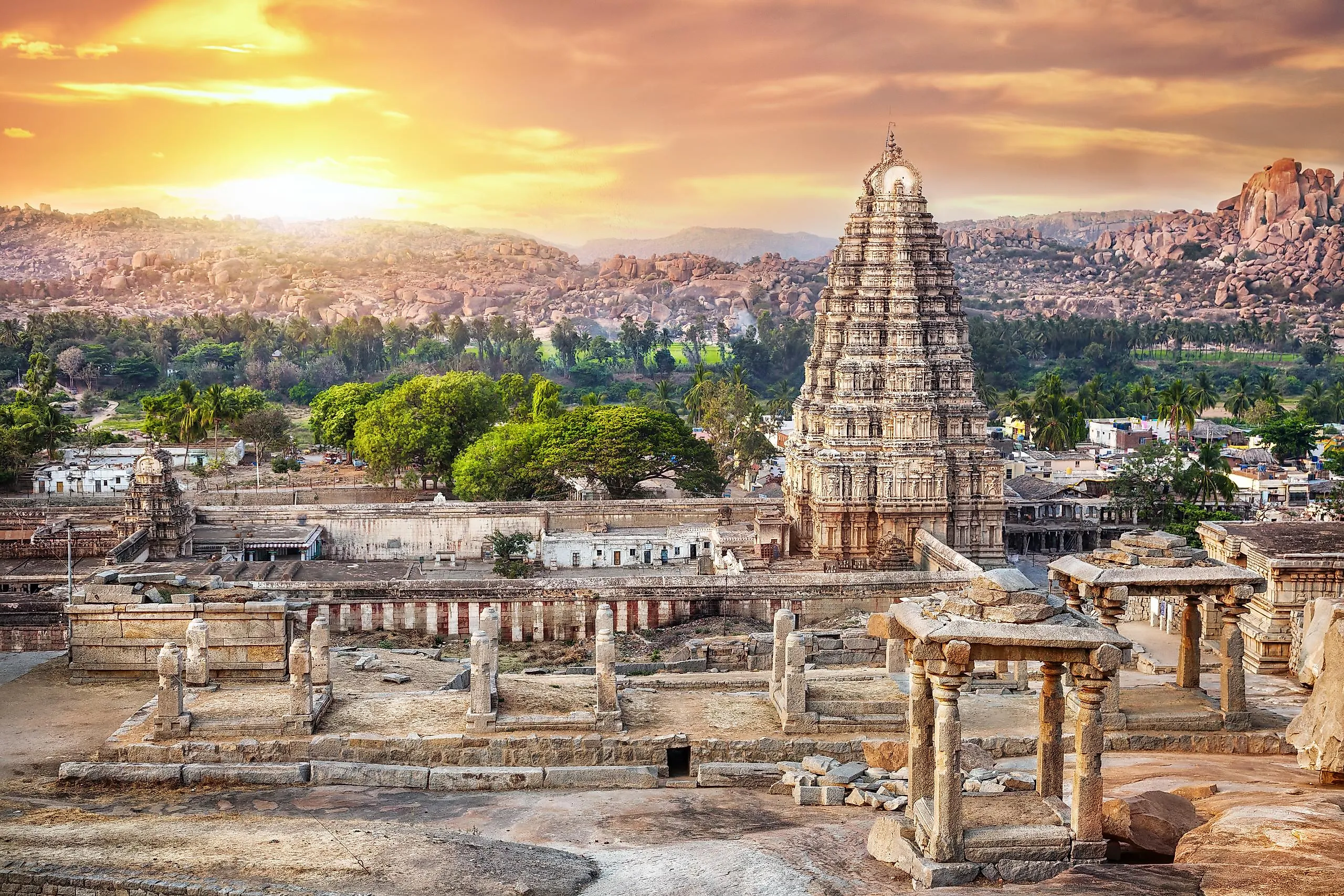
Ancient India, taken broadly as the span from the rise of the Indus Valley Civilization around 3300 BCE through the start of the Delhi Sultanate in 1206 CE, produced contributions to mathematics, medicine, linguistics, astronomy, and metallurgy that traveled outward for centuries and often arrived in Europe much later under different names. The thirteen items below sketch out the depth and reach of that footprint, including a rust-resistant iron pillar that has stood for sixteen centuries, a moral instruction game the Victorians renamed Snakes and Ladders, and a surgical text from 600 BCE that described rhinoplasty.
The Indus Valley Civilization Had Urban Sanitation Around 2,500 BCE
The Mature Harappan phase of the Indus Valley Civilization, dated roughly 2600 to 1900 BCE, produced the earliest known urban sanitation system in the world. Mohenjo-daro and Harappa were laid out on a grid plan, with most houses connected to brick-lined drains running below the streets. Individual homes typically included a private bathing area and a toilet that emptied into the municipal sewer through a clay pipe. The civilization also produced standardized weights and measures, fired brick of a uniform ratio used across hundreds of miles of territory, and a still-undeciphered script. The cities pre-date comparable Roman urban planning by roughly two thousand years.
Sushruta Wrote The First Comprehensive Surgical Text
The Sushruta Samhita, attributed to the physician Sushruta and most often dated to around 600 BCE (the question of authorship and dating remains debated by historians of medicine), described more than 300 surgical procedures and 120 instruments. Procedures detailed in the text include cataract removal, cesarean section, the setting of fractures, and rhinoplasty using a flap of skin from the forehead, a technique later adopted by European surgeons in the 18th century after East India Company doctors reported it from India. Sushruta is widely referred to in the history of medicine as the "father of plastic surgery," and the text remains a foundational work in the Ayurvedic tradition.
Panini Wrote The Oldest Surviving Formal Grammar
Around the 5th or 4th century BCE, the Sanskrit grammarian Panini compiled the Ashtadhyayi ("Eight Chapters"), a system of roughly 4,000 sutras that describes the entire grammar of classical Sanskrit. The work uses meta-rules, recursive definitions, and a notation that twentieth-century linguists recognized as anticipating the formal apparatus of generative grammar; the American linguist Leonard Bloomfield called it "one of the greatest monuments of human intelligence." Modern computer scientists have noted structural parallels between Panini's grammar and context-free formal languages used to describe programming languages.
The Decimal Place-Value System And The Symbol For Zero Originated In India
The decimal place-value system used in essentially all modern arithmetic was developed in India, and the symbol for zero as a number with its own arithmetic was first systematically defined by the mathematician Brahmagupta in his Brahmasphutasiddhanta, written in 628 CE. Brahmagupta laid out rules for operating with zero and with negative numbers, including the still-relevant observation that division by zero is undefined. The system passed to the Islamic world through Persian intermediaries (the Persian mathematician al-Khwarizmi wrote a Latin-translated treatise on Indian arithmetic around 825 CE) before reaching medieval Europe, which is how the system came to be known in the West as "Hindu-Arabic numerals."
Aryabhata Said The Earth Rotates On Its Axis In 499 CE
The mathematician and astronomer Aryabhata, working at Kusumapura (modern Patna) in 499 CE, proposed in his Aryabhatiya that the Earth rotates daily on its own axis and that the apparent motion of the stars is a consequence of that rotation. He calculated the value of pi to four decimal places (3.1416), estimated the length of the sidereal year within minutes of the modern value, and computed the Earth's diameter to within about one percent of the correct figure. The work pre-dates Copernicus by nearly a thousand years. Later Indian astronomers, including Brahmagupta and Bhaskara II in the 12th century, built directly on Aryabhata's framework.
Nalanda Was The First Residential University, But Takshashila Came First
Takshashila (also spelled Taxila), located in what is now northwestern Pakistan, was operating as a recognized center of higher learning by at least the 6th or 5th century BCE. The grammarian Panini, the strategist Chanakya, and the physician Charaka are all associated with it. Nalanda, in the modern state of Bihar, was founded around 427 CE under the Gupta emperor Kumaragupta I and became the first organized residential mahavihara, with formal admissions, faculty, and curriculum. At its peak it housed roughly 10,000 students and 2,000 teachers, and its library, the Dharmaganja, occupied three multi-story buildings. The Chinese pilgrim Xuanzang studied at Nalanda from 630 to 643 CE. The complex was destroyed around 1193 CE by the forces of Bakhtiyar Khalji. The site is a UNESCO World Heritage location.
The Mahabharata Is The Longest Epic In World Literature
The Sanskrit epic Mahabharata, traditionally attributed to the sage Vyasa and composed in layers between roughly 400 BCE and 400 CE, runs to about 100,000 verses (approximately 1.8 million words). That is roughly ten times the combined length of Homer's Iliad and Odyssey, and longer than the Bible and the Quran put together. The Bhagavad Gita, a 700-verse philosophical dialogue between the warrior Arjuna and Krishna, is embedded within it. The companion epic Ramayana, attributed to the poet Valmiki and composed roughly between the 7th and 4th centuries BCE, runs to about 24,000 verses.
Yoga's Roots Go Back To The Indus Valley

The earliest material evidence often associated with yogic practice comes from soapstone seals at Mohenjo-daro and Harappa (notably the so-called Pashupati seal from around 2500 BCE), which depict a seated figure in a posture resembling later yogic asanas. The Sanskrit word yoga first appears in the Rigveda, composed roughly between 1500 and 1200 BCE. The earliest systematic exposition is the Yoga Sutras of Patanjali, compiled between the 2nd century BCE and the 4th century CE, which lays out the eight-limb (Ashtanga) framework that underlies most later yoga traditions. The Indus Valley evidence is contested by some scholars, but the textual lineage from the late Vedic period onward is well documented.
Chess Began As Chaturanga
The Indian game of chaturanga, attested by the 6th century CE during the Gupta period, is generally accepted as the direct ancestor of modern chess. The name means "four divisions," referring to the four arms of the Indian army: infantry, cavalry, elephants, and chariots, which correspond directly to the modern pawns, knights, bishops, and rooks. The game traveled westward to Sasanian Persia, where it became shatranj, then to the Islamic world after the Arab conquest of Persia in the 7th century, before reaching Europe by the 9th and 10th centuries. The modern rules of chess (queen's expanded movement, en passant, castling) were largely settled in Europe by the late 15th century.
Snakes And Ladders Came From Moksha Patam
The game now known worldwide as Snakes and Ladders originated in India as Moksha Patam ("liberation lesson") and is most reliably attributed to the 13th-century Marathi saint and philosopher Sant Jnaneshwar (some sources speculate origins as early as the 2nd century BCE, but that earlier dating is not well supported in the scholarly record). The original board functioned as a moral instruction tool: ladders represented virtues such as faith, generosity, and knowledge; snakes represented vices such as anger, greed, and pride. Snakes outnumbered ladders deliberately, to make the point that the path of virtue is harder than the path of vice. The 100th square represented Moksha, the liberation of the soul. British colonial administrators brought the game to England in the 1890s, where the Hindu virtues and vices were replaced with Victorian ones. Milton Bradley imported a further-modified version to the United States in 1943 as Chutes and Ladders.
The Iron Pillar Of Delhi Has Not Meaningfully Rusted In 1,600 Years
The Iron Pillar standing in the Qutub complex in Delhi is 7.2 meters tall and weighs roughly 6,500 kilograms. It was cast during the reign of the Gupta emperor Chandragupta II (375 to 415 CE), originally erected at Vishnupadagiri near modern Udayagiri, and moved to its present site around 1233 CE by the Delhi Sultanate ruler Iltutmish. The remarkable feature of the pillar is the negligible corrosion on its surface after roughly sixteen centuries of outdoor exposure. Metallurgists have shown that the relatively high phosphorus content of the wrought iron formed a thin protective layer of misawite (a hydrogen-phosphate hydrate) that prevents further oxidation. The Gupta-period metallurgy that produced the pillar is part of the same tradition that later produced Wootz steel, the South Indian high-carbon crucible steel that was prized as a sword material and eventually traded westward as the source for what Europeans called Damascus steel.
India Was The World's Only Major Diamond Source For Roughly 2,000 Years
Diamonds were mined in India from at least the 4th century BCE (mentioned by name in Kautilya's Arthashastra) until the discovery of diamonds in Brazil in 1725 made significant non-Indian production possible for the first time. Indian diamonds were recovered from alluvial deposits in the Krishna, Godavari, and Penner river valleys; the Golconda region near modern Hyderabad produced most of the famous historical stones. The Koh-i-Noor, the Hope Diamond, the Daria-i-Noor, and the Regent Diamond all originated in Indian mines. Diamonds were valued in ancient India for their hardness (used as drill points and engraving tools) before their use as gemstones became widespread.
The Word "Shampoo" Comes From Sanskrit

The English word "shampoo" derives from the Hindi champo, itself from the Sanskrit champayati (to press, knead, or soothe). Traditional Indian hair washing relied on Ayurvedic preparations of shikakai (Acacia concinna), reetha (soapnut), amla (Indian gooseberry), and hibiscus. The word entered English through the Bengali-born entrepreneur Sake Dean Mahomed, who opened "Mahomed's Indian Vapour Baths" in Brighton in 1814 and described the head-massage component of his treatments as "shampooing." The cosmetic product sense that the word carries today (a hair-washing liquid) developed later in the 19th century.
What Got Carried Forward
The pattern across these thirteen items is the same. A contribution was worked out somewhere in the Indian subcontinent, passed westward through Persian, Arab, and later European intermediaries, and arrived in modern Europe and the Americas often without its original attribution. The Hindu-Arabic numeral system, the surgical techniques in Sushruta's text, chaturanga's evolution into chess, the etymology of "shampoo," and the formal-grammar framework of Panini all follow that path. Ancient India was not just contemporary with the other great Bronze and Iron Age civilizations of Eurasia. For long stretches it was setting the terms in which they would think, write, and count.